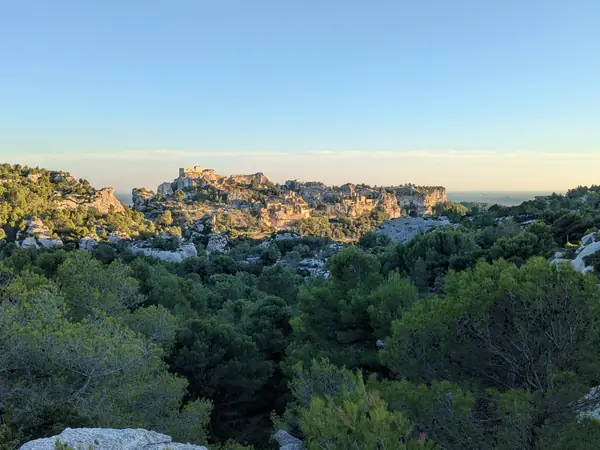
Les Baux-de-Provence, an eagle’s nest in the Alpilles
Clinging to their rocky spur, Les Baux-de-Provence overlook the olive groves of the Alpilles. Explore the village, from its lanes to the Costapéra plateau.


Hilltop villages, lavender plateaux, markets, abbeys, calanques, gorges and quiet country roads: these getaways bring together places visited and selected over the seasons, to help shape a more grounded stay in Provence close to the guest houses listed on the portal.
Clinging to their rocky spur, Les Baux-de-Provence overlook the olive groves of the Alpilles. Explore the village, from its lanes to the Costapéra plateau.
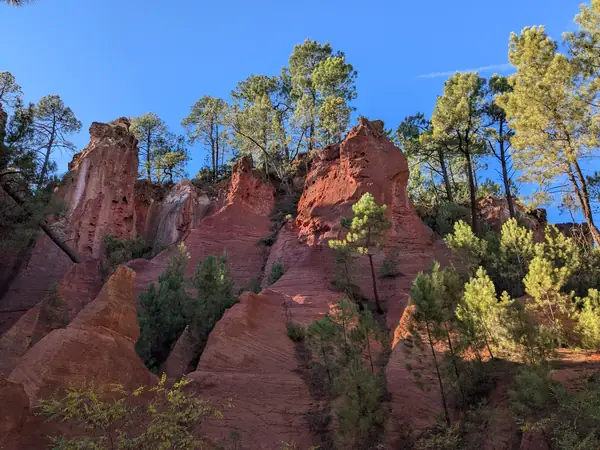
Explore the Ochre Trail in Roussillon: colourful cliffs, paths beneath the pines and the history of ochre workers, with a further visit to the Mathieu factory.
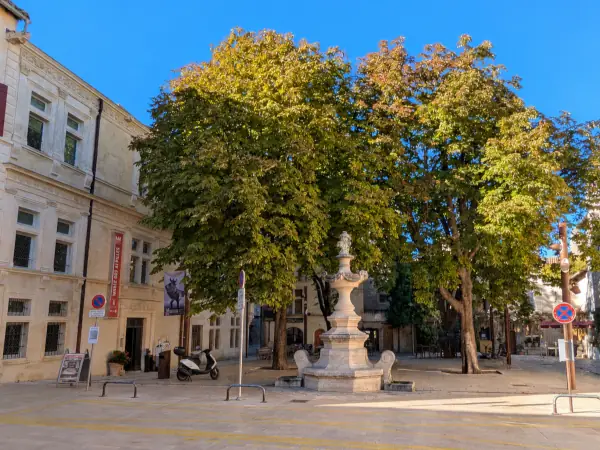
A stroll through Saint-Rémy-de-Provence’s old town, discovering squares, lanes, fountains, historic mansions and museums at the foot of the Alpilles.
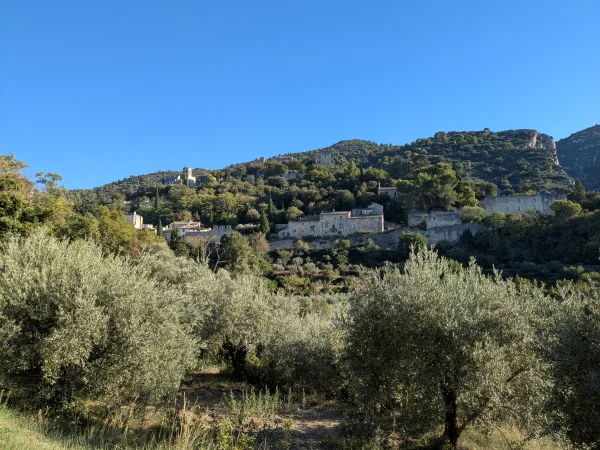
Vieil-Oppède rises above the Calavon plain, where cobbled lanes lead to Notre-Dame Dalidon and the ruins of the old fortress.
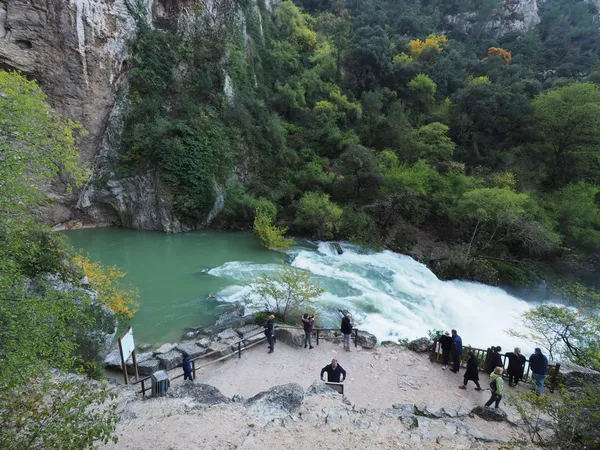
At Fontaine-de-Vaucluse, the Sorgue emerges at the foot of a cliff, flows through the village, and continues into the Sorgues plain.
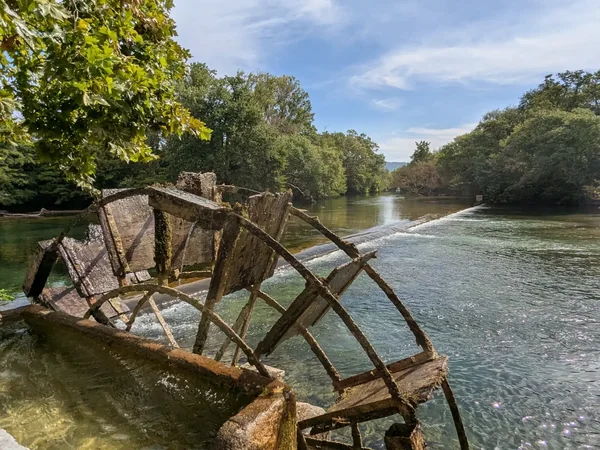
Two stone weirs divide the Sorgue upstream of L’Isle-sur-la-Sorgue, and the branches leaving the Partage des Eaux make the town an island.
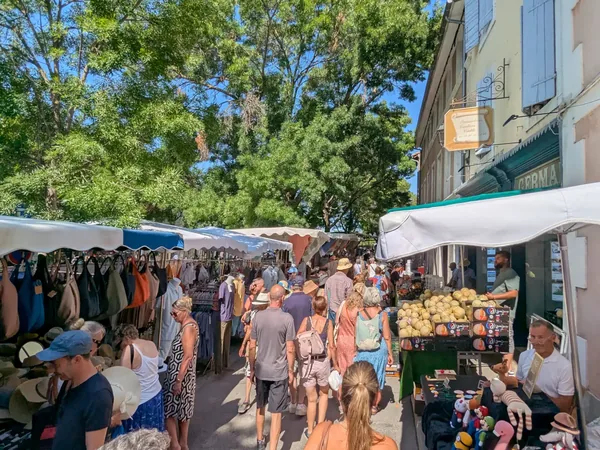
On Sunday mornings, the stalls follow the quays and reach into the streets of the old town. The crowd moves between fruit, fabric and the clear waters of the Sorgue.
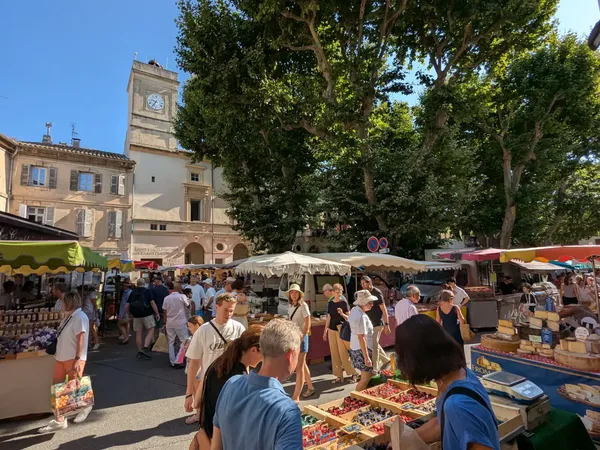
On Wednesday mornings, the stalls spread across the squares and streets of central Saint- Rémy-de-Provence. They draw a colourful route around the collegiate church and the town hall.

In Gordes, the calades descend from the château to the Fontaine Basse, while cellars extend beneath the houses, rooting the village more deeply in the rock.

In July, theatre covers the walls of Avignon as actors and audiences move through the streets to the rhythm of performances.

Visit Roussillon in the Luberon: colourful lanes, the belfry, Saint-Michel church, views from the Castrum and the history of the ochre village.

Above Bonnieux and Lacoste, tall cedars shade the Petit Luberon ridge. Paths cross the woodland and lead to views over the Calavon and Durance valleys.

Between Lourmarin and Bonnieux, a narrow valley cuts through the Luberon, linking its two sides beneath the cliffs. Discover the Aigue Brun beneath the trees, the Pont à coquille and the history of these old tracks.

On Friday mornings in Lourmarin, crowds stroll past the stalls lined up beneath the plane trees while the café terraces fill up.

From Vercoiran to Izon-la-Bruisse, rows of lavender follow the slopes of the Baronnies provençales, at the foot of ridges and wooded hillsides.

Around Sault and the Albion plateau, fine lavender colours open highland landscapes between Mont Ventoux, the Montagne de Lure and Haute-Provence.

On the Valensole plateau, the blue drifts of lavender fields shape an open, luminous landscape.

On Saturday mornings, Apt’s market fills the streets of the old town and shows the town at its liveliest.

Near Gordes, discover Sénanque Abbey, its Romanesque architecture and the fields of lavandin cultivated by the monks.

On the northern side of Sainte-Victoire, Vauvenargues overlooks a wooded valley, facing Picasso's castle.

Explore Venasque, its towers, fountain and baptistery, on a rocky spur facing Mont Ventoux amid the landscapes of the Comtat Venaissin.

Explore Salon-de-Provence from the Château de l’Empéri to the Clock Tower, Fontaine Moussue and the streets of the old town.

In Arles, discover the Notre-Dame-de-la-Major nativity scene: santons, village life and traditional trades in a church linked to shepherds and Camargue horsemen.

In Banon, an 80 m² Christmas nativity scene recreates the trades and daily life of Haute-Provence, thanks to the work of local volunteers.

The Saint-Sixte chapel stands on a limestone slab, on the outskirts of the village of Eygalières.

From the summit of Mont Ventoux, take in the landscapes of Provence, amid a desert of white limestone exposed to wind and cold.

Visit Blauzac near Uzès, its lanes, castle and church, then continue through the countryside to the dry-stone huts of La Librotte.

Explore the Gorges de la Nesque in autumn: scenic road from Villes-sur-Auzon to Monieux, tunnels, autumn foliage and the Castellaras viewpoint.

Explore Colmars and its former border, the Saint-Pierre gorges, the alpine pastures of the Col des Champs and Lake Allos in the Upper Verdon.

A sanctuary perched above a sacred forest

Discover Brantes, its stone-paved lanes, history and craftspeople, facing the northern slopes of Ventoux, then the old bridge over the Toulourenc.

In Grignan, four hundred rose bushes line the walls, stairways and cobbled lanes. The rose garden unfolds as you walk through the village.

Visit the daily market on Place Richelme in Aix-en-Provence. Fresh produce, days, opening hours and a walk through the historic centre.

From the old harbour to Saint-Tropez’s citadel, explore traditional boats, ocean-going captains, painters and the gulf’s major sailing regattas.

Explore Les Goudes at Marseille’s edge, with its fishing port, industrial history, cabanons and views of Maïre island at the gateway to the Calanques.

Facing Avignon, Villeneuve-lès-Avignon links the Tour Philippe-le-Bel, the Mourgues paths, the old streets and the Charterhouse, beneath the towers of Fort Saint-André.

At Fontaine-de-Vaucluse, the Bishops’ Castle overlooks the Sorgue and the enclosed valley, following in Petrarch’s footsteps.

Discover Piémanson Beach: access, parking, swimming and history

Explore Barthelasse Island opposite Avignon, from the towpath to the orchards, with the river shuttle and cycling routes.

Explore the Giens Peninsula near Hyères, its two tombolos, the salt pans of Les Pesquiers, its beaches and rocky coves.

Explore Le Panier in Marseille, from Les Accoules to Place des Moulins, with painted streets, workshops and neighbourhood squares.

Explore the Roman aqueduct remains near the Pont du Gard, from the arches of Vers to the Bornègre bridge, following the water’s route to Nîmes.

Explore Niolon on the Côte Bleue, its small harbour, railway viaducts and the surroundings of the former gun batteries overlooking the Bay of Marseille.

Understand the Sautadet waterfalls and their limestone potholes, then explore the bridge and village of La Roque-sur-Cèze. Tips for your visit.

Discover Le Castellet, a medieval village above the vineyards of Bandol: lanes, shops, church, château and views from the Trou de Madame.

Discover the mimosas of Tanneron in winter: flowering season, a walk around the village and views of the hills and the bay of Cannes.

Visit Montbrun-les-Bains, its stone-paved lanes, fountains and Renaissance castle, then explore the history of its baths at the foot of Ventoux.

Near Tarascon, at the foot of the Montagnette, Boulbon keeps the fortress that watched the border of Provence, and its Provençal traditions.

At Régusse, the village’s two windmills have had their mechanisms restored. The volunteers who maintain them keep Provence’s milling heritage alive.

Below Bonnieux, the three arches of Pont Julien span the Calavon. Today, the greenway follows this crossing of the ancient Via Domitia.

Guardian of Provence’s gateways, it offers breathtaking panoramas over the Durance Valley and the Rocher de la Baume.

In Aix-en-Provence, the Four Dolphins Fountain is a starting point for a walk through the Mazarin district, its grid of streets and historic townhouses.

From Avignon’s ramparts, Saint-Bénézet Bridge extends over the Rhône. Along its four surviving arches, the deck runs past two chapels and opens up views of the Barthelasse and Villeneuve-lès-Avignon.

Explore La Garde-Adhémar, its Romanesque church with two opposing apses, the Jardin des Herbes and old washhouses, then visit the Val des Nymphes.

Near Gordes, the huts of the Village des Bories tell the story of farming and dry-stone construction. Explore their courtyards and interiors, and discover how they were restored.

Explore Port-Miou calanque in Cassis, its sailing harbour, the remains of the Solvay quarry and the château beside the water.

Visit Bormes-les-Mimosas, its hilltop village, flower-filled lanes and gardens, then its coastal beaches facing the Fort de Brégançon.

In Saint-Rémy-de-Provence, the triumphal arch and Mausoleum of the Julii stand at the foot of the Alpilles, beside the archaeological site of Glanum.

Visit Crestet near Vaison-la-Romaine, from the cobbled lanes to the bishops’ castle, and discover its fountain, church and the landscapes of the Dentelles.

Visit Aups, its old gates, fountains and Saint-Pancrace collegiate church, then explore the markets and truffles of the Haut-Var.

Enjoy Port d’Alon cove in Saint-Cyr-sur-Mer, its pebble beach and the pinewood paths of the protected Nartette estate.

At Martigues, the rocky Côte Bleue shoreline opens into sandy coves well suited to swimming.

Emigrants from the Ubaye valley made their fortune in Mexico in the 19th century. Around fifty villas in Barcelonnette and twenty in Jausiers still bear witness to it.

Discover Saint-Étienne-de-Tinée, its heritage and the villages of the upper valley, then the barracks of Les Fourches and the Bonette road.

In the upper Ubaye valley, head up to Maljasset and explore the Châtelet bridge and the trails of Plan de Parouart.

In Goudargues, the Gard’s little Venice, the Canal de la Fontaine runs alongside shaded quays before reaching the gardens and the banks of the Cèze.

Visit Sainte-Croix-sur-Verdon above the lake’s beaches, explore the valley’s history and enjoy time by the water.

Above Fontvieille, in the Alpilles, the mill bears the name of Alphonse Daudet, who immortalized it without ever having lived there.

Above the Rhône and the Palais des Papes, the Jardin des Doms offers shaded walks and panoramic views of Avignon and the surrounding region.

In Jouques, the houses overlook the Réal and the Grand Pré. From the fountains on the boulevard, the lanes of the old village climb to Notre-Dame-de-la-Roque.

Near Tarascon, Saint Gabriel Chapel emerges among olive trees on the ancient site of Ernaginum, at a crossroads of ancient routes.

Near Ventabren, Roquefavour Aqueduct carries the Marseille Canal over the Arc. Discover its arches from ground level and from above, along with the Marseille Canal and the remains of the oppidum.

At the foot of the Grand Luberon, explore Cucuron, from the Étang basin and old lanes to the Saint-Michel keep and the views from the Süs Pous tower.

Visit Simiane-la-Rotonde, its stone-paved lanes, market hall and castle, with a Romanesque room and dome above the lavender fields.

At the Mirabeau bridge, the old portals overlook the Durance. Continue to the village and the fountain featured in Manon des sources.

Beneath the plane trees of Cours Gambetta in Cotignac, café terraces sit beside fountains. The lanes of the old village climb towards the tufa cliff of Le Rocher.

Along the quays and canals of L’Isle-sur-la-Sorgue, discover the water wheels that powered mills and factories or raised water for gardens.

From the castle of Châteauneuf-du-Pape, follow the village lanes down to the church and the Grande Fontaine, and discover the wines in the tasting rooms.
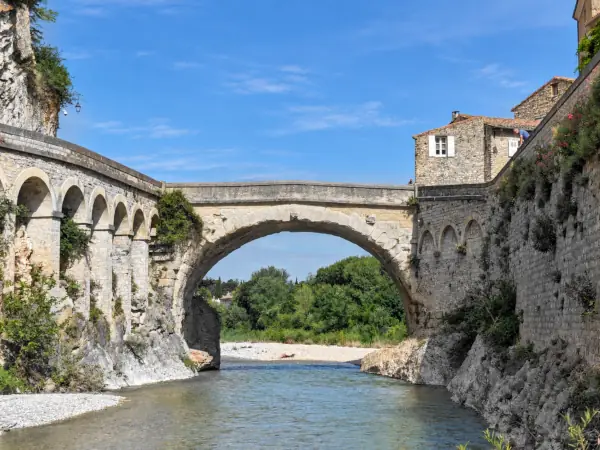
Explore Vaison-la-Romaine: the Roman bridge over the Ouvèze, the lower town, the ancient sites of Puymin and La Villasse, the theatre and the archaeological museum.
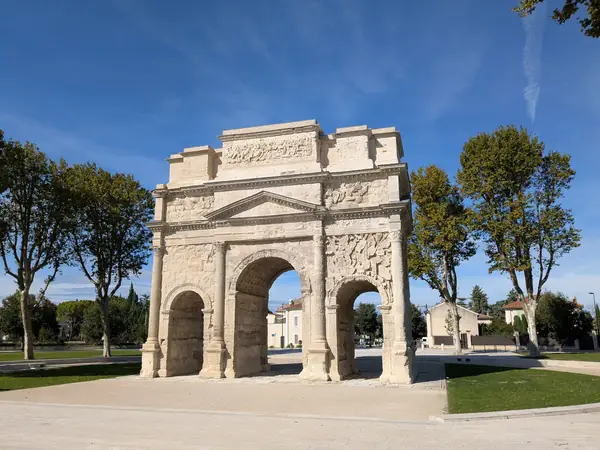
Explore Roman Orange, from the Triumphal Arch and ancient theatre to Saint-Eutrope Hill, with the history of the Princes of Orange.
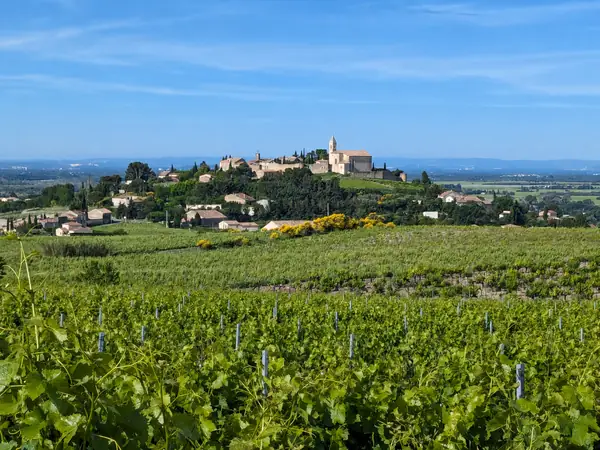
Explore the old village of Cairanne: fortified gates, a clock tower, gardens and views over the vineyards of this Côtes du Rhône cru.
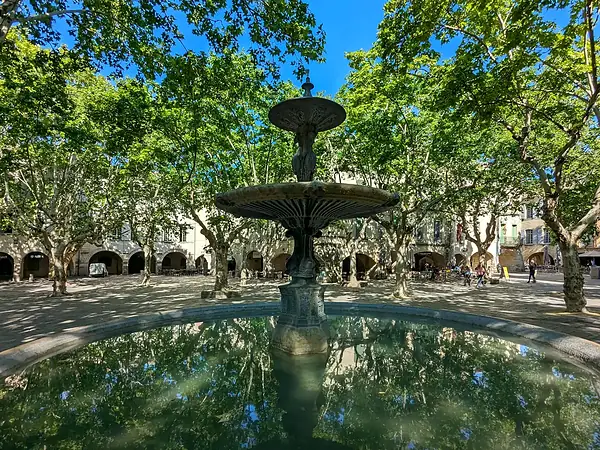
In Uzès, the streets of the old town converge on Place aux Herbes. Around its fountain and beneath its arcades, markets set the rhythm of the ducal town.