


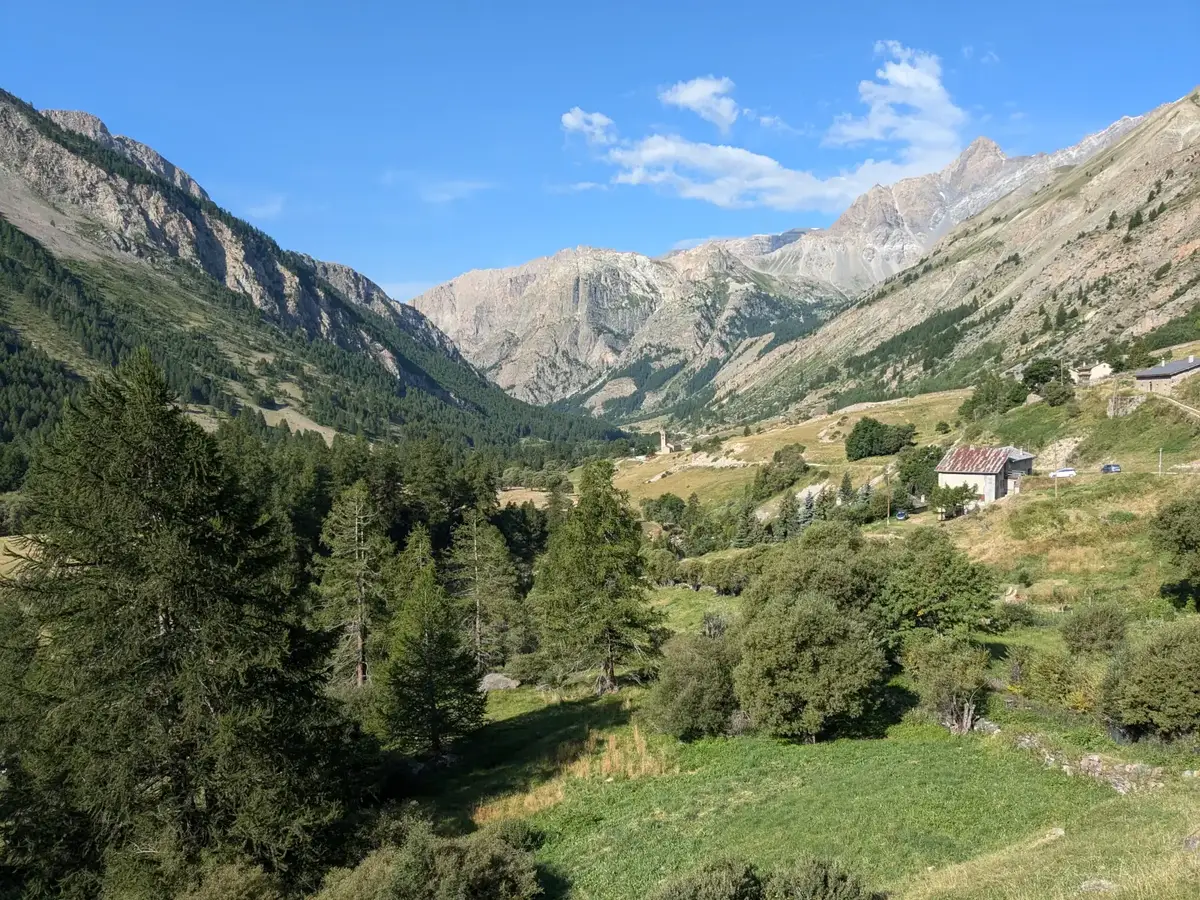
A getaway in Upper Ubaye
The Upper Ubaye Valley, from hamlets to mountain pastures
Text and photographs by Vincent Flachaire
Beyond Saint-Paul-sur-Ubaye, the road follows the mountain river to the last hamlets. Stone-slab roofs and Maurin’s bell tower stand against the slopes; soon, footpaths take over, leading towards the mountain pastures and the Italian border.
From Saint-Paul-sur-Ubaye towards Piedmont’s peaks
The upper Ubaye valley extends towards Provence’s north-eastern reaches, in the Alpes-de-Haute-Provence. From Saint-Paul-sur-Ubaye, at around 1,500 metres, it rises towards the hamlets of Maurin, close to 2,000 metres, and the peaks above 3,000 metres overlooking the border with Italy’s Piedmont region. Larches cover the slopes, meadows surround the houses, and bare rock gradually replaces the trees.
Downstream, the Ubaye flows into Lake Serre-Ponçon and joins the Durance. The road leads back through Barcelonnette and on towards Sisteron and inland Provence. The light still recalls the south, while the altitude brings a mountain climate and long winters.
The road to Maljasset and the turning for Fouillouse
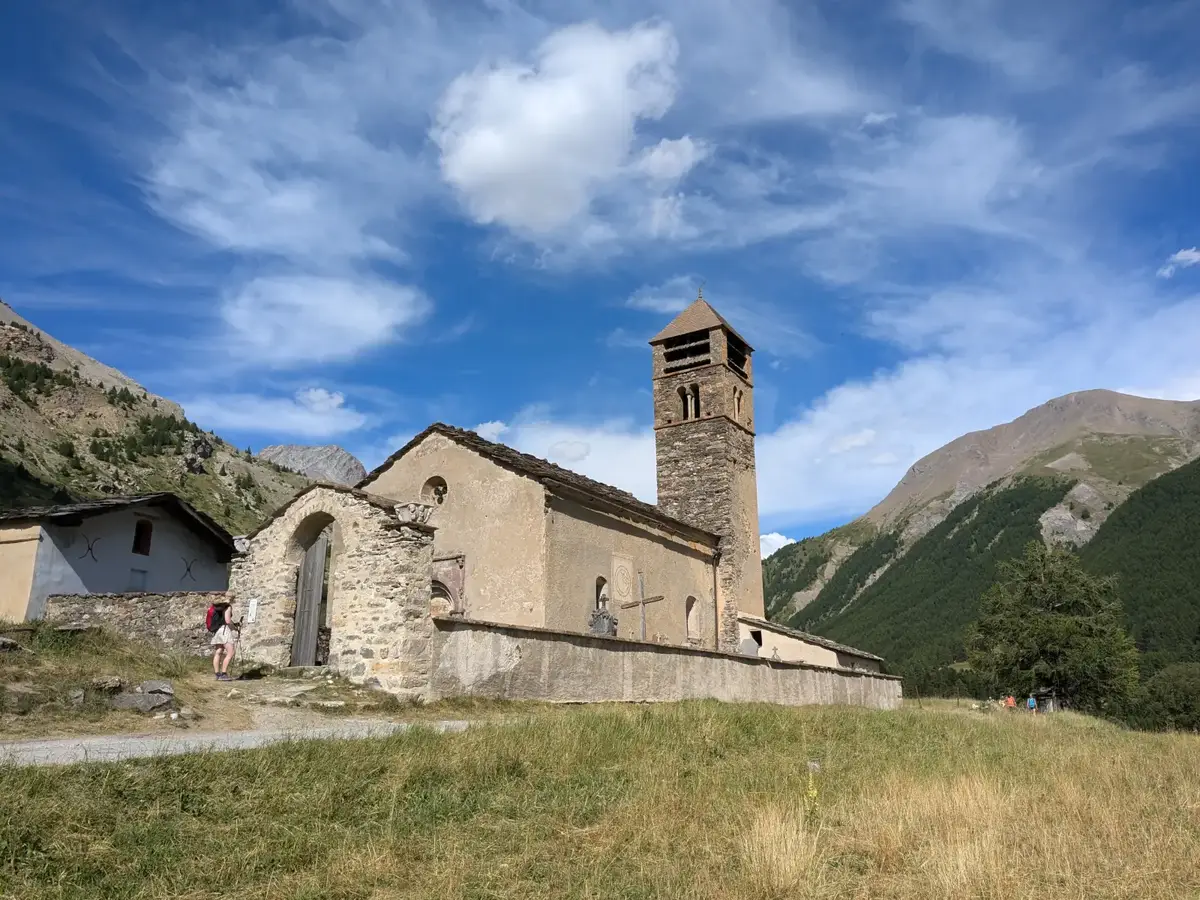
Leaving Barcelonnette and Jausiers, you pass the villas built by Ubaye emigrants returning from Mexico. Beyond Saint-Paul-sur-Ubaye, the road follows the river through Petite and Grande Sérenne, then towards Saint-Antoine and La Barge. In the narrower stretches, the water disappears deep into the gorge.
The Châtelet bridge marks the turning for Fouillouse. Its stone arch spans a narrow cleft more than a hundred metres above the water; the road then reaches the hamlet through a tunnel cut into the rock. The main valley road continues towards Maljasset, at 1,910 metres.
Maurin: stone roofs and a history of departure
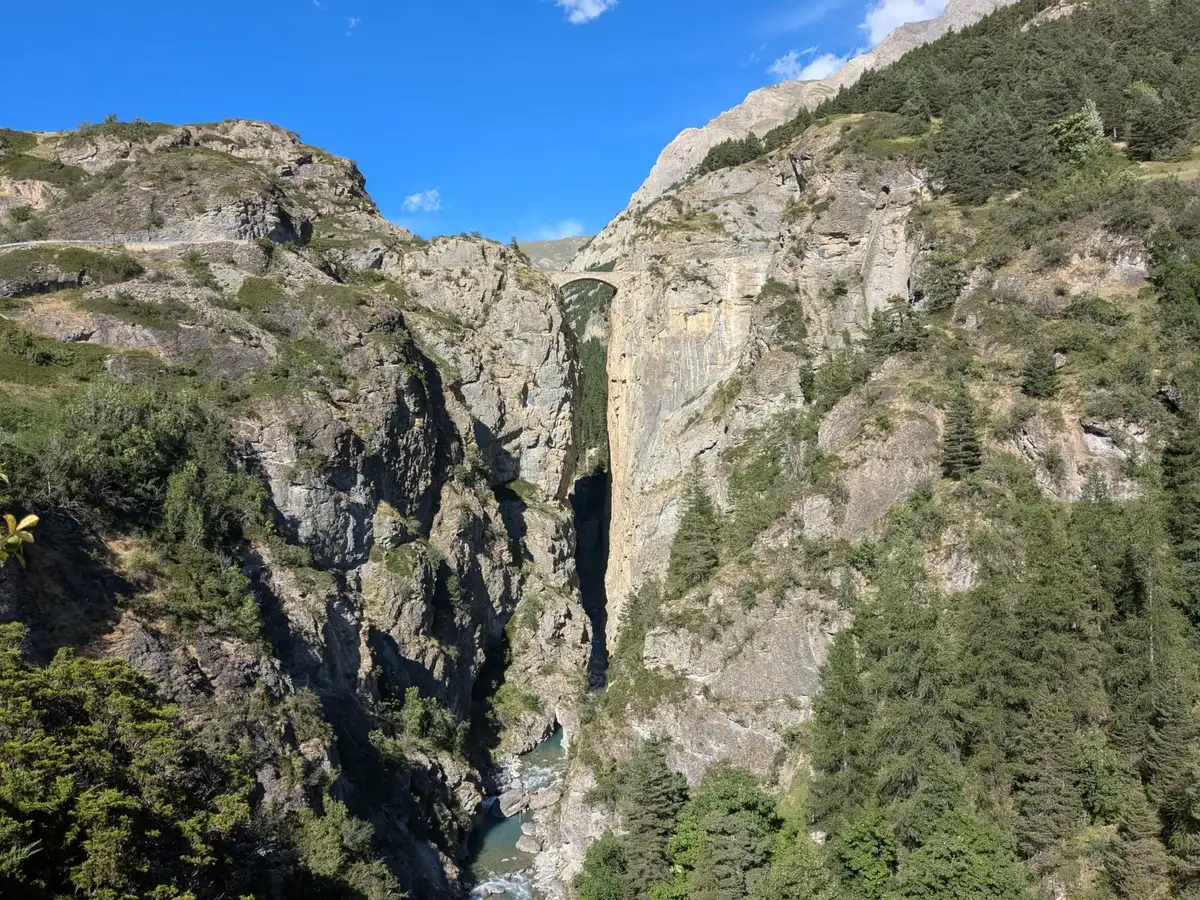
At Maurin, the church of Saint-Antoine-du-Désert stands near the hamlet of Maljasset, on the way to Combe Brémond. Around the church and cemetery, houses with stone-slab roofs recall the families who lived here by raising livestock and farming the high-altitude land.
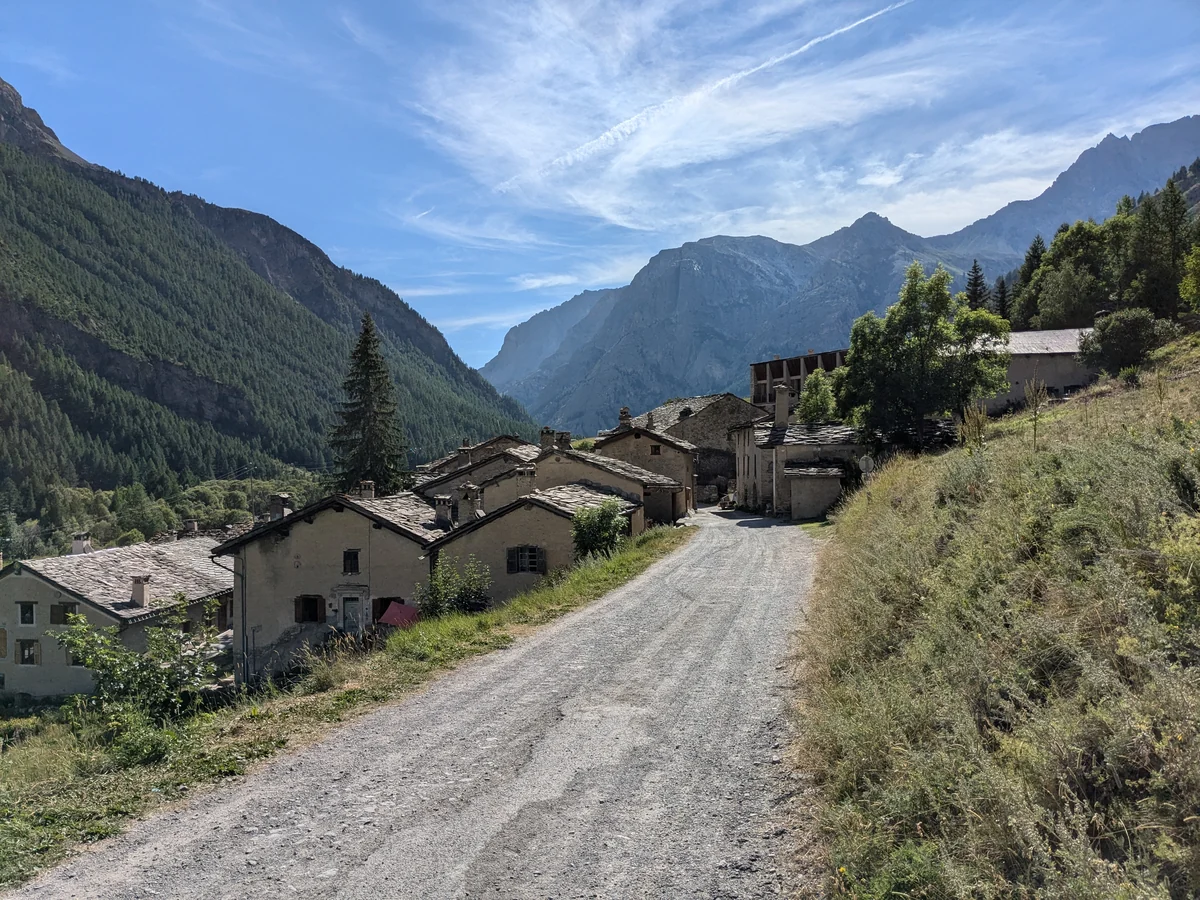
Harsh winters and remoteness accompanied the rural exodus that left many houses empty. The municipality of Saint-Paul-sur-Ubaye had 215 inhabitants in the 2023 census. Inhabited hamlets and mountain refuges still sustain a presence in this upper valley, explored by walkers in summer.
Plan de Parouart, where a lake became wetland
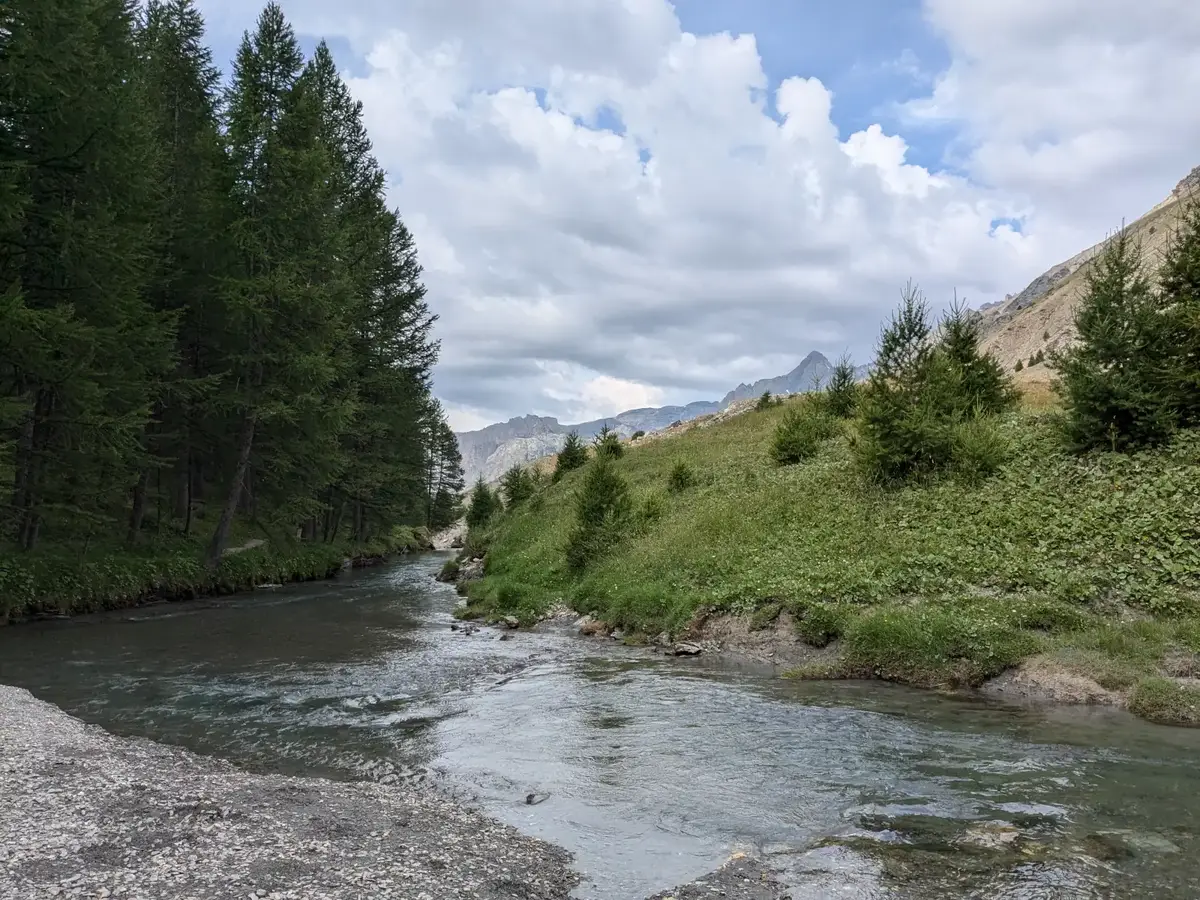
Beyond Maljasset and Combe Brémond, the path follows the Ubaye upstream to Plan de Parouart. Here the river slows across a broad, level stretch fringed with willows and larches. A lake still occupied this area in the early twentieth century; sediment gradually filled it, leaving a wetland through which the water continues to flow.
Higher up, routes branch towards the mountain passes. The Col de Malacoste provides a crossing into Italy; the lakes and Col du Longet lie in the area where the Ubaye rises. These high-mountain routes extend well beyond Plan de Parouart.
A stay in the Ubaye valley also reveals the small towns and villas of Barcelonnette and Jausiers, before heading back up towards the hamlets of Saint-Paul and the paths around Maurin.
Practical information
Getting to Maljasset and walking to Plan de Parouart
- Where does the road end?
- The D25 reaches Maljasset. The road then serves Combe Brémond; beyond it, the route up the Ubaye continues on foot.
- Where to park
- Visitors must park in the car park at the entrance to Maljasset. Continue on foot through the hamlet, then past Maurin church.
- Trail conditions
- The path towards Plan de Parouart climbs gently, with stony stretches. The full loop includes a ford: avoid it during snowmelt, heavy rain or thunderstorms. Wear hiking footwear.
Before setting out, check the Ubaye Tourism route and the departmental recommendations (in French).
Extend your stay
Guest houses to extend the getaway
Discover guest houses in the area and visit the owners’ websites directly to plan your stay.