


A getaway in Haute-Provence
Simiane-la-Rotonde, from stone-paved lanes to the dome
Text and photographs by Vincent Flachaire
In Simiane-la-Rotonde, the village’s stone-paved lanes climb towards the castle, whose keep shelters a remarkable dome above the plain and its lavender fields.
Up to the old village
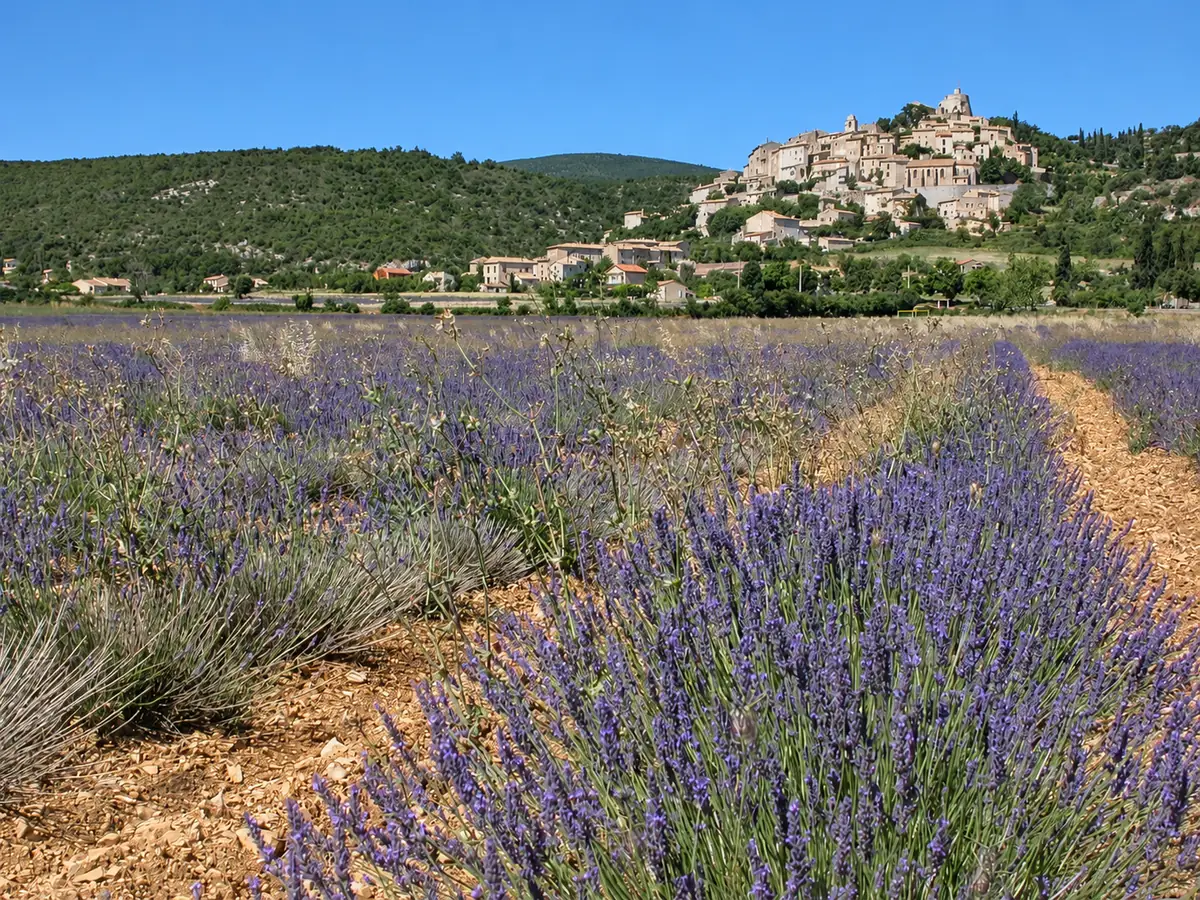
Seen from the plain, Simiane’s houses rise in tiers on a promontory at the edge of the Albion plateau. The Rotonde stands at the top, above the closely packed façades and rooftops. In summer, lavandin fields bring colour to the foreground; during the rest of the year, farmland and woodland reveal the contours around the village.
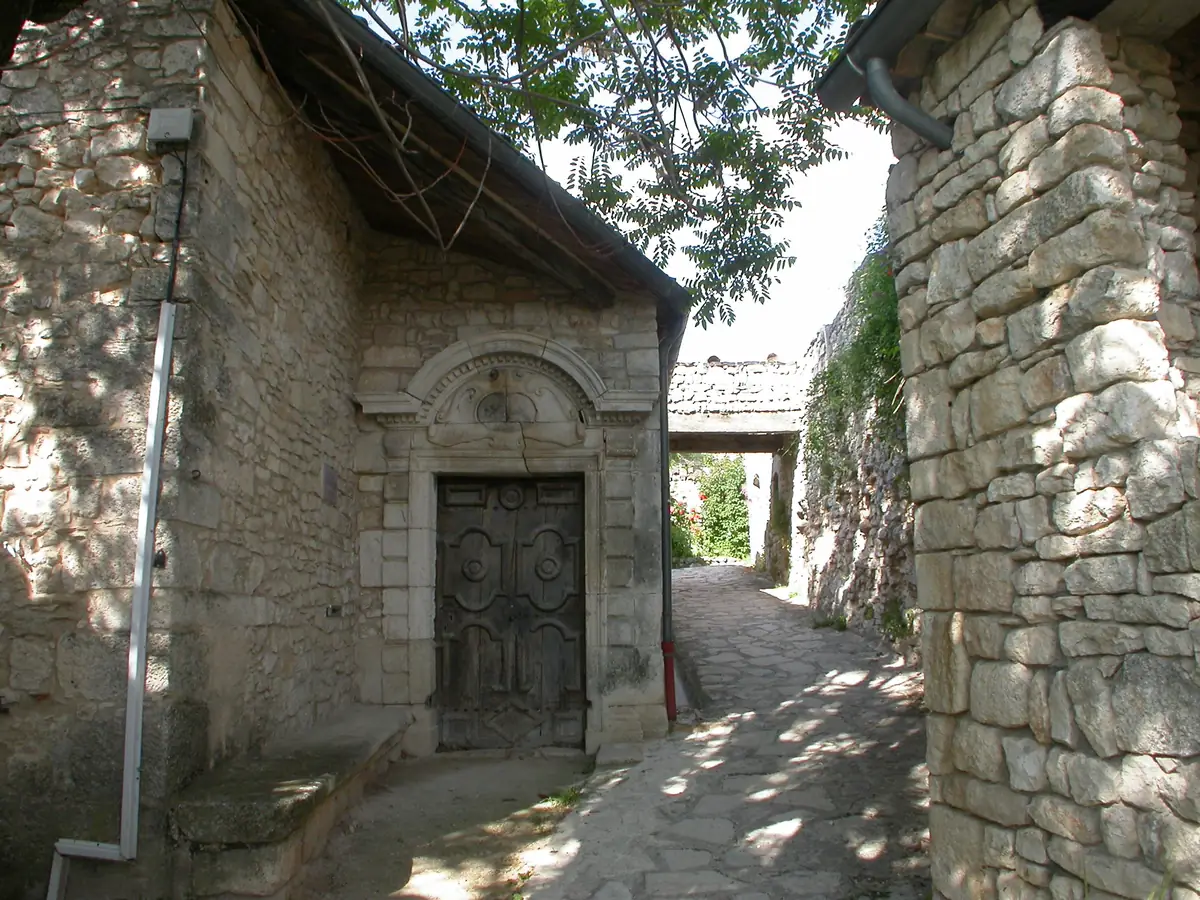
Continue on foot along sloping streets, stairways and passages beneath the houses. Mullioned windows stand alongside wooden doors with carved stone surrounds.
The houses of a prosperous town
Under the protection of the Agoult-Simiane family, agriculture, trade and glassmaking helped the village prosper. The plateau’s woodland supplied fuel for the furnaces; silica sand and lime obtained from limestone were used to make glass. The large houses of the 16th and 17th centuries belonged to prominent local families, merchants and glassmakers. Their façades facing the plain form an almost continuous frontage; on the street side, doors and windows distinguish one house from another.
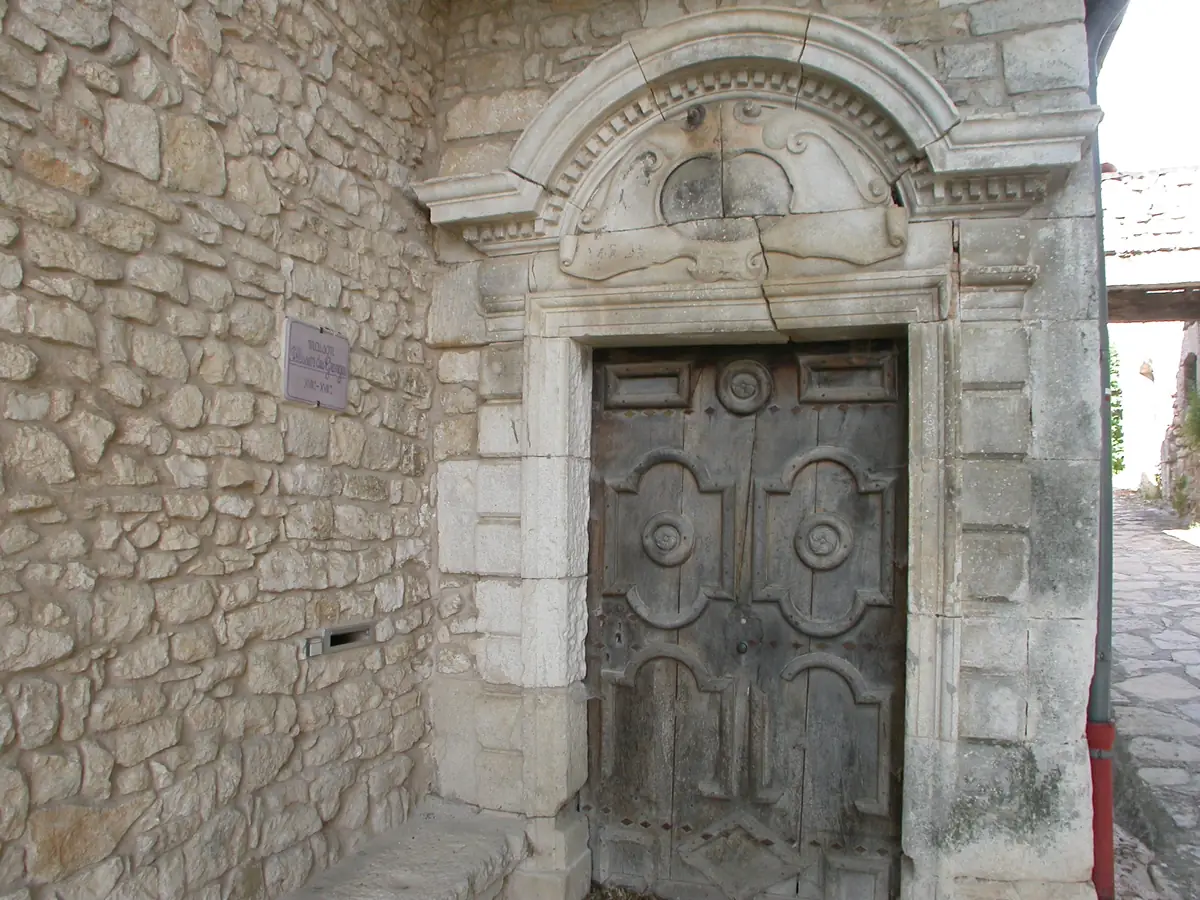
Stop at the doorway of the Pélissier des Granges house: its carved stonework echoes the motifs in the wood. Further along the paved lanes, former homes give way to workshops and galleries that open seasonally. Take time to explore these streets before entering the castle.
Trading beneath the market hall
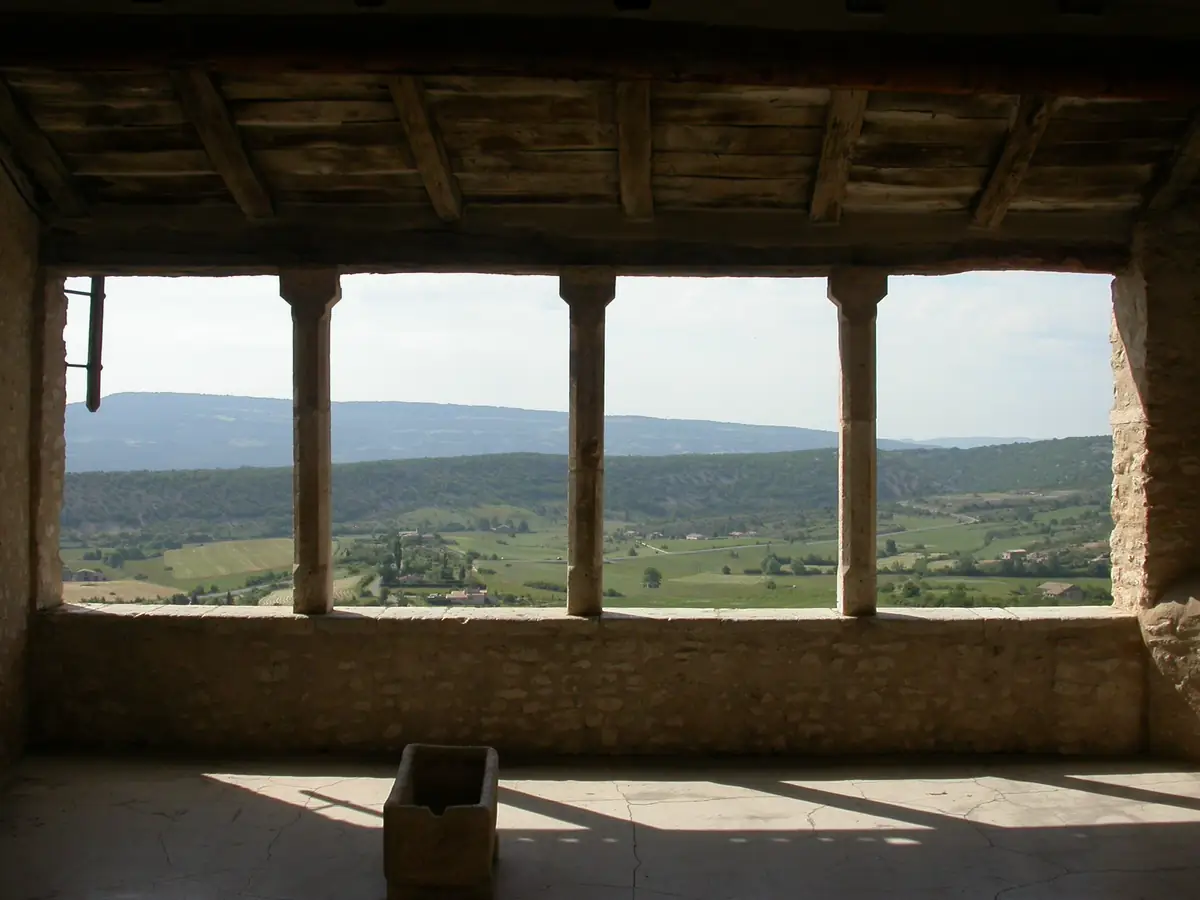
The covered market hall offers a shady stop, with views of the plain between its columns. It was built in the late 16th century, when public space was scarce between the houses and ramparts. To make room for it, the bailiff had the upper part of a block of houses purchased and the street widened.
Trading took place under the supervision of the “pezadou”, who checked weights and measures. The town’s old shops also supplied everyday goods and food.
The Agoult-Simiane castle
The castle is mentioned as early as 1031, but the Rotonde you visit today is later: it was built around 1200, in the late 12th or early 13th century. This keep helped defend a group of buildings arranged around a courtyard.
The rooms open to visitors show how the castle changed over time. One room presents the history of the site and the family, with architectural fragments found during excavations. The Renaissance apartment retains a sequence of adjoining rooms; a terrace built over the remains of a former residence overlooks the rooftops and farmland.

Beneath the Rotonde’s dome
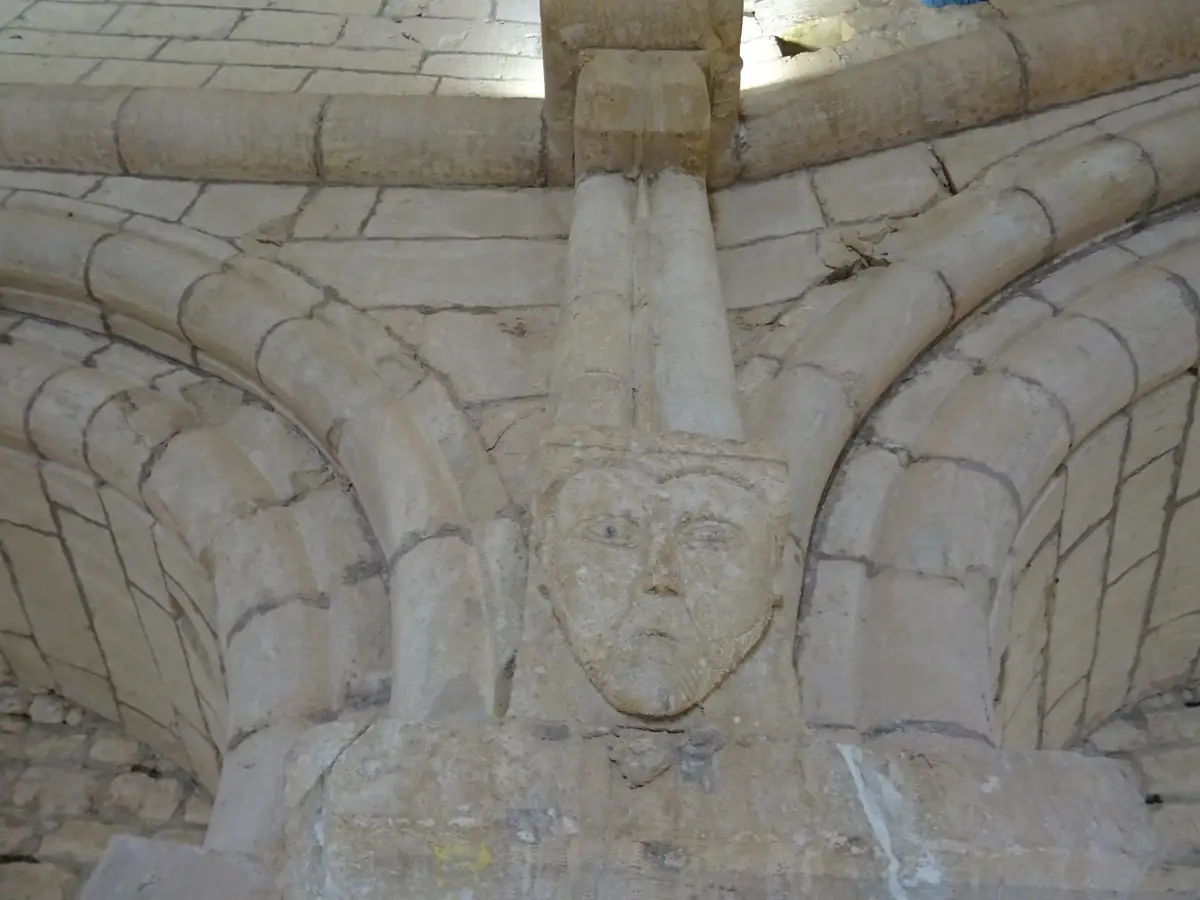
On the keep’s upper floor, a twelve-sided room fills the interior of the tower. Its arcading, columns and ribbed dome create a space far more elaborate than the thick outer walls suggest. The stonework is carefully fitted; the ribs rise towards the oculus, the circular opening that lights the vault.

Look closely at the carved masks: human faces, distorted features and animal figures. They form part of the medieval decoration of the arcading.
At the top, the ribs meet the oculus with a slight twisting movement. Their layout is not perfectly regular.

Music and lavender at the castle
In August, the room hosts the Riches Heures Musicales de la Rotonde. Founded in 1982, this early music festival brings voices and instruments into the monument’s distinctive acoustics. A concert offers another way to enjoy the building, with a programme and bookings separate from castle visits.
The castle’s Renaissance apartment also houses a space devoted to the region’s aromatic plants. The displays cover lavender, distillation and essential oils. It has its own opening hours: check them if this exhibition is a particular reason for your visit.
On towards lavender fields and Banon
The roads towards Revest-du-Bion and Sault lead to the lavender fields around Sault and the Albion plateau. Continue exploring the crops, meet growers or enjoy the seasonal festivals in Ferrassières and Sault.
Banon is another stop before heading towards Montagne de Lure. In winter, the Christmas nativity scene in Banon, installed by volunteers in the lower church, brings together the houses and trades of the surrounding countryside.
Practical information
Visiting Simiane-la-Rotonde
- Route and duration
- Allow an hour and a half to two hours for the upper village streets, stops and photographs. Add around forty-five minutes to an hour to visit the castle and its Rotonde.
- Parking
- The Rotonde car park, behind the castle, and the Place de la Combe car park provide access to the upper village with less climbing. The Place René-Char car park is below, in front of the town hall. The official website lists these car parks as free.
- Castle and Rotonde
- Walking around the village and entering the market hall is free; admission to the castle interior is charged and subject to seasonal opening. Check the official opening hours and prices before setting off.
- What to bring
- Comfortable shoes for the paved lanes, steps and sloping streets, plus water and sun protection in summer. Ask at reception about access to the castle’s various rooms according to your needs.
- Concerts and aromatic plants
- For August concerts, see the Riches Heures Musicales programme. The aromatic plants exhibition has its own opening hours, separate from those of the castle.
Plan your visit on the official Simiane-la-Rotonde tourism website.
Extend your stay
Guest houses to extend the getaway
These properties listed on the Portal are within 25 km as the crow flies of the location featured in this getaway. Visit their websites to plan your stay.
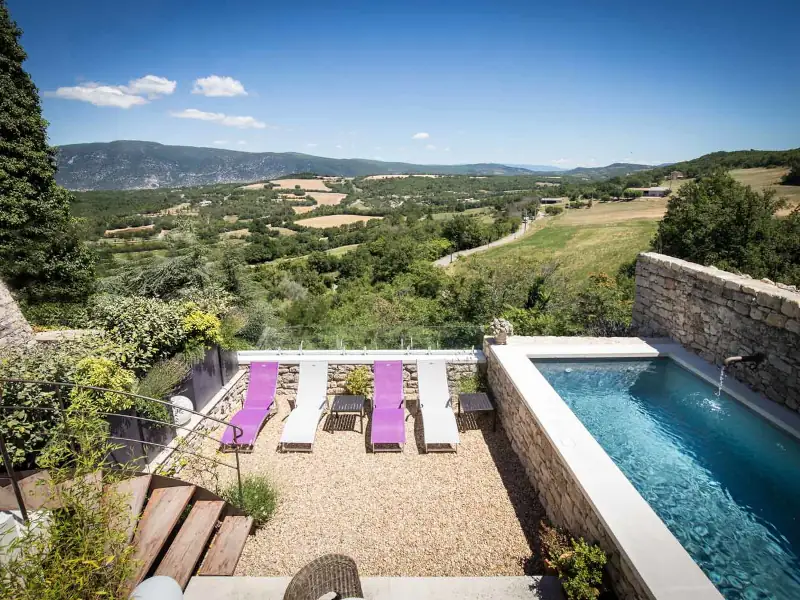
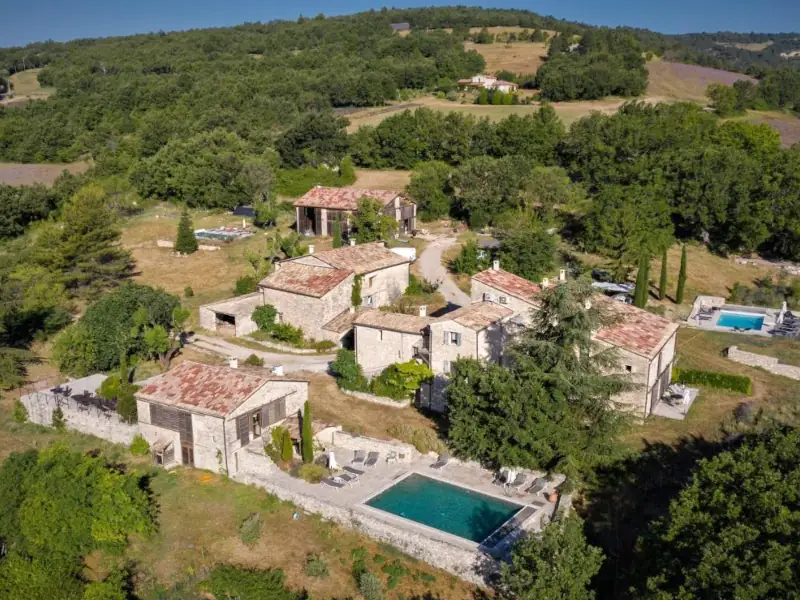

La Lauren
Charming vacation rental
Ferrassières
Visit website

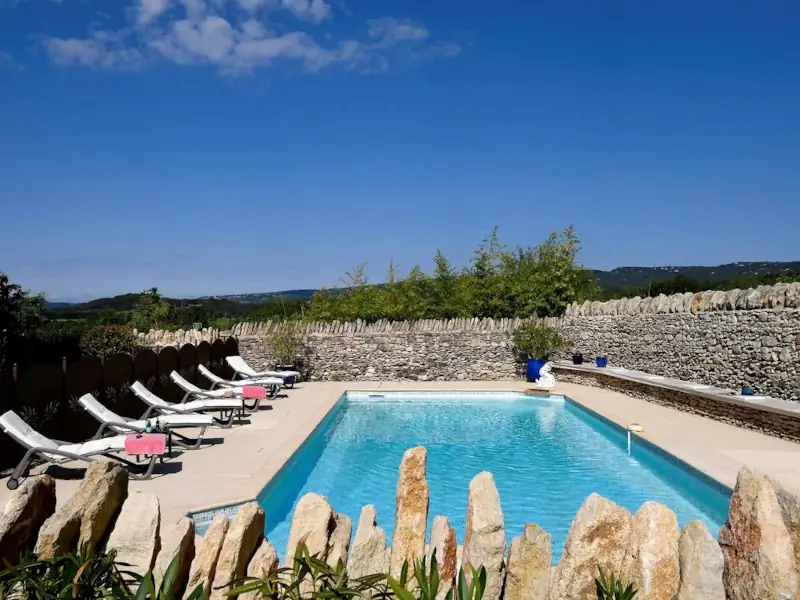
Gîte des Demoiselles
Charming Gite
Roussillon
Visit website
Last updated: