A getaway in the Cèze valley
The Sautadet waterfalls at the foot of La Roque-sur-Cèze
Text and photographs by Vincent Flachaire
At the foot of La Roque-sur-Cèze, the river divides into waterfalls, hollows out pools and disappears into cracks in the limestone. The bridge and village round off this visit beside the Cèze.
A river divided into waterfalls
Near the bridge at La Roque-sur-Cèze, the riverbed changes abruptly. The water meets a fissured limestone slab, splits into several channels and flows over closely spaced steps. The sound reaches you well before each cascade comes into view.
The Sautadet waterfalls do not form a single large fall. Their many channels spread across rocks, pools and gullies. The flow greatly alters the landscape: some features clearly visible at low water disappear when the Cèze rises.

How the potholes form
The rounded cavities are often called “giant’s kettles”. Pebbles carried around by swirling water gradually wear away the rock. Cracks in the limestone also guide the flow, which erosion widens over time.
Within just a few metres, this process creates very different shapes: an almost circular basin, a narrow ridge or a channel where water plunges out of sight. Some cavities connect beneath the rocks: an apparently calm surface can conceal a powerful current.

The mills of the Cèze
The power of the water also served the village’s activities. At the foot of the waterfalls, the Magnin mill produced oil and ground grain around 1850. It was later converted into an ochre mill, at a time when deposits were being worked in the neighbouring commune of Cornillon.
Its history took another turn in 1897: a Swedish entrepreneur bought it to manufacture calcium carbide for the production of acetylene used in lighting. The project came to nothing and the buildings were abandoned in 1902. The mill ruins survive near the waterfalls.

A medieval bridge over the Cèze
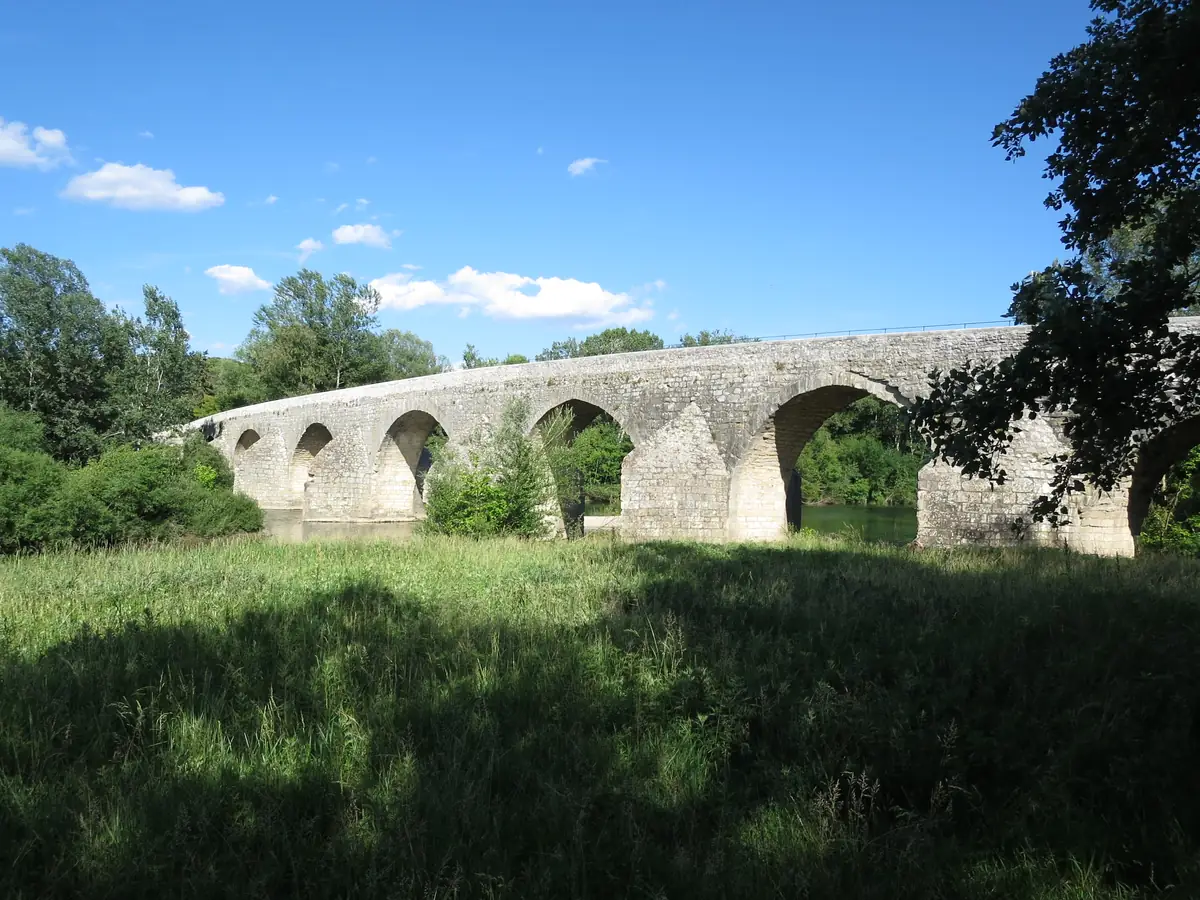
The Charles-Martel bridge carried the road from Uzès to Pont-Saint-Esprit. Built from the 13th century onwards, it crosses the Cèze on twelve arches. Its name remains a mystery: the municipality mentions both the Frankish leader and Father Charles Martel, a preacher who visited the village in the 19th century, without choosing between the two.
The bridge escaped the bombs in August 1944. Allied aircraft were trying to cut this crossing to hinder the German retreat, but the bombs hit the village and the riverbanks. Two people were killed, houses destroyed and the church damaged.
Up to La Roque-sur-Cèze
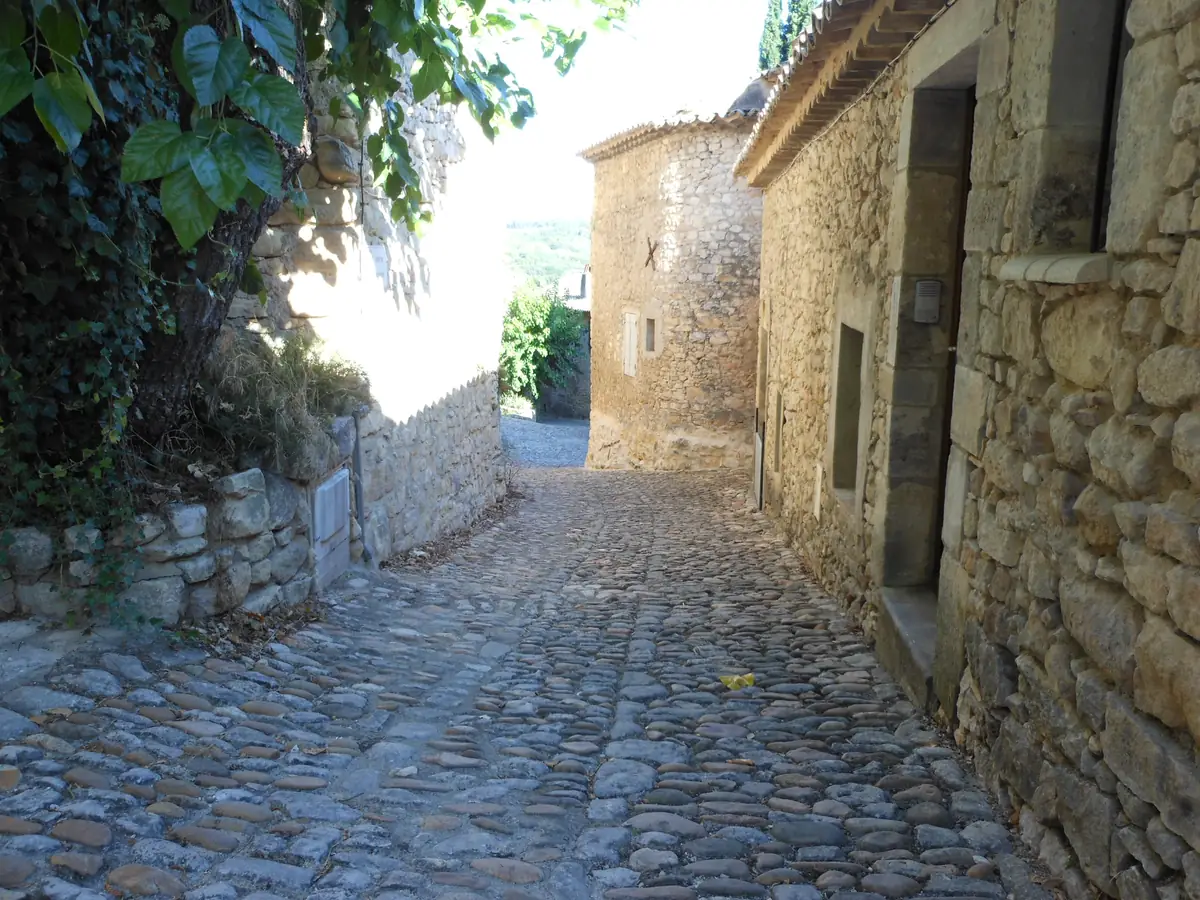
Above the bridge, cobbled lanes climb between stone houses. Covered passages and steps connect the different levels of the village, which stands on a rocky spur above the Cèze and the vineyards. The church in the lower village was not completed until 1883.
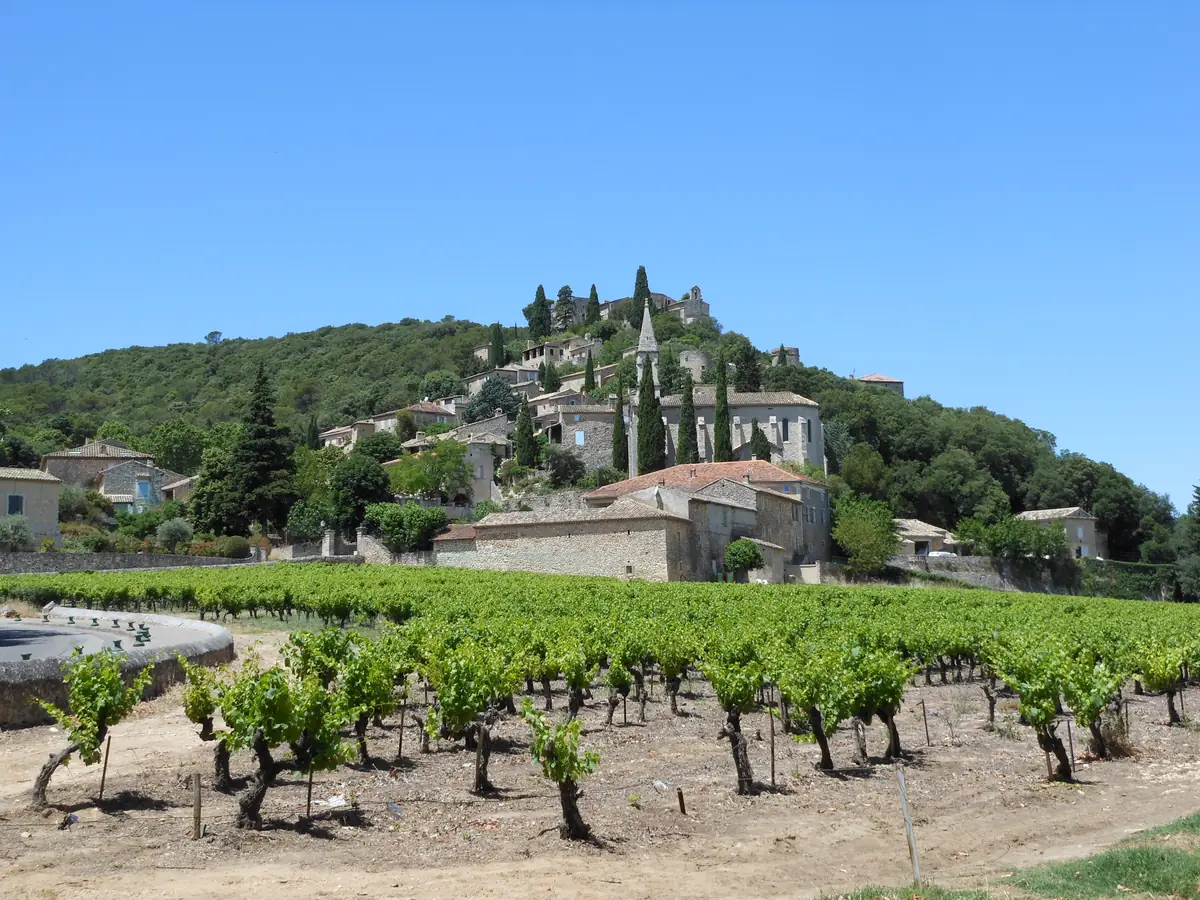
Higher up, the castle and its chapel occupy the top of the rock. Consecrated in 1156, the chapel served as the parish church until the lower one was built. Both are now privately owned. Water also imposed its constraints on this hilltop village: before the washhouse was completed in 1843, women went down to the Cèze to wash their laundry, then carried it back up to their homes.
Further along the Cèze valley
Further along the valley, Goudargues and its canal offer another riverside stop beneath the trees in the village centre.
The visit can also continue with a swim in the Cèze. Upstream, the pebble beach at the Pont du Courau in Saint-André-de-Roquepertuis lies beside the river beneath the arches. Downstream from the waterfalls, the Sautadet beach lies beyond the falls, outside the area where swimming is prohibited. Neither bathing spot is supervised.
Practical information
Visiting the Sautadet waterfalls
- Duration
- Allow around an hour to enjoy the site at an unhurried pace, and half a day if you include the bridge and the village of La Roque-sur-Cèze.
- Parking
- Use the signposted car parks near the village and waterfalls. Charges apply in some areas depending on the season; avoid parking on verges or private access roads.
- Swimming and access
- Swimming is prohibited in the waterfalls. Stay within permitted areas, away from the falls and channels, and keep children close. Wet rocks are slippery; respect barriers and signposted closures. For nearby beaches, check the bathing water quality and any restrictions displayed on site.
- When to visit
- Spring and autumn generally avoid the summer crowds. However, the flow depends on rainfall and can change quickly. In July and August, mornings or late afternoons are preferable for a quieter visit. Avoid the riverbanks during heavy rain or flooding.
- What to bring
- Shoes with grippy soles for the rocks and the village’s cobbled lanes, water and sun protection. Consult the municipal information on the waterfalls. The village history trail and its information panels cover the bridge, mills and village life.
To plan your visit: Provence Occitane.
Extend your stay
Guest houses in the Cèze valley
These properties listed on the Portal are within 25 km as the crow flies of the location featured in this getaway. Visit their websites to plan your stay.