


A getaway in Aix-en-Provence
The Four Dolphins, at the heart of the Mazarin district
Text and photographs by Vincent Flachaire
At the centre of the Mazarin district, water flows from four stone dolphins. From the square, straight streets lead to carved doorways, historic townhouses and the museums of Aix-en-Provence.
Jean-Claude Rambot’s dolphins
In 1667, sculptor Jean-Claude Rambot created this fountain on Place Saint-Michel, renamed Place des Quatre-Dauphins. The animals surround an obelisk topped with a pine cone. With their raised tails, bulging eyes and open mouths, these Baroque dolphins look more like fantastic creatures than marine animals.
From the edge of the pool, you can make out the scales, fins and waves carved beneath the bodies. The pool is made of stone from the Sainte-Baume, while the dolphins’ tail fins are carved from Calissanne stone. Walk around the fountain to observe all four animals and the details of their decoration.

The grid of streets in the Mazarin district
From the fountain, Rue Cardinale and Rue du Quatre-Septembre run in straight lines on either side of the square. This grid dates from the expansion of Aix initiated in 1646 by Michel Mazarin, the city’s archbishop and brother of the cardinal.
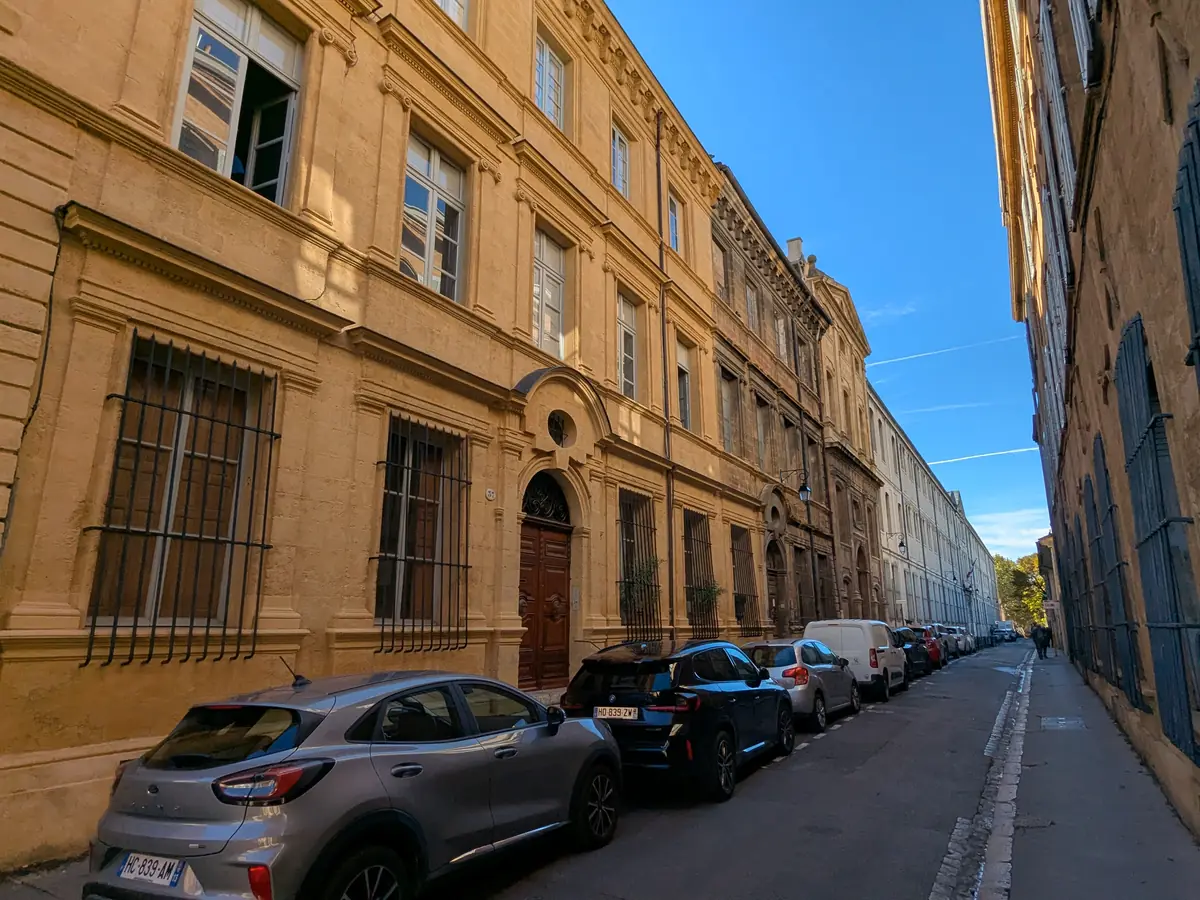
Commissioned to draw up the new district’s plan, Jean Lombard took inspiration from Italian Renaissance urban design. Along these regular streets, members of the parliament and wealthy families of Aix gradually built their townhouses.

The hackberry tree and the Olivari doorway
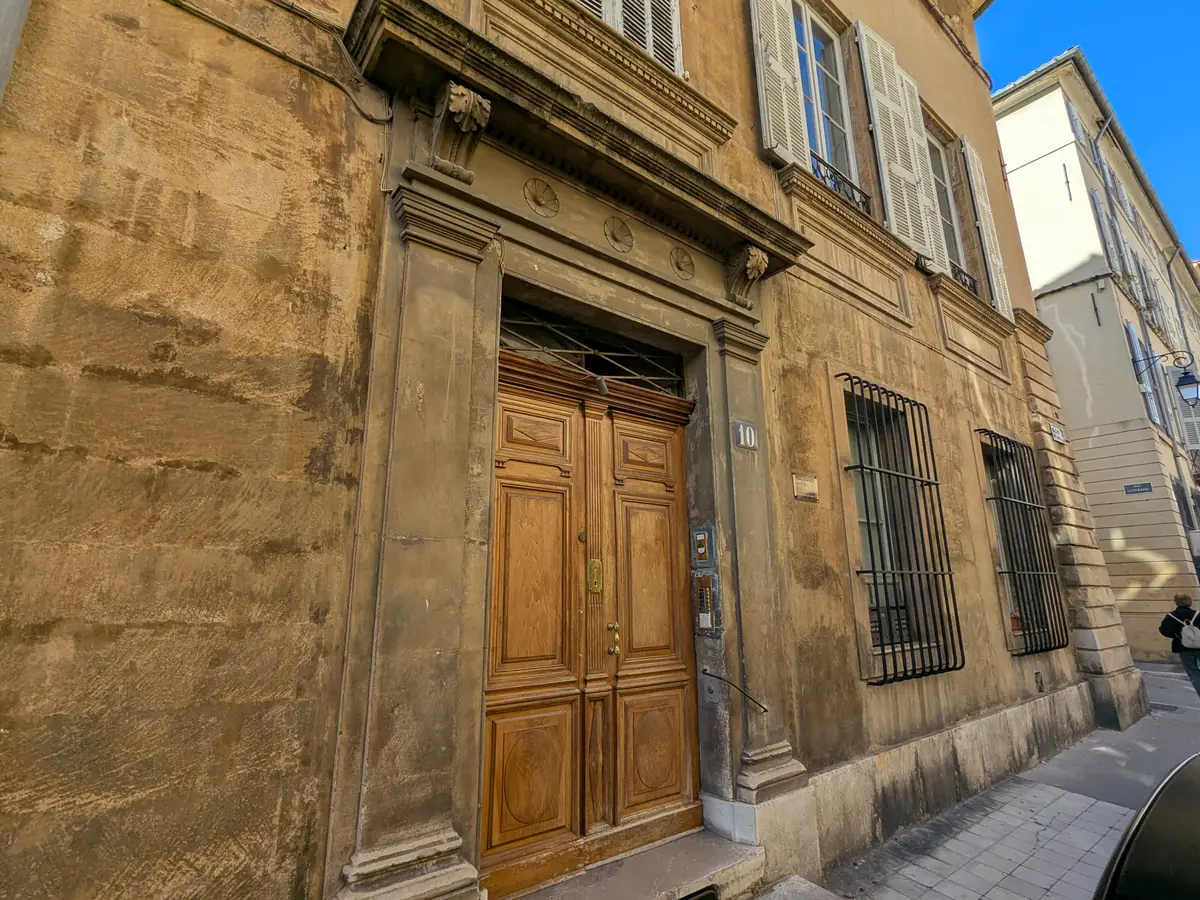
A century-old hackberry tree was felled when the square was laid out. According to the history published by the city, its wood was used for cabinetmaking, notably to restore the entrance door of the Hôtel d’Olivari at 10 Rue du Quatre-Septembre. The branches alone are said to have provided enough wood for this monumental door.
Two museums to extend your walk
To explore the inside of a historic townhouse, head to the Hôtel de Caumont on Rue Joseph-Cabassol. Begun in 1715 for a senior magistrate of the Court of Accounts, this residence between courtyard and garden now houses an art centre. Its historic rooms and gardens complement the temporary exhibitions.
Another option is to follow Rue Cardinale east to Saint-Jean-de-Malte church and the Musée Granet. Its collections include Old Master paintings, works by Granet and Cezanne, and a section devoted to modern art. Choose a visit to suit your interests and the time available.
Return to the Cours Mirabeau and the old town
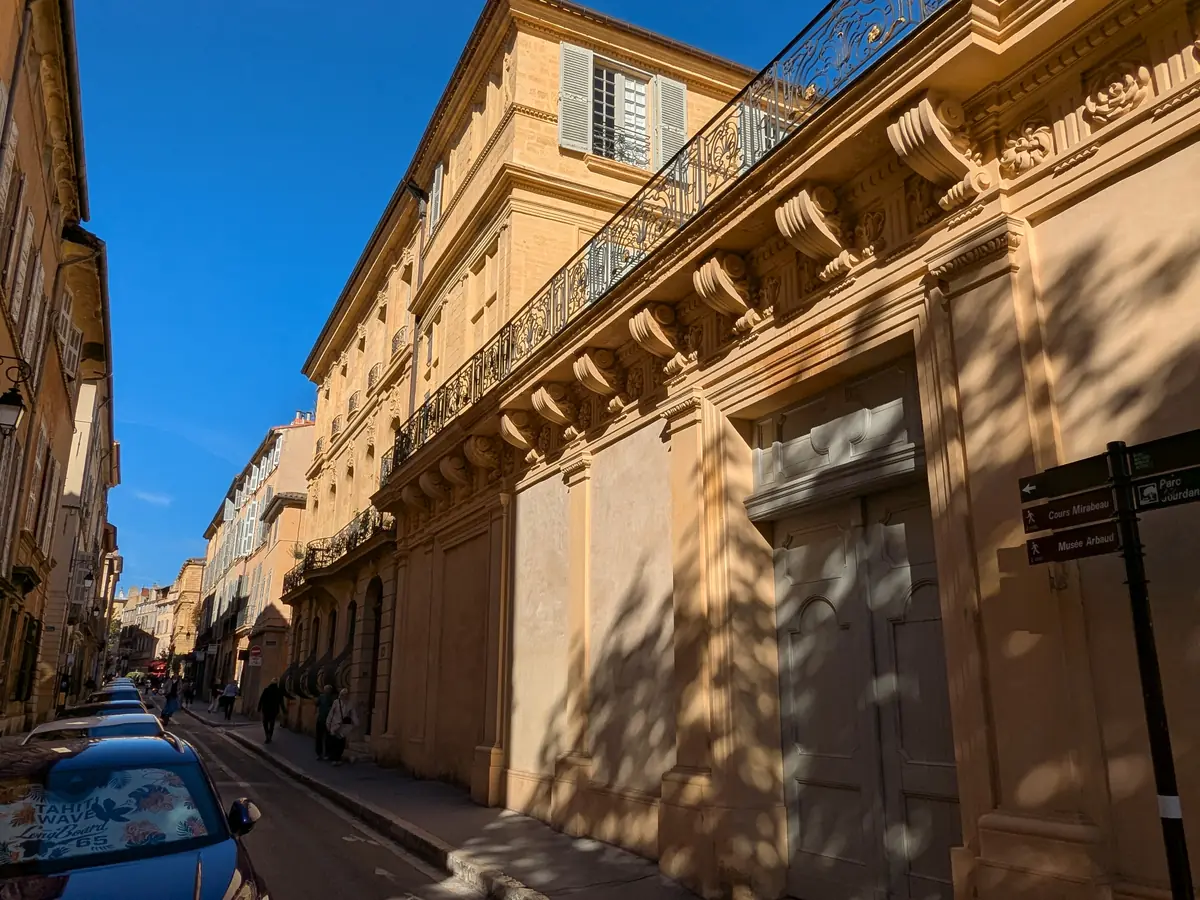
Rue du Quatre-Septembre leads back to the Cours Mirabeau. Across the avenue, the streets of the old town take you to the former grain hall and the town hall. In the morning, the daily market on Place Richelme extends the walk among stalls and café terraces.
Practical information
A walk through the Mazarin district
- Location and access
- Place des Quatre-Dauphins lies south of the Cours Mirabeau, at the junction of Rue Cardinale and Rue du Quatre-Septembre. Access to the square is free and unrestricted.
- Suggested duration
- Allow 30 minutes to an hour for the fountain, nearby streets and a few photo stops. Add time for museum visits.
- Walking around the district
- The square and neighbouring streets are open to traffic: use the pavements when looking at the façades. Private townhouses are not freely accessible.
- Nearby museums
- The Hôtel de Caumont on Rue Joseph-Cabassol offers historic rooms, gardens and exhibitions. The Musée Granet is on Place Saint-Jean-de-Malte. Check opening hours, admission prices and programmes before choosing your visit.
To plan your stay: Aix-en-Provence tourist office.
Extend your stay
Guest houses around Aix-en-Provence
These properties listed on the Portal are within 25 km as the crow flies of the location featured in this getaway. Visit their websites to plan your stay.

Campagne Chastel
Charming bed and breakfast and Gite
Aix-en-Provence
Visit website
La Ferme
Charming bed and breakfast
Saint-Marc-Jaumegarde
Visit website

Last updated: