


A getaway in Provençal Drôme
La Garde-Adhémar, from the hilltop village to the Val des Nymphes
Text and photographs by Vincent Flachaire
Saint-Michel church in La Garde-Adhémar overlooks the Rhône valley. A visit to the village takes in its lanes, the Jardin des Herbes and the washhouses, before continuing a little further away to the Val des Nymphes.
The Adhémars’ fortified village
The name “La Garde”, recorded in 1119, recalls the village’s defensive role. From this rocky spur, the Rhône valley and the Rieu valley could be watched over. An initial enclosure protected the castle, Saint-Michel church and a few houses.

“Adhémar” is the name of the noble family that owned the village and also held estates in Montélimar and Grignan. In the 12th and 13th centuries, people from the Val des Nymphes settled in the fortified village under the lords’ protection. The settlement grew and a second enclosure was built. Gates, vaulted passages and surviving ramparts still line the walk through its streets.

Saint-Michel and its two apses
Saint-Michel church dates from the 12th century. Both ends terminate in an apse, a rounded structure: one to the east, the other to the west. This arrangement of two opposing apses is rare in Provençal Romanesque architecture.
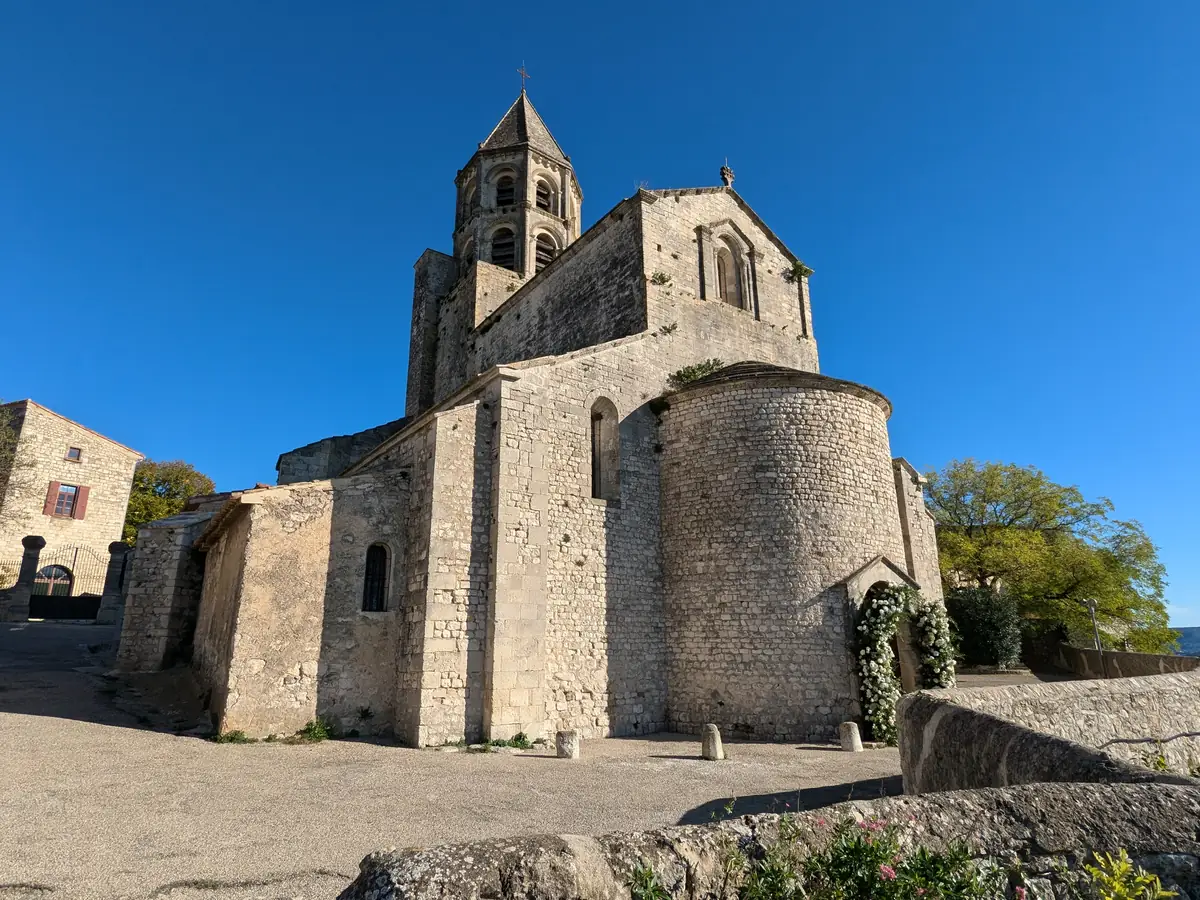
The bell tower owes part of its silhouette to the restoration of 1849–1850, supported by Prosper Mérimée: its upper storey and pyramidal spire date from this work. From around the church, the view extends across farmland and the main transport routes of the Rhône valley. Just below, the terraces of the Jardin des Herbes occupy the hillside.
The terraced Jardin des Herbes
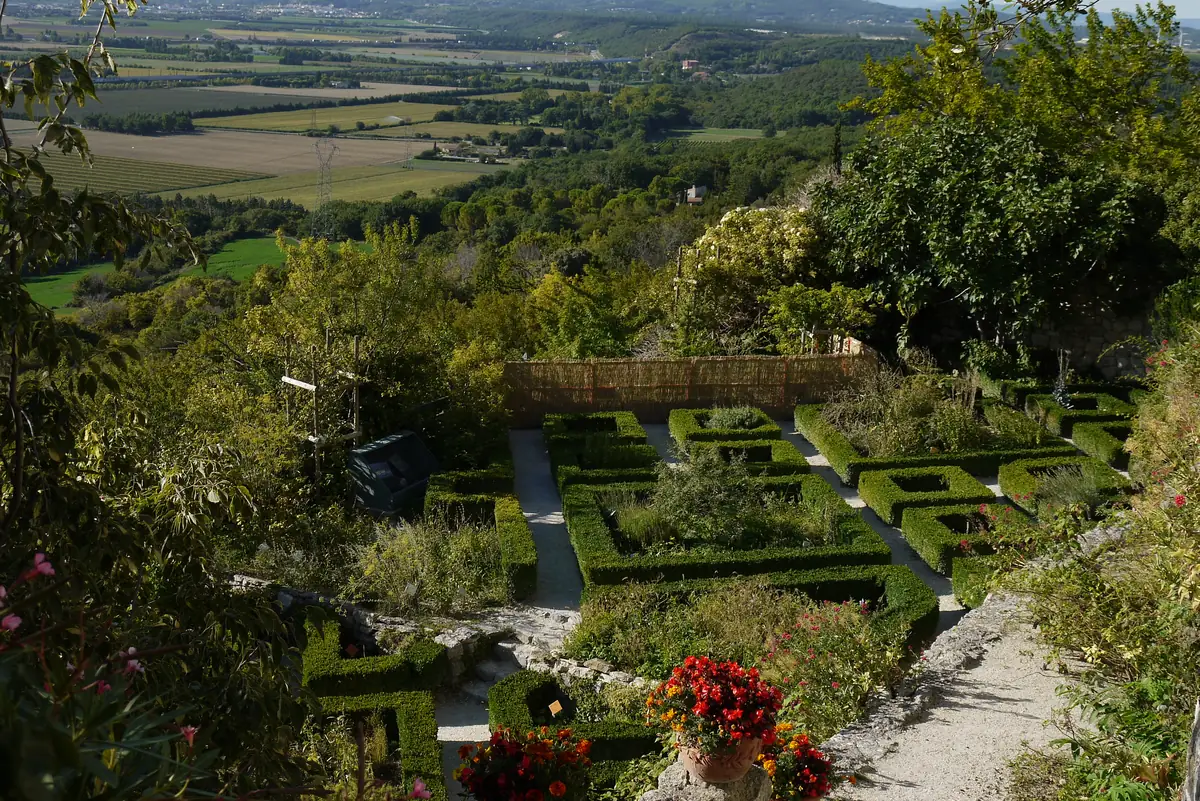
Created in 1990 by Danielle Arcucci, the Jardin des Herbes brings together medicinal and aromatic plants on two levels. This contemporary garden is devoted to “simples”, the traditional name for plants used for their medicinal properties.
Medicinal plants are grouped in square beds on the upper terrace, with labels explaining their uses. Lavender, thyme and rosemary are among the plants growing further down. The plain remains visible beyond the beds.
Water outside the ramparts
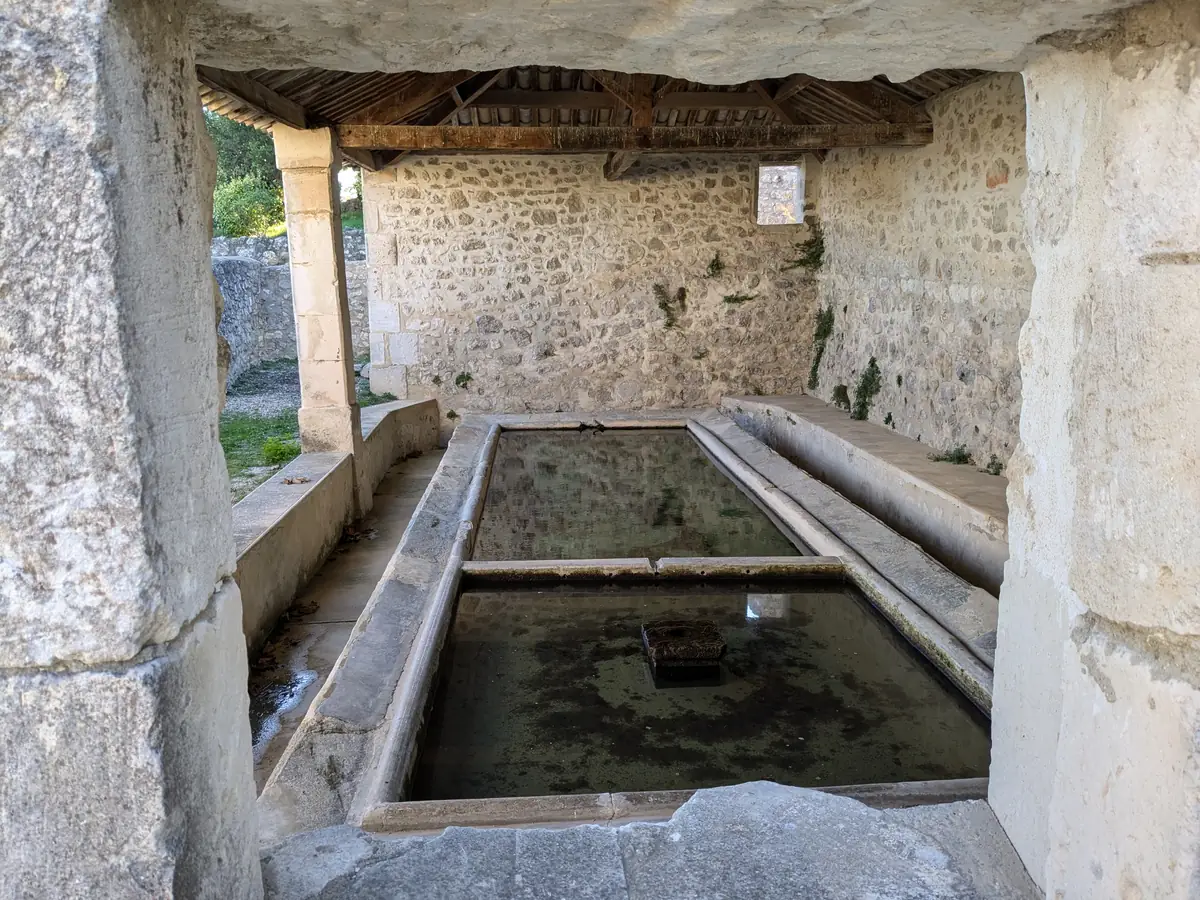
On this limestone plateau, obtaining water long made daily life difficult. The spring lay outside the medieval enclosure: people had to go down to fetch water, water their animals and wash their laundry.
The washhouses were roofed in 1842. In 1898, tapping a new spring finally supplied the large Saint-Michel fountain in the heart of the village. Water was now available close to the houses.
A stop at the Val des Nymphes
Around two kilometres from the village, a spring feeds the pool at the Val des Nymphes, in front of Notre-Dame chapel. Beneath the oaks, this small valley contrasts with the plateau overlooking the Rhône. Water drew people here long before the Romanesque chapel was built.

The place takes its name from the ancient cult of the “Mother Nymphs”, deities of water and fertility. A small votive altar dedicated to them bears witness to this history. It is now displayed at the entrance to Saint-Michel church in the village.
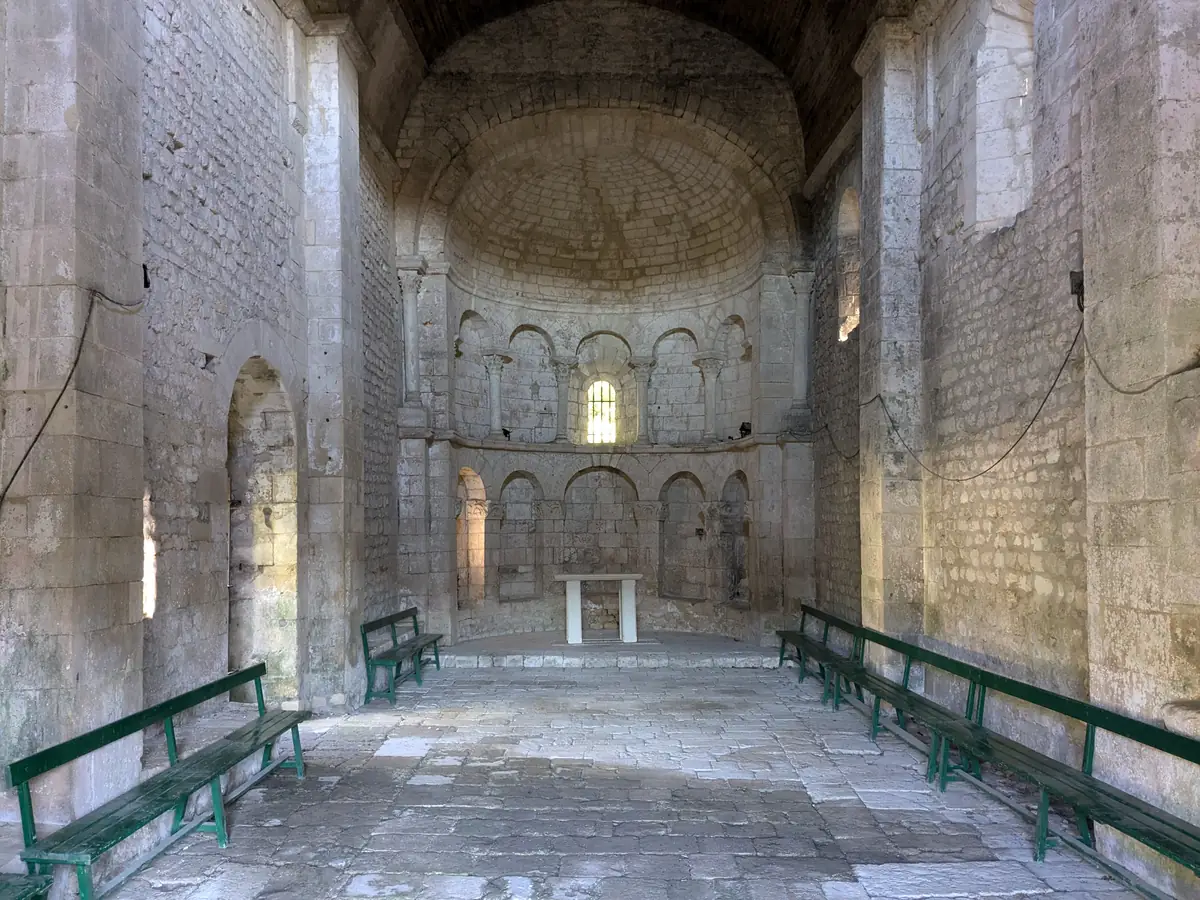
In the Middle Ages, a settlement developed around the springs, with several churches. Only Notre-Dame, built in the 12th century, survives today. It belonged to a priory dependent on Tournus Abbey in Burgundy. Its façade and apse bear decoration inspired by Antiquity. The side buttresses were added to strengthen the building on unstable ground.
Continue your getaway in Provençal Drôme
To the east, Grignan’s château overlooks lanes lined with rose bushes. The getaway devoted to Grignan and its roses continues the exploration of the villages of Provençal Drôme.
Practical information
Planning a visit to La Garde-Adhémar
- Duration
- Allow one to two hours for the village, the area around the church and the garden. Add travel time and a stop at the Val des Nymphes.
- Parking and walking
- The Montjars visitor car park provides access to the centre on foot. The streets, stairways and paths to the terraces involve slopes and steps.
- When to visit
- Spring and autumn are pleasant seasons for walking through the village and garden. Flowering changes with the seasons. In summer, favour mornings or late afternoons to avoid the hottest hours.
- Church and Jardin des Herbes
- Check church opening times with the tourist office. The Jardin des Herbes is freely accessible, with steps between the terraces. See the garden presentation.
- Val des Nymphes
- The site is around two kilometres from the village, with parking nearby. The grounds around the chapel are freely accessible; the interior is not always open. See the Val des Nymphes visitor information.
To plan your visit: Drôme Sud Provence tourist office.
Extend your stay
Guest houses in Provençal Drôme
These properties listed on the Portal are within 25 km as the crow flies of the location featured in this getaway. Visit their websites to plan your stay.
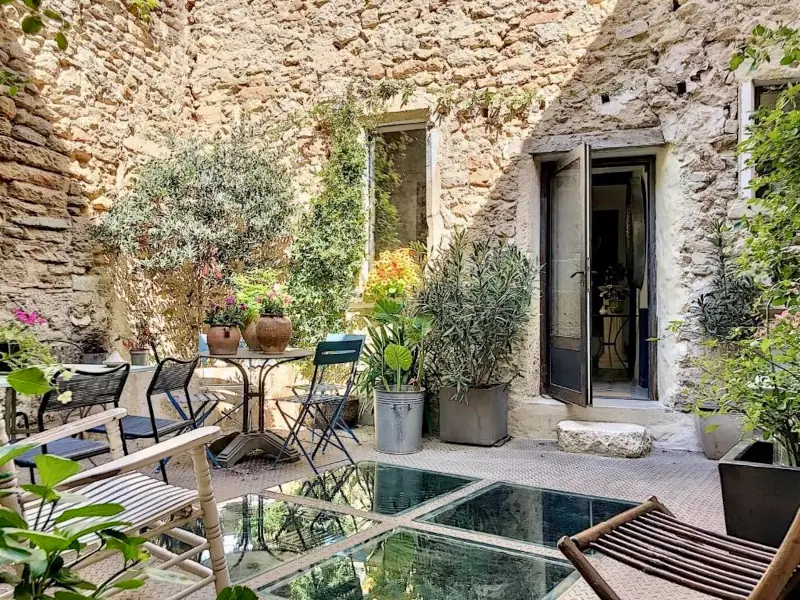
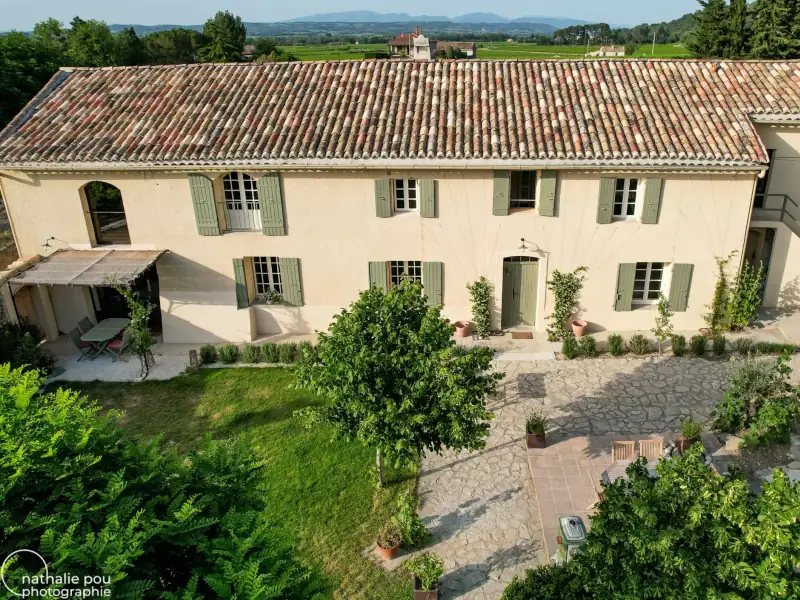
Le Mas des Poules
Charming bed and breakfast and Gîte
Saint-Roman-de-Malegarde
Visit website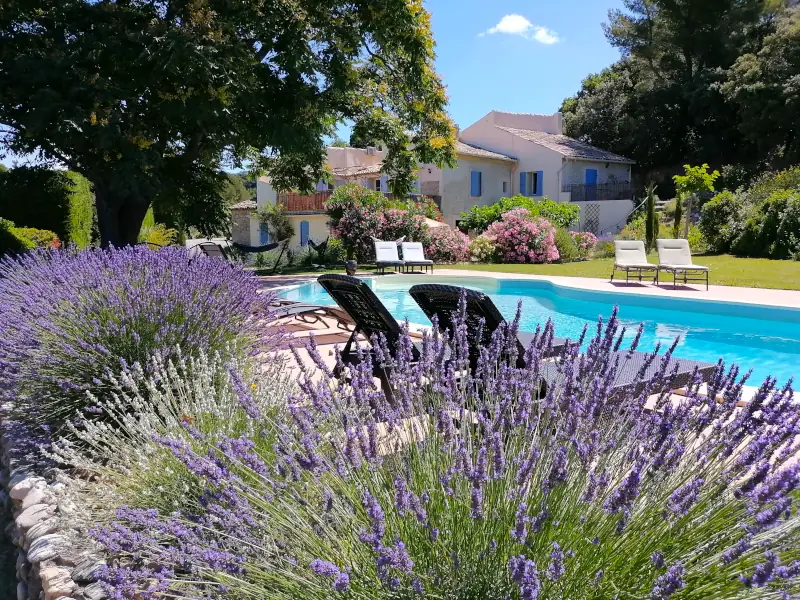

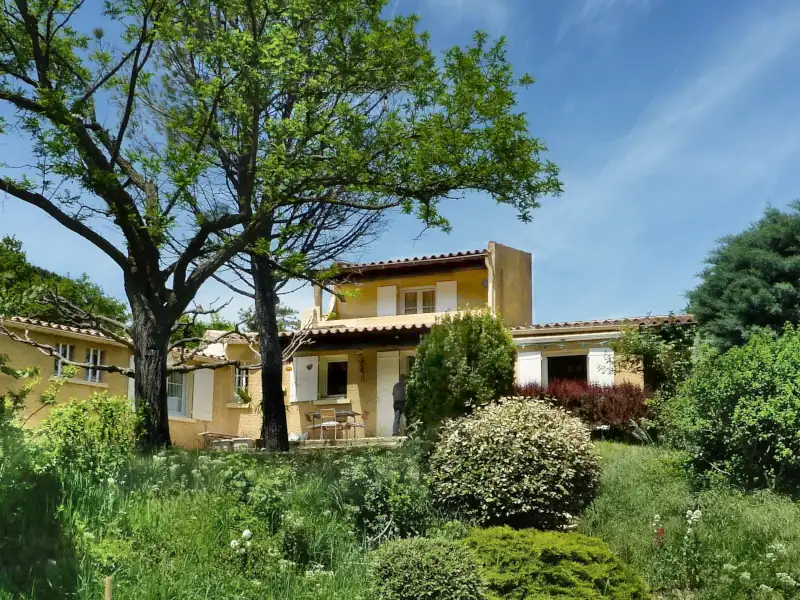
Tre Mas
Charming guest rooms
St Marcel-lès-Sauzet
Visit websiteLast updated: