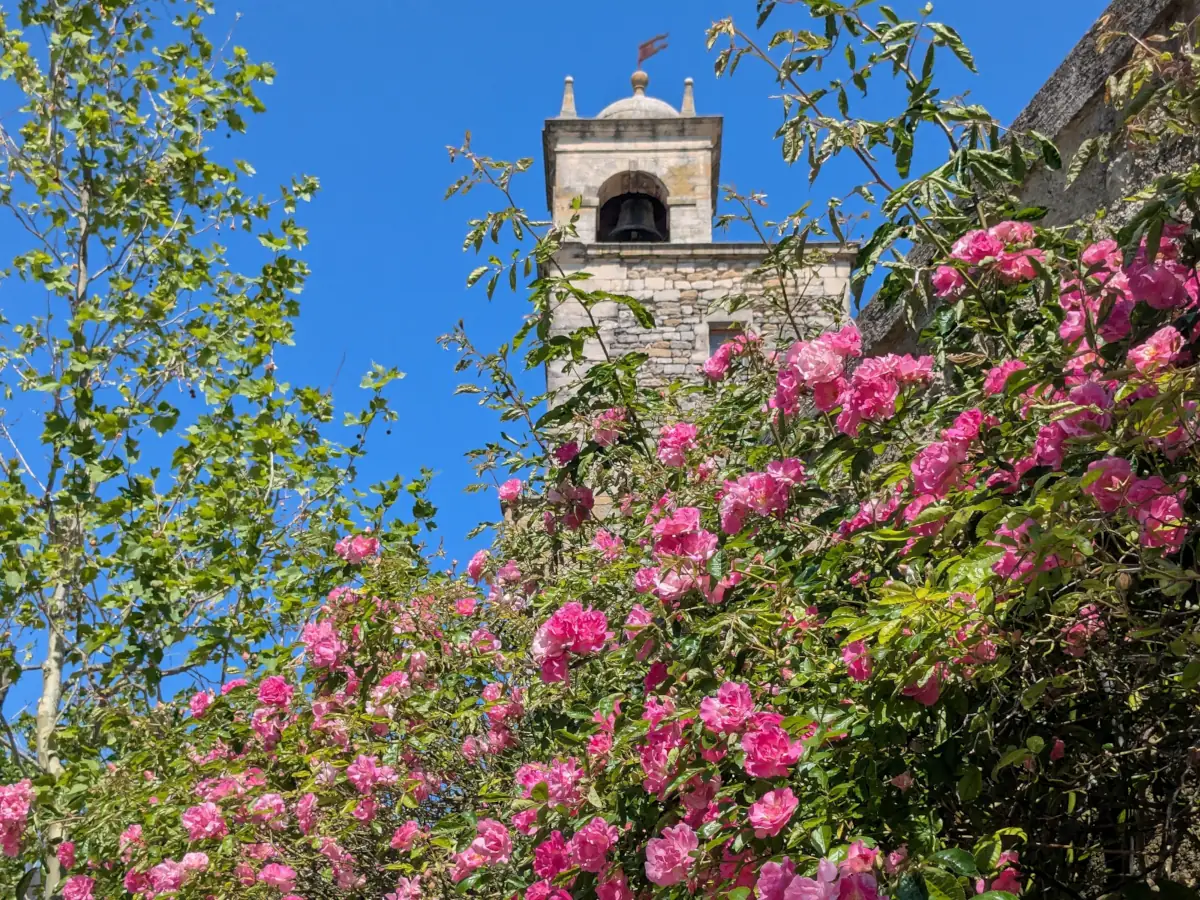
In Grignan, four hundred roses flower along walls, stairways and cobbled lanes. This open-air rose garden is best discovered on a walk through the village in May and June.
Four hundred roses planted in the streets
Roses grow at the foot of the walls, along the stairways and up the façades in a village whose stone lanes climb towards the rock. Nearly four hundred plants line the streets, and the old-rose trail takes in a good part of them.
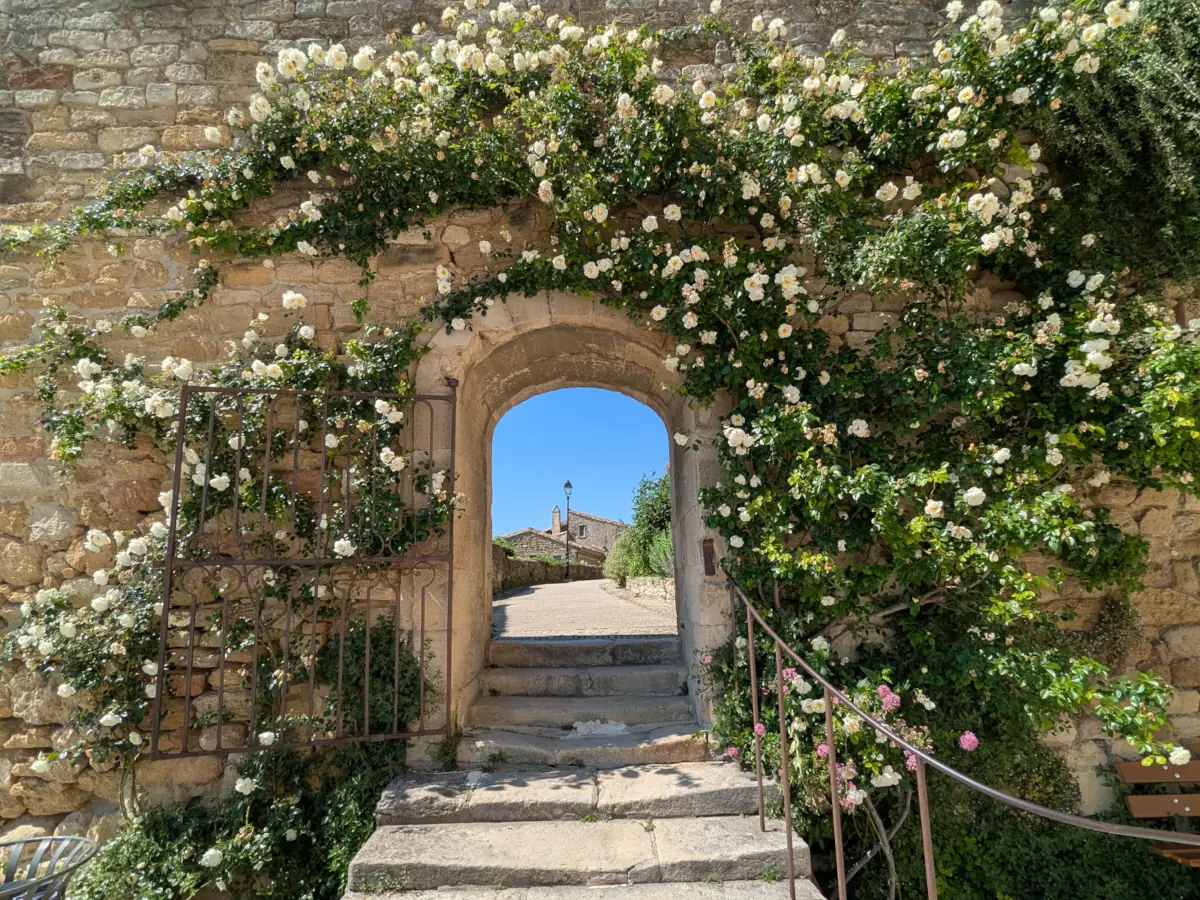
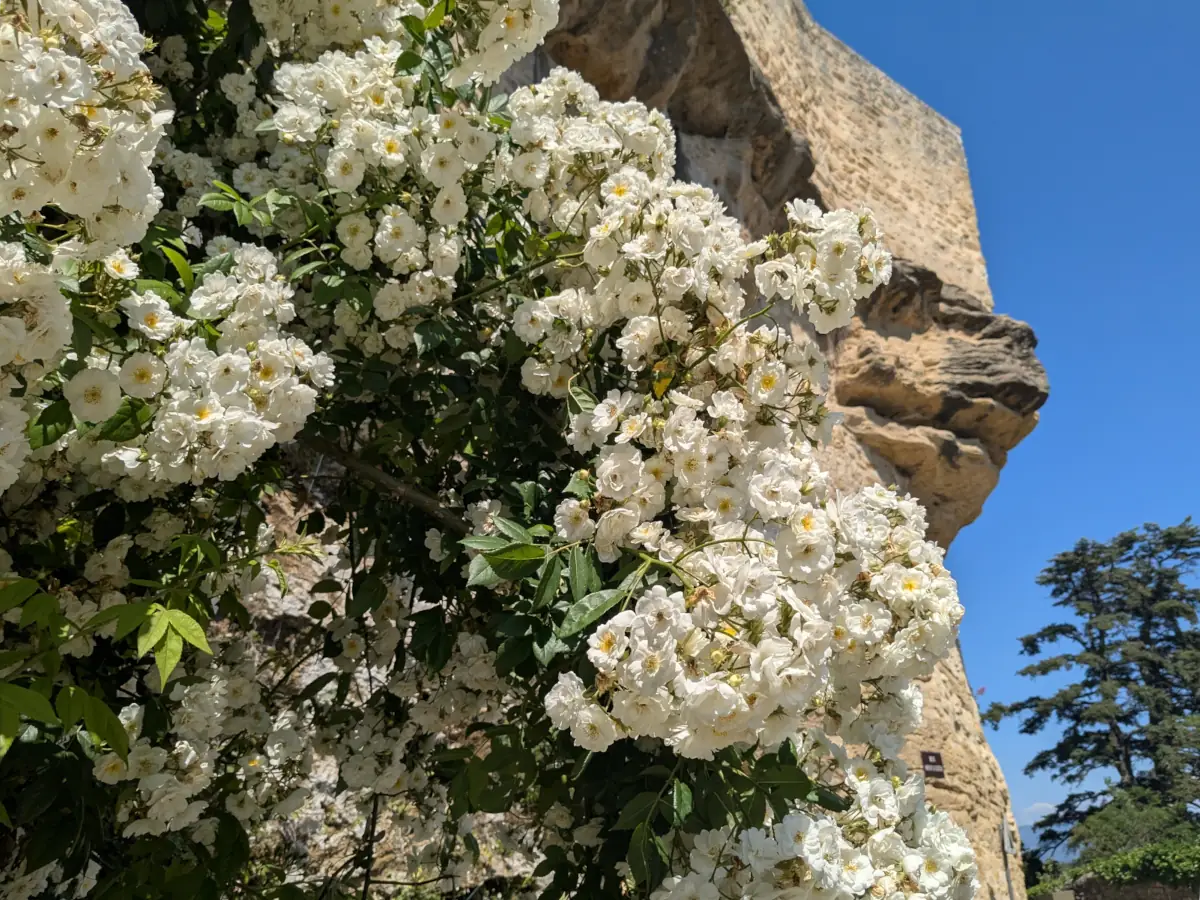
In flowering season, colour catches the eye and fragrance fills the air, changing the way the village is seen. Some climbing varieties reach the first floor of the houses; others grow into bushes at the foot of the cliffs, while rambling roses spill over and cover a retaining wall.
Every rose is identified
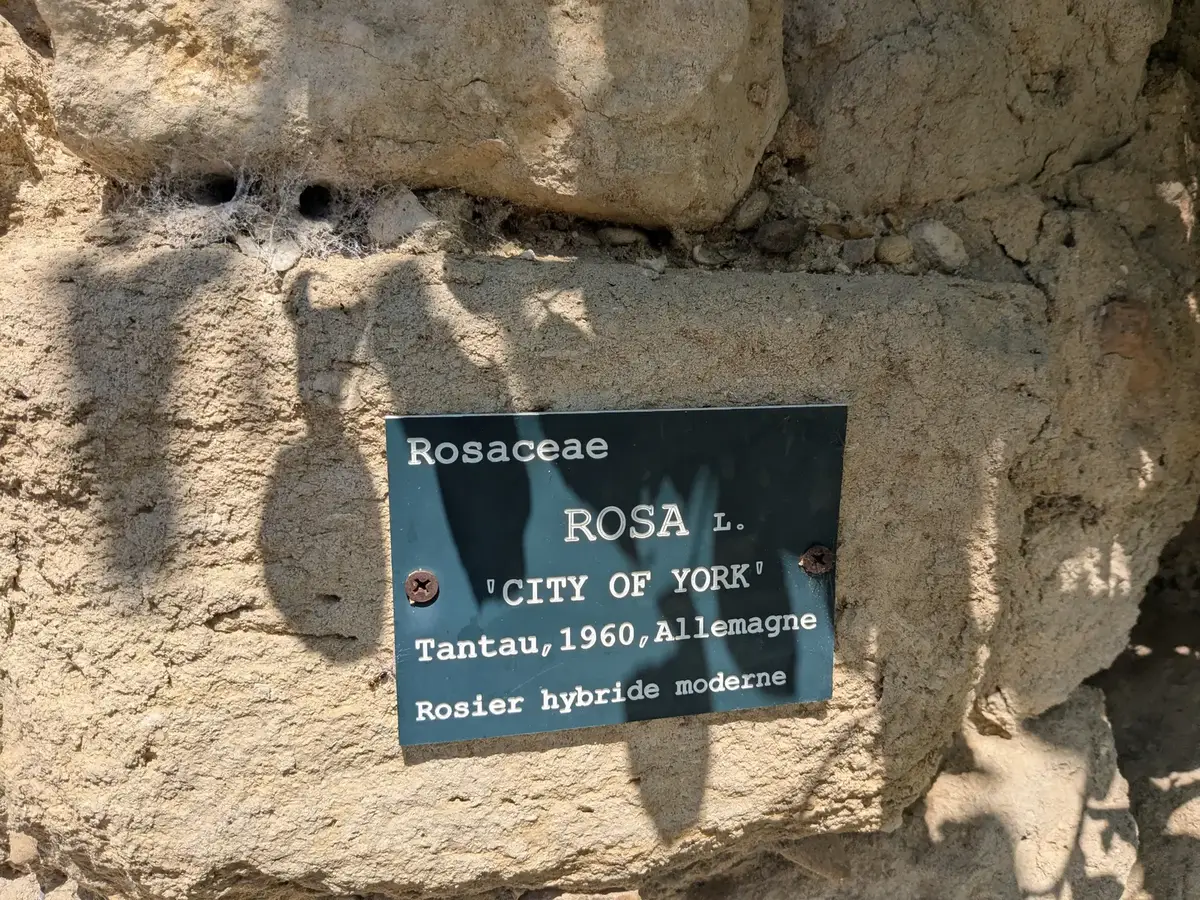
A small plaque is fixed into the wall beside each plant. It gives the botanical family, the cultivar name, the breeder, the year and country of introduction, then the classification. One of them reads: Rosaceae — ROSA L. — « City of York » — Tantau, 1960, Germany — modern hybrid rose. Explanatory sheets are available at the town hall to follow the trail.
The association belongs to the « Villages botaniques de la Drôme » network, whose member villages each develop a plant trail. In Grignan, old roses are its theme.
An association active since 1991
The plantings are the work of the Grignan, Pierres et Roses anciennes association, founded in 1991 and now with around seventy members. It maintains the trail, holds talks and leads guided walks through the village in spring.
Old rose groups are well represented — Alba, Centifolia, Bourbon and Tea hybrids — while the plaques also show modern hybrids planted for their long flowering season.
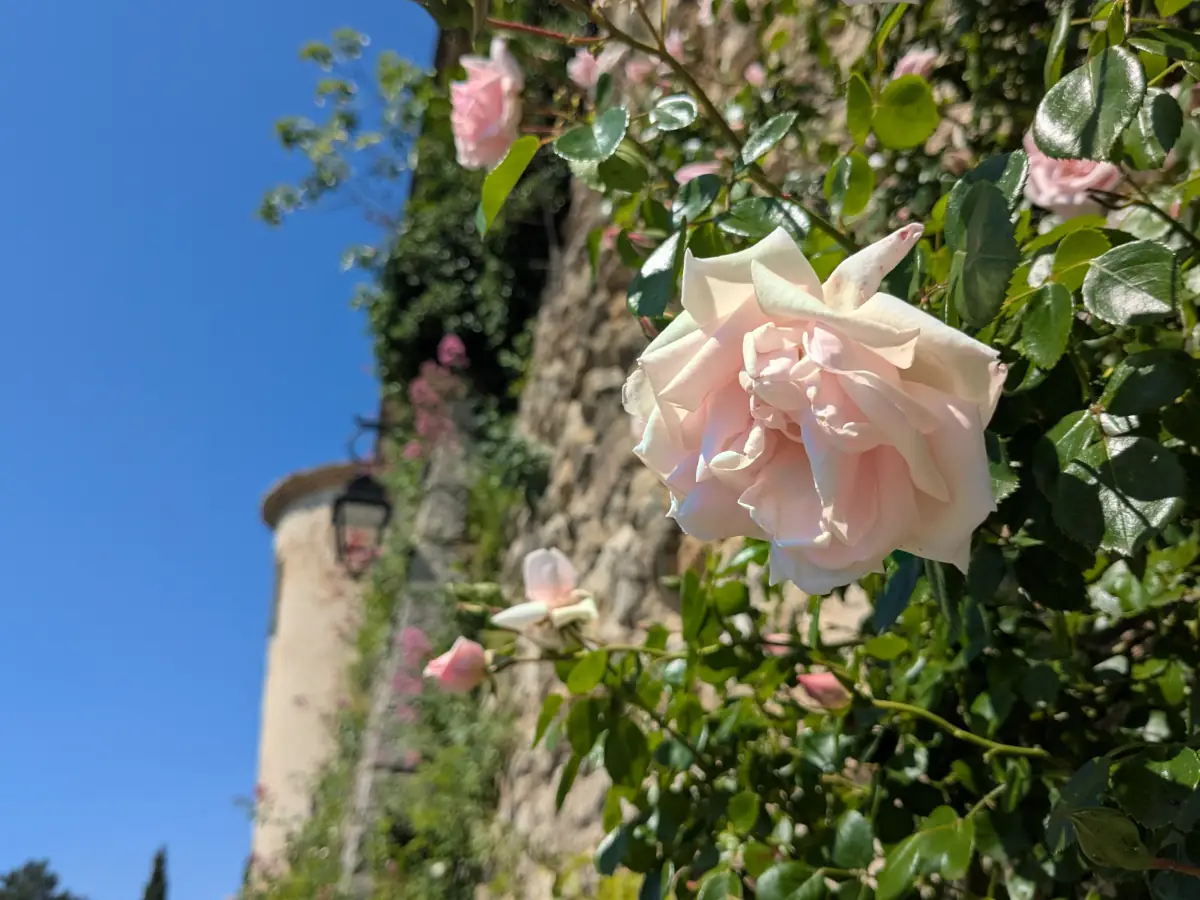
Two roses here bear the village's name. The first is labelled Françoise de Grignan, bred by Massad in 1995: a modern hybrid of Rosa spinosissima recalling Madame de Sévigné's daughter. The second, Mme de Grignan, has its bronze plaque set into the same wall.
From the belfry to the château, along the ramparts
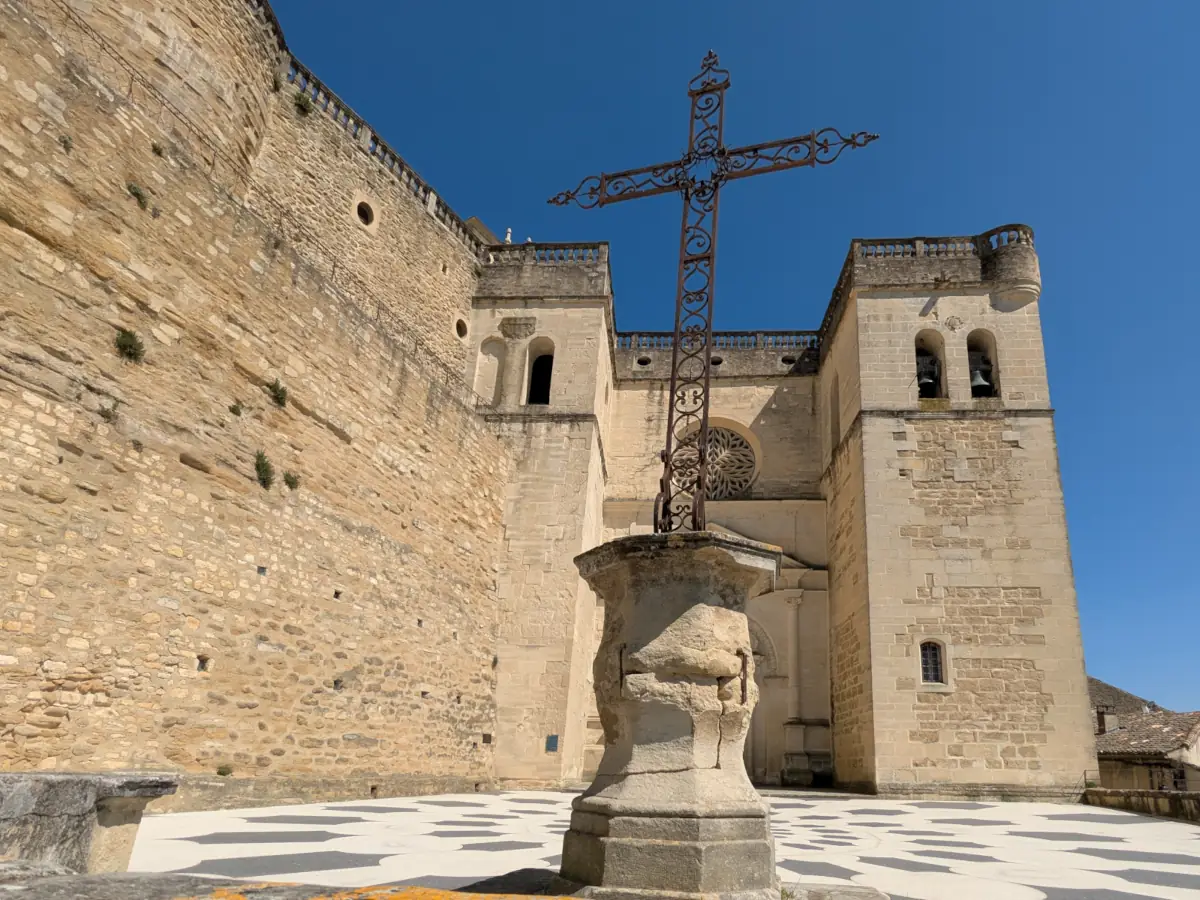
From the belfry, the trail follows Rue sous les Remparts, then Grande Rue, which climbs towards Saint-Sauveur collegiate church. Built between 1535 and 1542 on the south-west side of the rock, the church is both a stage on the trail and a landmark in the village skyline.
Beyond the forecourt, the rampart walk leads up towards the château. Roses accompany this climb between stone walls, gateways and narrow passages, linking the lower streets to the highest point of the village.
May and June, then lavender
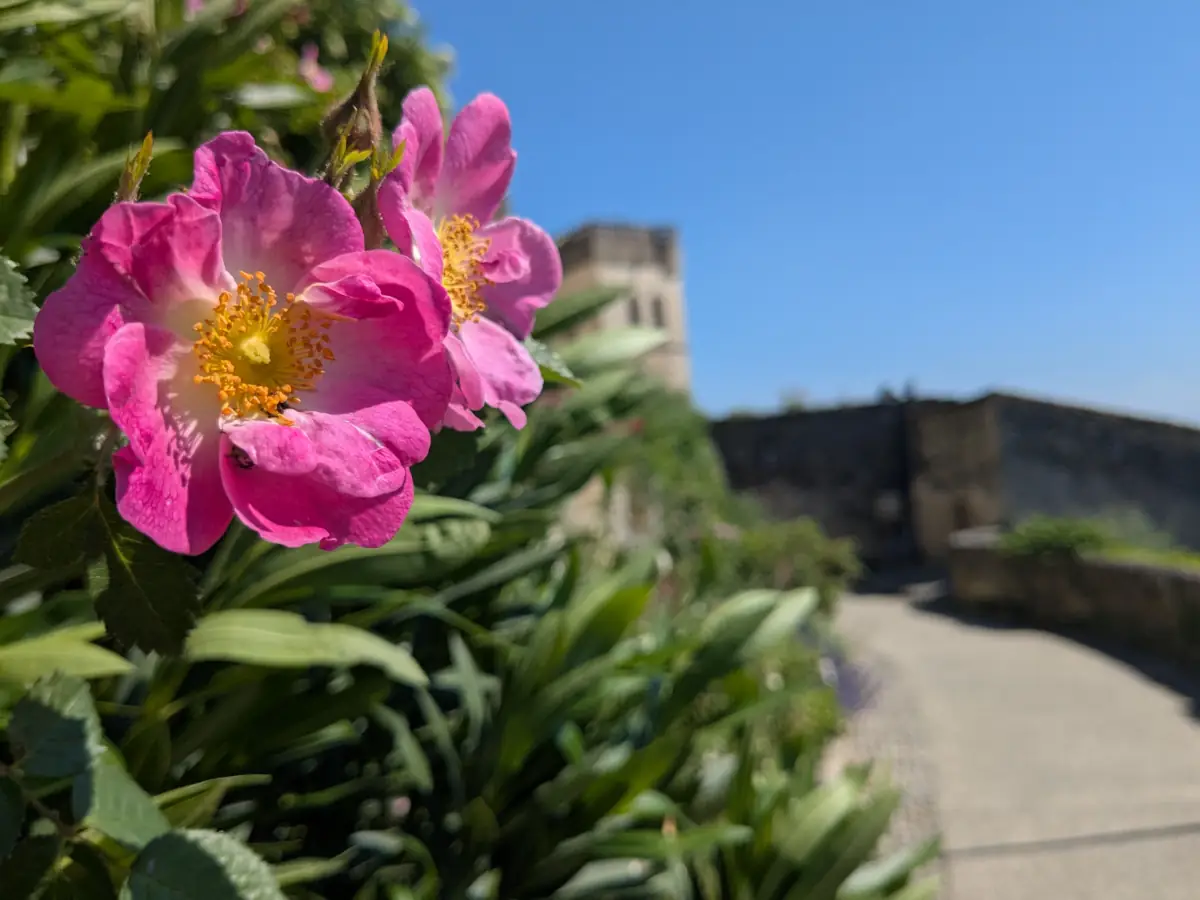
Flowering runs from May until late June, with a peak in May. This is the season for guided visits led by association members, by prior arrangement. The plants and their plaques remain in place throughout the year: the trail is open, with no enclosed garden.
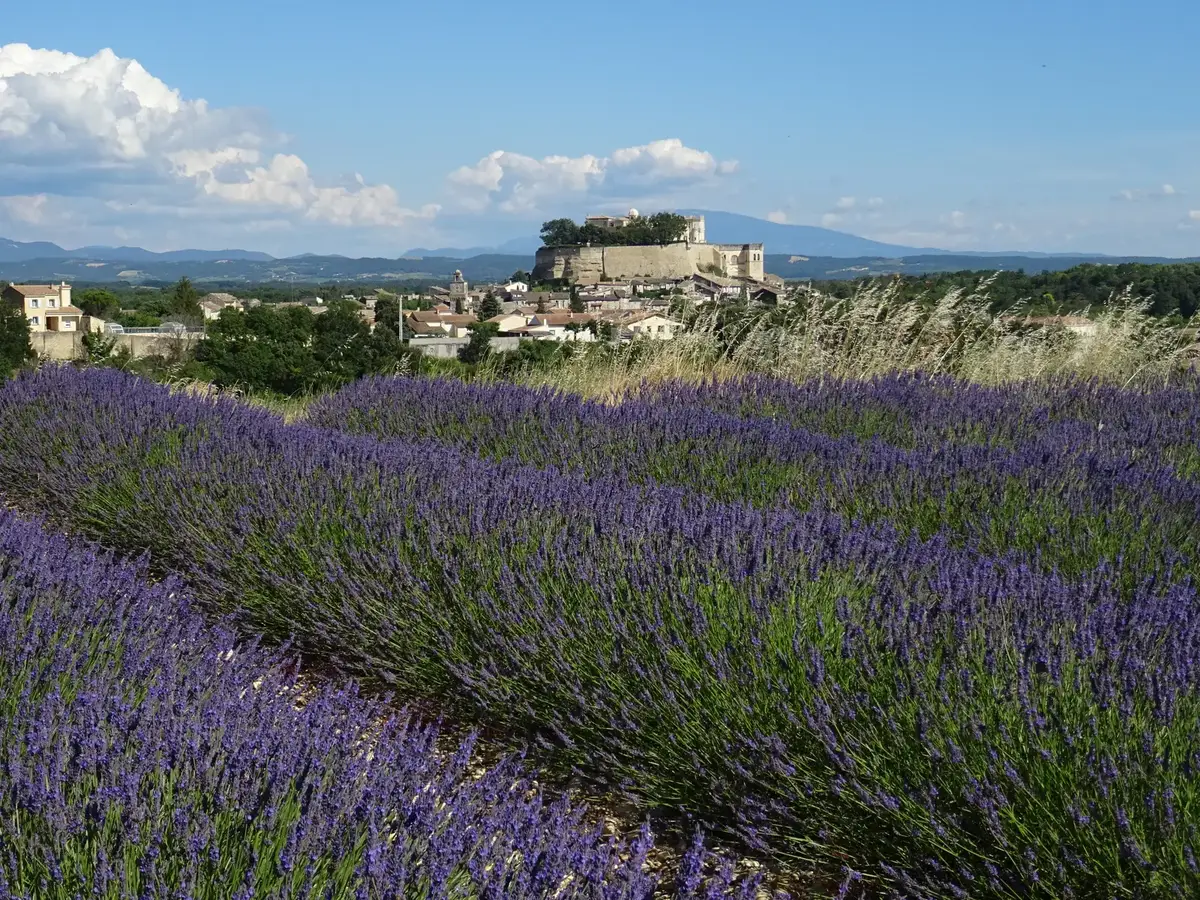
Around mid-June, when the roses begin to fade, colour moves down into the plain and across the neighbouring plateaux. Lavender takes over, while the vines of the Grignan-les-Adhémar appellation cover the hillsides. From the lavender fields beside the road, the village can be seen as a whole, set on its rock above the orchards.
The rose trail extends naturally towards the neighbouring villages of Drôme Provençale, including La Garde-Adhémar, where a listed medieval garden gathers medicinal plants, aromatic herbs and traditional simples below the church.
Useful information
Following the rose trail
- Trail and flowering
- The trail can be followed freely through the village streets. Explanatory sheets are available at the town hall. The main flowering season is in May and continues through June.
- Guided visits
- Led by the Grignan, Pierres et Roses anciennes association in spring, by prior arrangement.
For a guided visit, consult the Grignan, Pierres et Roses anciennes website before you come.
Extend your stay
Guest houses around Grignan and Drôme Provençale
These properties listed on the Portal are within 25 km as the crow flies of the location featured in this getaway. Visit their websites to plan your stay.
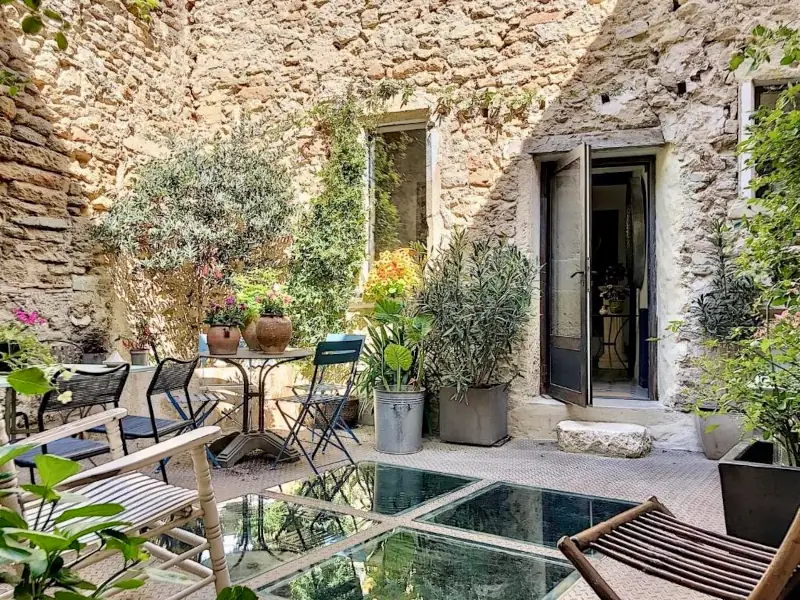
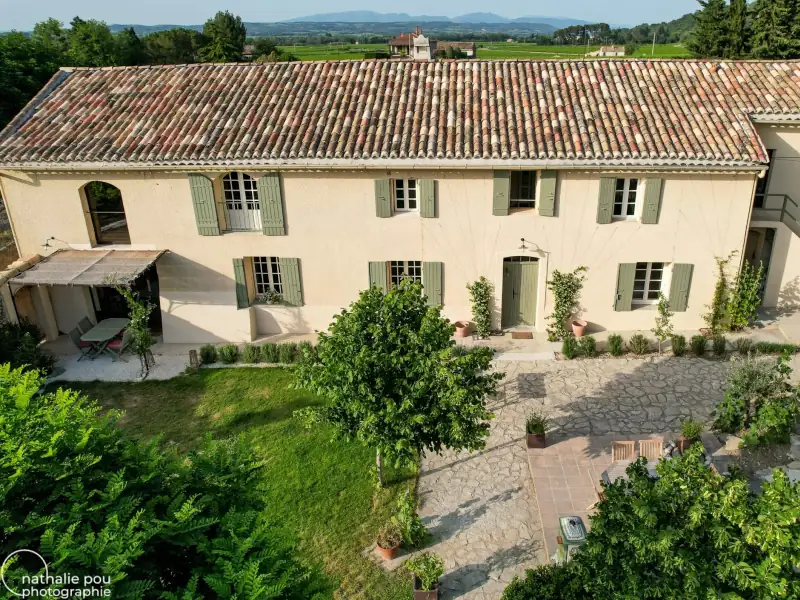
Le Mas des Poules
Charming bed and breakfast and Gîte
Saint-Roman-de-Malegarde
Visit website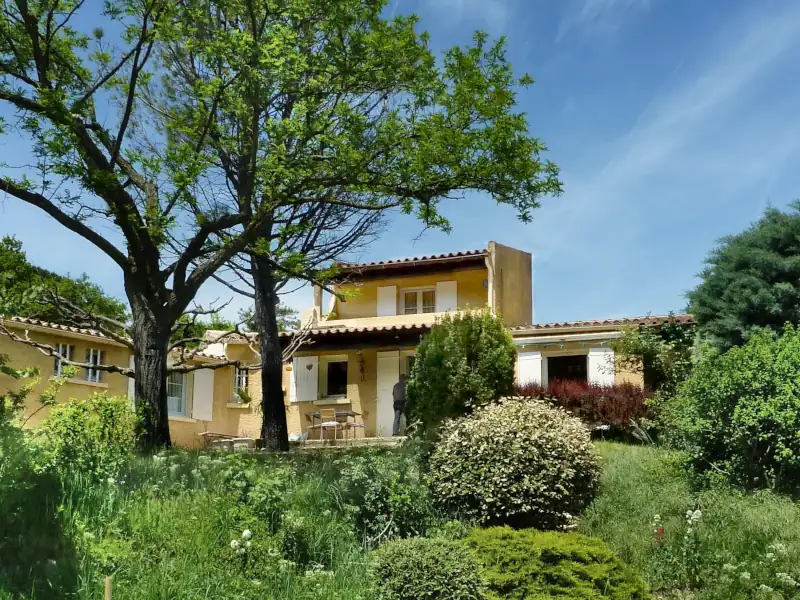
Tre Mas
Charming guest rooms and unusual lodging
St Marcel-lès-Sauzet
Visit website