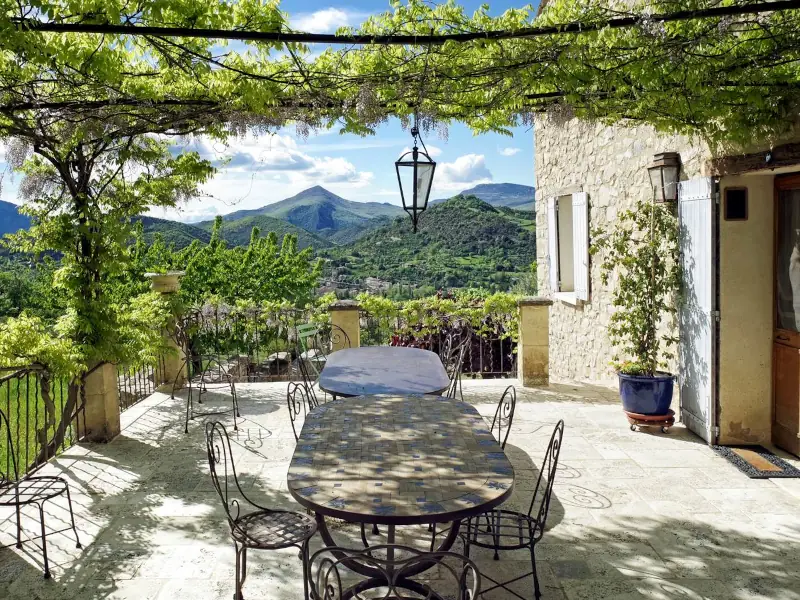
Provençal Drôme occupies the southern part of the Drôme department. It lies between the Rhône Valley, the first reliefs of the Baronnies and Mont Ventoux. The landscape alternates hills, plateaus, vineyards, lavender fields, orchards, olive groves and stone-built villages.
Villages and small towns
La Garde-Adhémar, Suze-la-Rousse, Grignan, Buis-les-Baronnies, Montbrun-les-Bains and Le Poët-Laval show the area’s variety. In Grignan, the old-rose trail offers another way to read the village streets and ramparts. Some villages face the Rhône Valley and wine routes, while others look towards the more mountainous Baronnies. Castles, squares, lanes, fountains and viewpoints shape the visit without requiring long journeys.
Vineyards, olives, lavender and markets
The area is shaped by the vineyards of the Rhône Valley and Tricastin, the olives of Nyons, truffles, apricots, aromatic plants and lavender. Markets help explain this agricultural geography: products change with altitude, exposure, season and the proximity of valleys. In summer, lavender in the Baronnies provençales offers a more inland reading of Provençal Drôme.
Hiking, rivers and thermal springs
The Baronnies relief suits hiking, cycling, climbing and mountain-pass roads. Rivers such as the Eygues and Lez offer bathing places depending on season and conditions. Montbrun-les-Bains adds a thermal dimension, with treatments linked to sulphurous waters and a village built into the slope.
A region that changes with the seasons
Spring brings orchards and lime trees. Summer is the season of lavender, markets, festivals and fruit harvests. Autumn brings grape harvests, olives and changing colours in the hills. Winter is quieter, with open landscapes and occasional snow on the higher ground.


 Garden or park
 Meals with the hosts
 Pool