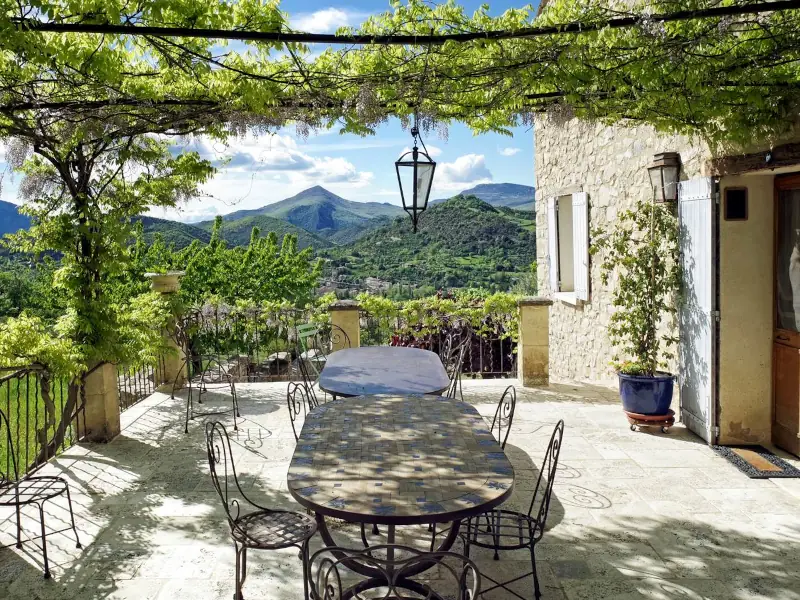
The Provençal Baronnies form a mid-mountain area south of Provençal Drôme. They stretch between the Rhône Valley, Mont Ventoux and the first Alpine reliefs. Mediterranean climate meets higher altitudes here, explaining the presence of lavender, olive trees, vines, lime trees, oak woods and dry slopes.
Villages, valleys and regional natural park
Villages are spread between valley floors, promontories and small farming basins. The regional natural park of the Provençal Baronnies has strengthened protection for landscapes, natural environments and agricultural practices. The area remains sparsely populated, with winding roads, passes and many hiking starts.
Nyons and Buis-les-Baronnies
Nyons is associated with black olives and olive oil, protected by an appellation of origin. The town also has an old bridge, mills and an active market. Buis-les-Baronnies is linked to lime blossom, aromatic plants and nearby reliefs, particularly for climbing, walking and routes towards Mont Ventoux.
Local produce and agricultural landscapes
Lavender, thyme, rosemary, apricots, cherries, peaches, olives and wines form an agricultural economy that is easy to read in the landscape. Crops occupy terraces, valleys and well-exposed slopes, while steeper hillsides often remain wooded or crossed by paths. In summer, a getaway to lavender in the Baronnies provençales gives a clear reading of this landscape from small roads and valleys.
Outdoor activities
The Baronnies are suited to hiking, cycling, climbing and landscape observation. The Eygues and its tributaries shape part of the valleys. Routes sometimes require attention to heat, relief and the distance between villages.
In the Hautes-Baronnies, Montbrun-les-Bains combines the stone lanes and fountains of a hilltop village with its spa history, facing Ventoux.


 Garden or park
 Meals with the hosts
 Pool