


A getaway in the Var
Le Castellet, a walk through the medieval village
Text and photographs by Vincent Flachaire
Above the vineyards of Bandol, Le Castellet is best explored on foot. The walk follows streets lined with shops up to the church and château, with stops to look out over the hills.
Entering the fortified village
The houses of Le Castellet cluster on a hill above the vineyards in the countryside behind Bandol. From the road, the village comes into view well before you reach the car parks. Continue on foot, passing through the ramparts by one of the two gateways: the Grand Portail or the Portalet.
The streets climb between the houses, open onto small squares, then narrow again. They lead to the church and château at the top of the village, before you head back down through other lanes.
Place de la Fontaine recalls the difficulties of supplying water to this hilltop village. Inaugurated in December 1895 thanks to the benefactor Montanari-Revest, the fountain was intended to put an end to shortages. At first, however, it produced only a trickle of water.

Lanes, shops and galleries
The galleries and shops of Le Castellet continue a transformation that began in 1923. The municipality launched an improvement scheme to welcome visitors; three years later, painters, sculptors and shopkeepers moved inside the village walls. Today, workshops, art galleries and homeware shops occupy the ground floors of the houses and invite you to step inside.
As you climb, small squares and terraces offer places to pause. You can sit in the shade and watch the activity in the streets before continuing along the paved passages and steps.

Saint-Sauveur de la Transfiguration church
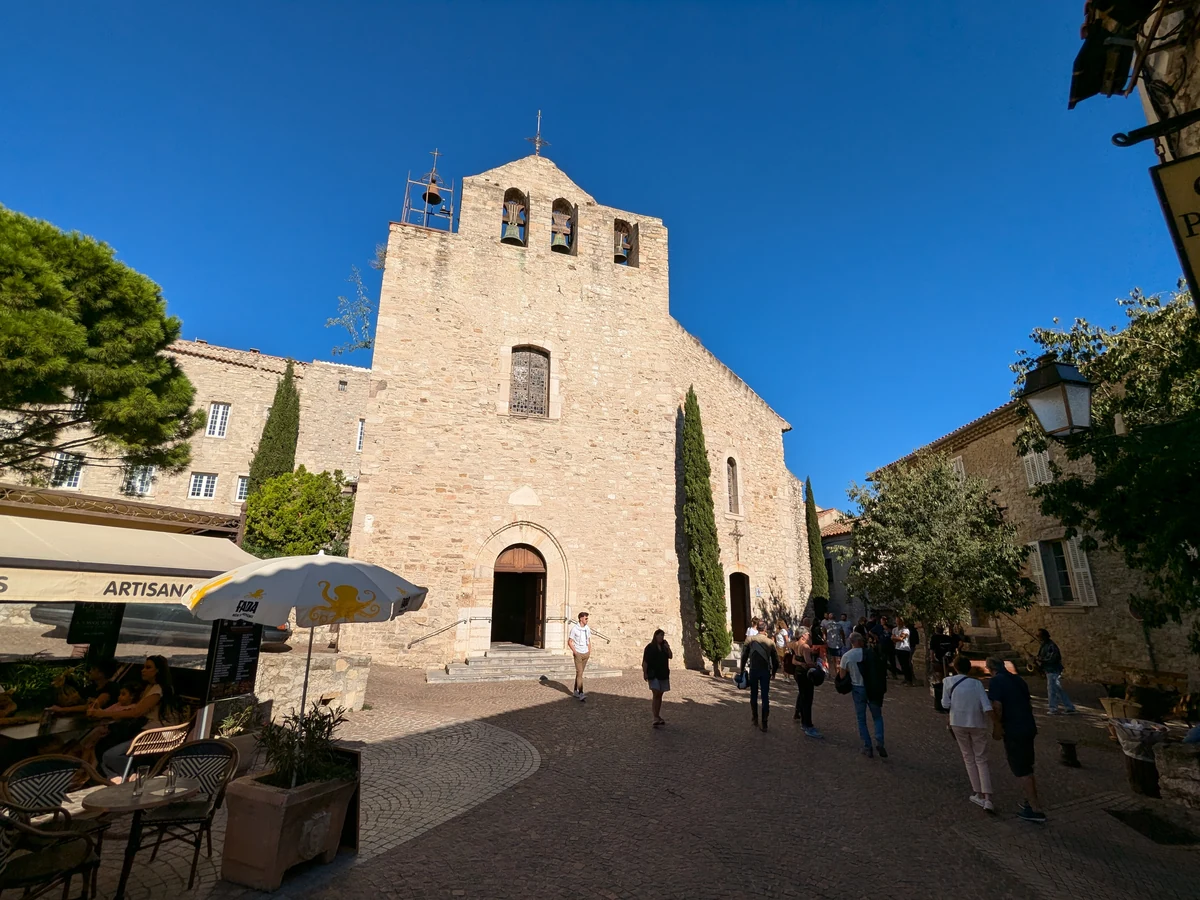
Near the château, the church occupies the upper part of the village. Romanesque in origin and documented in 1153, it was enlarged in 1754 to accommodate more worshippers. Its bell gable has three arched openings.
To the left of the main nave, a blocked-up window recalls the proximity of the château: the lords could attend services from their residence. This opening was sealed during the French Revolution, when seigneurial privileges were abolished.
The château, now the town hall
On Place du Champ de Bataille, the château presents a long stone façade. The current building dates from the 15th century and succeeded earlier structures. It retains two wings, one of which has a round tower.
After the French Revolution, the château became national property and was sold in four parts: an olive oil mill, a classroom and two homes took their place in the former seigneurial residence. The municipality did not become its owner until 1969. The building now houses the town hall and is not open for visits.

The Trou de Madame, a view through the ramparts
Near the château, the Trou de Madame is a postern opening through the ramparts onto the wall walk. It overlooks cultivated land, the hamlet of Le Brûlat and, in the distance, the Sainte-Baume massif.
According to legend, a lady of Le Castellet waited here for her knight to return. Today, visitors stop to look out over the landscape and the vineyards below the village.

The village in Pagnol’s cinema
Marcel Pagnol filmed La Femme du boulanger in Le Castellet in 1938. Through its characters and their everyday lives, the film offers another way of looking at the streets and squares of a village in traditional Provence.
The vineyards of the Bandol appellation
Le Castellet is one of the municipalities in the Bandol appellation, whose vineyards extend over the hills near the coast. A visit to a wine estate is an opportunity to understand the work of the winegrowers and what distinguishes their wines.
Choose an estate that explains its visitor arrangements and the opportunities to tour the vineyard or cellar. The Maison des Vins de Bandol, in Le Castellet, also presents the appellation. Allow time for this stop in addition to your walk through the village.
Continuing towards the coast and Sainte-Baume
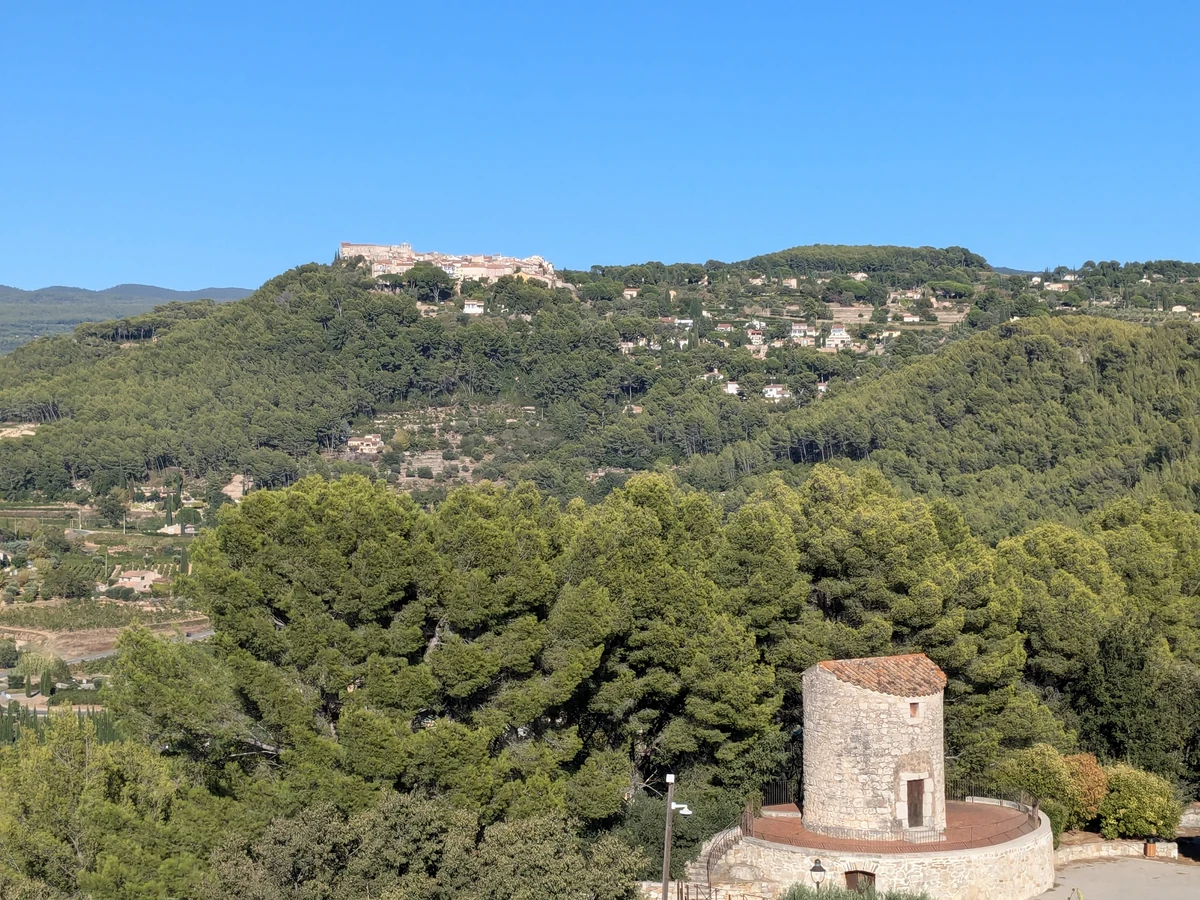
La Cadière-d’Azur offers another hilltop village to explore in the area. Towards the sea, head for Bandol or the Port d’Alon cove. For an inland outing, you can visit the Sainte-Baume forest and the grotto of Saint Mary Magdalene.
The Paul Ricard circuit is in the municipality of Le Castellet, away from the medieval village. Consult its calendar to choose an event or a visit.
Practical information
Planning a visit to Le Castellet
- Walk
- Explore the old village on foot, from the gateways through the lanes to the church, château and Trou de Madame viewpoint. Allow one to two hours to visit the village.
- Getting there
- Reach Le Castellet village from Le Beausset, Bandol or La Cadière-d’Azur. The medieval village and the Paul Ricard circuit are two separate destinations.
- Parking
- The La Ferrage and Cros du Loup car parks provide access to the village on foot. Parking charges apply depending on the season; check the current conditions and rates.
- Accessibility
- Paved streets, slopes and steps in the old village. Parts of the walk are less convenient for pushchairs and visitors with reduced mobility.
- What to bring
- Footwear suitable for paved streets, water and sun protection in summer. To enter the church or visit an exhibition, check opening times with the tourist office.
Village and heritage · Château · Place de la Fontaine · Trou de Madame · Parking · Maison des Vins de Bandol · Visits to the Paul Ricard circuit
Extend your stay
Guest houses to extend the getaway
These properties listed on the Portal are within 25 km as the crow flies of the location featured in this getaway. Visit their websites to plan your stay.

Bastide de Fontvieille
Prestige bed and breakfast
Saint Cyr sur mer
Visit website
Les Pieds tanqués
Prestige Bed and breakfast
Saint-Cyr-sur-Mer
Visit website
Last updated: