


A getaway in Marseille
Le Panier, from the Old Port to Place des Moulins
Text and photographs by Vincent Flachaire
Above the Old Port, Le Panier’s lanes and stairways lead to small squares. Workshops, shops and murals enliven Marseille’s oldest neighbourhood.
The origins of Marseille
Around 600 BC, Greek seafarers from Phocaea founded Massalia on the northern shore of the Lacydon inlet, today’s Old Port. The first settlers occupied Saint-Laurent hill among other sites, before the town spread to the neighbouring heights.
Excavations in the neighbourhood have revealed traces of this early town. On Place du Refuge, clay floors and mud-brick partitions date from the beginnings of the Greek colony. The streets you walk today occupy a site inhabited for twenty-six centuries.
The name Le Panier is thought to come from the sign of a 17th-century inn, “Le Logis du Panier”. It may first have referred to the street, then to the neighbourhood.

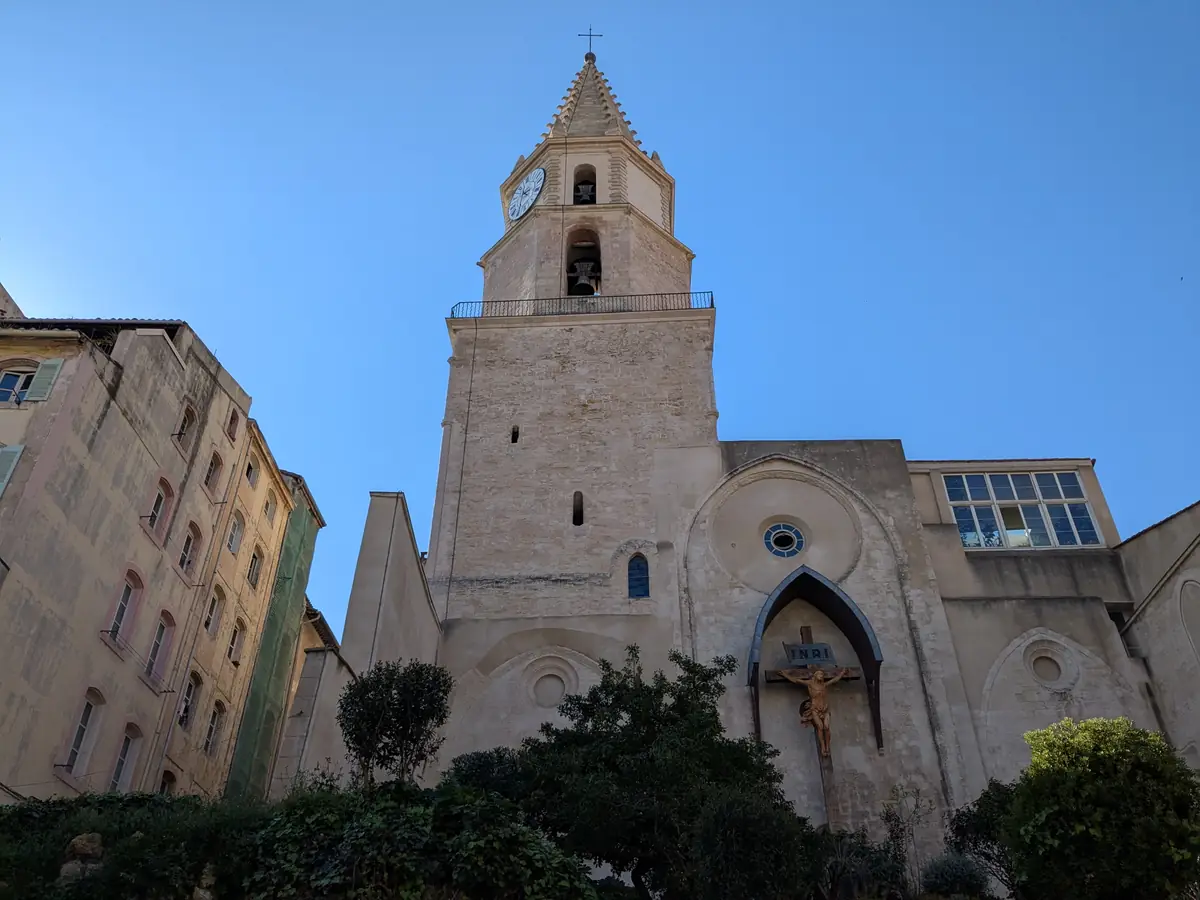
The bell tower of Les Accoules
The bell tower of Les Accoules rises above the houses in the lower part of the neighbourhood. It belonged to an old church largely demolished during the French Revolution. The buildings around the tower date from different periods.
From the quays, the Montée des Accoules leads to Le Panier’s sloping lanes. Around the bell tower, passages continue towards the upper part of the neighbourhood.
A reservoir beneath Place des Moulins
Place des Moulins is one of Le Panier’s highest points. Its name recalls the windmills that once stood on the hill. Benches beneath the trees offer a resting place after the climb.
Beneath your feet lies an unsuspected structure: a 12,000 m³ reservoir built in 1851–1852 to distribute water brought by the Marseille canal. Its vaults rest on 160 pillars. The Roquefavour aqueduct, upstream of Marseille, belongs to the same water supply network.

Le Panier in the 20th century
In February 1943, German occupying forces blew up the old neighbourhoods along the northern side of the Old Port, after the inhabitants had been forcibly evacuated with the help of the Vichy police. The higher parts of Le Panier largely escaped destruction. Renovation of the dilapidated, sometimes insanitary housing began in the 1970s and continued through the 1990s and beyond.
Painted streets and workshops
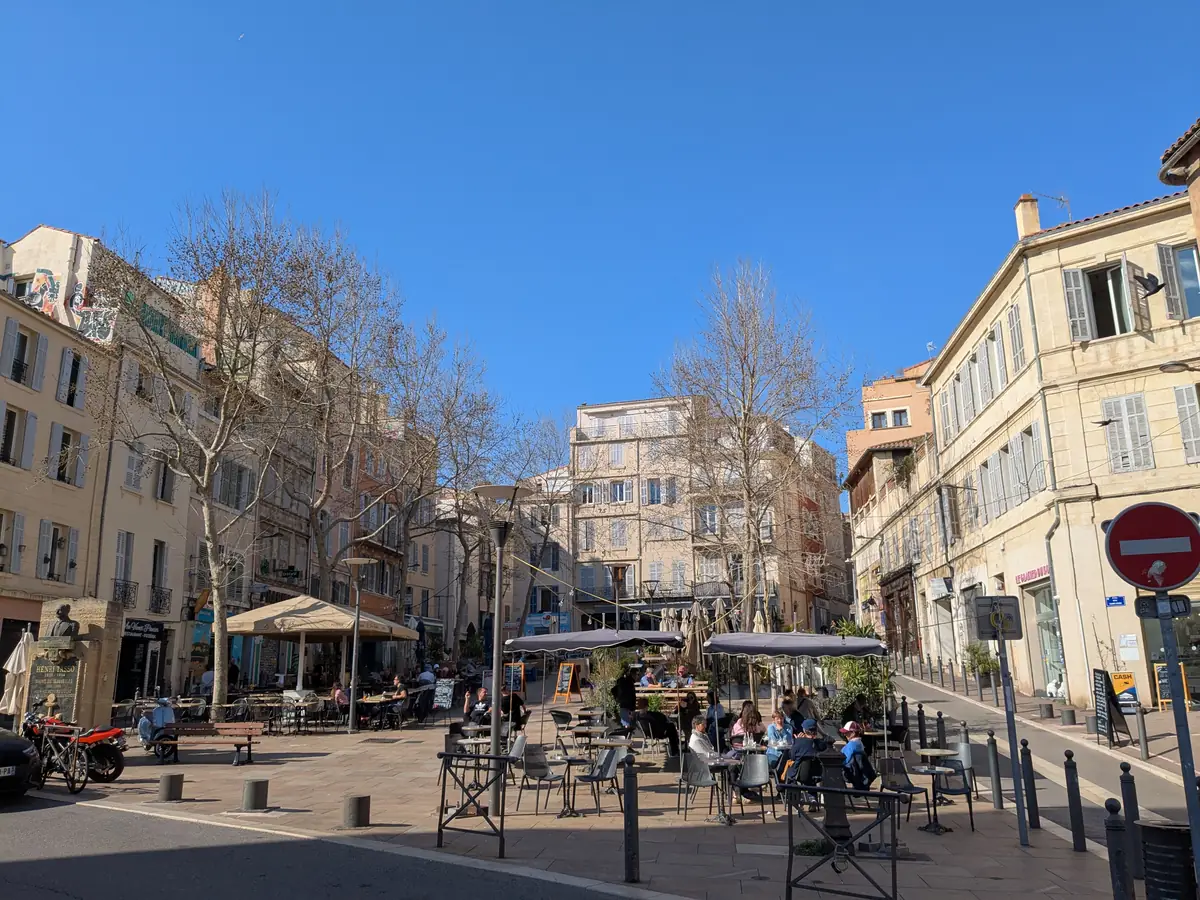
Murals cover whole sections of façades, street corners and shop shutters. Some images are replaced over time, so the same walls may display new paintings from one visit to the next.
Workshops and small shops stand alongside homes. Stairways, doorsteps and small squares also form part of residents’ everyday routes.

La Vieille Charité, a former almshouse
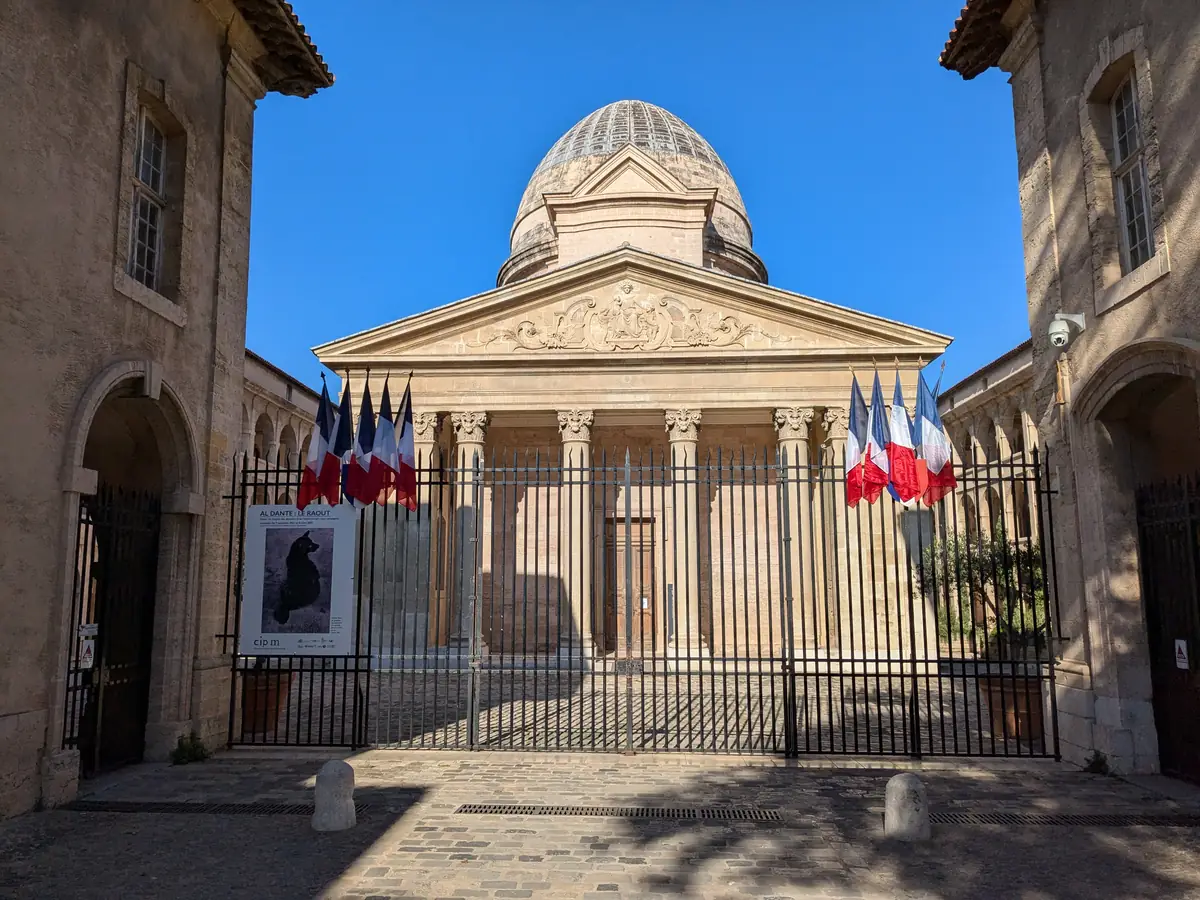
La Vieille Charité stands in the heart of the neighbourhood. Designed in the 17th century by Pierre Puget to house the poor, the complex is arranged around a galleried courtyard and a chapel. Its regular proportions contrast with the surrounding streets.
The museums housed here display collections of Mediterranean archaeology and art from Africa, Oceania and the Americas. Allow time for these collections and the temporary exhibitions.
Back towards the sea
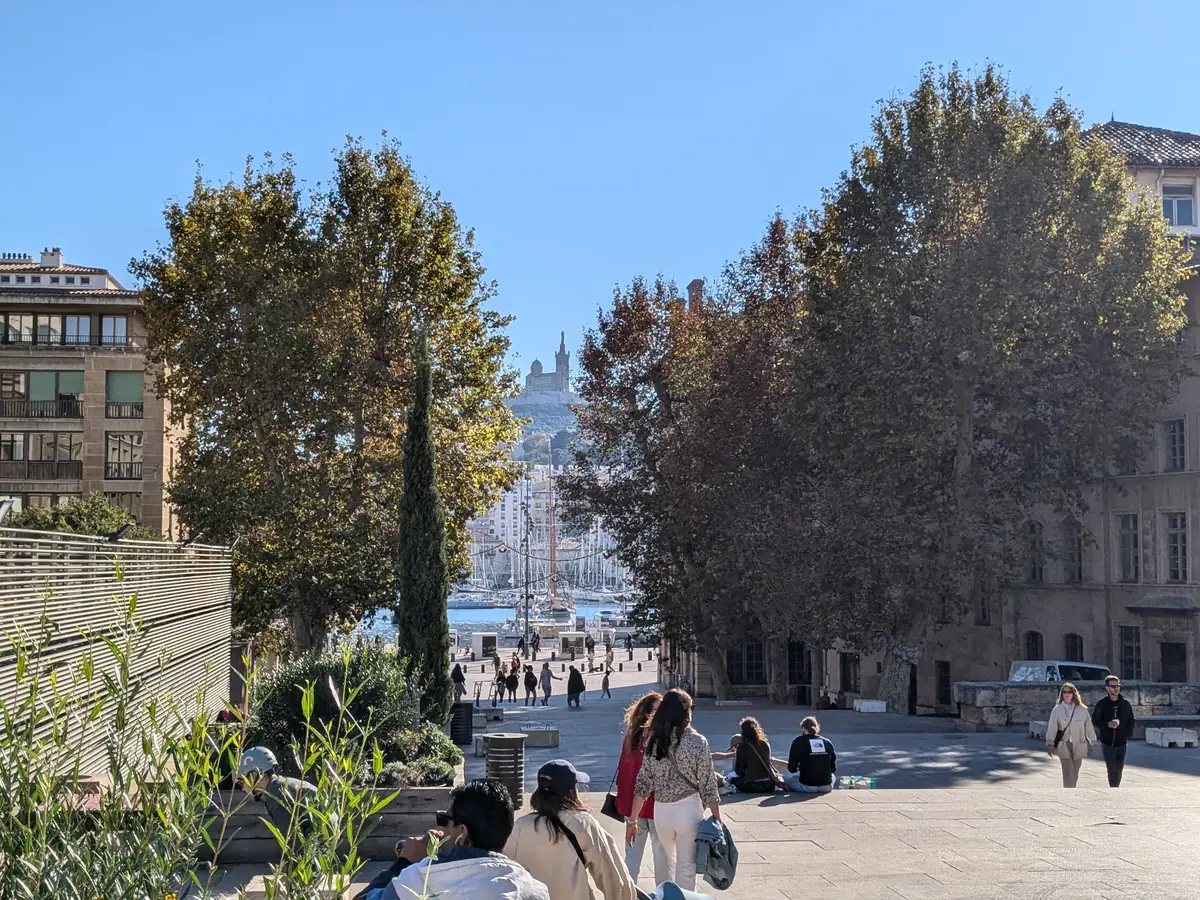
On the way back down to the quays, the boats of the Old Port come into view, with Notre-Dame de la Garde above the opposite shore.
For another walk in Marseille, Les Goudes offers a small harbour at the foot of limestone hills. West of the city, Niolon on the Côte Bleue can be reached by the coastal railway.
Practical information
Exploring Le Panier on foot
- Suggested duration
- Allow an hour and a half to two hours for the streets and squares, excluding museum visits.
- Getting there and walking
- Walk up from the Old Port. Wear comfortable shoes for the paved streets and slopes. With a pushchair, plan a route that avoids stairs.
- Museums and visits
- Check opening hours and exhibitions with the Marseille museums for La Vieille Charité. The interior of the Place des Moulins reservoir is accessible only during announced openings.
- When to visit
- Mornings generally allow you to explore before the café terraces become busy. Bring water in summer and keep entrances to homes clear.
To plan your visit: Marseille tourist office.
Extend your stay
Guest houses around Marseille
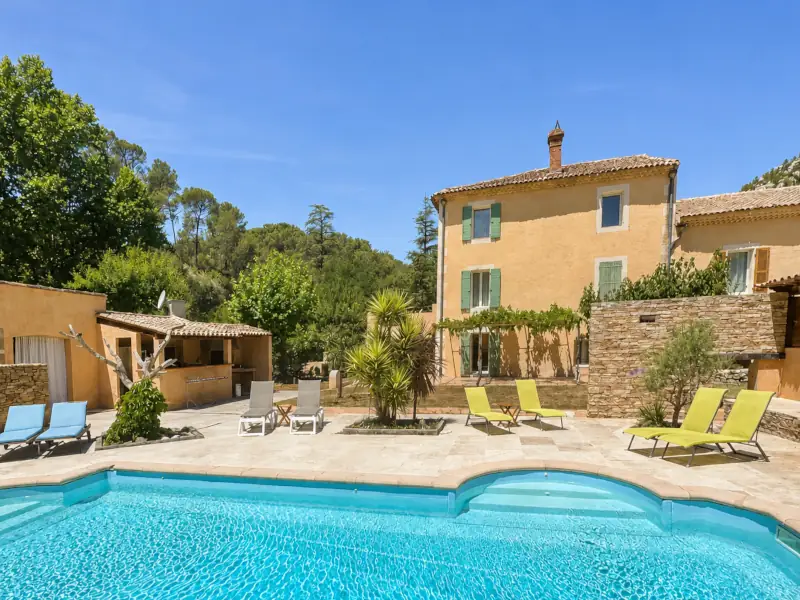
These properties listed on the Portal are within 25 km as the crow flies of the location featured in this getaway. Visit their websites to plan your stay.
Last updated: