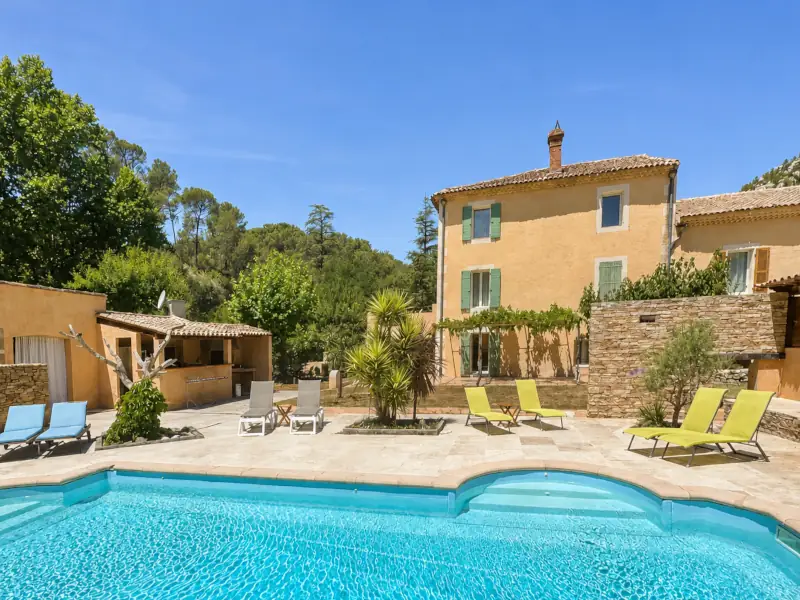
Founded by Greeks from Phocaea, Marseille today combines old districts, harbours and coastline. Choose your accommodation according to your visits: city centre, museums, sea or approaches to the Calanques.
A port looking out to the world
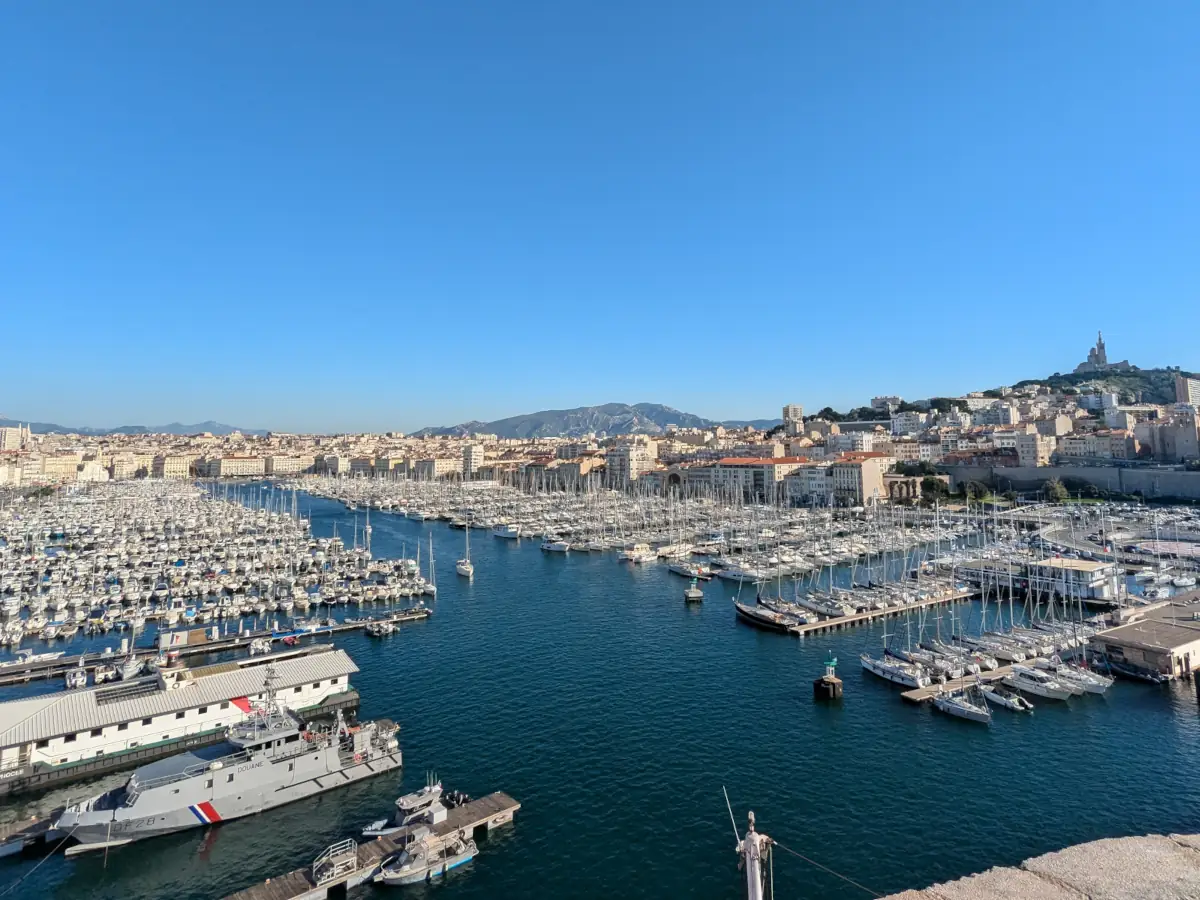
Maritime history is visible around the Old Port and La Joliette seafront. The Mucem, Fort Saint-Jean and nearby districts introduce Mediterranean exchanges and the port’s transformation.
A lively and cosmopolitan city
Explore central districts on foot or by public transport. Group stops according to their location:
- Notre-Dame-de-la-Garde, with a wide view over the city and the Mediterranean.
- The Old Port, Marseille’s historic and lively heart.
- La Canebière, the historic avenue linking the port with the city center.
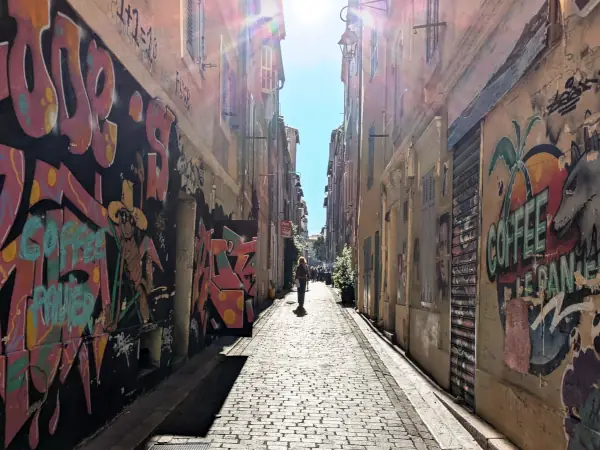
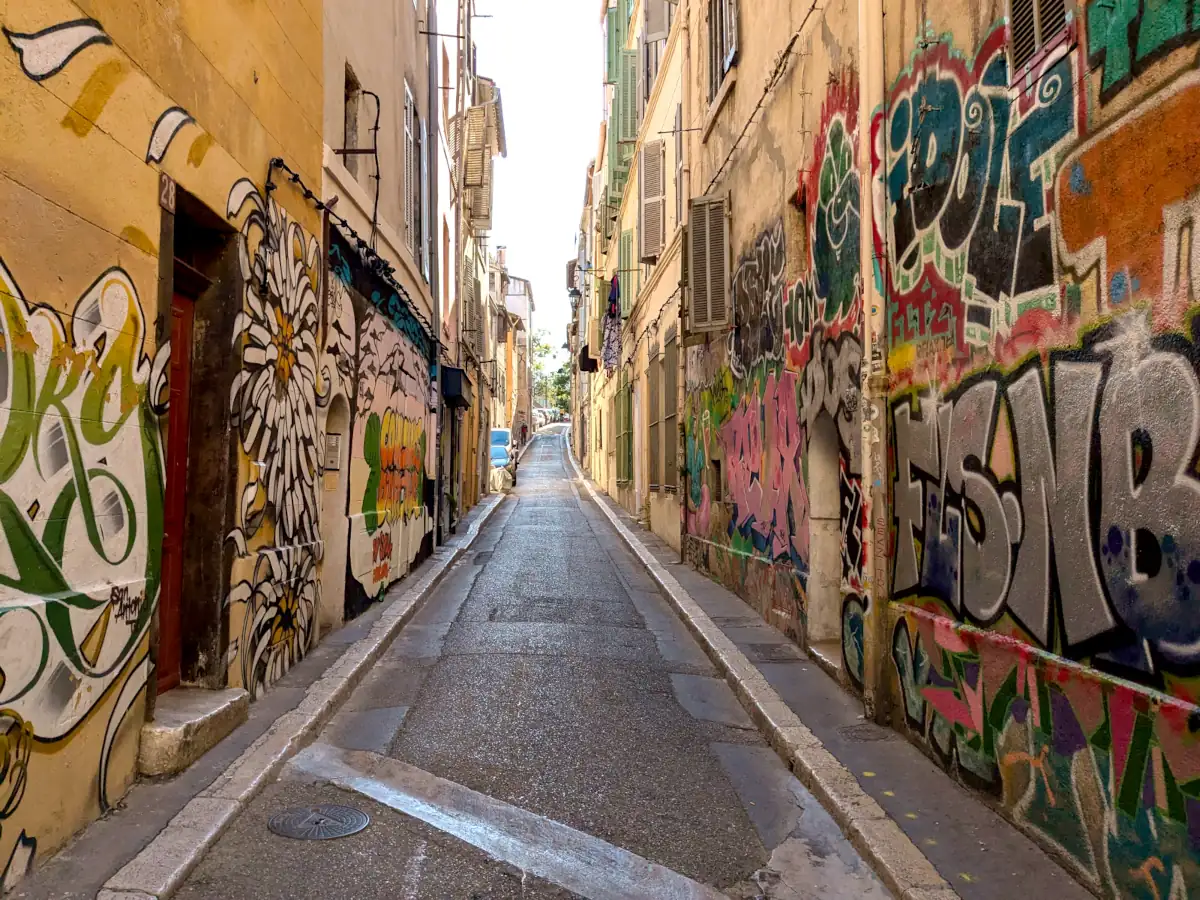
- Le Panier, Marseille’s oldest district, with narrow streets and sloping squares.
- The Vallon des Auffes, a small fishing harbor set within the city.
- L’Estaque, known for landscapes painted by the Impressionists.
- La Joliette, a former port district transformed around the docks, the Mucem and the cultural spaces of the seafront.
Sea, islands and the Calanques
The coast offers outings separate from the centre: choose beaches, islands and Calanques approaches according to weather and access.
- The beaches and the Prado, for enjoying the seafront.
- The Calanques, a national park of limestone cliffs, coves and trails between Marseille and Cassis.
- The Frioul islands and Château d’If, reached by boat from the Old Port.
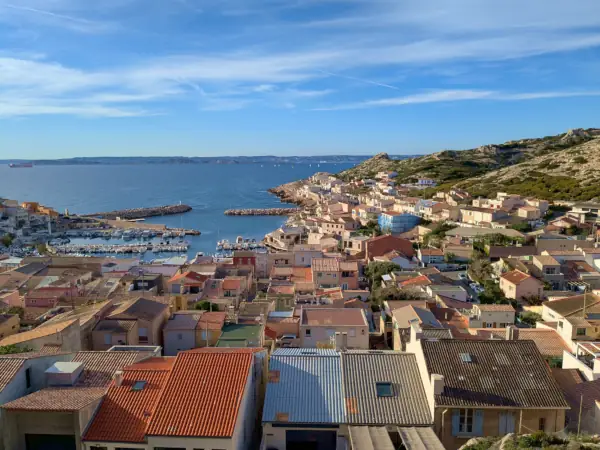
- The port of Les Goudes, at the southern edge of Marseille, at the gateway to the Calanques.
A stay between city, sea and Provence
Choose a district suited to your outings and transport. Trips to Cassis, the Côte Bleue or Aix-en-Provence can fill separate days according to journeys and access conditions.

 Meals with the hosts