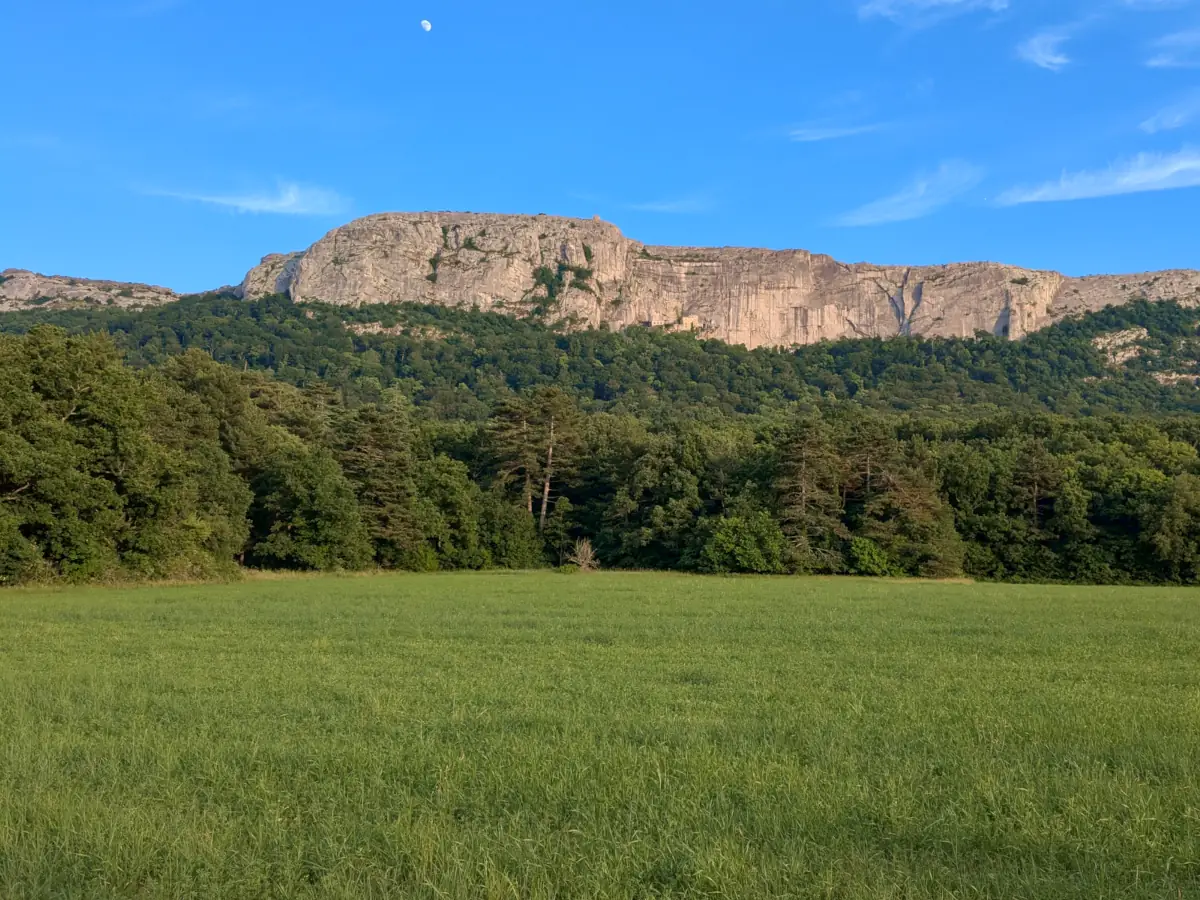
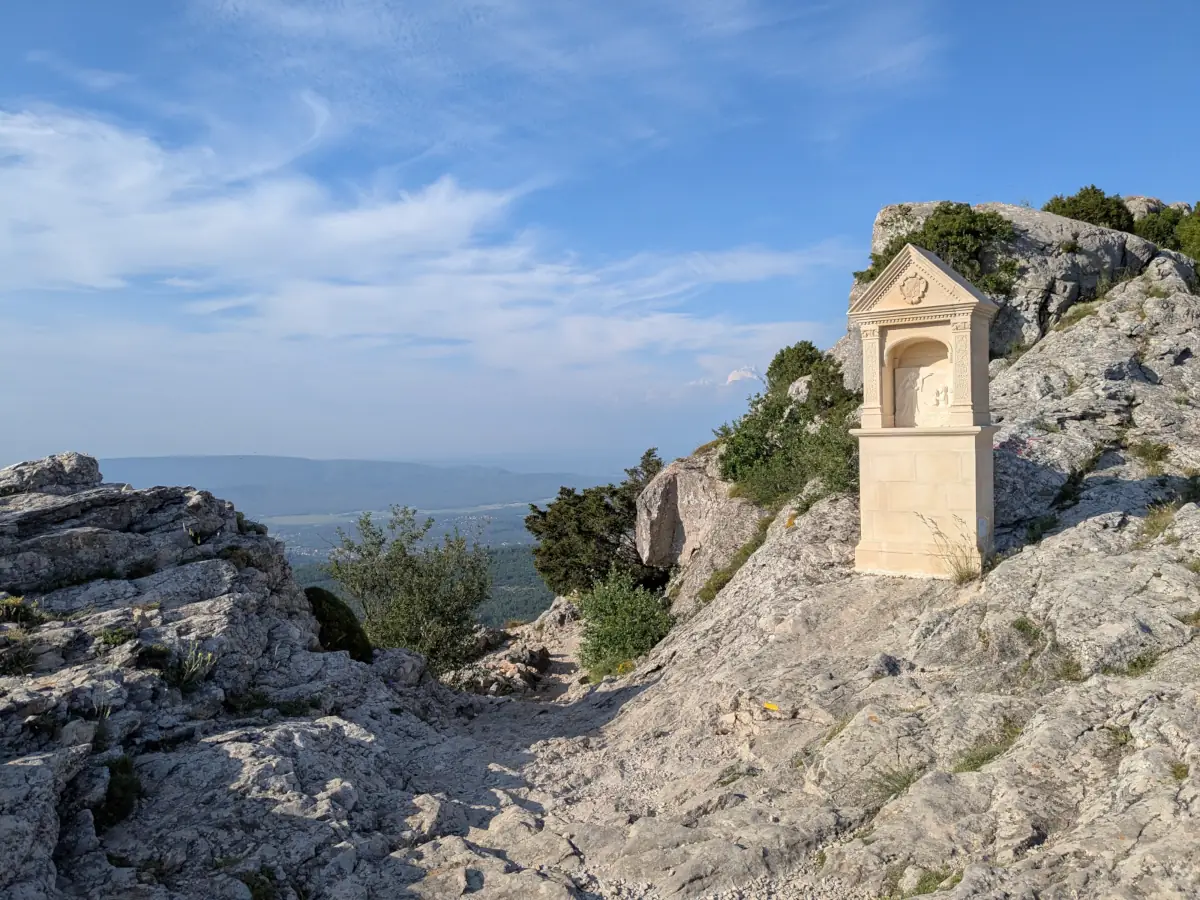
The Sainte-Baume massif rises between the Bouches-du-Rhône and Var departments. This long limestone barrier stretches for about 35 kilometres, with a marked ridge whose highest points, the Joug de l’Aigle and the Signal des Béguines, reach 1148 metres.
The area combines narrow valleys, wooded slopes, cliffs and villages. Springs descending from the massif feed the surrounding countryside and help explain the presence of a cooler forest than in many other Provençal landscapes.
The grotto of Mary Magdalene
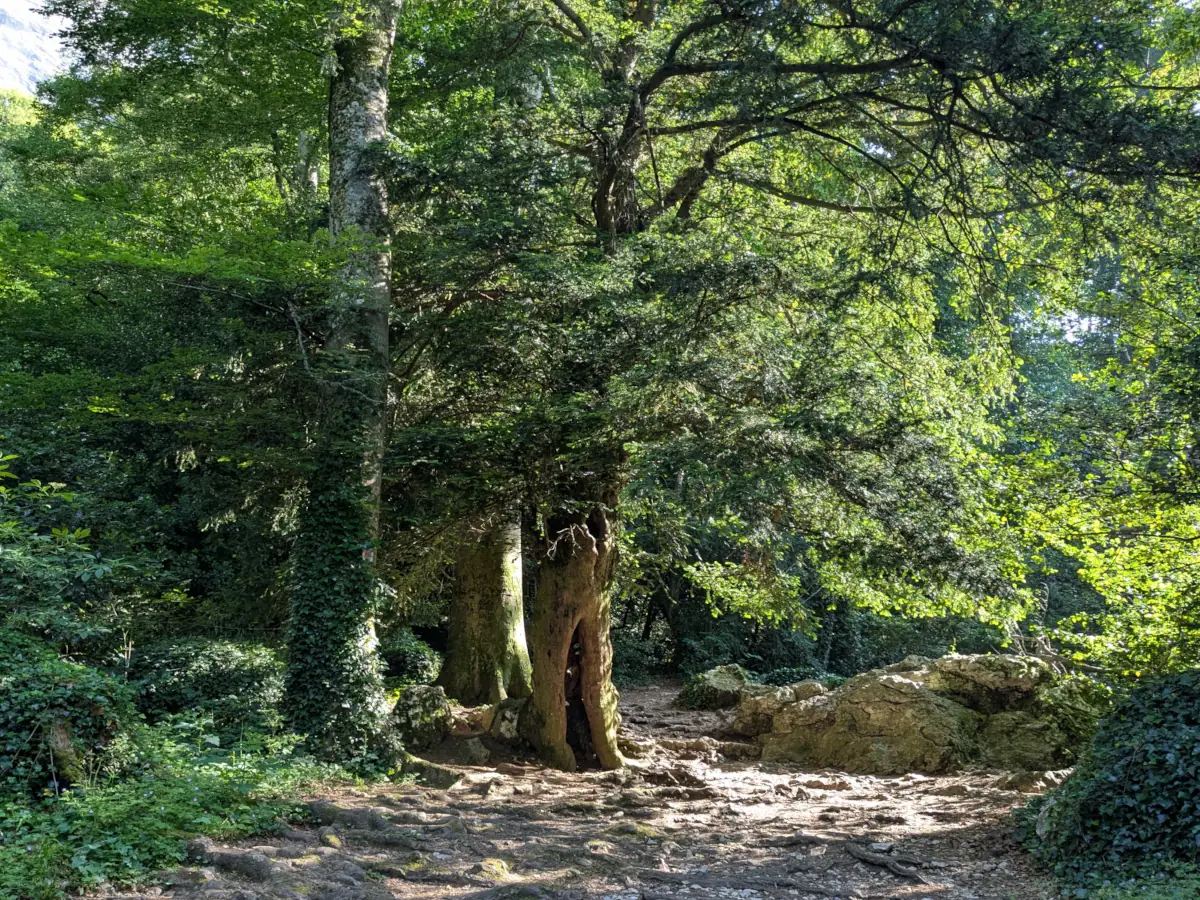
The word baume means cave in Provençal. Sainte-Baume owes much of its reputation to the grotto where, according to tradition, Mary Magdalene lived as a recluse. The sanctuary still attracts pilgrims, walkers and visitors, who can climb through the forest from the Sainte-Baume hostellerie.
This old beech forest, rare in Provence, gives the site a distinctive atmosphere and contrasts with the drier landscapes of the surrounding slopes.
Saint-Maximin and the villages of the massif
Saint-Maximin-la-Sainte-Baume, north of the massif, is known for its Gothic basilica and its connection with the relics of Mary Magdalene. Around the massif, Plan-d’Aups, Nans-les-Pins, Saint-Zacharie, Auriol, Roquevaire, Gémenos, Cuges-les-Pins, Riboux and Signes provide several access points to the trails.
A bed and breakfast near Sainte-Baume makes it easy to combine hiking, religious heritage, villages of Green Provence and day trips toward Aix-en-Provence, Cassis or the Var coast. South of the massif, a visit to the medieval village of Le Castellet takes you through its lanes, past the château and to views over the vineyards of Bandol.

 Meals with the hosts