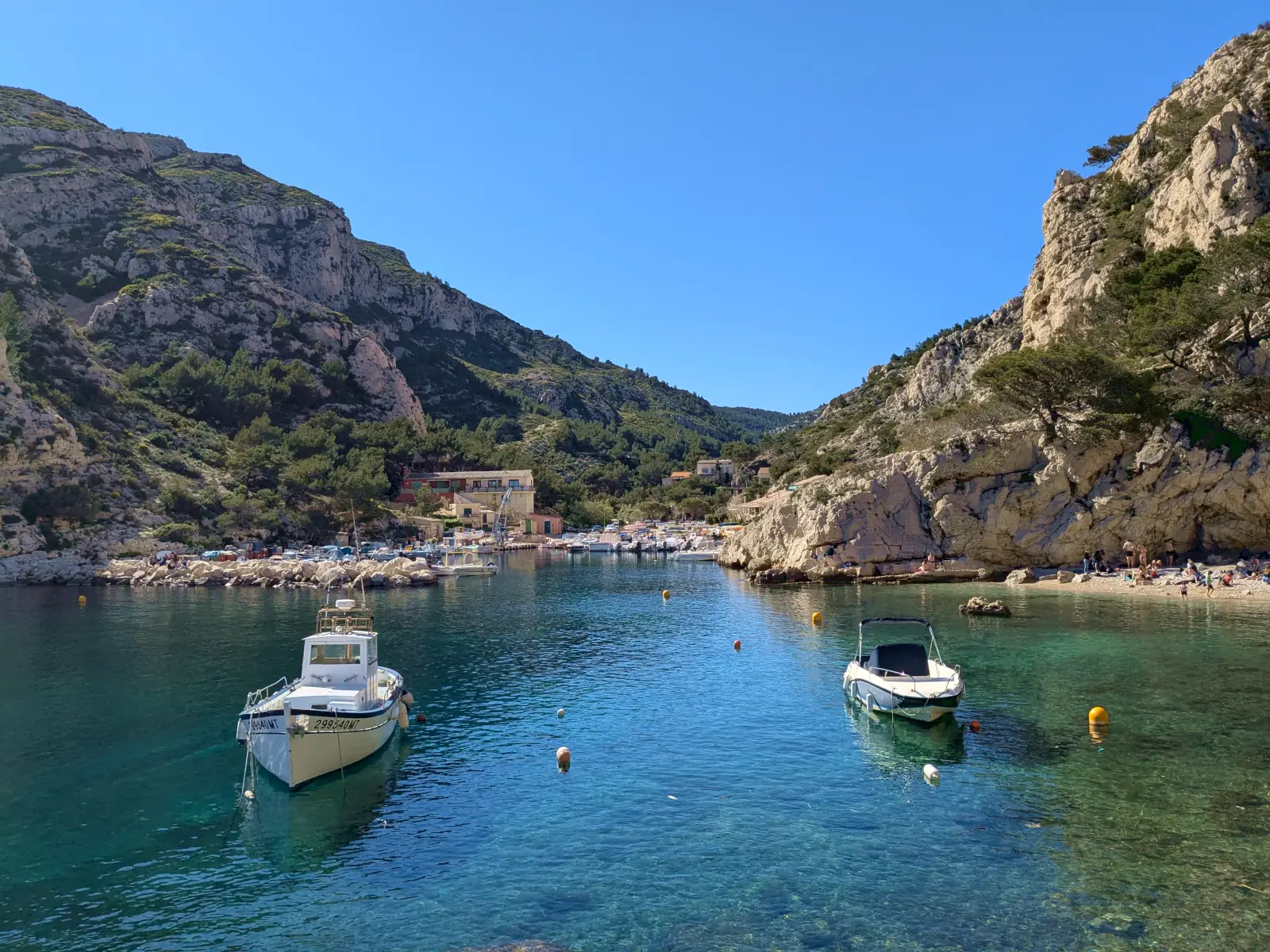
Between Marseille and Cassis, the Calanques massif forms a strongly mineral landscape. Limestone cliffs descend towards deep water, carving narrow coves where light, rock and sea create a coastline unlike any other in Provence.
The terrain is steep, distances can be deceptive and access varies depending on the season. This is part of the character of the Calanques: a natural area close to the city, but one that requires planning and respect for national park rules.
The best-known calanques
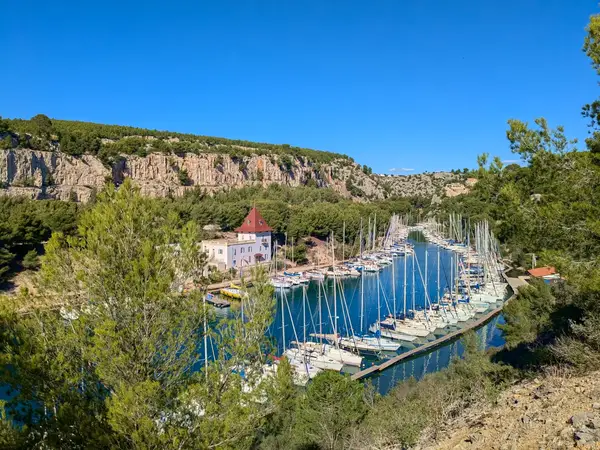
Sormiou, Morgiou, Sugiton, En-Vau, Port-Pin and Port-Miou are among the most sought-after sites. Some are reached from Marseille, others from Cassis, on foot or by boat depending on access conditions.
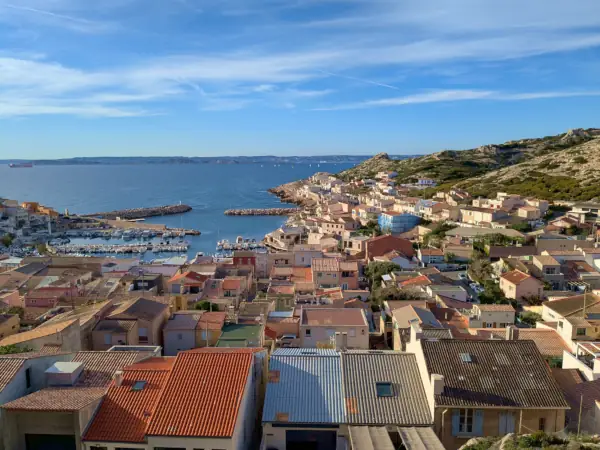
The landscapes vary greatly from one sector to another: cabins and small harbors at Sormiou or Morgiou, more vertical cliffs towards En-Vau, the long harbor-like inlet of Port-Miou, and open views from the ridges above Cassis.
Other calanques along the Provençal coast
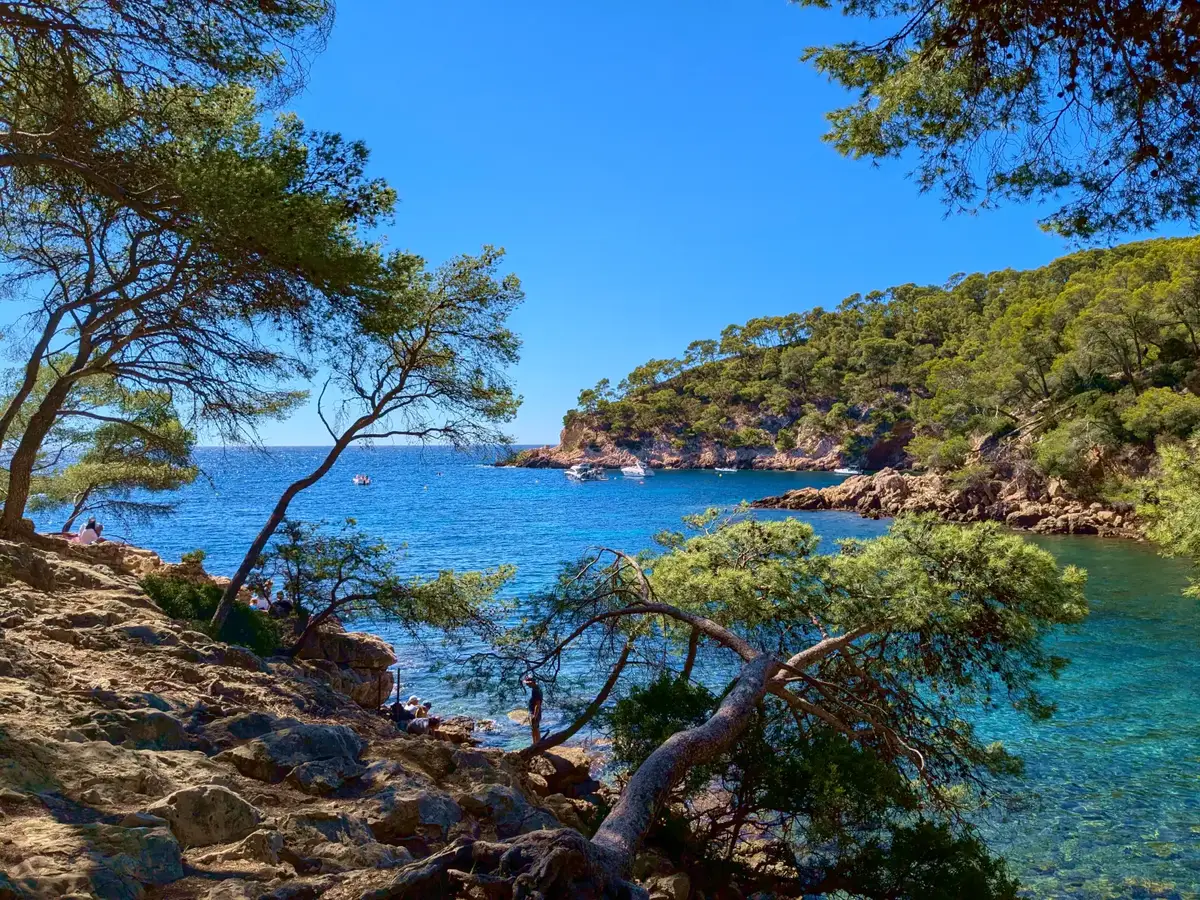
The word calanque does not refer only to the massif between Marseille and Cassis. Other limestone coves can be found along the Provençal coast, such as the Port d’Alon Calanque between Saint-Cyr-sur-Mer and Bandol, or Méjean and Érevine on the Côte Bleue.
Hiking, sea trips and stays near the Calanques
The Calanques can be discovered on foot, by boat or from coastal viewpoints. Hiking remains one way to understand the massif, but it requires attention to heat, wind, water supplies and restrictions linked to fire risk.
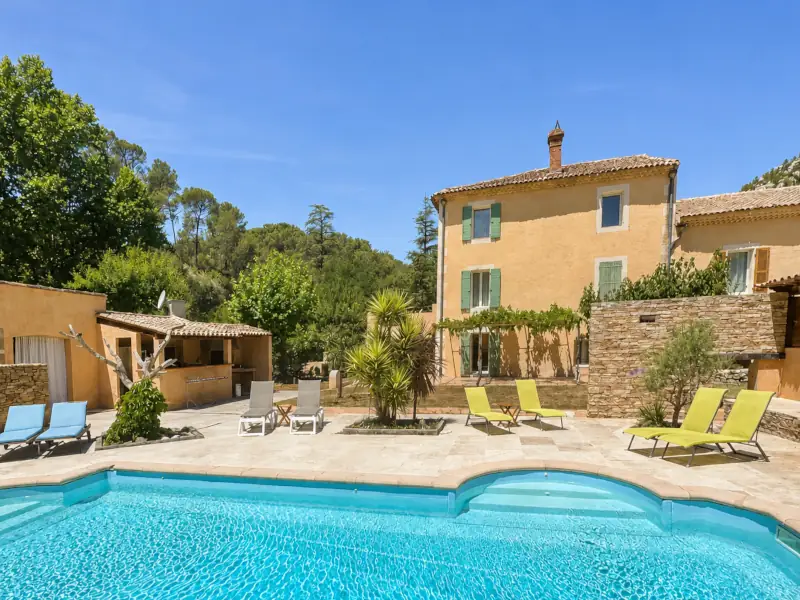
For a stay near the Calanques, Marseille is convenient for Sormiou, Morgiou, Les Goudes and boat trips. Cassis is ideal for Port-Miou, Port-Pin, En-Vau, Cap Canaille and the Route des Crêtes. The surrounding area makes it possible to enjoy the coast while returning to a quieter setting at the end of the day.



 Meals with the hosts