


A getaway in the Calanques
Port-Miou, the calanque of sailing boats and quarry workers
Text and photographs by Vincent Flachaire
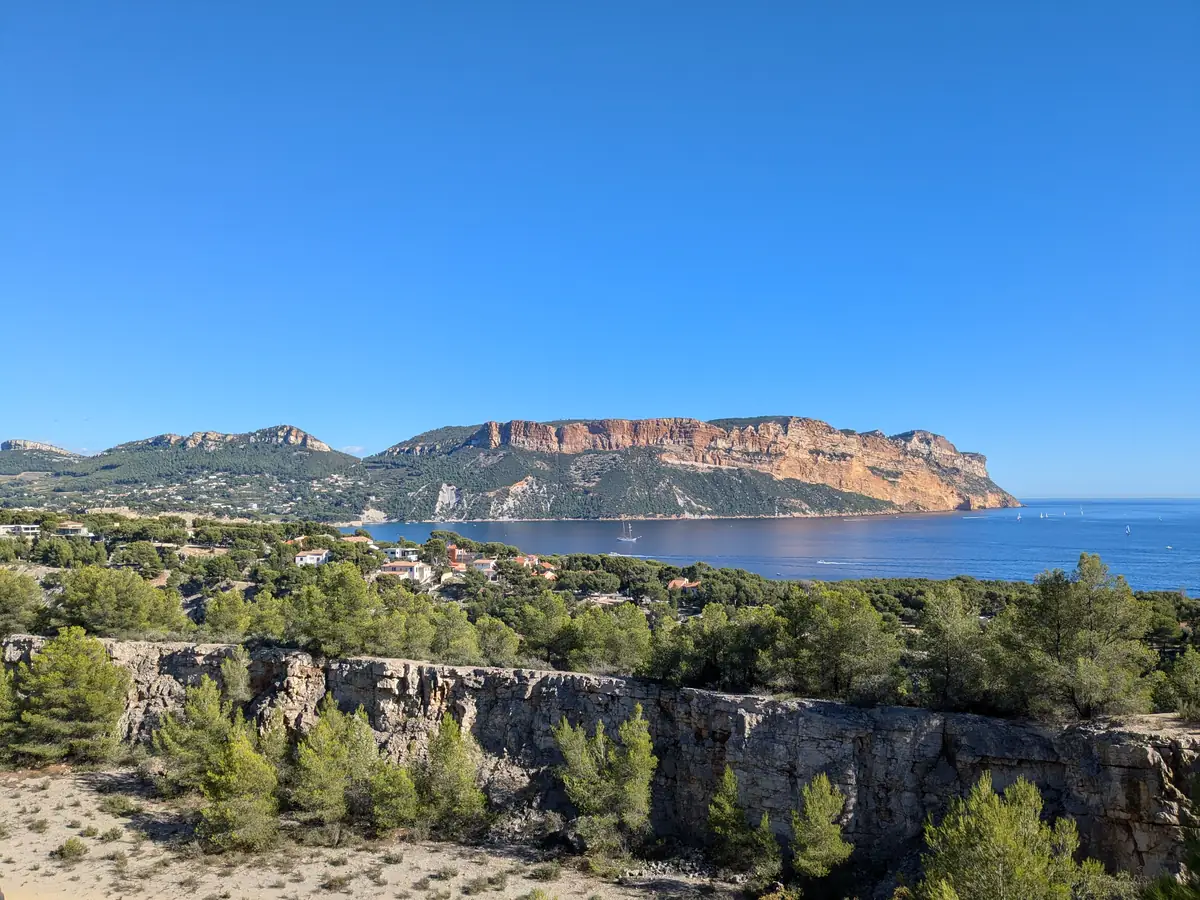
At Cassis, sailing boats occupy the long inlet of Port-Miou. Above the pontoons, the quarry faces bear the marks of the workings that transformed the calanque.
A harbour in a narrow calanque
On the outskirts of Cassis, Port-Miou reaches deep into the limestone hills. Sailing boats crowd an avenue of seawater, their masts lined up beneath the pine canopy. Pontoons follow the shores of this natural shelter.
Port-Miou means “better harbour”. Since Antiquity, ships have found refuge in this inlet, sheltered from the mistral and easterly winds. In 1376, Pope Gregory XI sheltered his fleet here when a storm caught it during his journey from Avignon to Rome.

This long inlet occupies a valley carved into the limestone. When sea levels were lower, erosion cut into the rock; after the last ice age, the rising Mediterranean flooded the valley floor. Quarry workers later cut back the cliffs, adding their own straight lines to the shapes formed by erosion.
Limestone for the soap factories
In 1896, Solvay bought land to open a limestone quarry supplying raw material for soda production. The soda was made at Salin-de-Giraud in the Camargue and used, among other things, in Marseille soap.
Neighbouring quarries supplied building stone. At Solvay, limestone became a raw material for the chemical industry. The extracted blocks were taken to loading chutes, installations used to pour the stone into boats.
The vessel Camarguais, brought into service in 1924, carried limestone to Salin-de-Giraud. The quarry’s position made transport easier: the stone was loaded on site and taken to the factory by sea.
Quarrying ceased in the early 1980s. Sailing boats and walkers have replaced industrial traffic, but the rock faces cut at right angles remain clearly visible above the water.

1910, defending the Calanques
On 13 March 1910, around 2,000 people gathered at Port-Miou to oppose a proposed extension of the quarry, notably at the call of the Excursionnistes marseillais walking association. This mobilisation was among the earliest demonstrations to protect the Calanques. Quarrying nevertheless continued for decades. The neighbouring calanques of Port-Pin and En-Vau, also coveted by industrialists, were granted protected status in 1936.
The château, once the quarry office
The building was already mentioned in 1810, long before Solvay acquired it in 1898. It later housed the site manager, offices and an infirmary for the workers. Its construction date and the origin of its tower remain unknown.
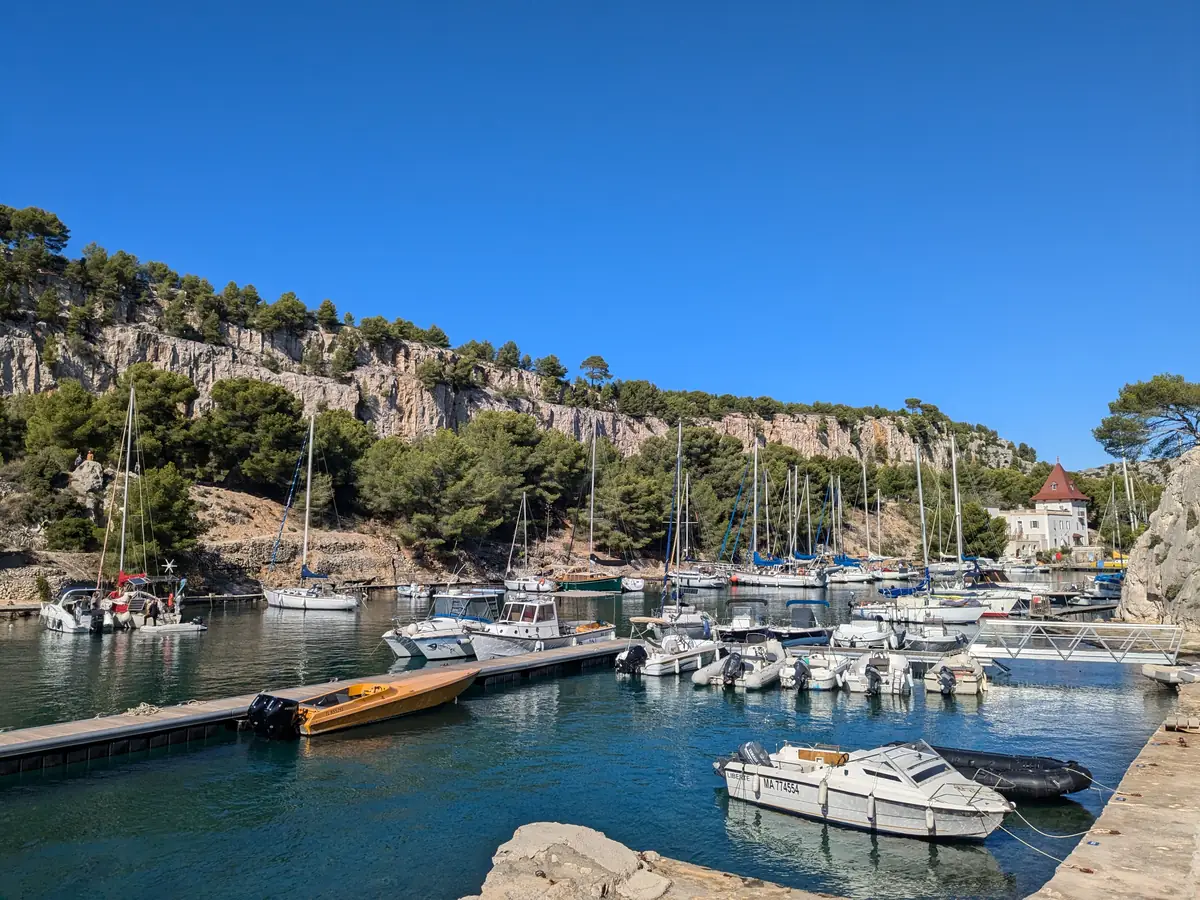
Today it houses the harbourmaster’s office and hosts activities organised by the Calanques National Park, including exhibitions and events.
Walking around the calanque
Paths follow the moorings and former quarries above the shores. On the peninsula, the Petit Prince trail forms a short loop among the pines, with views of Port-Miou and Cap Canaille. This walk stays close to Cassis; the routes to Port-Pin and En-Vau lead further into the hills, with climbs and rocky sections.

A small beach occupies the head of Port-Miou, between the vegetation and the first pontoons. Space is tight and boats occupy most of the water: swimming opportunities remain limited. In the neighbouring calanque, Port-Pin beach is reached by a longer, rougher path.
Continue into the Calanques and along the Côte Bleue
For other outings along Marseille’s coast, Les Goudes also retains traces of the factories that stood alongside fishermen’s homes and cabanons. On the other side of Marseille, Niolon offers a stop on the Côte Bleue, served by train.
Practical information
Planning a visit to Port-Miou
- Time and distances
- The calanque is around 1.4 km long. Allow one to two hours for the walk and nearby viewpoints, plus the walk from central Cassis.
- Getting there and parking
- Approach Port-Miou from Cassis. At busy times, check the Gorguettes park-and-ride and shuttle services. See National Park access and visitor information.
- Walks and hikes
- The Petit Prince trail makes a 1.7 km loop around the peninsula, listed by the National Park as a 30-minute walk, excluding stops. To continue to Port-Pin or En-Vau, plan a walk suited to your fitness. Check daily woodland access restrictions, particularly in summer.
- What to bring
- Water, walking shoes and sun protection. Stay on authorised paths: public access to the pontoons is prohibited. The small beach at the head of the calanque borders the harbour area: observe the signs and swimming restrictions displayed on site.
To plan your visit: Calanques National Park.
Extend your stay
Guest houses near Cassis
These properties listed on the Portal are within 25 km as the crow flies of the location featured in this getaway. Visit their websites to plan your stay.
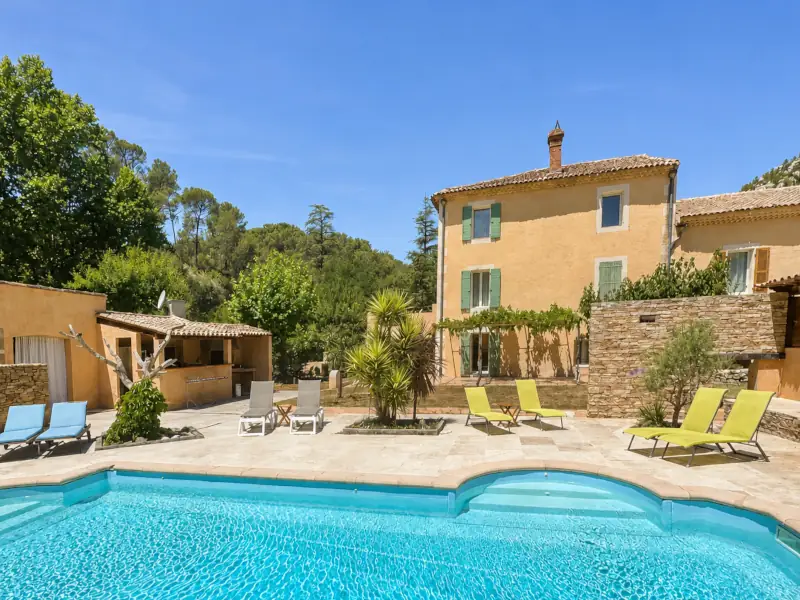
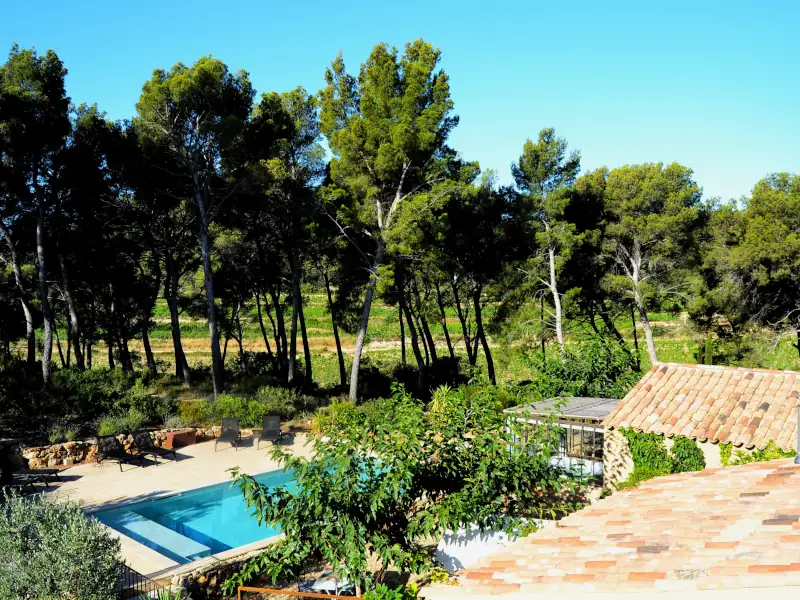
Les Pieds tanqués
Prestige Bed and breakfast
Saint-Cyr-sur-Mer
Visit website
Bastide de Fontvieille
Prestige bed and breakfast
Saint Cyr sur mer
Visit website
Last updated: