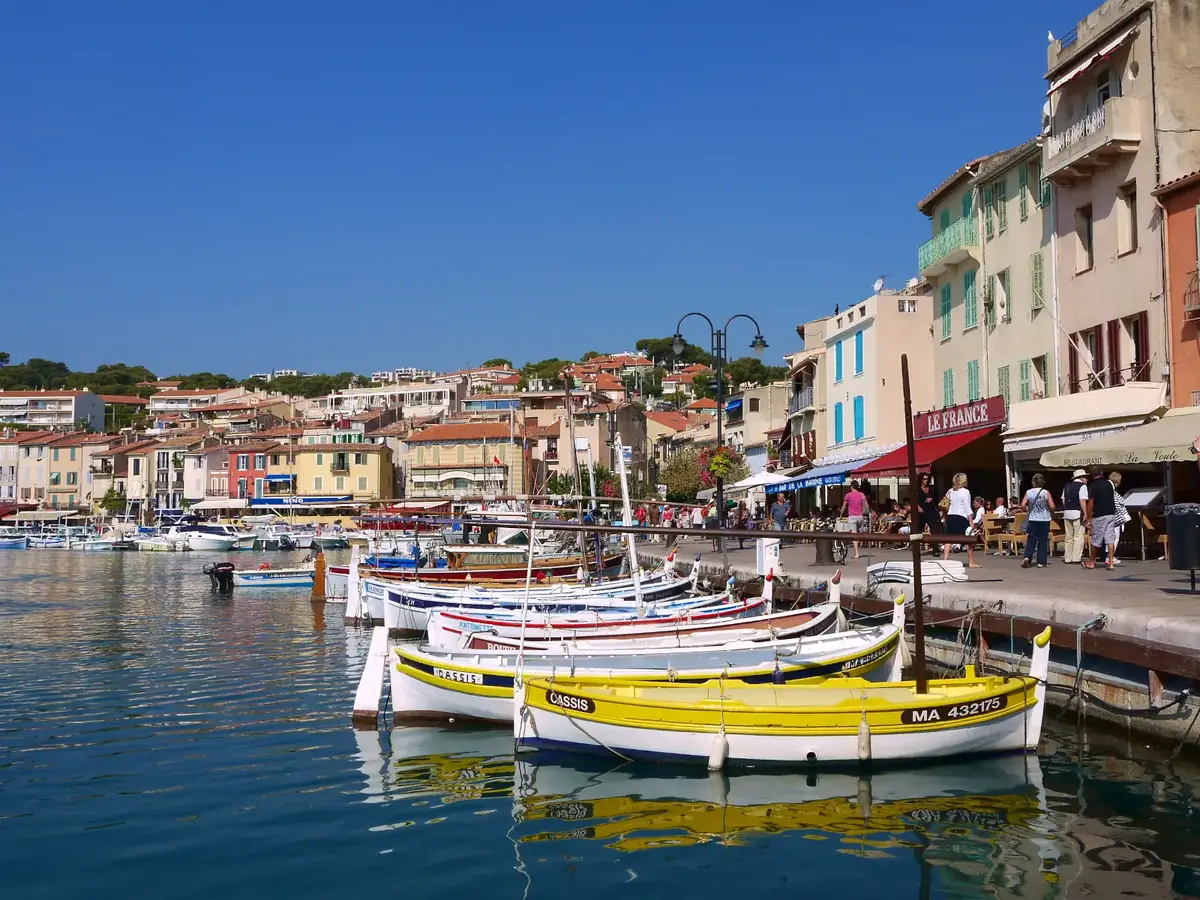
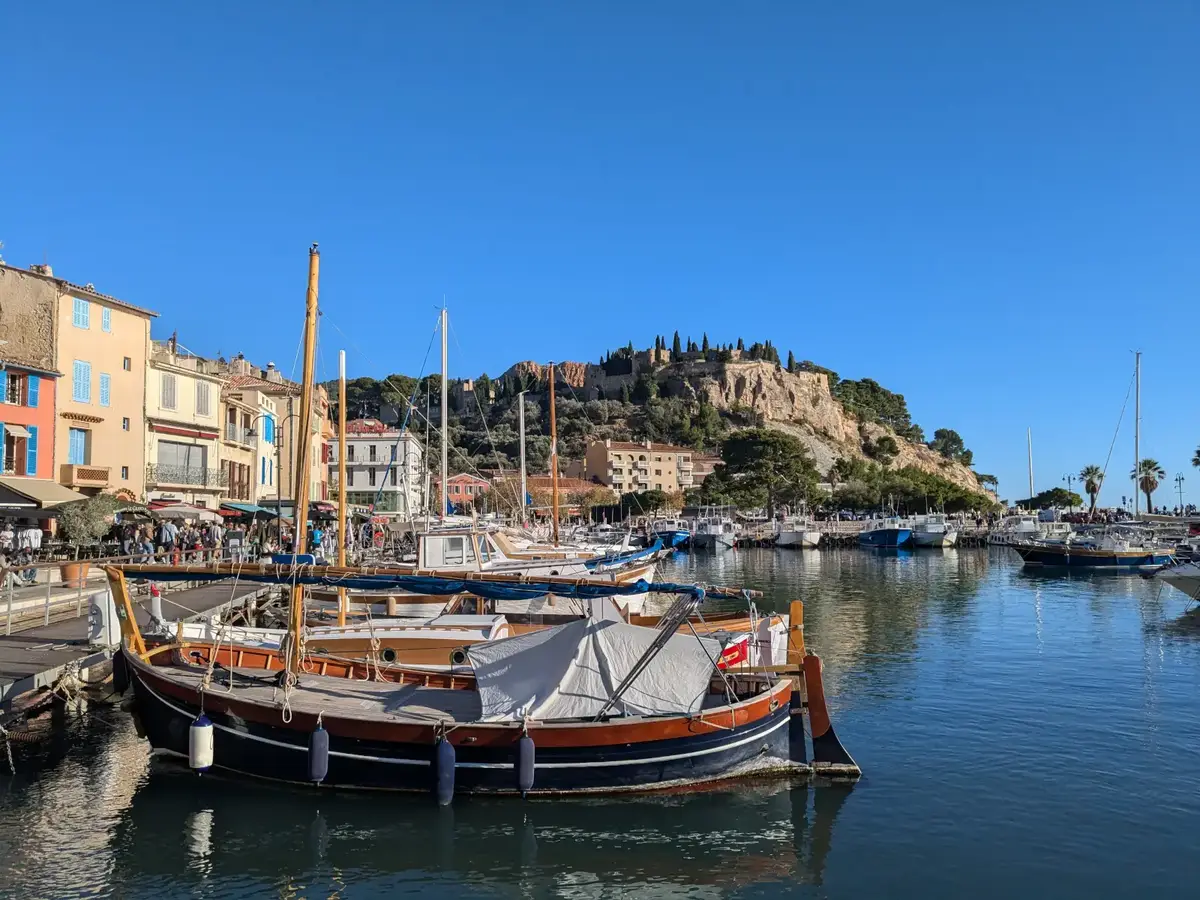
Already known in Roman times as Carsici portus, Cassis developed in a bay framed by the Mont de la Gardiole and Cap Canaille. The harbor keeps a village scale, with quays, small boats, terraces and departures towards the Calanques.
In the morning, the life of the harbor, the pale façades and the light on the bay give Cassis an atmosphere quite different from larger seaside resorts. The village is best explored on foot, through narrow streets, small squares, nearby beaches and views of the cliffs.
Port-Miou, Cap Canaille and the Route des Crêtes
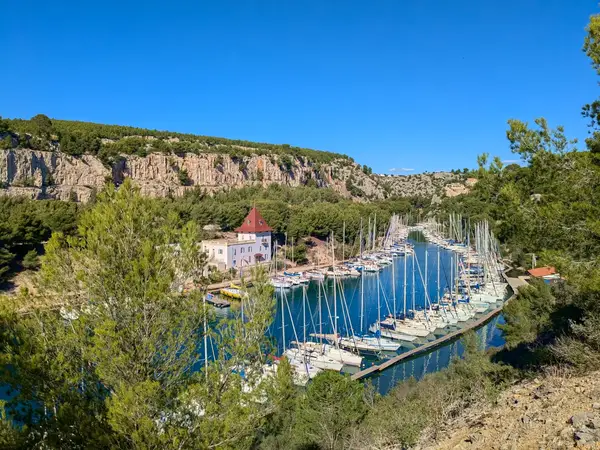
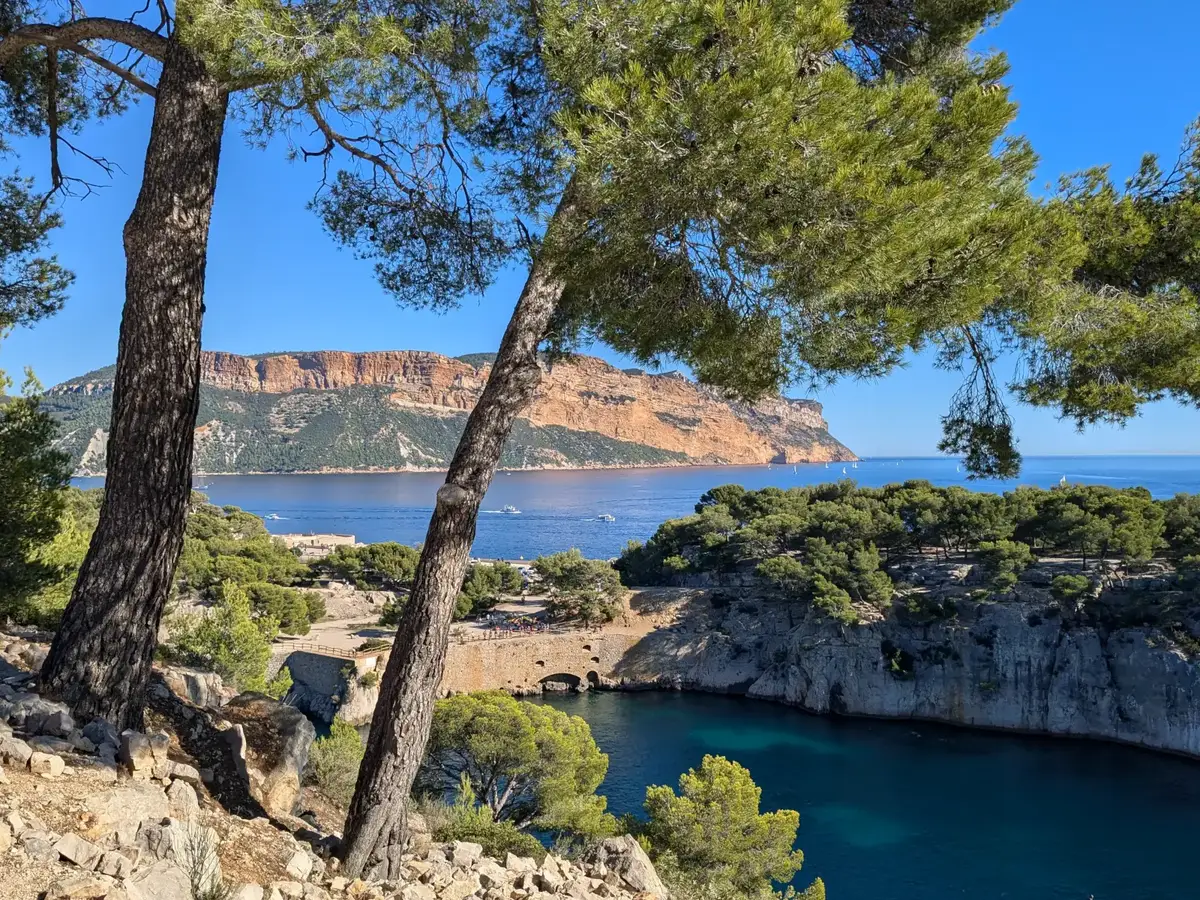
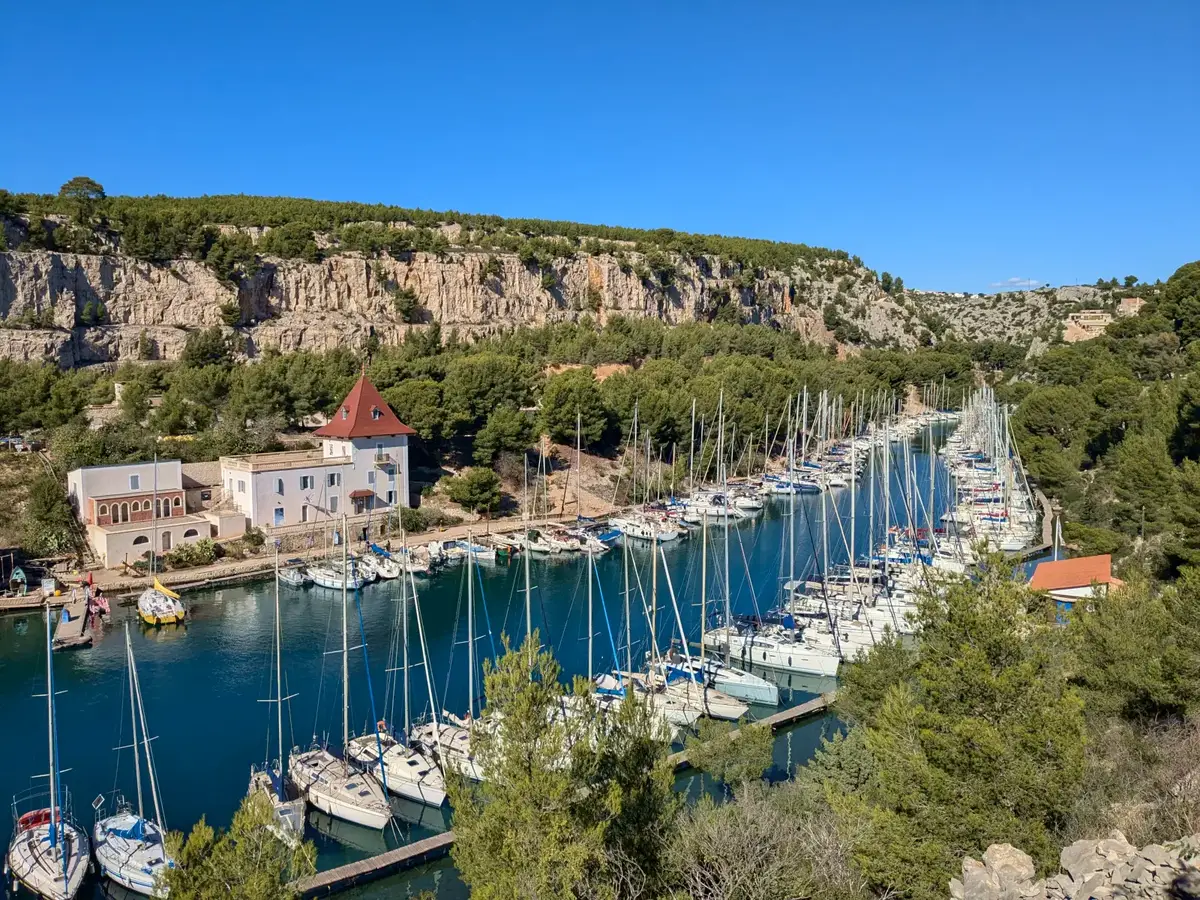
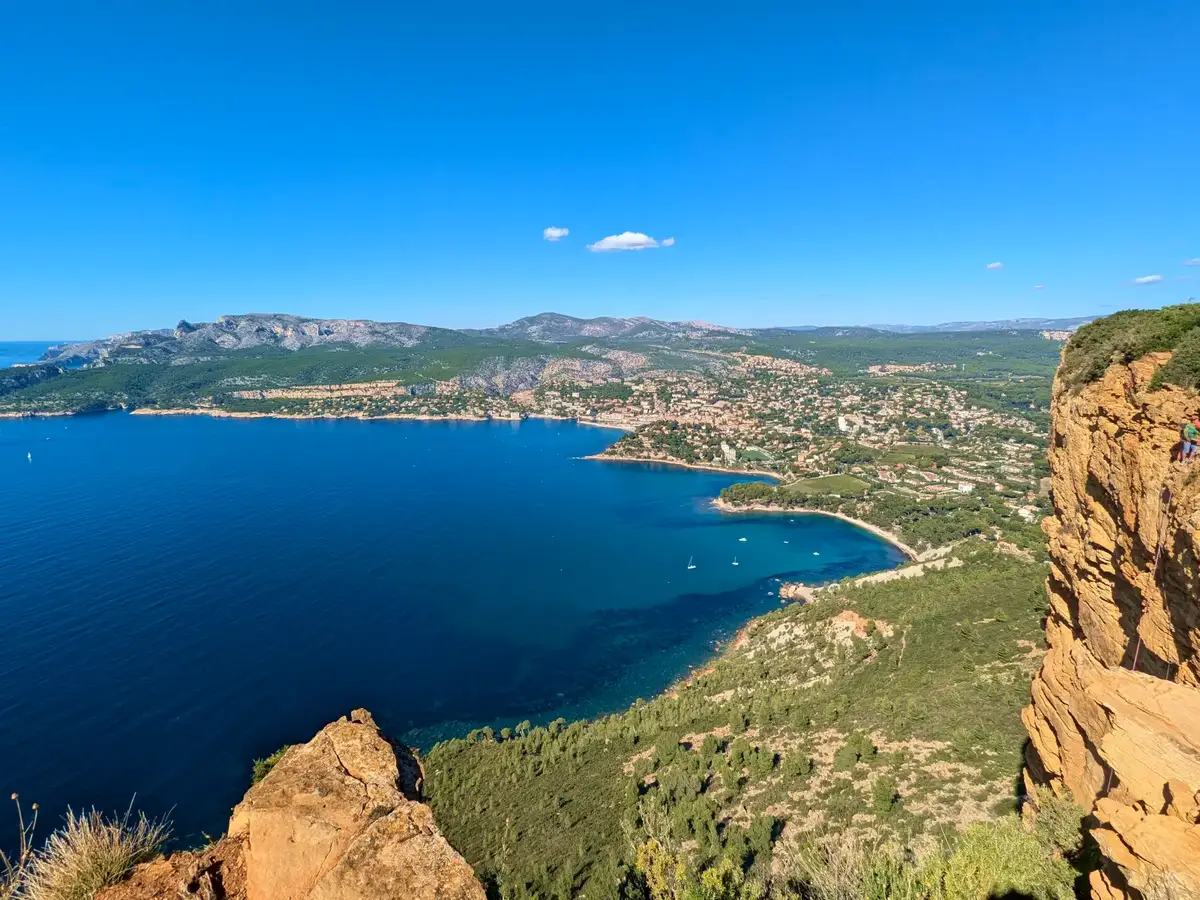
West of the village, the Port-Miou Calanque marks the entrance to the Calanques massif. Higher up, Cap Canaille and the Route des Crêtes open wide views over the bay of Cassis, La Ciotat and the Soubeyrannes cliffs.
Trails lead towards Port-Miou, Port-Pin or En-Vau depending on the season, weather and access conditions in the massif. Boat trips offer another view of the coastline, more mineral and vertical, with the cliffs seen from the sea.
Vineyards and heritage in Cassis
Vineyards still surround the village and recall the long-standing importance of the Cassis terroir. Its white wines, among the first appellations officially recognized in France, naturally pair with fish, shellfish and Mediterranean cooking.
In the center, Saint-Michel church, sloping streets and traces of the former castle evoke a quieter history than the harbor, but one that is still present. Staying in a bed and breakfast in or around Cassis lets you enjoy the village early in the morning or in the evening, then explore Marseille, La Ciotat, Bandol or the Provençal hinterland, as far as the Sainte-Baume massif and its Grotto of Mary Magdalene.

 Meals with the hosts