


A getaway in Marseille
Les Goudes, a fishing port at Marseille’s edge
Text and photographs by Vincent Flachaire
Houses cluster around the small harbour in the cove of Les Goudes. Limestone crops out everywhere, and beyond Callelongue, steep paths lead on foot into the Calanques.
A fishing port on the edge of Marseille
At Marseille’s southern edge, Les Goudes occupies a cove between the sea and the Marseilleveyre massif. A single road connects it to the rest of the city: from Pointe Rouge, it follows the coast through Montredon and La Madrague de Montredon, before reaching the harbour beneath the limestone slopes.
The city centre is far away, on the other side of the bay. The road continues to Callelongue, where it ends without crossing the Calanques massif. Getting to Les Goudes sometimes takes patience: this sole road access is often congested at weekends and in summer.

Les Goudes in the days of factories and cabanons
In the 19th century, fishermen were not the only people in Les Goudes. Relegated far from central Marseille, soda, lead and sulphur factories were established along this coast. Some of their walls were later reused to build cabanons and the Saint-Lucien chapel.
In 1875, a railway project proposed linking Le Prado to Les Goudes to serve the factories. The line would have stopped at Sainte-Anne, Château Borély and Montredon, but it was never built. It was the tramway that eventually brought this coast closer to central Marseille. Its terminus was established at La Madrague de Montredon in 1891, making Sunday outings to the cabanons easier.
The cabanons welcomed fishermen, factory workers and modestly paid employees who spent their days off by the water. These simple cottages offered a Sunday away from the city, fishing and sharing a meal with family or friends. Over the years, many were enlarged and converted into houses.
In recent years, Les Goudes has become fashionable. Its restaurants and terraces attract visitors well beyond the regulars from Marseille. The former fishing and working-class neighbourhood is now sought after for its waterside houses and proximity to the Calanques.
A coast defended by the military
The hills and headlands also served to defend Marseille’s bay. The small fort above Les Goudes dates from the Napoleonic era. Second World War defences added to this network, including a blockhouse south of the harbour.
These military structures are not, however, equipped for visits.

Maïre island opposite the rocky coast
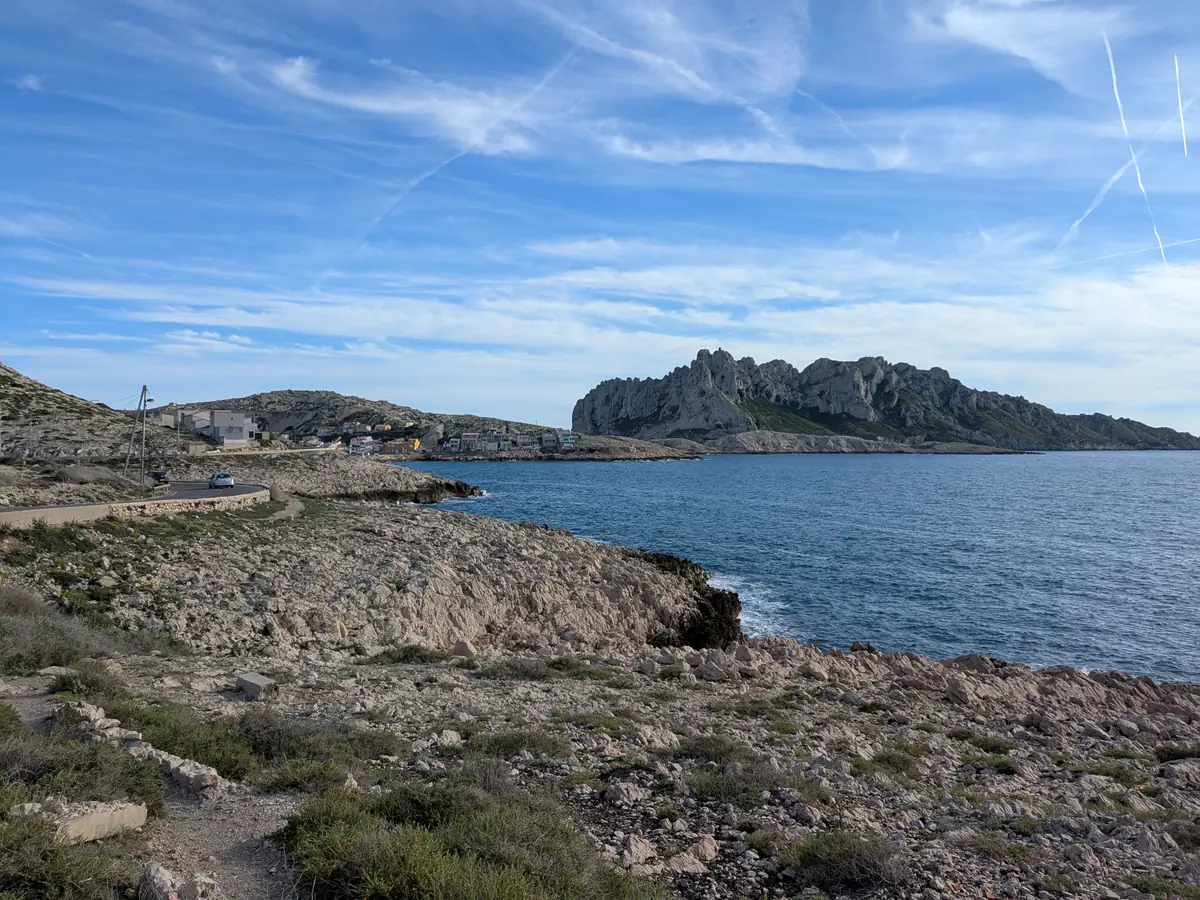
Leaving the quays, limestone once again appears underfoot. Jagged rocks and small coves replace the village streets. The outline of Maïre island stands out. The island belongs to the Riou archipelago. The Passage des Croisettes separates it from Cap Croisette: it is only 70 metres wide at its narrowest point. Uninhabited Maïre is part of this group of protected islands that provide a home for many seabirds.
Coastal vegetation grows in shallow soil exposed to wind and sea spray. Areas protected by the National Park allow these plants to re-establish themselves.

Continuing to Callelongue
The road reaches Callelongue, the last coastal hamlet before the paths of the Calanques. From its small harbour, trails continue into the Marseilleveyre massif.
Les Goudes can also be reached by sea: in season, a boat shuttle links the Old Port with Pointe Rouge, where a connection continues to Les Goudes harbour.
For another side of Marseille, the lanes and stairways of Le Panier offer a walk through the old town. On the other side of the bay, the calanque of Niolon combines a small harbour with structures belonging to the Côte Bleue railway.

Practical information
Planning a getaway to Les Goudes
- Suggested duration
- Allow an hour to an hour and a half for the village, harbour and surroundings, excluding travel and hiking.
- Getting there without a car
- Buses 19 then 20 serve Les Goudes. In season, boat shuttles also provide a connection via Pointe Rouge. Check routes, timetables and operating days with RTM.
- Traffic and busy periods
- In summer and at weekends, traffic is heavy and parking spaces are scarce. Favour off-peak hours and public transport. Streets and entrances to homes must remain clear.
- Walking and the coast
- Bring water, sun protection and shoes suitable for rocky ground. Check the National Park’s visiting conditions, including closures of the hills. The small beaches are not supervised.
To plan your visit: Calanques National Park.
Extend your stay
Guest houses around Marseille
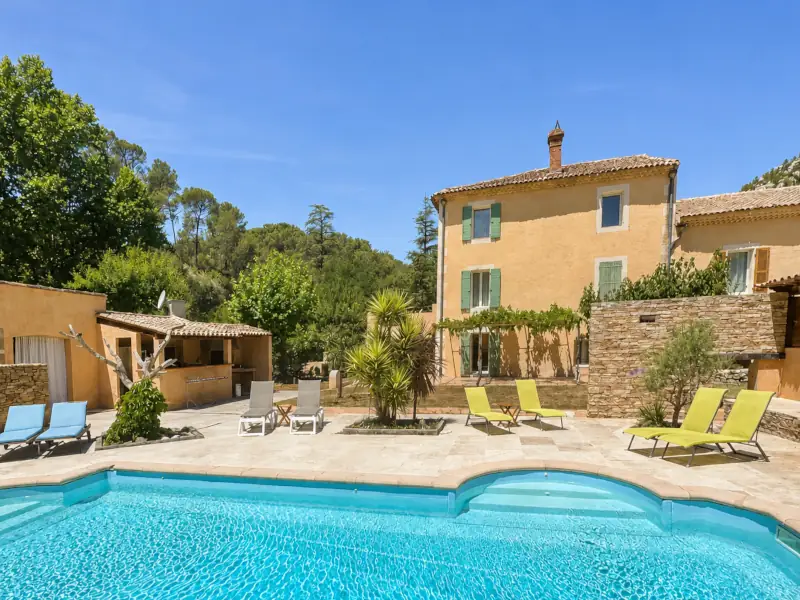
These properties listed on the Portal are within 25 km as the crow flies of the location featured in this getaway. Visit their websites to plan your stay.
Last updated: