


A getaway in Uzège
Blauzac, visiting a hilltop village in Uzège
Text and photographs by Vincent Flachaire
In Blauzac, stone lanes lead to the castle and church above the countryside around Uzès. Nearby, paths through the garrigue lead to the dry-stone huts of La Librotte.
A village on a hill
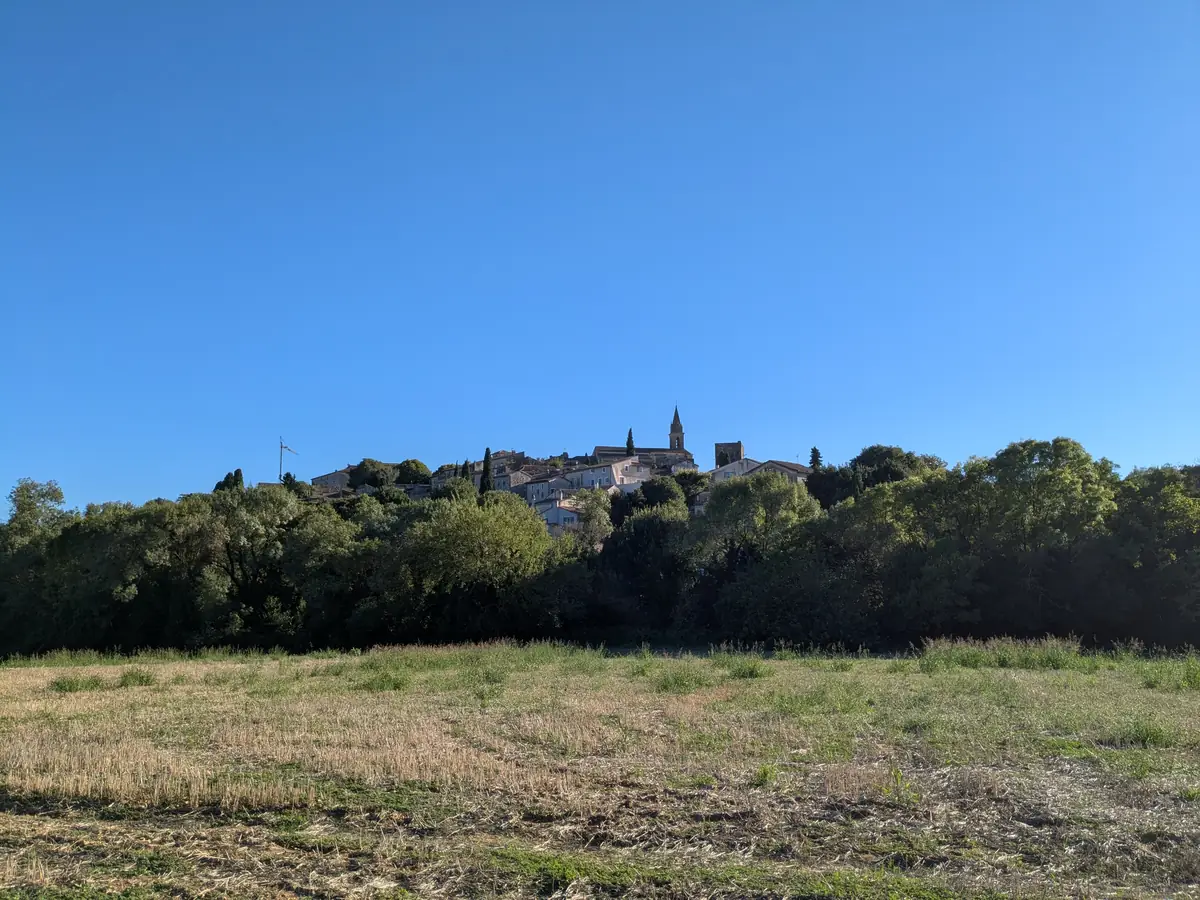
On the approaches to Blauzac, the bell tower and houses rise above olive trees and fields. Rue de l’Hôtel-de-Ville leads to the castle and church at the heart of the former fortified village. The two buildings stand close together, with streets allowing you to walk around them.
Take time to look at the door surrounds, mullioned windows and façades built from stones of different shades. In the narrowest passages, a few steps take you from sunshine into the shade of the walls.

A medieval castle at the heart of the village
The fortified village is mentioned as early as the twelfth century, but the present castle dates mainly from the fourteenth and fifteenth centuries. Its corner tower, built with projecting stone faces known as rustication, appears to be older. Around an inner courtyard, the wings combine living quarters with defensive features.
The building has suffered damage over the centuries. In the 1380s, the Tuchins set fire to the castle and church during the revolt that swept through Languedoc. Much of the castle’s medieval architecture survives, with later additions including cross-mullioned windows and an eighteenth-century courtyard gallery.
To see part of the castle’s interior decoration, continue to the Musée Georges Borias in Uzès. It holds medieval floor tiles made in Saint-Quentin-la-Poterie, comparable to those in the Palais des Papes in Avignon.

Notre-Dame, a church reshaped over time
On its north side, Notre-Dame church retains masonry that local historical research dates, with some uncertainty, to the second half of the twelfth century. After the destruction of the 1380s, some sections were rebuilt using smaller stones. The porch and bell tower give the building an appearance largely shaped by nineteenth-century alterations.
In the lane beside the church, marks carved into the stones are attributed to the masons who worked on the medieval building.

A Catholic and Protestant history
Blauzac also has a Protestant church. An earlier building was destroyed when the Edict of Nantes was revoked in 1685. The present church, built in 1818 with subscriptions from the congregation, gave the Reformed community its own place of worship again.

Views across Uzège
Place du 8 Mai has a viewpoint table facing Mont Ventoux. Another route leads to the former windmills and a view towards the Cévennes.
The dry-stone huts of La Librotte
In the eighteenth and nineteenth centuries, silkworm rearing and wine growing contributed to Blauzac’s prosperity. Cereals occupied the lowland fields, olive trees grew on stony ground, and sheep flocks were numerous.
Dry-stone walls mark the boundaries of former cultivated plots. The capitelles, huts built without mortar, provided temporary shelter for farmers, their tools or their crops. They served both farming and pastoral activities.
At La Librotte, three adjoining huts form a group that the association of the same name has maintained and restored since 1995. They were built with stones found on site. Along with the walls and heaps of stones cleared from fields, these shelters help explain how local people cultivated such stony land.
Continue towards Uzès and the Gardon
In Uzès, Place aux Herbes, the Duchy and the streets of the historic centre complement a visit to this village of Uzège. For another example of building in stone, explore the Roman aqueduct remains near the Pont du Gard. Towards Collias and the Pont Saint-Nicolas, the Gorges du Gardon offer further opportunities for walks.
Practical information
Planning your visit
- Route and duration
- Allow about an hour for the historic centre, and longer for breaks and viewpoints. Information panels describe a historical circuit and a route to the windmills; a leaflet is available from the town hall and village shops.
- Access and parking
- Blauzac lies south of Uzès, towards Nîmes. Place du 8 Mai provides a starting point for visiting the village. Use authorised parking spaces and respect posted restrictions and residents’ access.
- Castle and places of worship
- The castle is privately owned: its façades can be seen from the streets. Opening arrangements for the Catholic and Protestant churches depend on services and other activities. Contact Blauzac town hall for information and details of organised visits.
- The capitelles walk
- Plan this as a separate outing from the village walk. Consult the route published by the tourist office to choose your itinerary. The La Librotte association presents the Three Huts and their restoration. Do not climb on the dry-stone structures.
- What to bring
- Wear shoes suitable for slopes and stony paths, and bring water and sun protection. Avoid the hottest hours in summer. Before walking in the garrigue, check the Gard wildfire risk map and any access restrictions.
To plan your stay: Destination Pays d’Uzès Pont du Gard tourist office.
Extend your stay
Guest houses around Uzès and the Gardon
Discover guest houses in the area and visit the owners’ websites directly to plan your stay.
Last updated: