


A getaway in the Aix region
Jouques, from the Village Fountains to Notre-Dame-de-la-Roque
Text and photographs by Vincent Flachaire
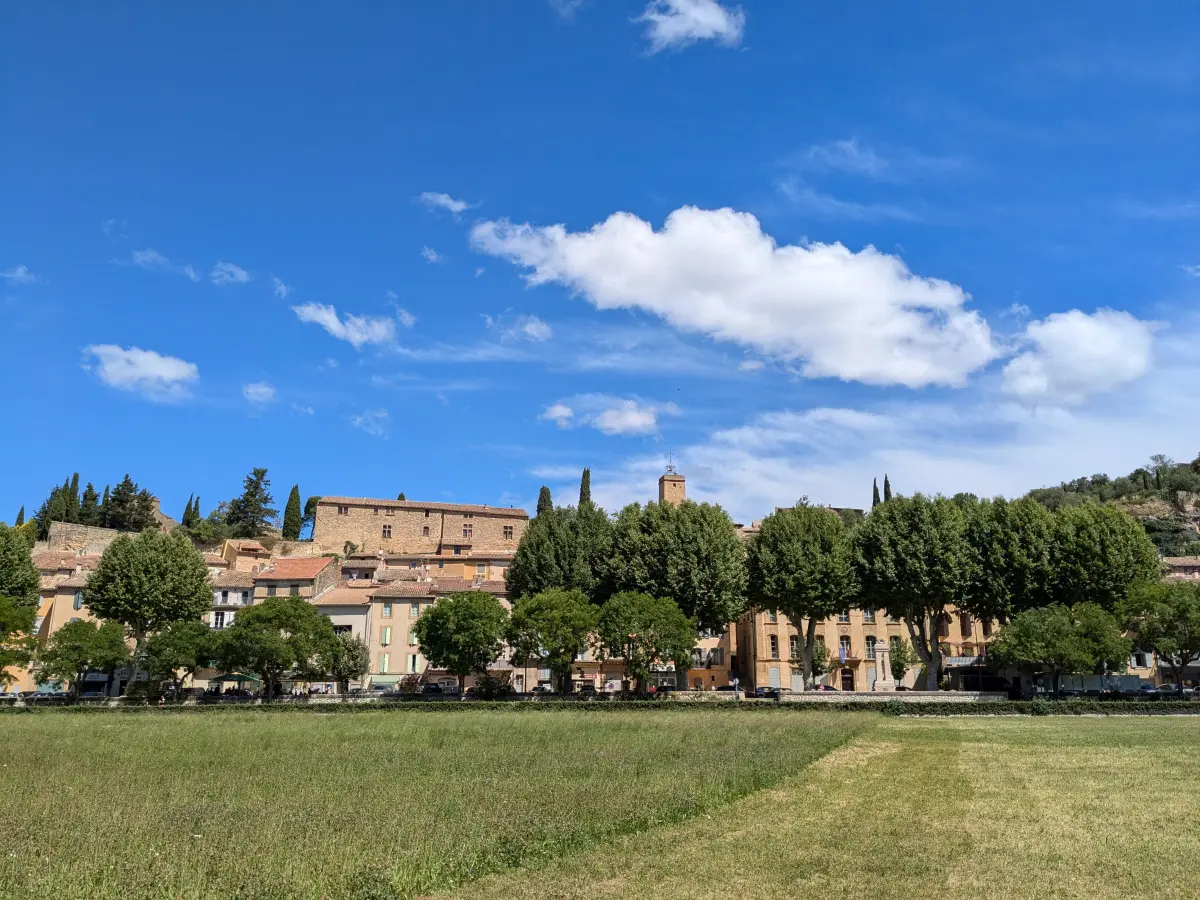
In Jouques, houses rise in tiers above the Réal. The lanes of the old village climb towards Notre-Dame-de-la-Roque, while fountains line the Boulevard de la République.
The Réal, the Grand Pré and the first lanes
North of Aix-en-Provence, Jouques stretches along the foot of a hill near the Durance valley. Façades and rooftops rise one above another on the slope. Below, the Réal long supplied the mills and irrigated the gardens.

The Grand Pré is a broad expanse of grass at the heart of the village. In the 1960s, intervention by the Beaux-Arts authorities helped preserve part of the meadow during a development project near the protected site of Notre-Dame-de-la-Roque. The meadow offers an open view of the old village façades.
The fountains and the Traconnade spring
Several fountains line the Boulevard de la République at the foot of the old village. The Portail and Pousterle fountains were connected to the Traconnade spring in 1674. The Pousterle bears a head crowned with reeds, the work of sculptor Chastel. The Fontête, another fountain on the boulevard, was built in the 18th century.
Water from Traconnade already supplied Aix in Roman times. An aqueduct of around thirty kilometres linked the spring to Aquae Sextiae; remains survive, notably at Meyrargues. Before the fountains were installed, people living on the higher ground depended on cisterns and the springs in the valley.
The lanes and the medieval village gate
From the boulevard, Rue Grande climbs the slope. The lanes narrow between the façades and sometimes pass beneath the houses. Wooden doors, stone door surrounds and small stairways follow one another along the climb.
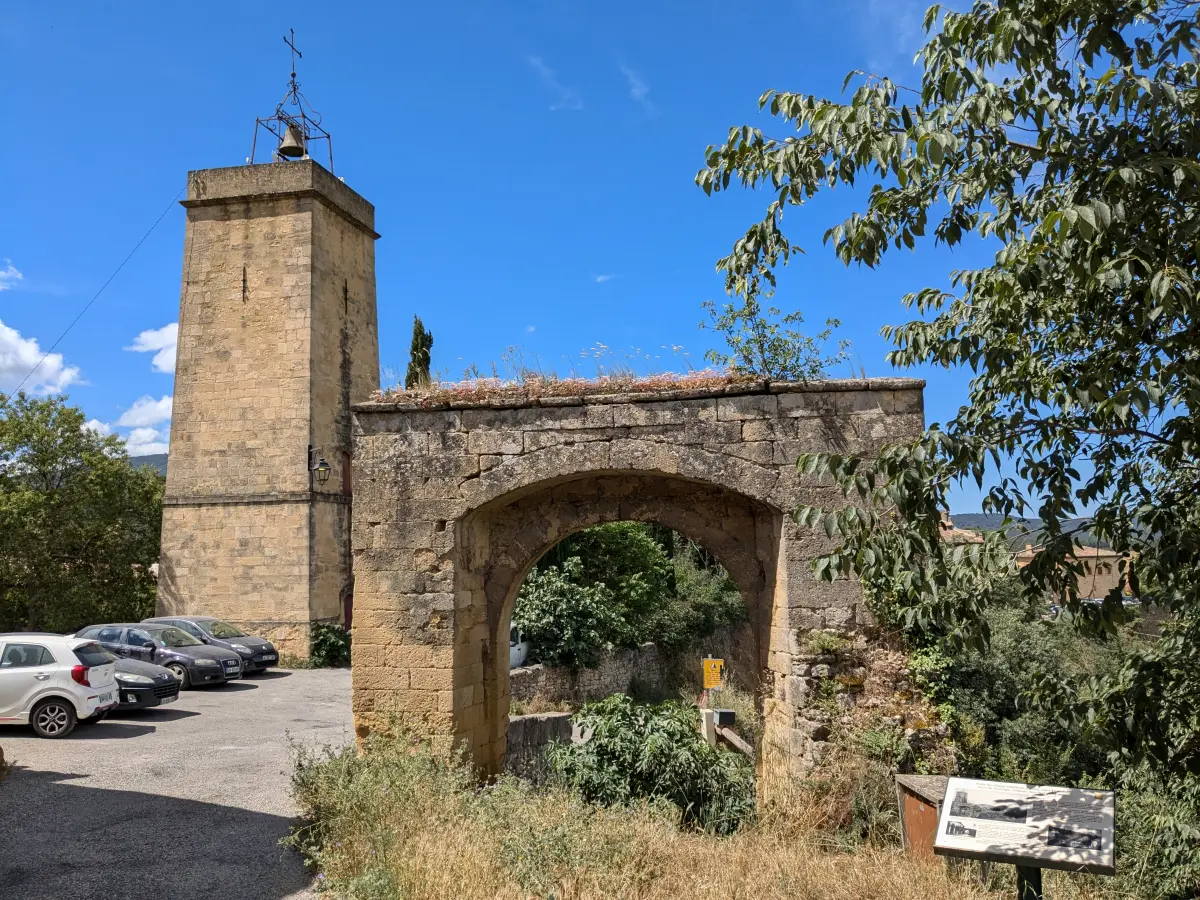
In the upper village stand the medieval gate and the Clock Tower. The stone arch, beside the former archbishops’ château, recalls the successive walls of Jouques. From the Middle Ages onwards, houses gradually spread down the hill towards the present village.
Notre-Dame-de-la-Roque, the former village church
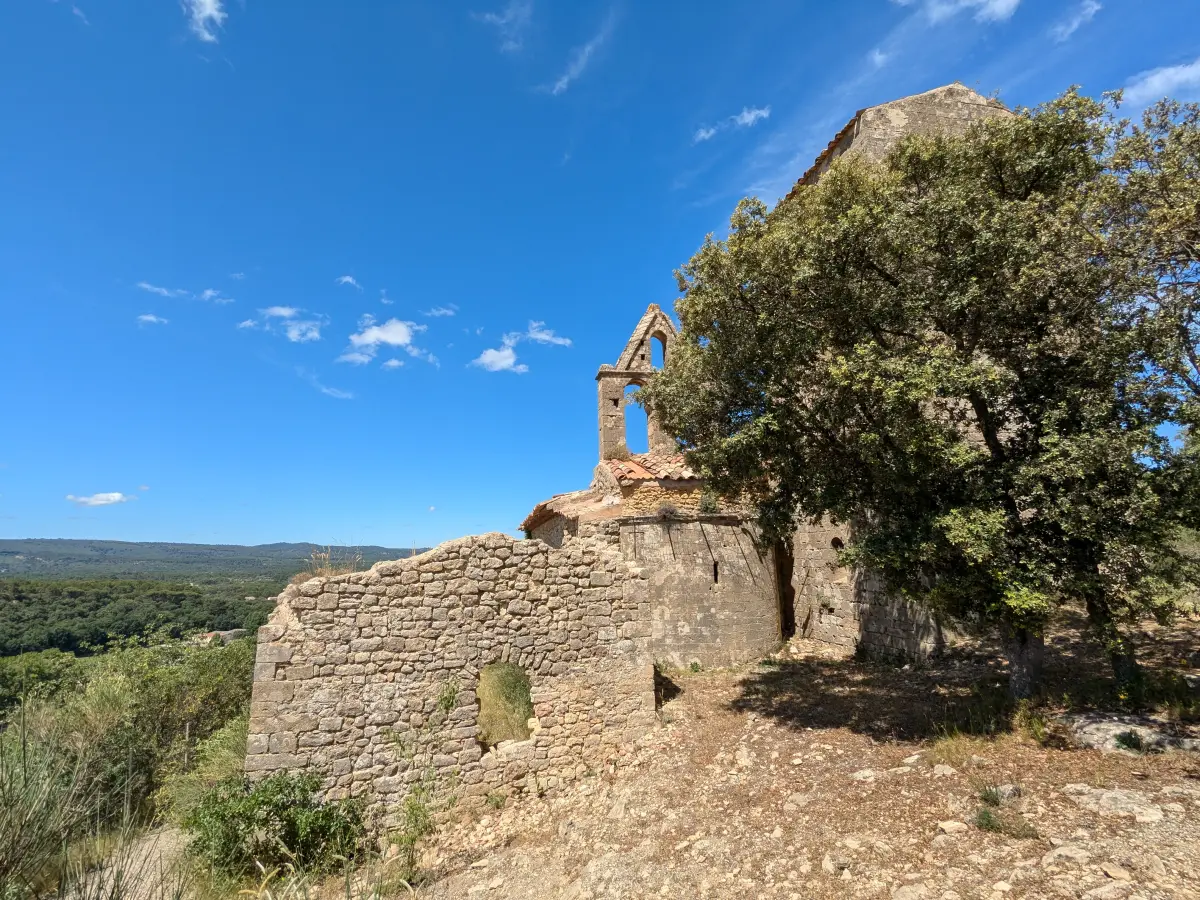
A stony path climbs to Notre-Dame-de-la-Roque above the rooftops. Mentioned as early as 1135 among the dependencies of the Abbey of Saint-Victor in Marseille, it remained the parish church of Jouques until 1440. That role then passed to Saint-Pierre, near the cemetery.

Originally, the church had a single Romanesque nave. In the 14th century, the lords of Jouques added two side naves. The southern one, Saint-Claude, collapsed in 1778: its surviving walls explain the open appearance of this part of the building.
From the forecourt, the view takes in the rooftops, the Réal valley and the Concors and Ubacs hills. On the horizon stands the Pic des Mouches, a summit of Sainte-Victoire.
The Bèdes plateau and the Concors hills
Outside the village, roads pass through olive groves, vineyards and woodland. To the north, the Bèdes plateau also has almond trees and a few lavender fields. The D11 towards Vauvenargues crosses the Concors massif through alternating woods and cultivated land.
Continue towards Mirabeau, Vauvenargues or Roquefavour
Towards the Durance, Mirabeau Bridge occupies the narrow passage through the Canteperdrix gorge. Towards Sainte-Victoire, Vauvenargues offers another village to explore at the foot of the massif.
Near Ventabren, Roquefavour Aqueduct extends the journey through the history of water: its 19th-century arches carry the Marseille Canal over the Arc valley.
Practical information
Exploring Jouques on foot
- Starting point
- The Boulevard de la République runs along the foot of the old centre. The tourist office is at number 33 bis on this boulevard.
- Parking
- The Place des Anciens Combattants near the Grand Pré and the sociocultural centre are among the village’s parking locations. The Boulevard de la République includes a blue parking zone.
- Suggested duration
- Around 1 hour 30 minutes for the boulevard, lanes and climb to Notre-Dame-de-la-Roque, excluding an interior visit and long breaks.
- Route
- The old centre includes sloping streets, steps and a stony path on the climb to the chapel.
- Notre-Dame-de-la-Roque
- The walk reaches the area around the chapel. Interior opening depends on locally announced visits and celebrations.
- Market and annual events
- The market is held on Sunday mornings. In early October, the Saint-Baqui festival brings a funfair and local festivities to the village. The Jouques Trail and the popular walk also take place in October. Dates and programmes appear in the Jouques events calendar.
- Local information
- Jouques heritage and visits; parking and services.
Extend your stay
Guest houses around Aix-en-Provence to extend the getaway
These properties listed on the Portal are within 25 km as the crow flies of the location featured in this getaway. Visit their websites to plan your stay.
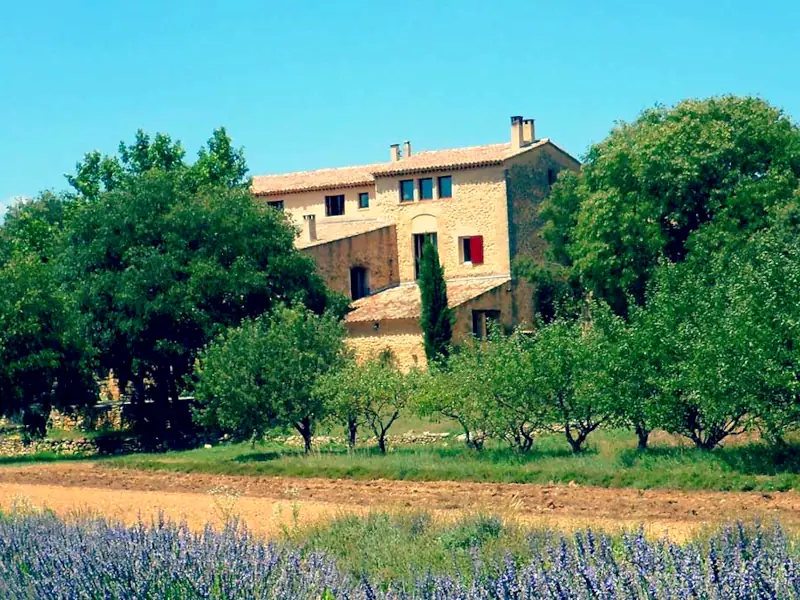

La Ferme
Charming bed and breakfast
Saint-Marc-Jaumegarde
Visit website
Campagne Chastel
Charming bed and breakfast and Gite
Aix-en-Provence
Visit website
Last updated: