


A getaway around Sault and on the Albion plateau
Lavender around Sault and the Albion plateau
Text and photographs by Vincent Flachaire
Around Sault, lavender fields alternate with cereals, woodland and dry-stone huts. The roads of the Albion plateau lead to Ferrassières, where the lavender festival takes place in early July.
Sault above the lavender fields
The houses of Sault overlook an agricultural basin at the foot of Mont Ventoux. From the edge of the village, fields fill the foreground, with wooded hills beyond. The road towards Aurel runs alongside the crops, while those to Saint-Trinit and Ferrassières climb towards the Albion plateau.
Allow for several stops to enjoy the scenery along the way. A village above flowering rows, a lone tree or a stone hut offer different views within the Sault countryside. The fields also change in appearance according to their exposure, the variety grown and the progress of the harvest.

Fine lavender and lavandin
The Sault area is known for its fine lavender, also called true lavender. Sunshine, limestone soils and the coolness of the uplands suit this plant, whose essential oil is valued in perfumery for its delicate fragrance. Lavandin is also grown here: the plateau’s fields do not all contain the same plant.
Lavandin is a hybrid of fine lavender and spike lavender. It yields more essential oil and is used in soaps and other scented products. To tell these plants apart, talk to a grower: ask which varieties they cultivate, how they harvest them and what their crop is used for.

The roads of the Albion plateau
Towards Saint-Trinit, Ferrassières and Revest-du-Bion, lavender grows alongside cereals and woodland, with isolated farms dotted across the landscape. Stones cleared from cultivated land provided material for low walls and the huts known here as bories. These mortar-free buildings served farm work long before they became photographic subjects among the lavender fields.
The borie at Ferrassières is a reason to stop along this route. Around its stone vault, lavender rows follow the lie of the field; further away, the crops give way to woodland. The roads continue towards Banon and Simiane-la-Rotonde, towards the Montagne de Lure.

Ferrassières celebrates lavender
On the first Sunday in July, the streets of Ferrassières host the lavender festival. Organised by the Eurolavande association, it is a chance to meet the people who grow and process the plant. Stalls bring together bunches, dried flowers, essential oils and handmade products; conversations with growers add to a walk through the fields.

Sickle-cutting and distillation demonstrations introduce the skills of the harvest. Depending on the edition, the programme also includes walks and workshops. These festival photographs were taken in 2025: among the market stalls, a still helped explain how the plant becomes essential oil.
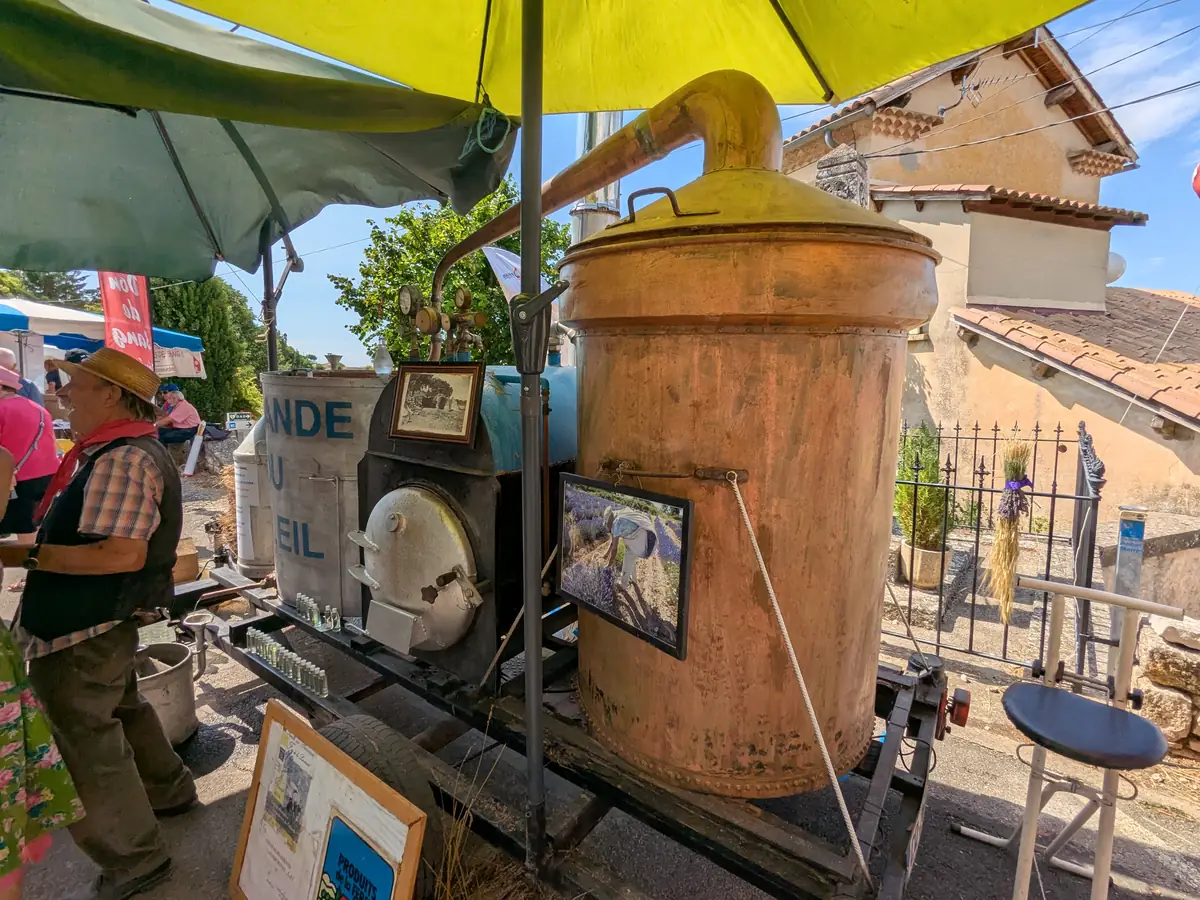
Inside the still, steam passes through the flowers and carries their aromatic compounds with it. It is then cooled back into liquid. The essential oil separates from the floral water, known as hydrolat. Some of the harvest follows a different route: once dried, it is made into bunches or flower sachets. These uses explain the range of products available at the festival.
Sault’s big gathering on 15 August
Sault’s lavender festival is a major summer event in the lavender-growing area. Every 15 August, growers, craftspeople and visitors gather at the Bois du Deffends for the market, distillation demonstrations and Provençal entertainment. The French sickle-cutting championship honours a skill that mechanisation has largely replaced in the fields.
Run by the Lavandes en Fête association and its volunteers, the day combines a parade, meetings with lavender growers and a country lunch beneath the oaks. It offers a way to continue exploring lavender after flowering: by this date, many fields have already been harvested.

Aurel, a village of painters
Aurel has been home to several Provençal painters, including René Seyssaud, who set up a studio here in the 1930s. In 1955, Pierre Ambrogiani moved into a teacher’s accommodation and used an empty classroom as his studio. Beyond Aurel, Montbrun-les-Bains extends the outing towards the Baronnies, with its fountains, the stone-paved lanes of the old village and the buildings of its spa resort.
Choosing when to see the flowers
July is a useful guide when planning this outing, but it does not guarantee that every field will be in bloom. Altitude, varieties, weather and cutting dates shift the timetable from one field to another. Before setting out, ask about the current flowering conditions rather than relying on a fixed date.

Morning and late afternoon give the lavender rows more definition. When the sun is lower, shadows highlight the furrows and the rolling ground.
Further afield towards Ventoux and the Baronnies
From Sault, the road to the summit of Ventoux leaves the farmland and climbs through the forest. To the southwest, the Nesque gorges offer a different landscape of cliffs and roads along the hillsides; the Nesque area is also an option for a place to stay.
To the north, the lavender fields of the Baronnies continue the journey into the valleys and hills of the Drôme. For another outing around this crop, the Valensole plateau offers different perspectives, with its village, almond trees and large lavandin fields.
Practical information
Seeing lavender around Sault
- Route and time to allow
- From Sault, plan an outing through Aurel, Saint-Trinit and Ferrassières. Allow half a day with several photography stops, and longer for a walk, a distillery visit or the festival.
- Flowering
- Flowering varies with the fields, weather and harvest. Check current conditions with the tourist office. The date of a festival does not guarantee flowering fields.
- Sault lavender festival
- On 15 August at the Bois du Deffends: a growers’ market, distillation, sickle-cutting competitions and Provençal entertainment. Consult the official Sault festival website for the forthcoming edition’s programme, access, parking and shuttle services, as well as country-lunch bookings.
- Ferrassières lavender festival
- On the first Sunday in July. The official Ferrassières programme gives details of activities, walks and access arrangements for the forthcoming edition.
- Parking and farmland
- Park in authorised spaces without blocking farm tracks or stopping on bends. The fields are private property: keep to accessible paths, do not pick the flowers and ask permission before entering a field.
- What to bring
- Water, a hat, sun protection and shoes suitable for stony paths. Many bees forage among the lavender: avoid touching or disturbing them.
- Meeting a grower
- Choose a visit that covers cultivation and processing the harvest. Check opening times and any booking requirements; distillation demonstrations also depend on the working season.
To plan your outing: Ventoux Provence tourist office.
Extend your stay
Guest houses around Sault and the Albion plateau
These properties listed on the Portal are within 25 km as the crow flies of the location featured in this getaway. Visit their websites to plan your stay.
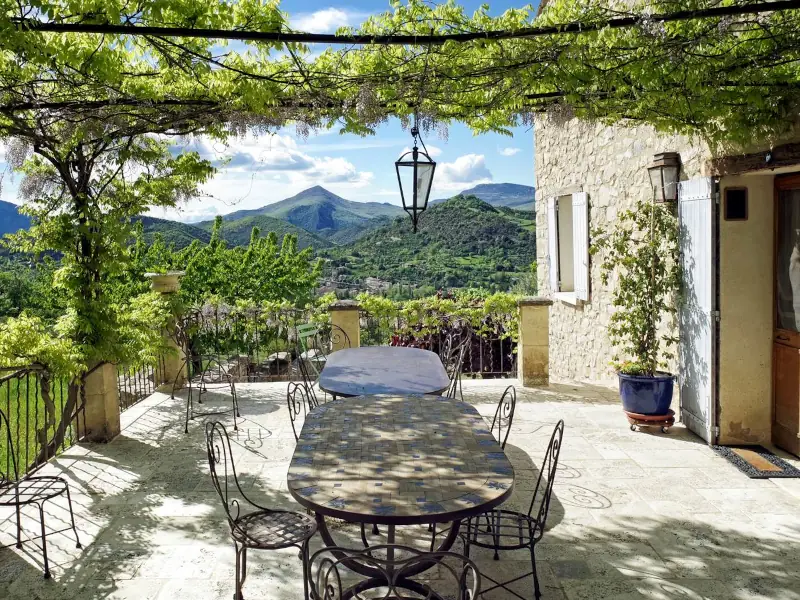
Le Deffends de Redon
Charming bed and breakfast
Montbrun-les-bains
Visit website
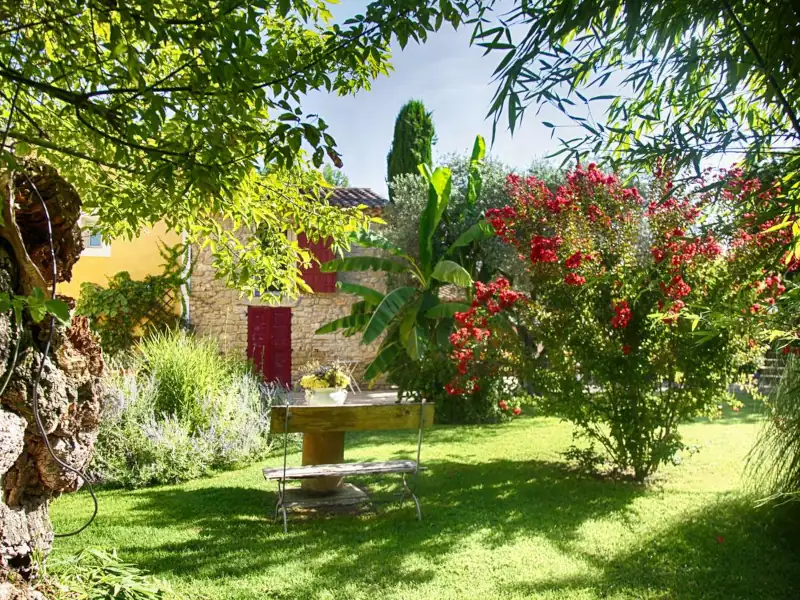


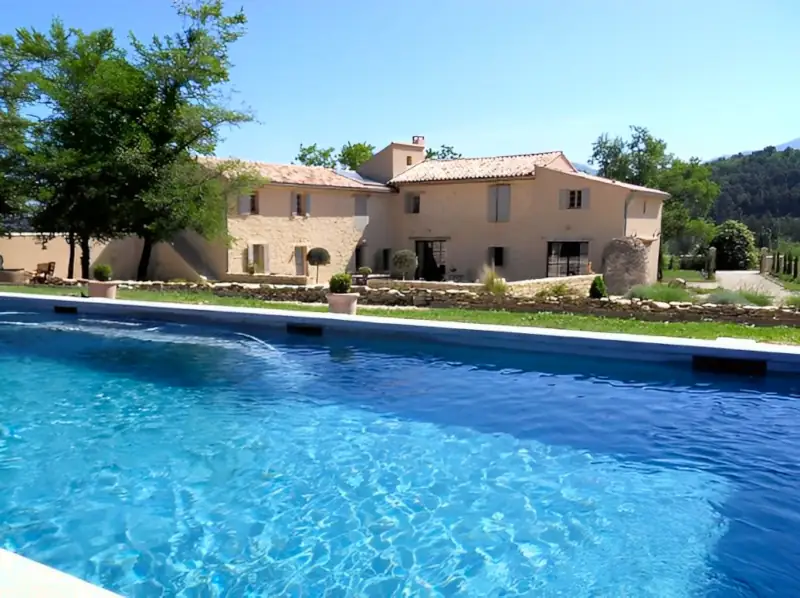

Gîte des Demoiselles
Charming Gite
Roussillon
Visit website
Four de Cony
Charming bed and breakfast
Saumane de Vaucluse
Visit website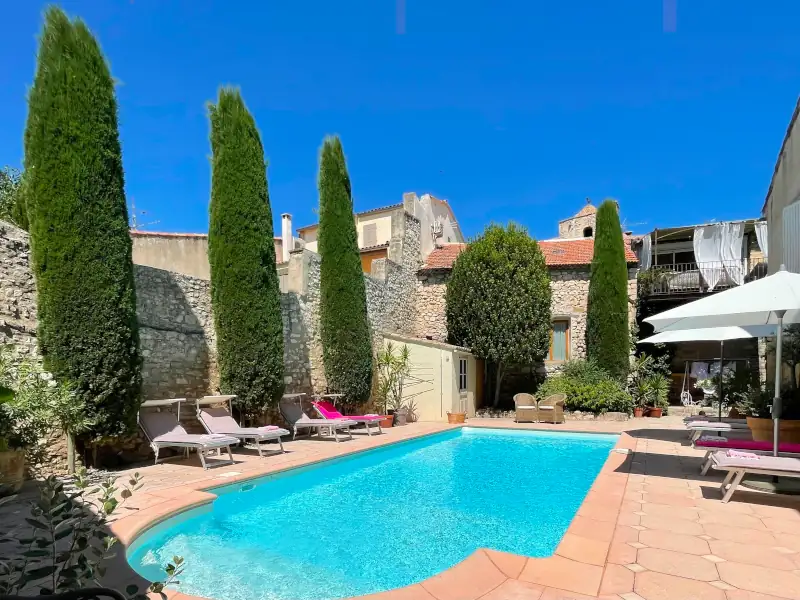


La Lauren
Charming vacation rental
Ferrassières
Visit website

Last updated: