A getaway in the Rhône vineyards
Cairanne and its wine, a visit to the village
Text and photographs by Vincent Flachaire
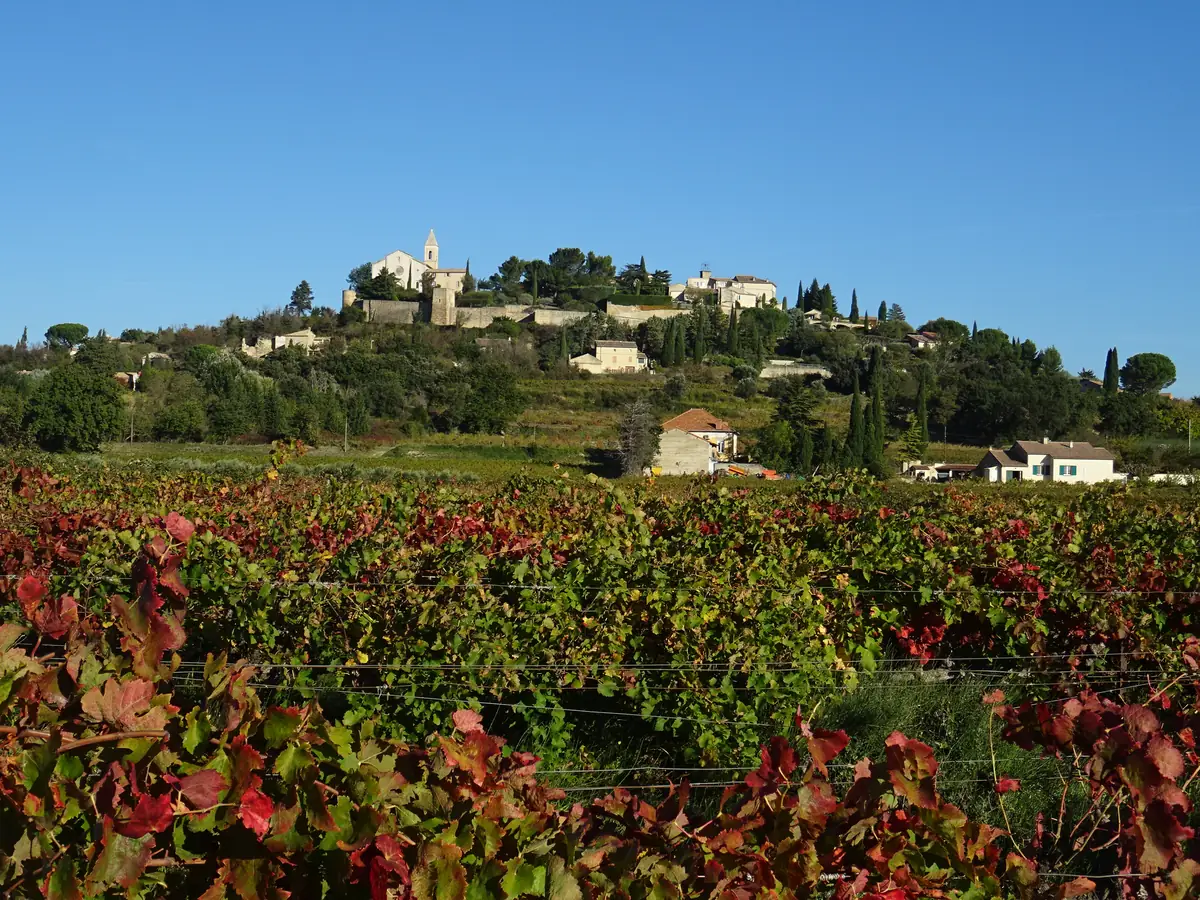
At Cairanne, the vines that produce the cru bearing its name stretch below the old village. The walk leads to fortified gates, the clock tower and gardens.
The old village above the vineyards
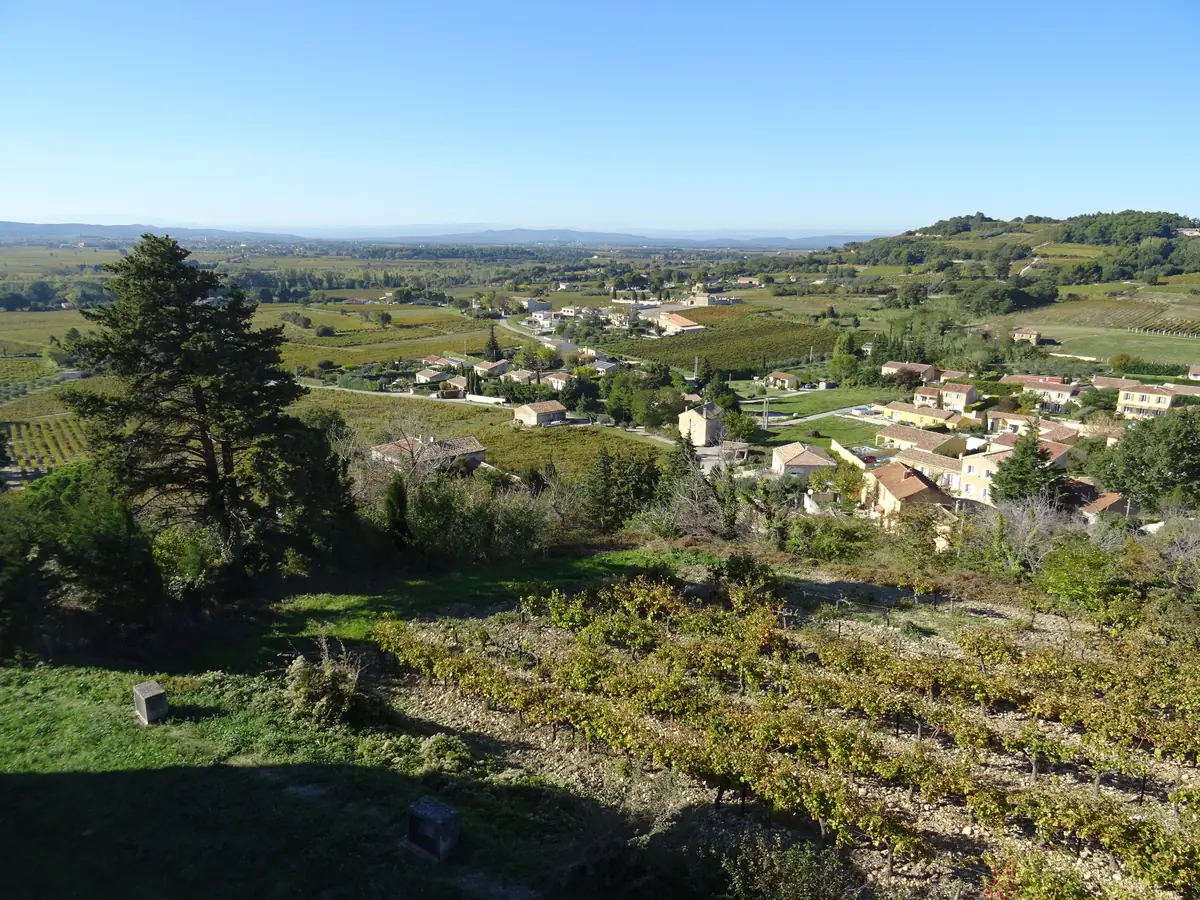
In northern Vaucluse, Cairanne occupies a hill overlooking the Aygues plain. From the vineyard roads, houses cluster around Saint-André church; further down, buildings extend towards the shops and wine cellars. In the 19th century, some residents left the hilltop to settle on the plain.
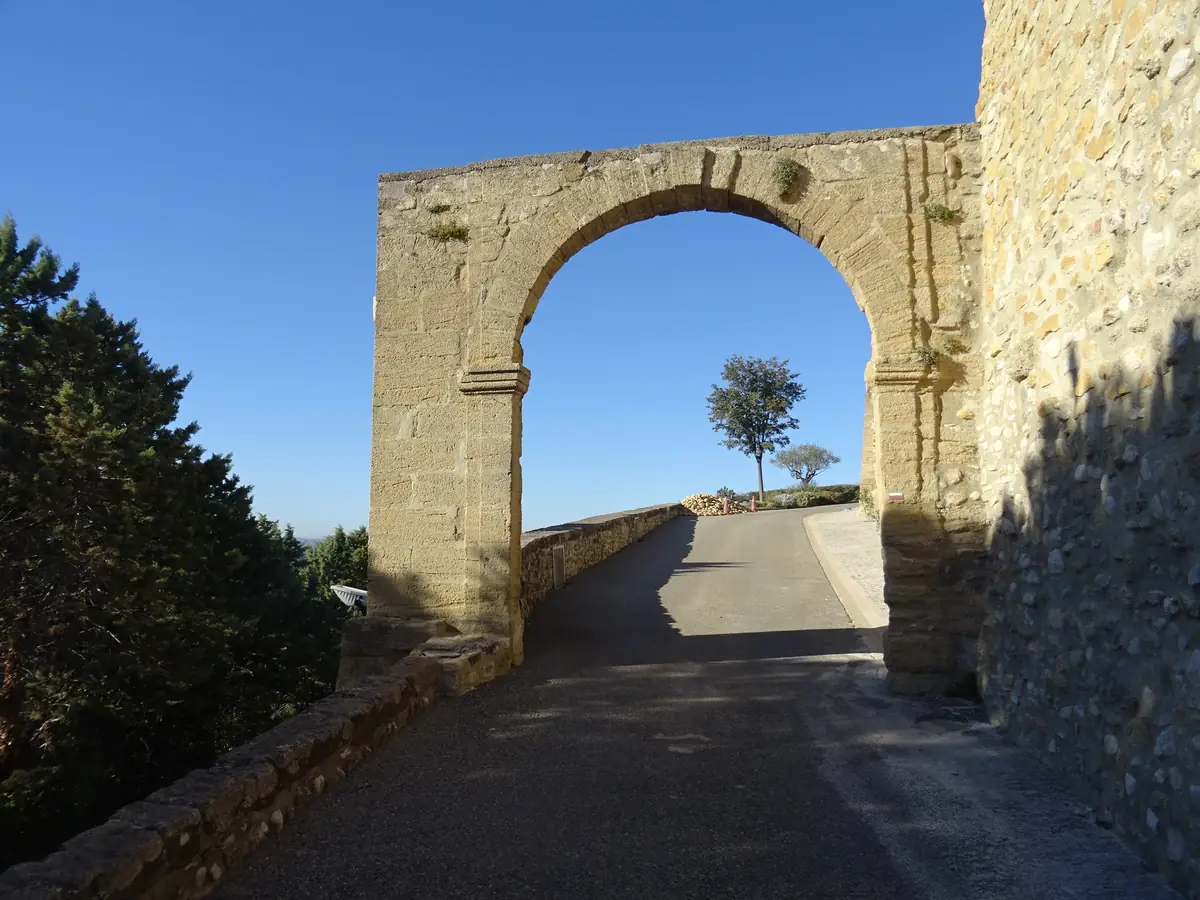
The hilltop village retains its passageways and remains of its enclosing walls. Until the 19th century, only two gates provided access: the Porte du Sergent and the Porte d’Autan. Walking uphill brings you into this compact settlement, whose walls protected residents and allowed them to control access.
The Porte du Sergent
A cobbled climb leads beneath a stone arch to the Porte du Sergent. Its long steps were used by more than pedestrians: they also made the ascent easier for mules. Before roads and vehicles, these slopes had to allow provisions and other loads to reach the houses.
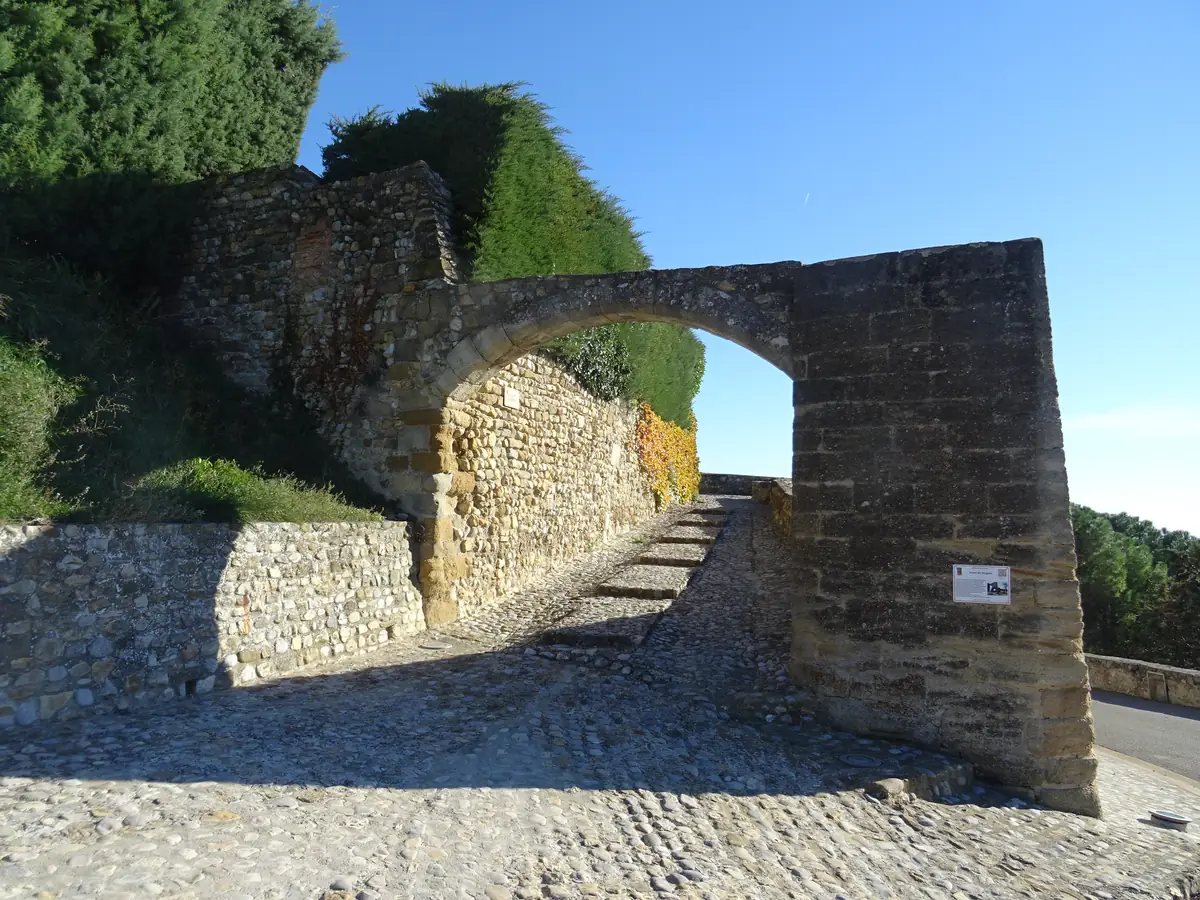
The entrance was protected by a barbican, an outer defensive structure that forced attackers through two successive gates. Set at an angle to each other, the gates prevented a direct attack with a battering ram; attackers had to advance along an exposed ramp below the walls. The village information panels reconstruct this arrangement, partly erased when a road was opened after the French Revolution.
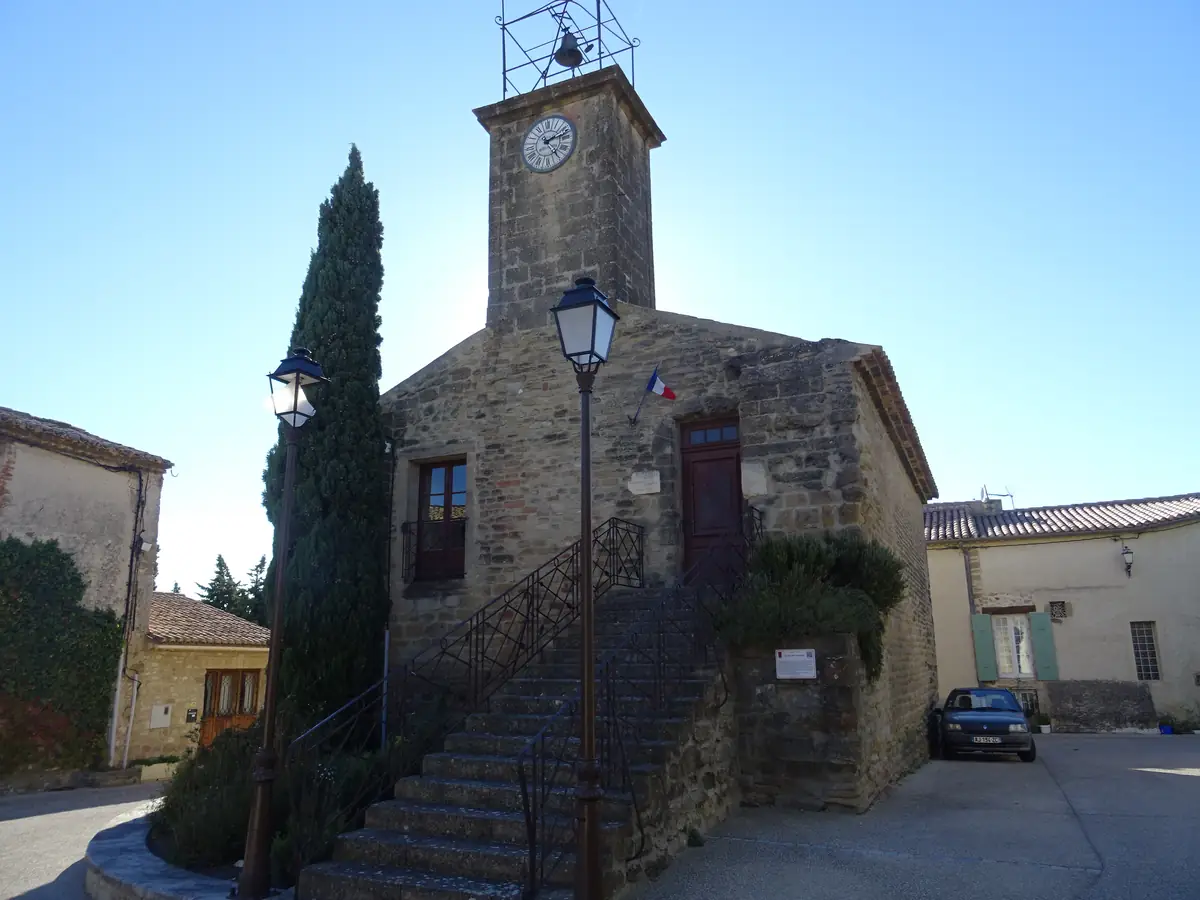
The tower known as the Templars’ Tower
Above its external staircase, the tower carries a clock and an open bell frame. The name “Templars’ Tower” comes from oral tradition: the presence of the order at Cairanne has not been established. There is, however, a record of a defensive tower being repaired in the 14th century.
Cairanne then belonged to the Comtat Venaissin, under papal authority. Residents also helped defend the village, keeping watch and guarding its gates. The building later served several purposes: town hall, boys’ school, then housing in the 19th century. The clock, documented since 1702, recalls its public role at the heart of the old village.
Saint-André, a rebuilt church
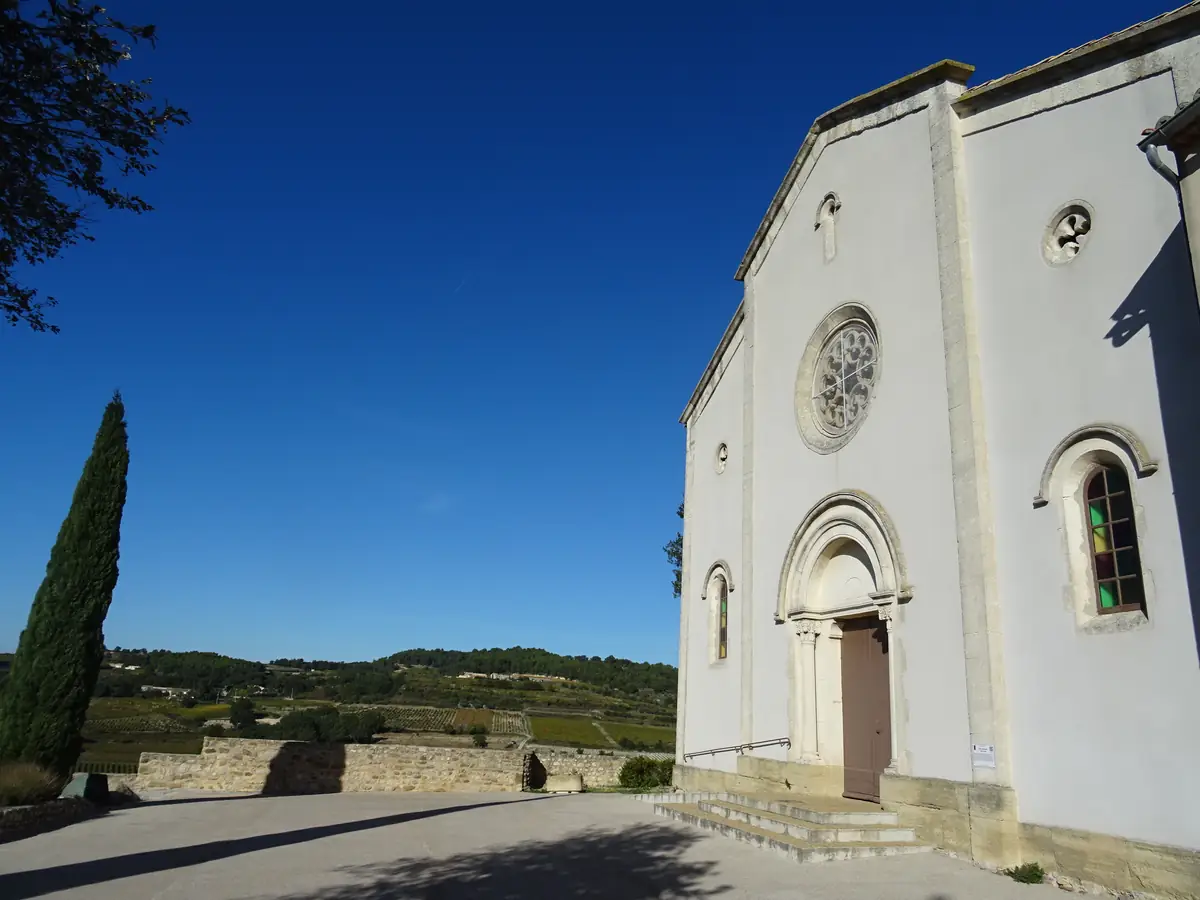
Saint-André church overlooks the houses and vines. Rebuilt in 1864 in a Romanesque Revival style, it replaced a church considered too dilapidated and too small to accommodate the congregation.
Yet the new church preceded the shift of village life towards the foot of the hill. The old settlement thus retains a large church above the neighbourhoods developed on the plain. Its bell tower preserves bells from the earlier church, the largest of which was blessed in 1780.
The ramparts and views over the vineyards
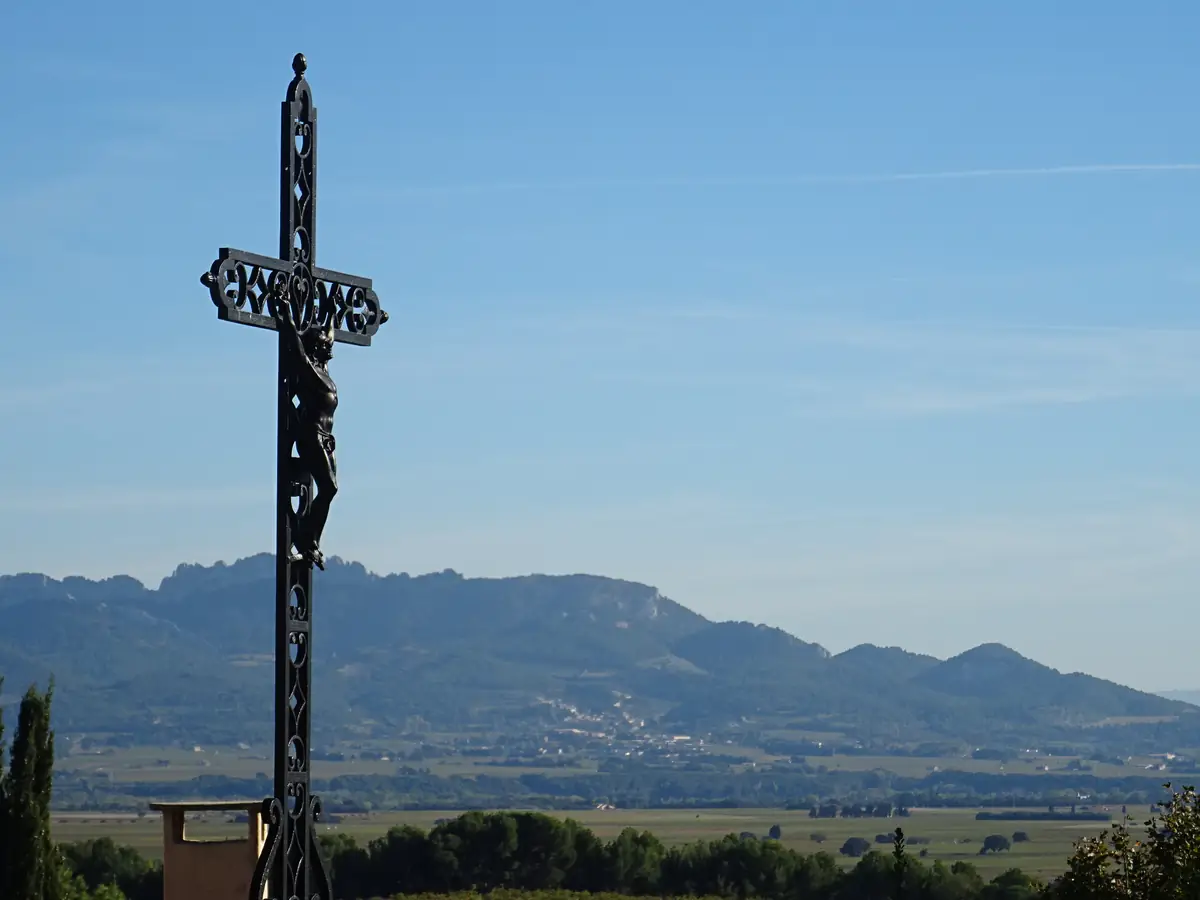
The path beside the old fortifications opens up views beyond the houses. Vineyard plots follow the slopes and cover the plain; to the east, the ridges of the Dentelles de Montmirail rise behind the vines. Successive viewpoints reveal the different landforms worked by the winegrowers.
The Porte d’Autan was the village’s other historic entrance. Nearby, Saint-Roch chapel recalls the fear of epidemics. It was built in the 18th century in gratitude after a plague outbreak had spared Cairanne. Its dedication to the patron saint of plague sufferers helps explain this small chapel beyond its façade.
A garden and a family’s history
The Quenin-Constant family garden occupies the plot where Marius Constant’s house once stood. In 1944, a German shell destroyed it during fighting between retreating troops and members of the Resistance. The family donated the land to the municipality in 2016. An information panel preserves the memory of the vanished house, in a space now open to the landscape.
It also offers a way to understand the horizon. Until the 18th century, the land in view belonged to several political territories: the Principality of Orange, the Comtat Venaissin, the Dauphiné and, beyond the Rhône, the Languedoc. From the old village, the view crosses these former borders, which today’s roads pass without a sign.
Cairanne, a village and its cru
The walk encourages a closer look at the vineyards around Cairanne. Three main terroirs contribute to the appellation: the Aygues terraces to the west, the Miocene hills to the north and the Garrigues terraces to the south. Pebbles, sand, clay and marl occur in different combinations; the landscape seen from the ramparts thus includes several types of vineyard soil.
Cairanne has been recognised as a Côtes du Rhône cru since 2016, with its own appellation. This status builds on the winegrowers’ efforts during the 20th century: the village name could accompany Côtes du Rhône from 1953, before recognition as Côtes du Rhône Villages in 1967.
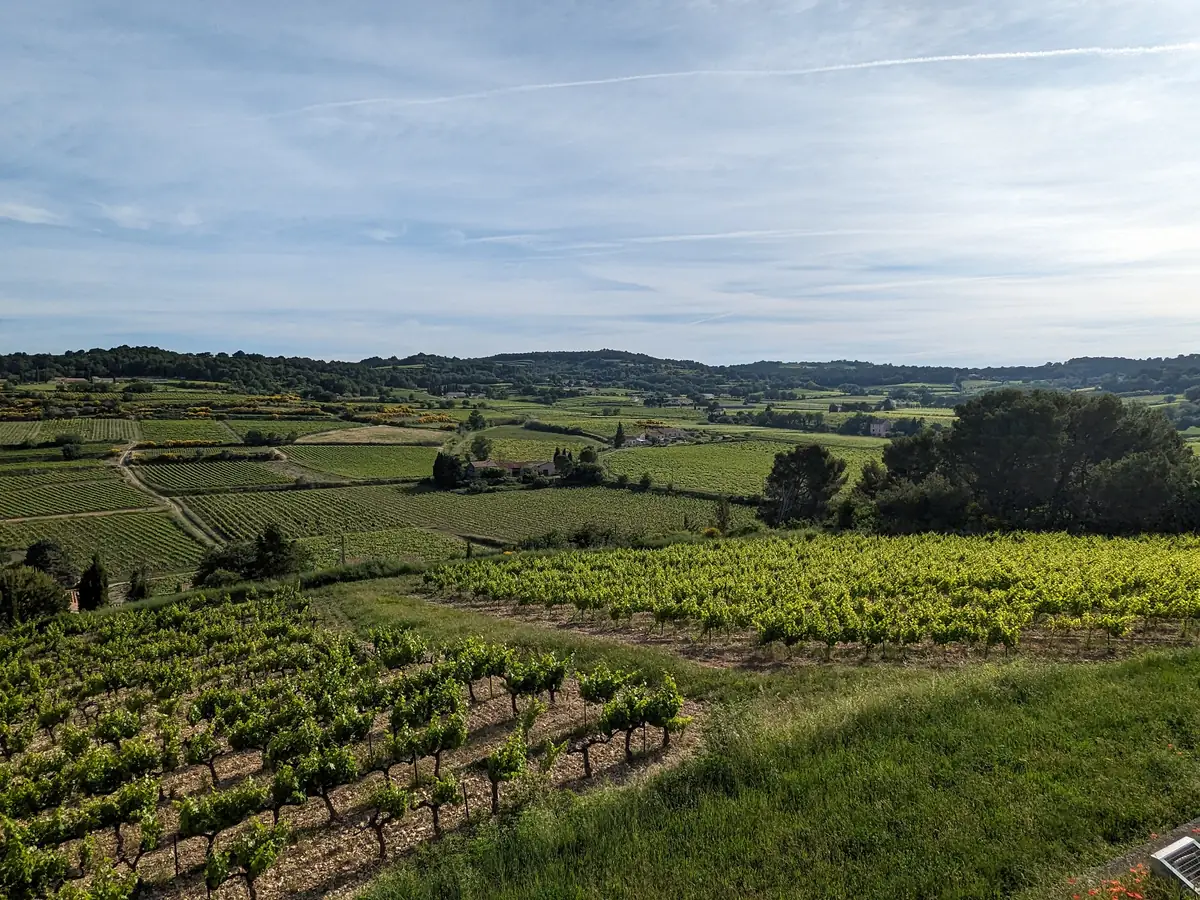
The reds are based mainly on Grenache, blended notably with Syrah and Mourvèdre. Cairanne also produces whites, whose main grapes are Clairette, Grenache Blanc and Roussanne. Hand harvesting and grape sorting are requirements of the appellation.
At an estate’s tasting room, you discover the producer’s own wines; a vineyard or cellar tour may complement the tasting, depending on what is offered. The Caveau du Cairanne lets you compare wines from several estates in one place. The cooperative winery, meanwhile, offers wines made from grapes grown by its members.
This tradition of collective tasting dates back to 1959: the winegrowers’ association describes the Caveau du Belvédère, now the Caveau du Cairanne, as the first wine-tasting cellar in the Côtes du Rhône.
Explore around Cairanne
To the east, the villages and paths of the Dentelles de Montmirail extend the discovery of the vineyards. The bridge and Roman town of Vaison offer another walk in northern Vaucluse. To the south-west, Roman Orange links the Triumphal Arch, ancient theatre and Saint-Eutrope Hill. Near Vaison, the cobbled lanes of Crestet lead to the bishops’ castle, above vineyards of the Ventoux appellation.
Further south, Châteauneuf-du-Pape extends the exploration of Rhône crus, from the village lanes to the papal castle and wine tasting rooms.
Practical information
Visiting Cairanne
- Walk and suggested duration
- Allow around one to one and a half hours to explore the old village, its gates, lanes and views from the ramparts, excluding wine tasting. The time needed depends on your stops and which buildings are open when you visit.
- Access and parking
- To start in the lower village, you can park on Place de la Libération, opposite the Maison du Cairanne, then walk up to the old settlement. Follow the signs and parking conditions on site.
- What to bring
- Wear shoes suitable for cobbled lanes, slopes and steps, and bring water and sun protection. In summer, choose the morning or late afternoon for your walk; exposed stretches can be hot.
- Heritage and opening times
- The gates and ramparts can be explored from public spaces. For guided visits and access to buildings, check the tourist office’s information before coming.
- Wine and meeting the growers
- The Cairanne appellation website lists estates and the collective tasting room at the Maison du Cairanne, 20 Avenue de la Libération. Check opening times and whether visits or tastings require booking.
- The Cave de Cairanne, a cooperative founded in 1929, is at 290 Avenue de la Libération. See its website for tasting-room opening times and tasting options.
To plan your visit: Vaison Ventoux Provence tourist office.
Extend your stay
Guest houses around Cairanne and the vineyards
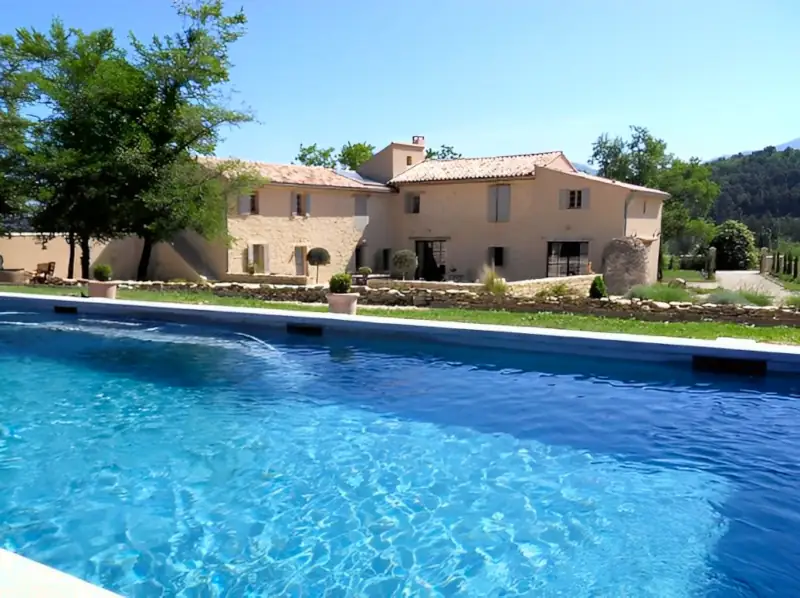
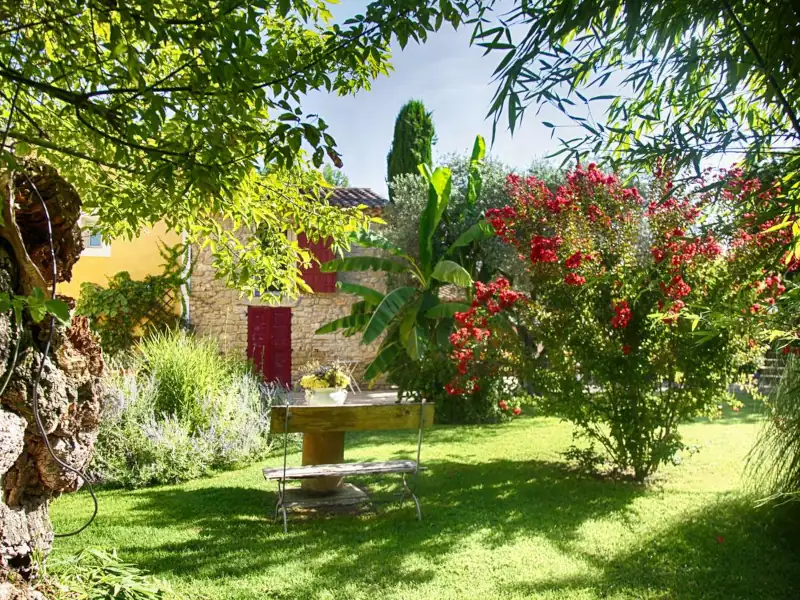
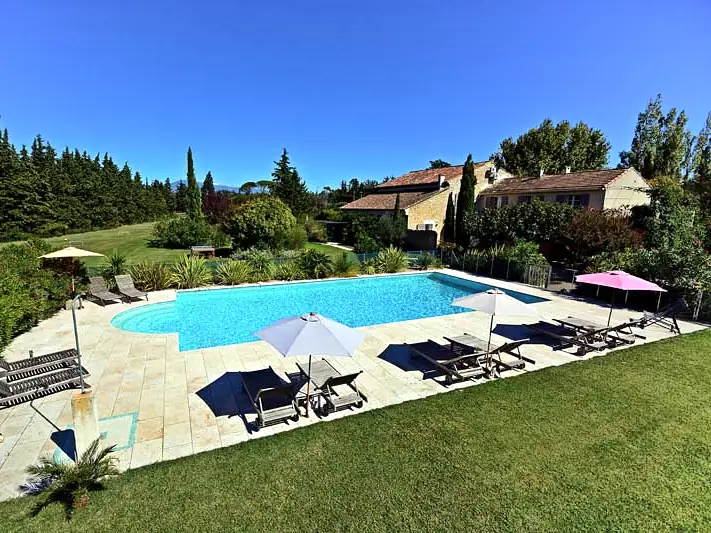
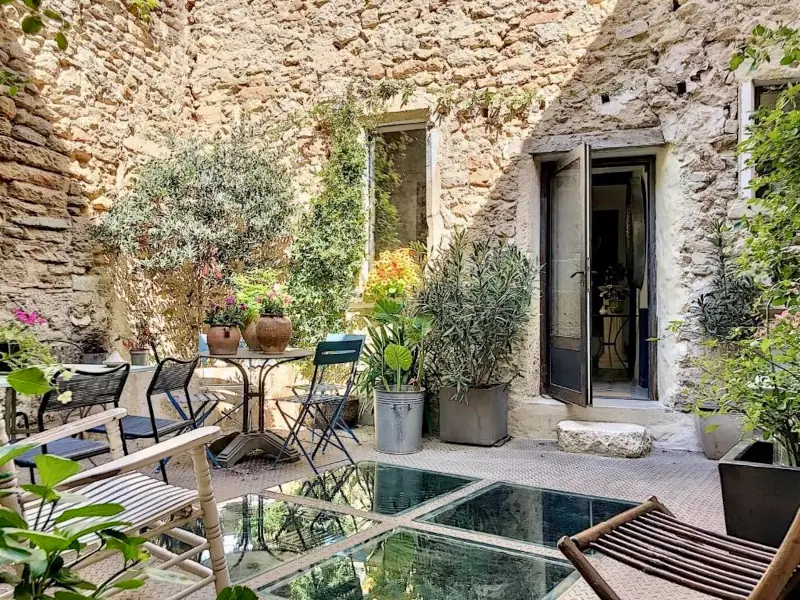
Staying near Cairanne gives you time to explore wine villages, paths in the Dentelles and nearby Roman towns. The portal links directly to the owners’ websites to help you plan your stay.
These properties listed on the Portal are within 25 km as the crow flies of the location featured in this getaway. Visit their websites to plan your stay.
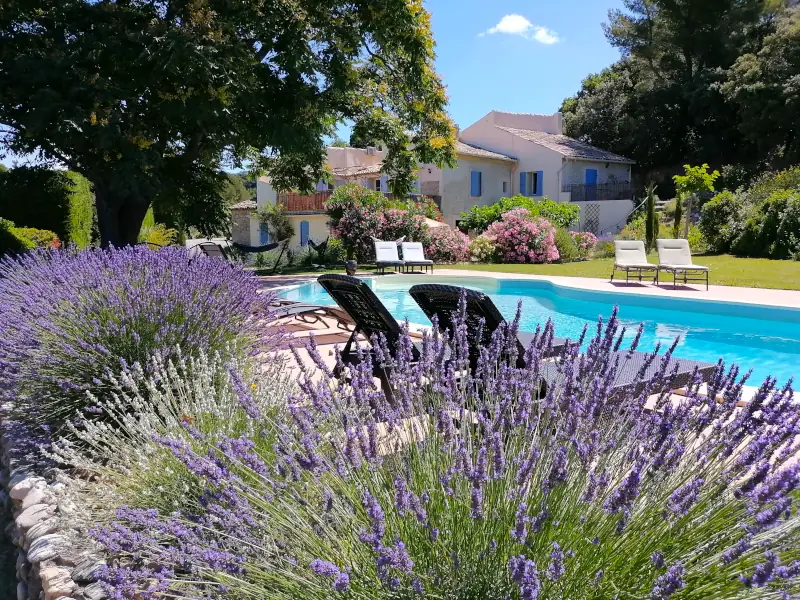
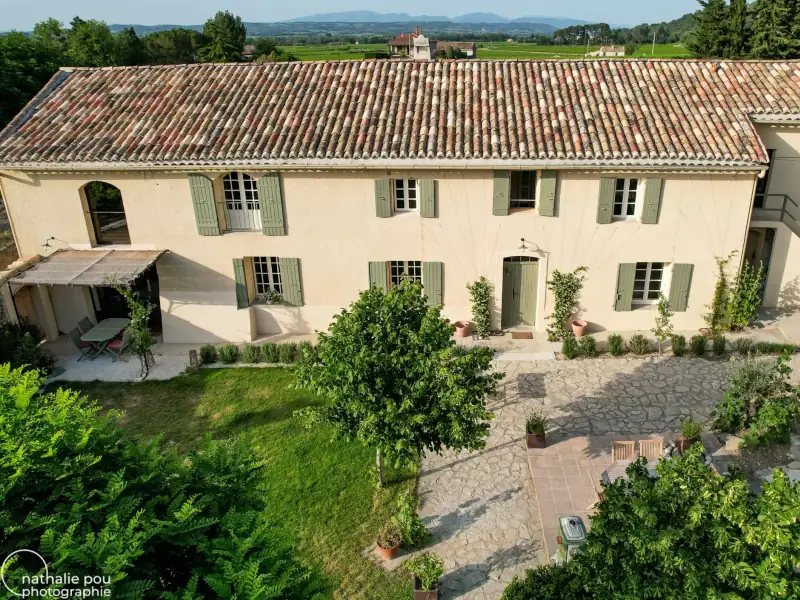
Le Mas des Poules
Charming bed and breakfast and Gîte
Saint-Roman-de-Malegarde
Visit website