A getaway near Tarascon
Boulbon and its castle, sentinel of the Rhône
Text and photographs by Vincent Flachaire
From the foot of the Montagnette, Boulbon watched the Rhône and the border of Provence, and it keeps its Provençal traditions alive.
A village with the Montagnette at its back
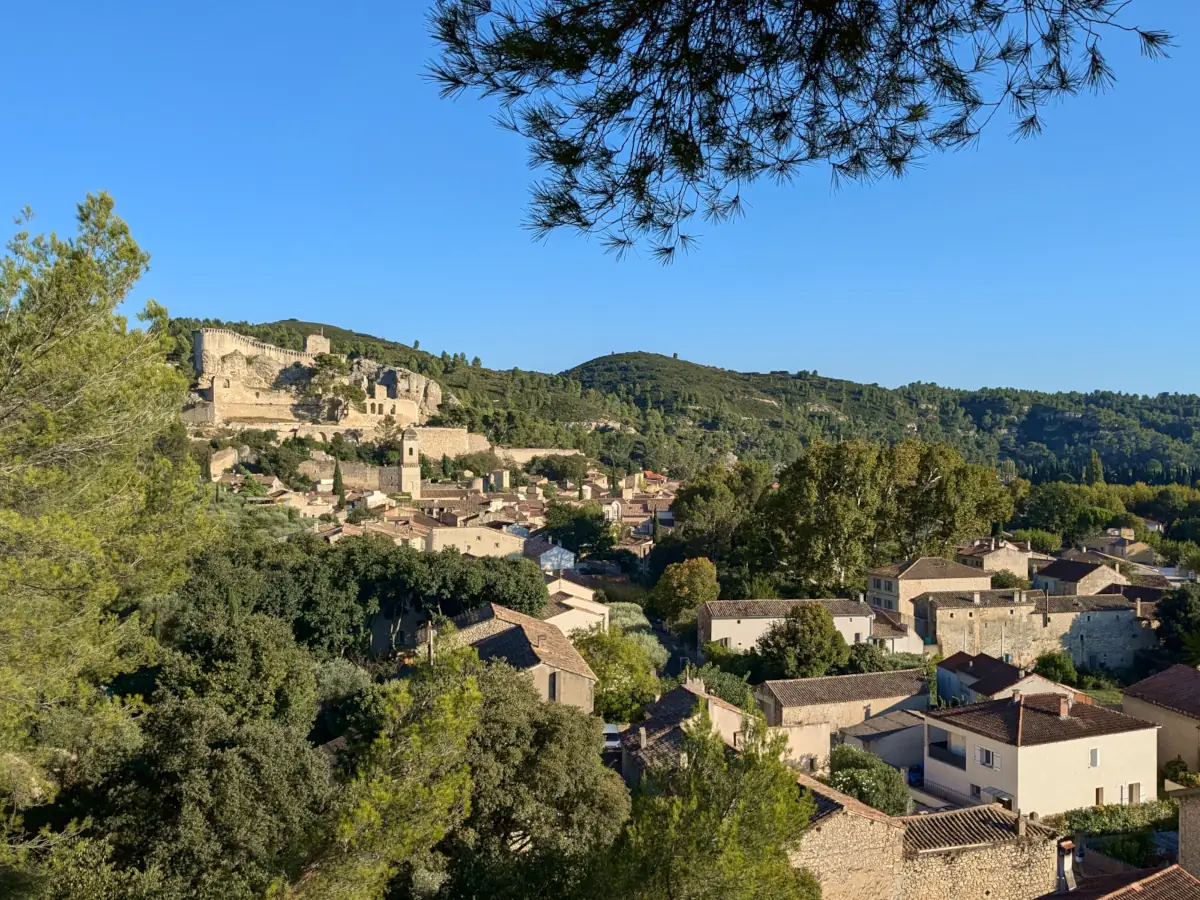
The Montagnette is a limestone massif of low wooded hills, running along the Rhône between the confluence of the Durance and the Alpilles. Its high point, the Mont de Rouchon, reaches 117 metres, enough to watch over the valley.
Boulbon sits on its western flank, sixteen metres above sea level, seven kilometres north of Tarascon. In front of the village the plain spreads out, held in place by windbreaks of cypress and poplar. The Rhône runs less than two kilometres to the west, and yet you cannot see it: the embankments raised in the nineteenth century to contain the river also hide its bed from the plain. To find the water again, you have to climb.
The castle that guarded a border
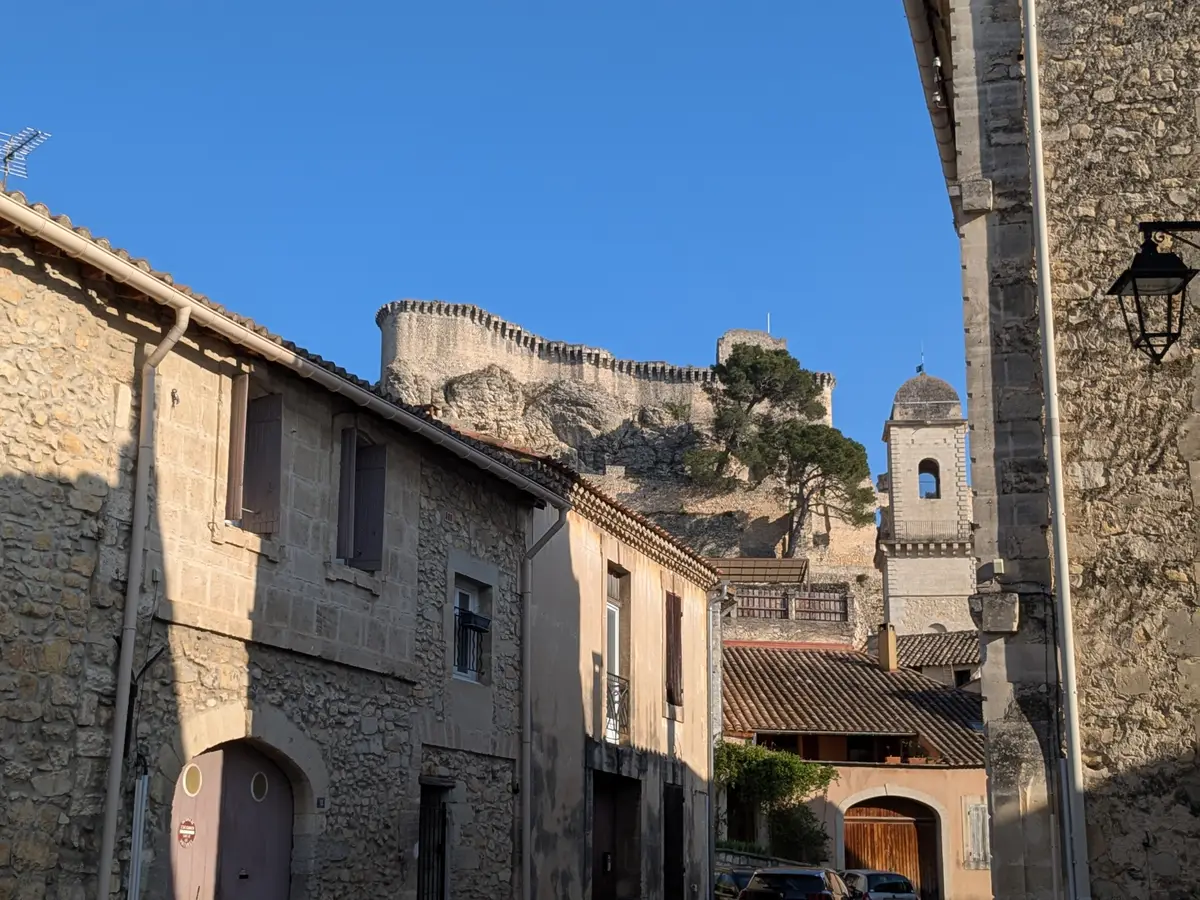
For centuries the Rhône separated two worlds. On the left bank lay the County of Provence, which belonged to the Holy Roman Empire; on the right bank, Languedoc and the Kingdom of France. The castle of Boulbon, set on its rock above the village, was long one of the sentinels of that border, and its position allowed it to control traffic on the river.
The oldest part is the keep, a rectangular tower clinging to the rock, which may go back to the eleventh century. The curtain wall around it follows the stone exactly and dates from the thirteenth. Of the machicolations, only the corbels remain, carved with trefoil motifs like those crowning the royal castle of Tarascon downstream: the same century, the same hands. The lords’ lodging and the huge western terrace, which softens the rock by half hiding it, were added at the end of the fourteenth century. The terraced gardens to the south and the carriage road climbing to the north gate, still the way in today, date from the seventeenth.
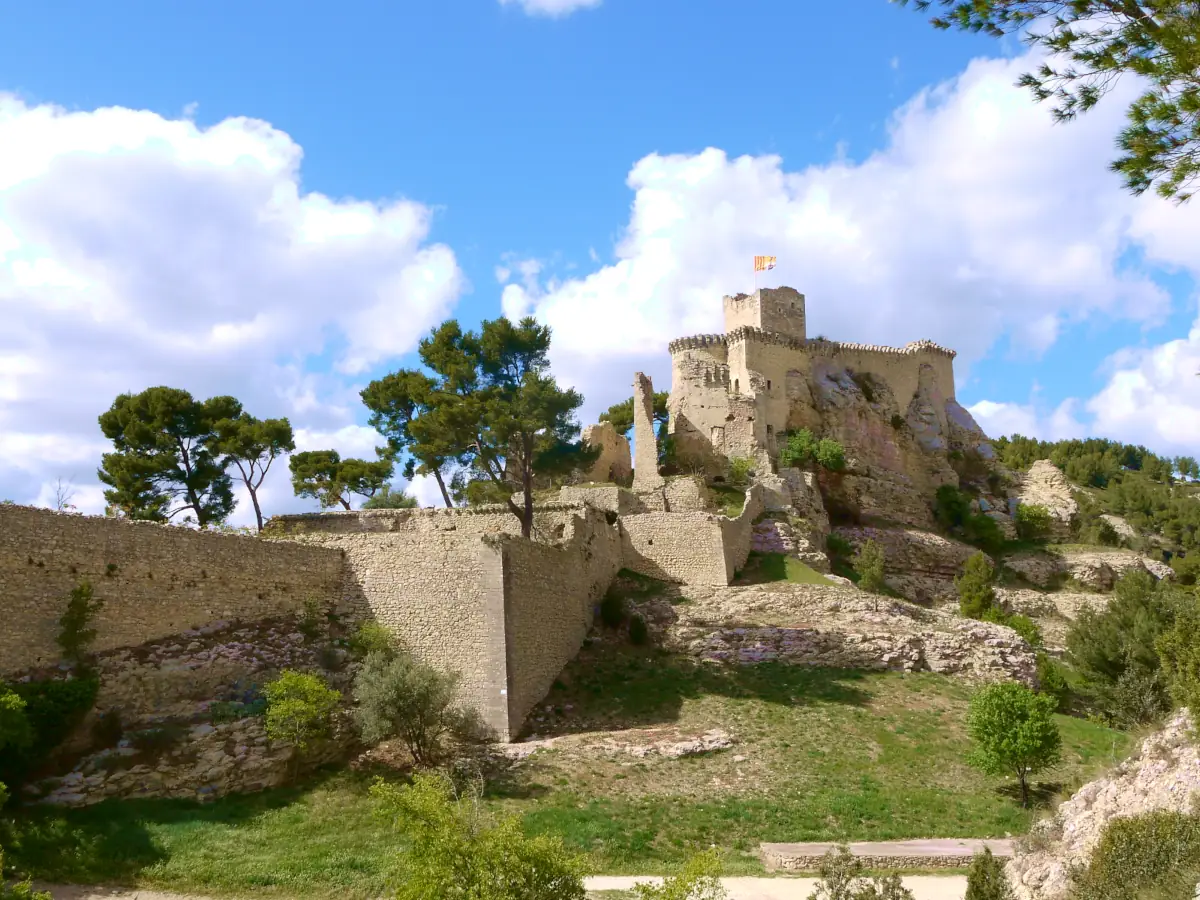
The place changed hands often. Raymond de Turenne and King René are among its owners. In 1608 the lordship of Boulbon was raised to a county; at the end of the seventeenth century it passed to the Raousset family, who held it into the twentieth. The last count of Boulbon, Gaston de Raousset, died in the village in 1956 without direct heirs. The castle has been listed as a historic monument since 2 January 1976. On the south side, the lodging and the old defensive tower have vanished under a thick layer of scree.
Saint Christopher watches over the Grand’Rue
Halfway up the Grand’Rue, the busiest street in the village, a pointed-arch niche holds a stone statue almost the height of a man. Saint Christopher stands with his feet in the water and the Christ Child on his shoulder, in the act of carrying him across the river. The carving dates from the fourteenth century. Its torso is far too long for its legs: that is how the sculptor rendered the giant of the legend. It has been suggested that the statue also served as a waymarker, in the tradition of the ancient Mercuries and Hermes that once marked the stages of a road.
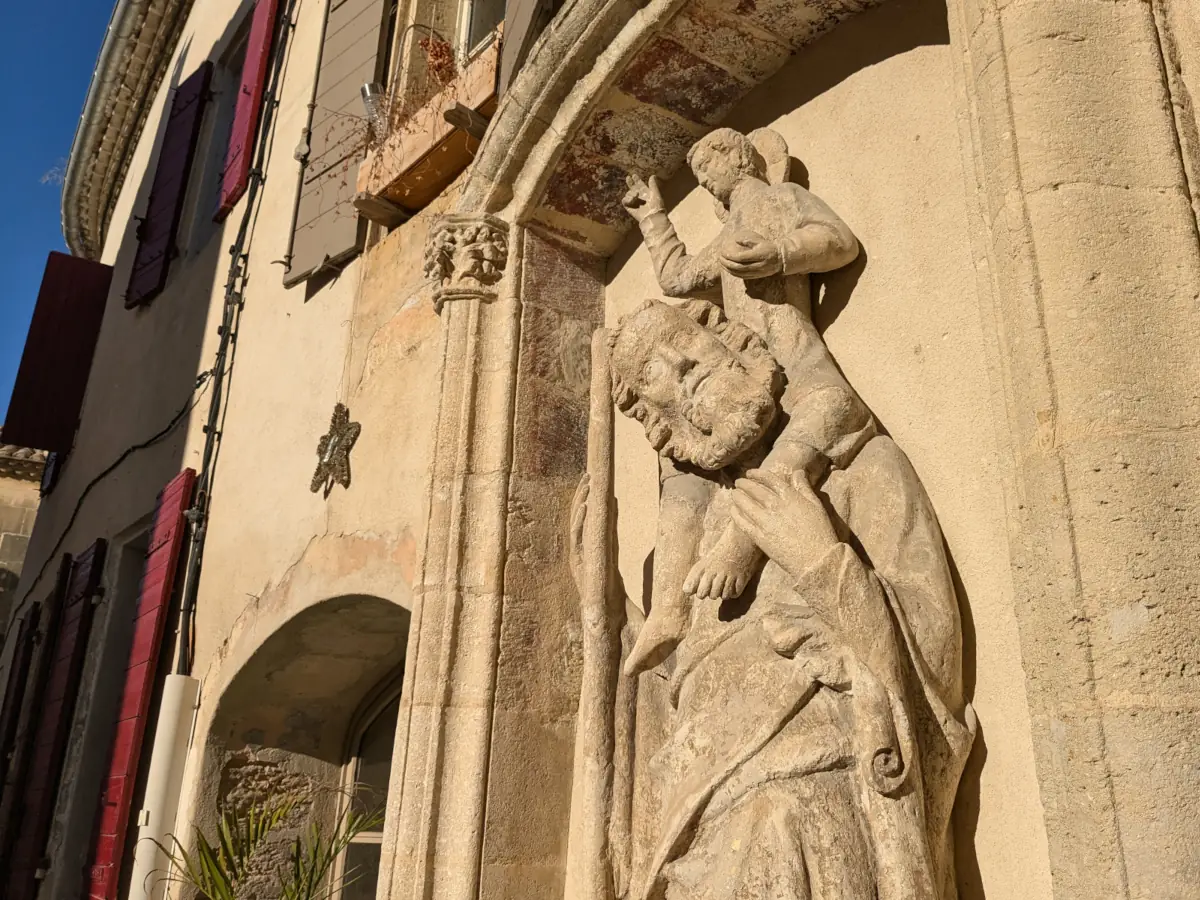
The river he is crossing is the Rhône, and the commune says so plainly. Christopher is the patron of those who cross: travellers, boatmen, ferrymen. The kingdom of France began on the bank opposite, and some twenty kilometres upstream Villeneuve-lès-Avignon played the mirror role: a royal town built to watch the city of the Popes.
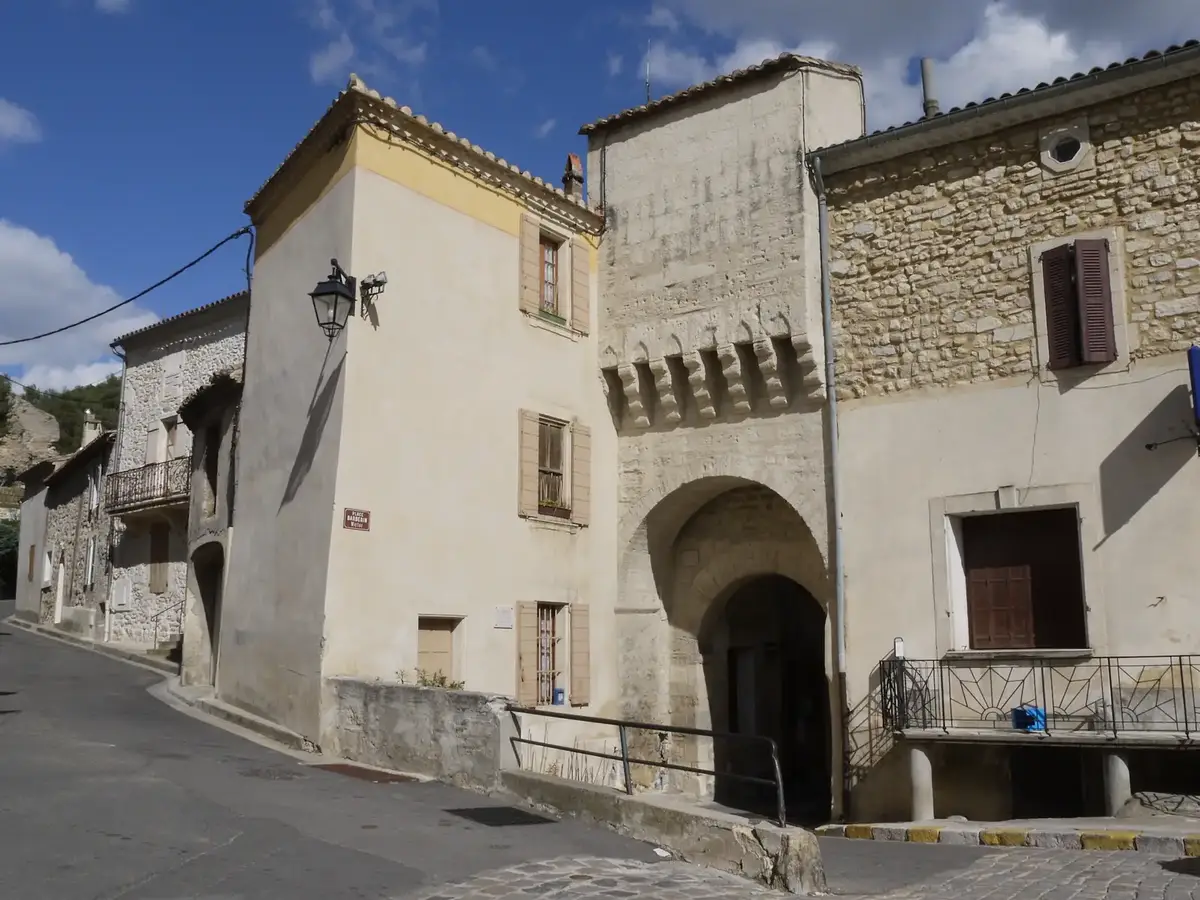
Once a year the Grand’Rue serves a very different purpose. On the last Sunday of August, for the feast of Saint Éloi, the carreto ramado — a cart dressed with willow branches and pulled by a long team of draught horses in Saracen harness — enters the narrow street, takes it at a trot and bursts out under the Porte Loriol. Folk groups and women in Provençal costume follow.
Three churches for one village
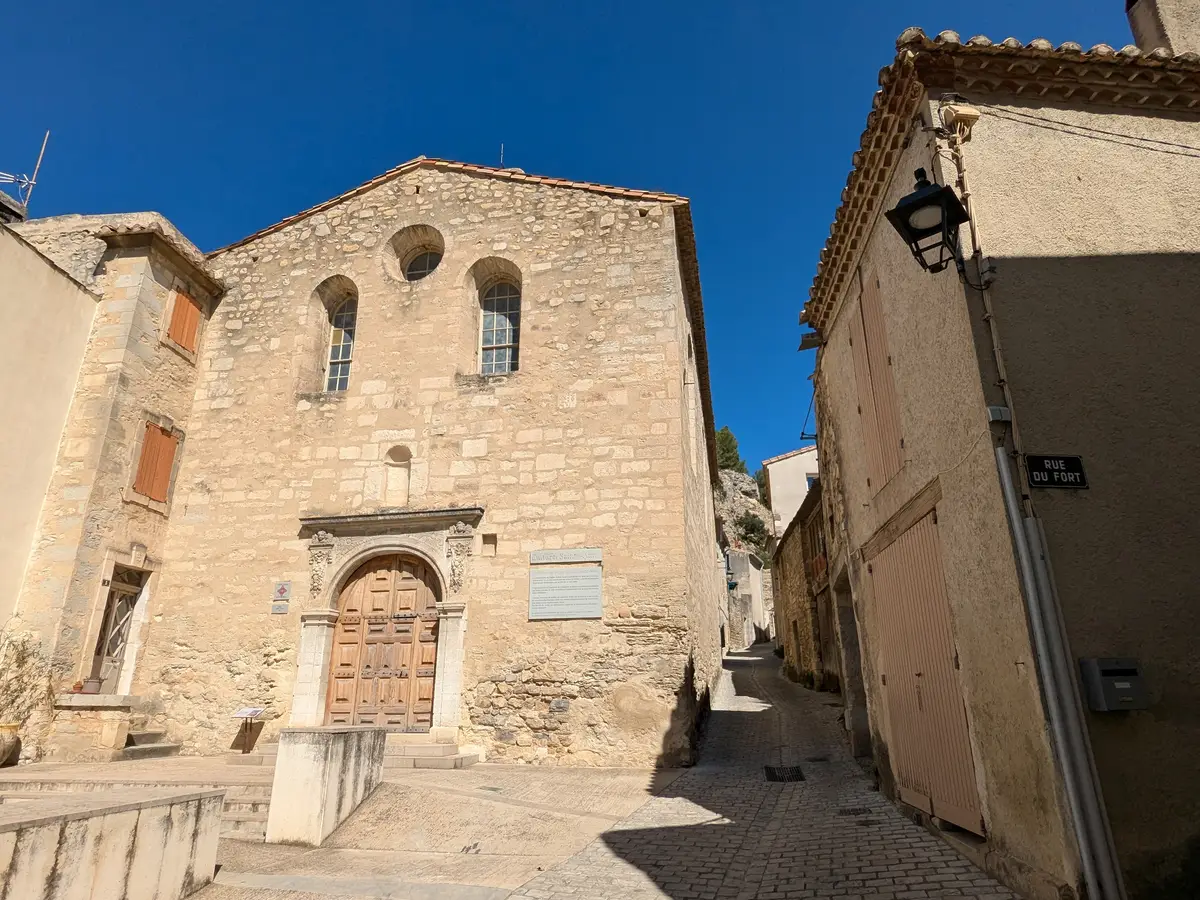
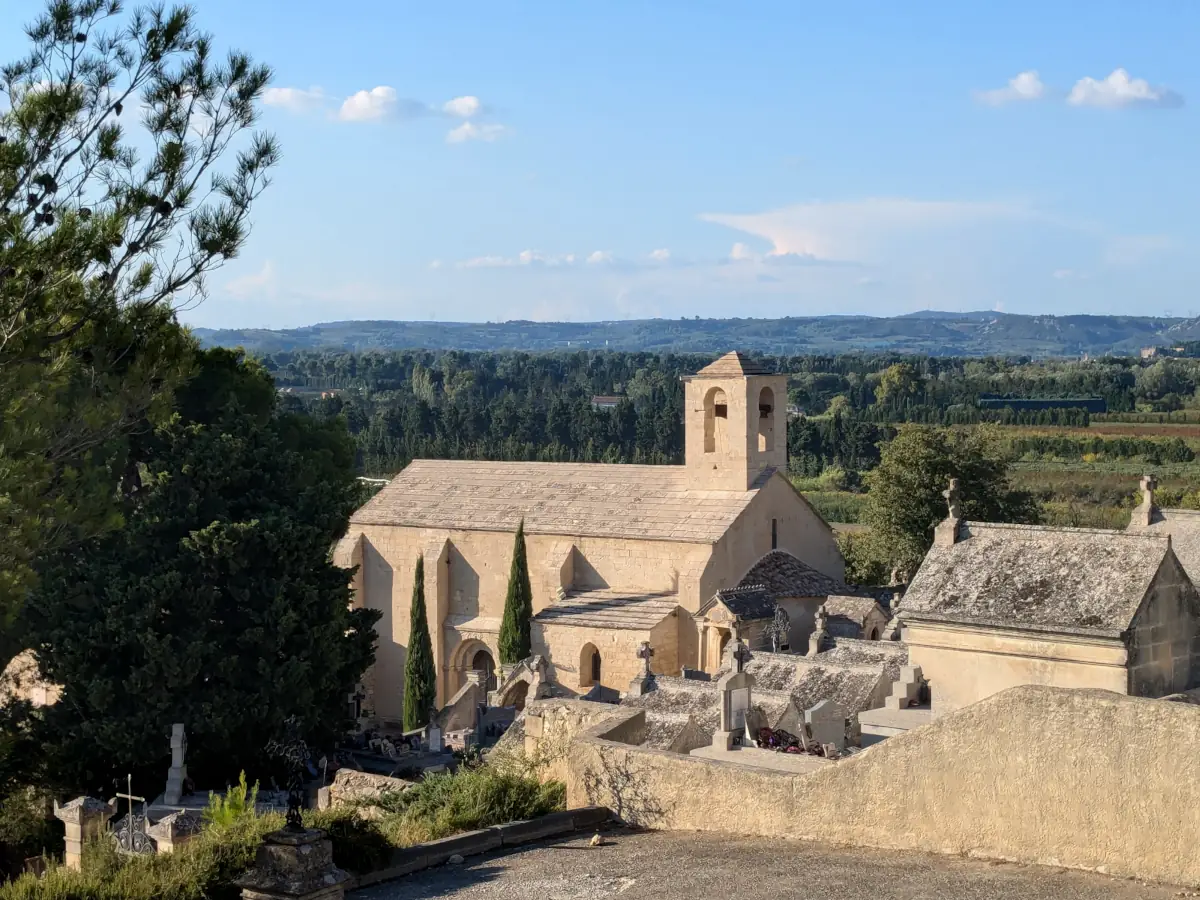
Boulbon has moved its parish twice, and all three buildings are still standing. Until 1628 the parish church was Saint-Marcellin, Romanesque, dating from the eleventh century and reworked in the twelfth and again in the sixteenth — but built outside the village, in open country. That year Sainte-Anne was raised inside the ramparts, in the centre of the village, on the site of a Romanesque chapel, and the parish came down to it.
In 1875 Sainte-Anne in turn handed the role to the church of Saint-Joseph and was deconsecrated. It was restored and reopened in 2009 as the village cultural centre.
On 1 June, the bottles climb to Saint-Marcellin
Every 1 June at seven in the evening, the men of the village leave Saint-Joseph and walk up to Saint-Marcellin, each carrying a bottle of wine, behind the banner and the reliquary bust of the saint, while the martyr’s hymn is sung in Provençal. The procession is for men only. At the end of the service the priest blesses the opened bottles, and each man drinks a mouthful.
The tradition is said to come from the monks of Montmajour, who settled at Boulbon to drain the marshes: the blessed wine was held to cure fevers. Saint Marcellin is also invoked to bring rain, hence the saying: “Sant Marcellin bon per l’aigo, bon per lou vin”, good for the water and good for the wine. Walking up to the chapel, the village retraces its own history backwards, from its newest parish church to its oldest.
The chapel can also be visited for itself. One of the side chapels is dedicated to Saint Anne, another to Saint George; the latter holds the tomb of the lord of Archimbaud, his effigy in full armour, with two shields bearing the arms of the first lords of Boulbon. Behind the high altar there once stood an altarpiece of the Avignon school, painted in the third quarter of the fifteenth century: the Trinity, with Saint Agricol presenting a kneeling donor. It has hung in the Louvre since 1904 under the name Retable de Boulbon. A photograph stands in for it in the nave.
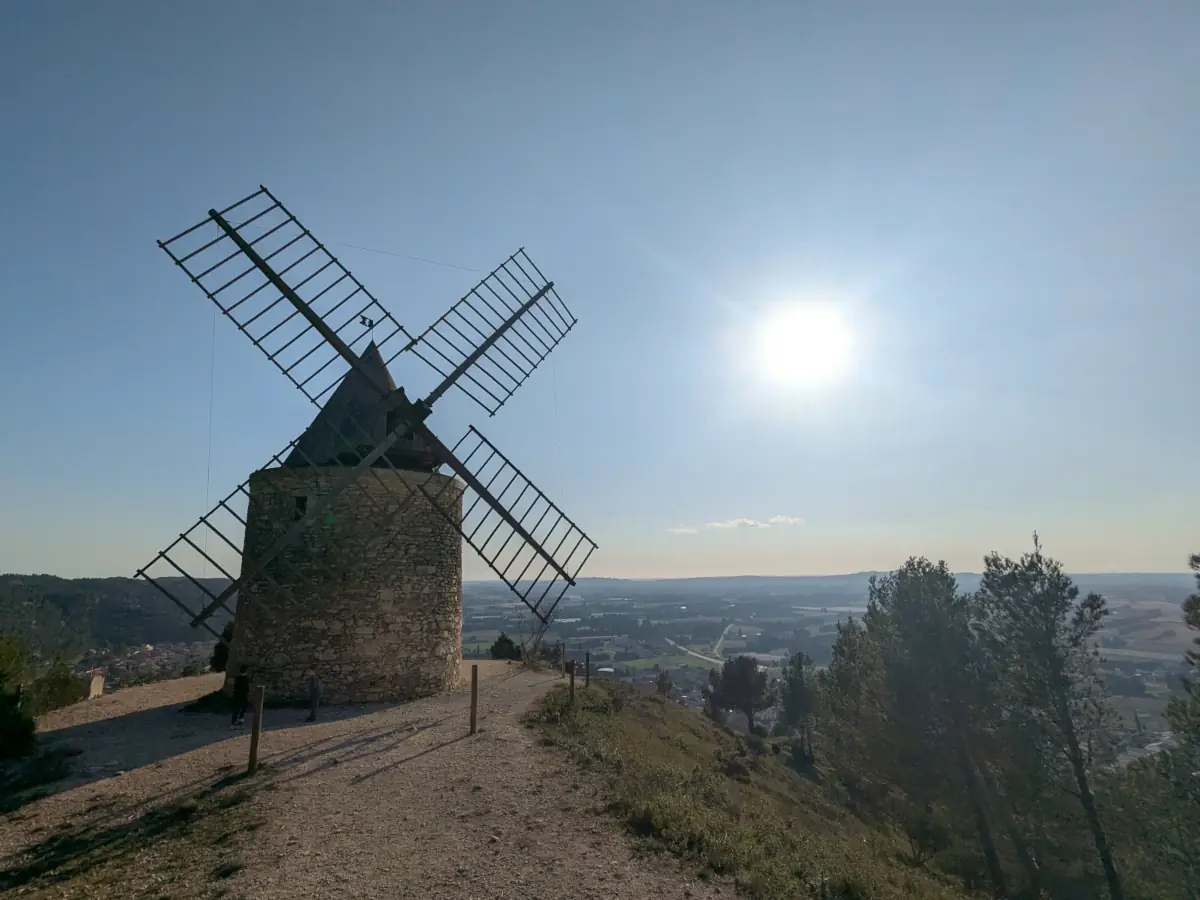
The Moulin Bonnet grinds again when the wind allows
A path climbs from the village to the mill, on the western flank of the Montagnette. Jean Braye built it in 1776; Antoine Bonnet bought it and left it his name. The date 1748 carved into the turning millstone is older than the building itself — a reused stone, taken from somewhere else. The mill worked until the nineteenth century, then lost its roof and its sails, and nothing was left but the tower.
The 2002 restoration gave it back the roof, the sails and the entire mechanism, true to the original. The stones can grind again when the wind is right. From the platform the plain unrolls to the west, and an orientation table made the same year by the children of the local primary school names what you are looking at. Beyond Tarascon, in the Alpilles, the Daudet mill met a different fate: turned into a museum in 1935, it kept its gears and millstones in order to show them.
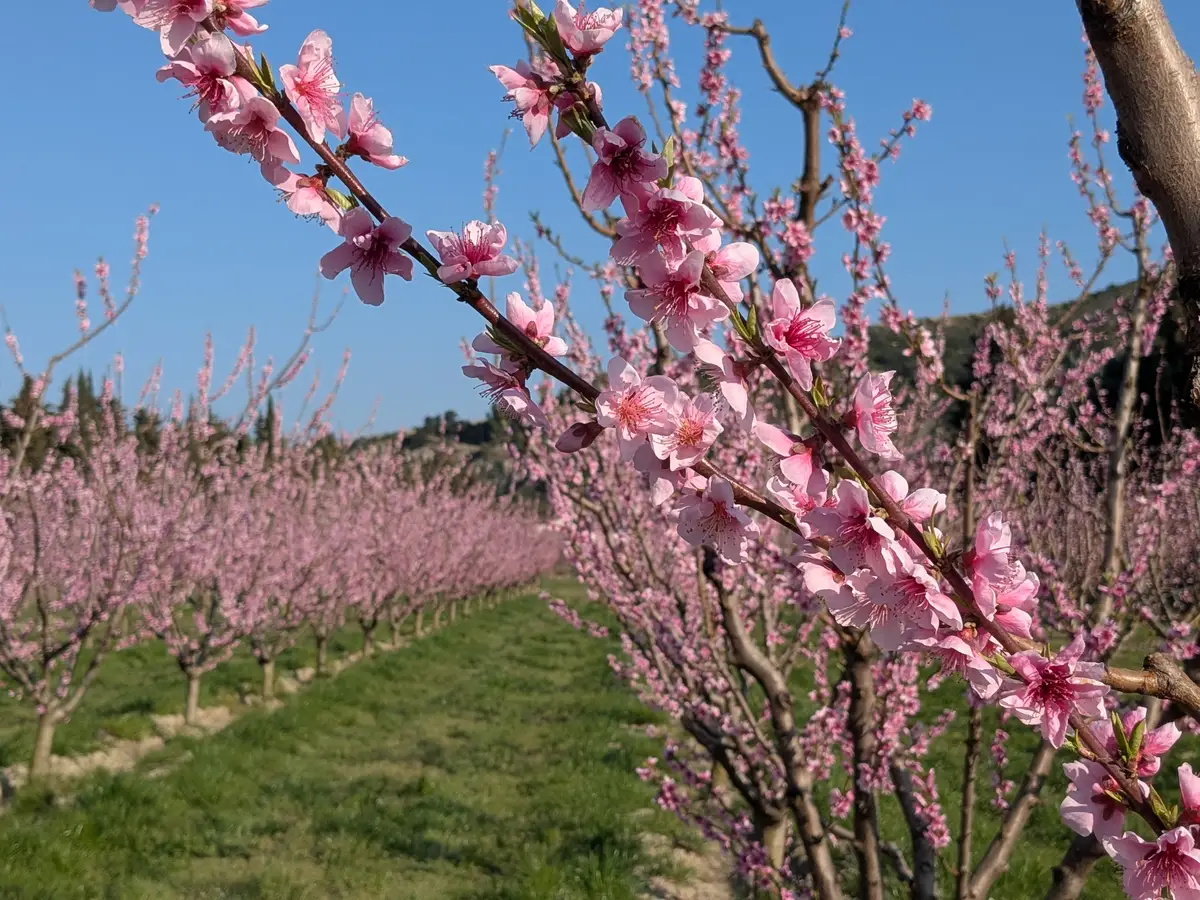
Orchards on the plain, paths on the Montagnette
At the foot of the hill the land is farmed. Orchards and market gardens share tightly drawn plots, and in early March the peach trees flower all at once: rows of bright pink against the grey of the Montagnette, for a fortnight or so. On the slopes, thyme, olive and almond trees hold the dry ground.
The paths of the Montagnette lead to the abbey of Saint-Michel de Frigolet, in the commune of Tarascon. Founded in the twelfth century and still held by Premonstratensian canons, it owes its name to the Provençal ferigoulo, the thyme that covers the massif. Three kilometres from the village, on the road that goes there, the chapel of Saint-Julien waits alone among the fields: Romanesque, a nave of two bays, an apse semicircular inside and pentagonal outside. To the south, Tarascon closes the horizon, with the chapel of Saint-Gabriel at the western tip of the Alpilles; to the north, the Montagnette ends at Barbentane, and Avignon is under twenty kilometres off.
Practical information
Visiting Boulbon
- The mill
- Open on the second and fourth Saturdays of each month, from 2 pm to 5 pm. Groups and school parties can visit the mill and the village by appointment with the town hall, at least five days ahead.
- The Montagnette
- From 1 June to 30 September, access to the forested massifs of the Bouches-du-Rhône is regulated day by day according to the fire risk. The path to the mill is covered by the rule.
- Festivals
- The procession of the bottles takes place on 1 June at 7 pm, from the church of Saint-Joseph to the chapel of Saint-Marcellin. The feast of Saint Éloi and its carreto ramado fall on the last Sunday of August, the bull club festival at the end of September.
Opening times and access conditions may change. Check the website of the commune of Boulbon before you travel.
Extend your stay
Guest houses around Tarascon and the Montagnette
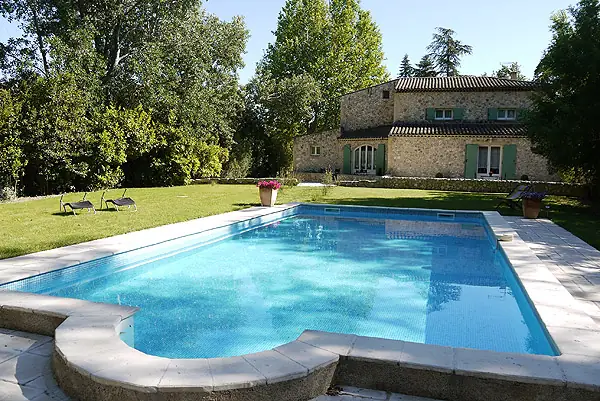
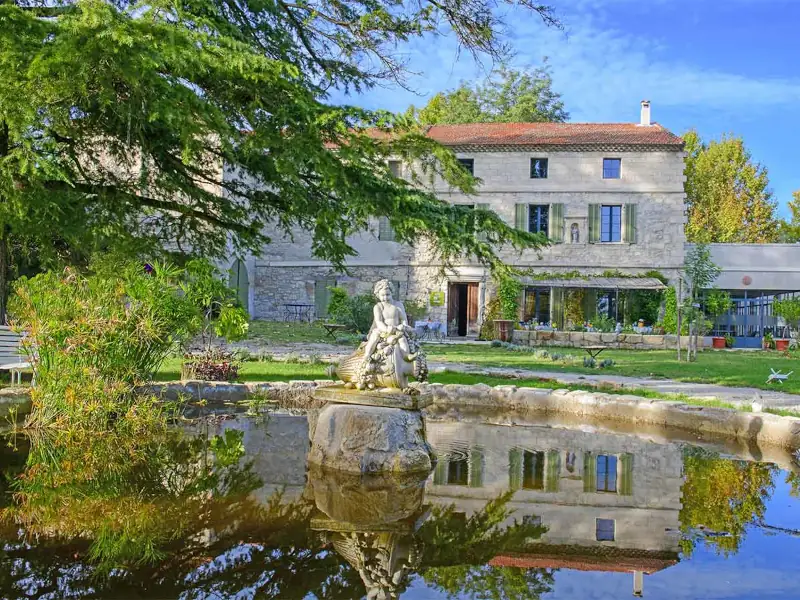
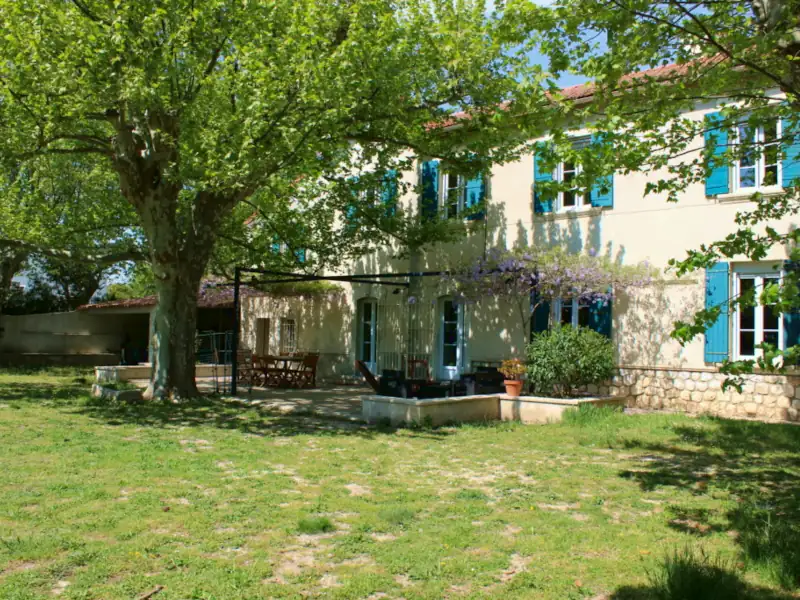
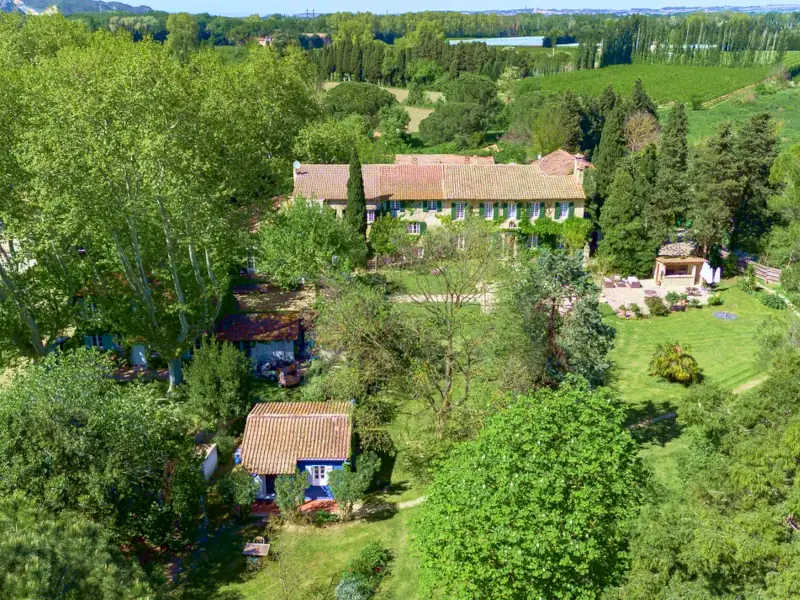
These properties listed on the Portal are within 25 km as the crow flies of the location featured in this getaway. Visit their websites to plan your stay.
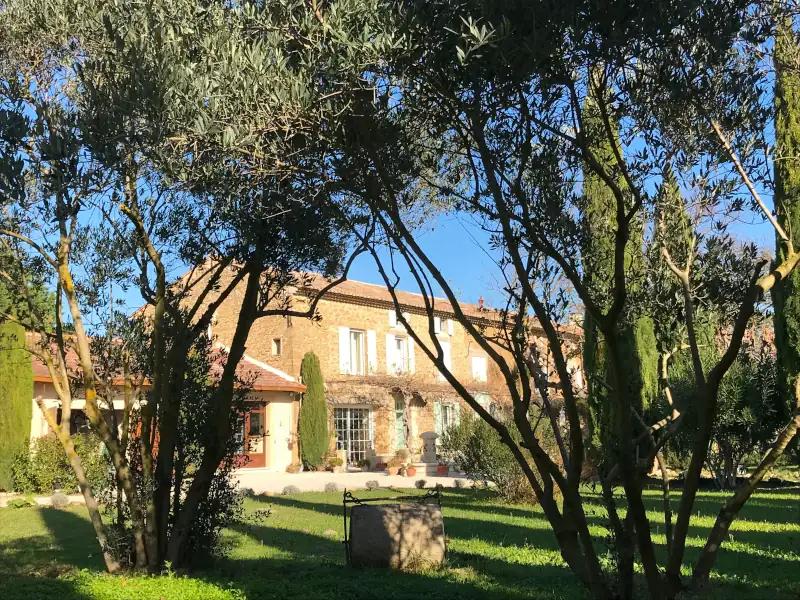
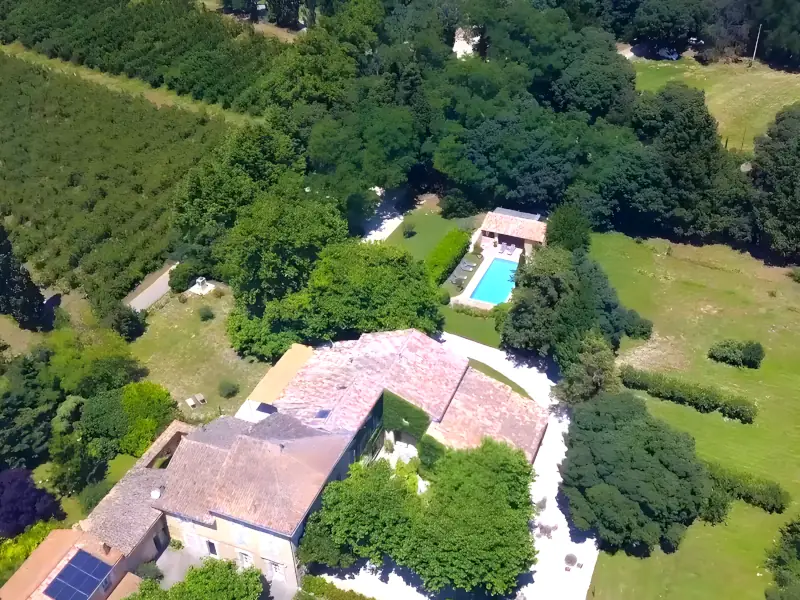
Fontaine des Magnarelles
Charming Bed and breakfast
Althen des Paluds
Visit website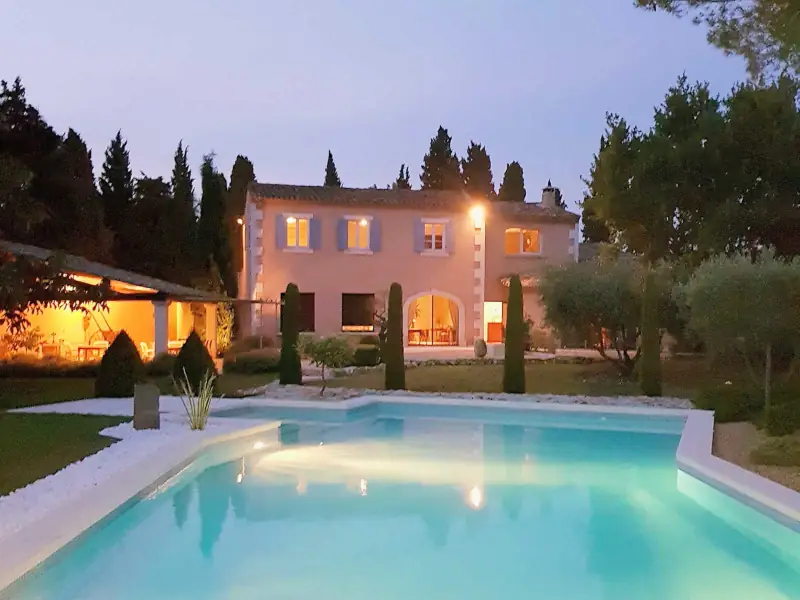
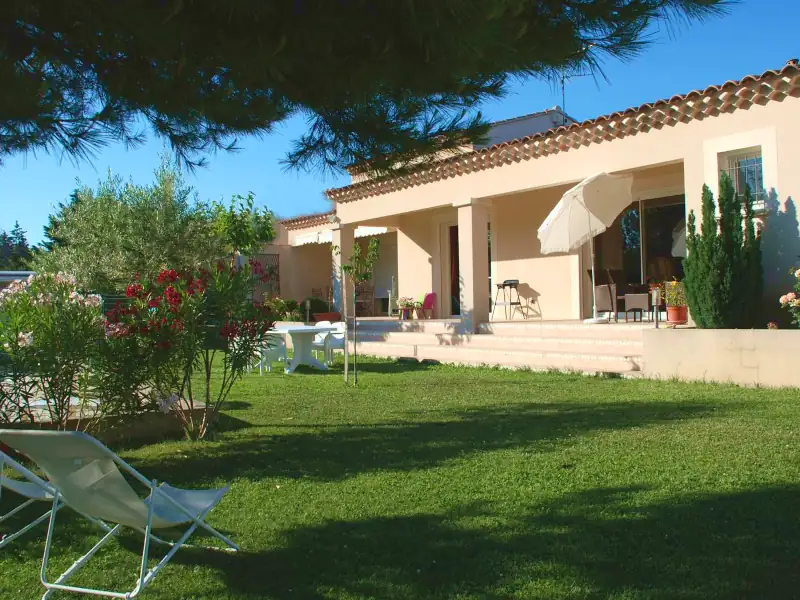

Mas des Marguerites
Charming Bed and breakfast
Maussane les Alpilles
Visit website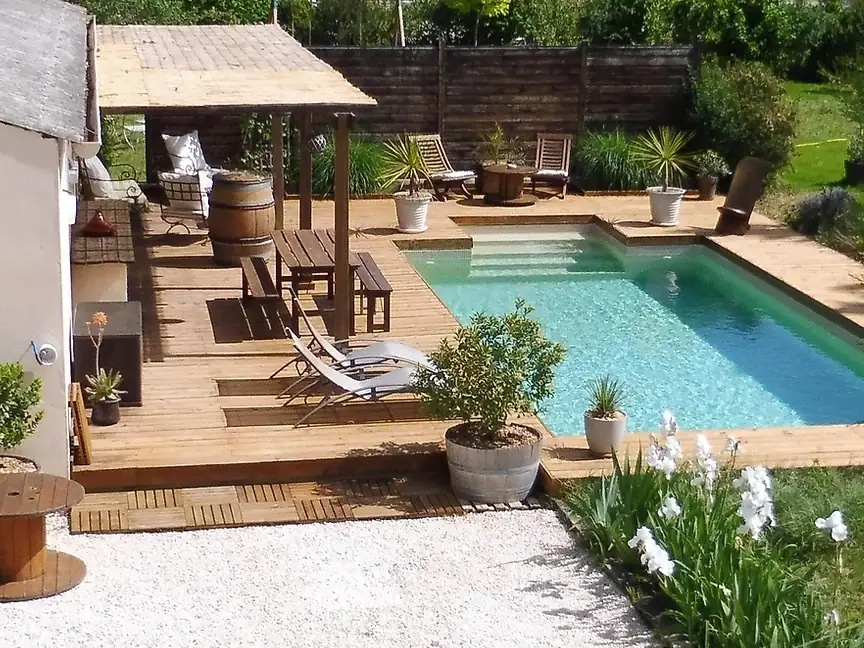
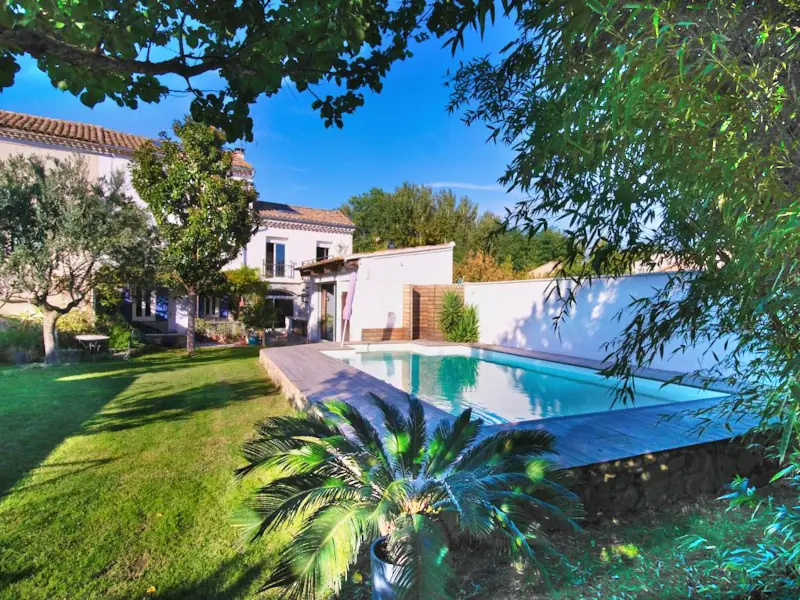
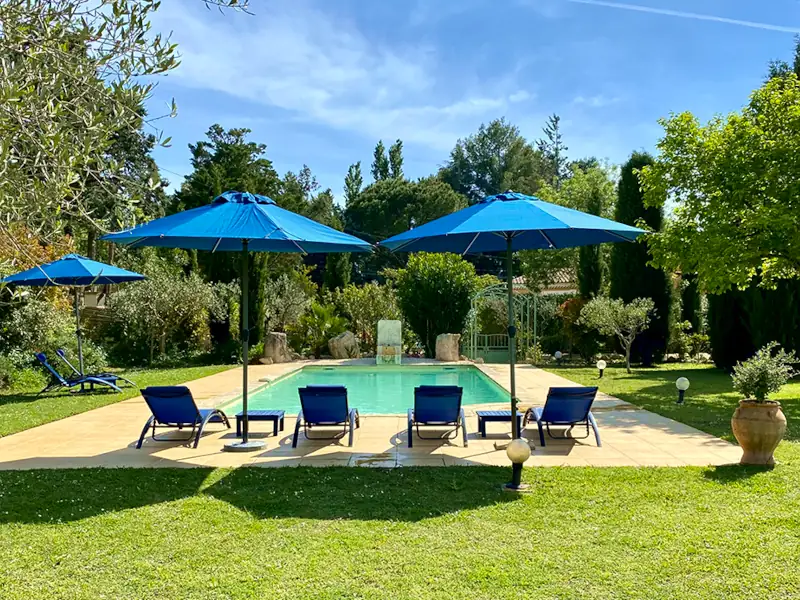
Au Coeur des Alpilles
Charming bed and breakfast
Maussane-les-Alpilles
Visit website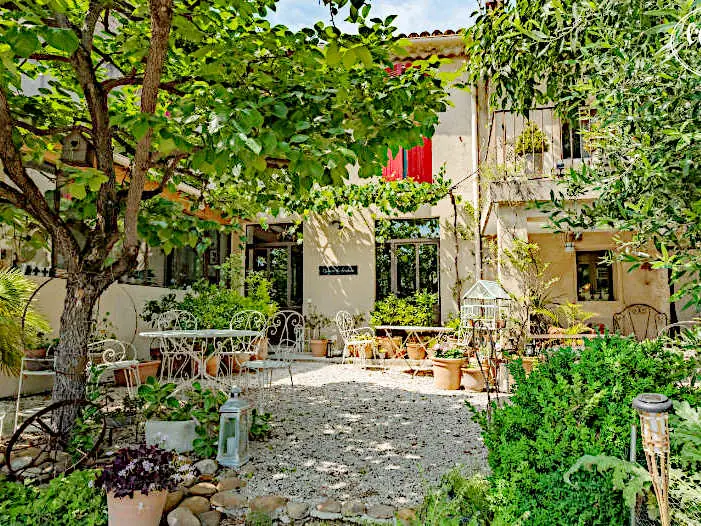
L'Oréliane
Charming Bed and breakfast
Châteauneuf de Gadagne
Visit website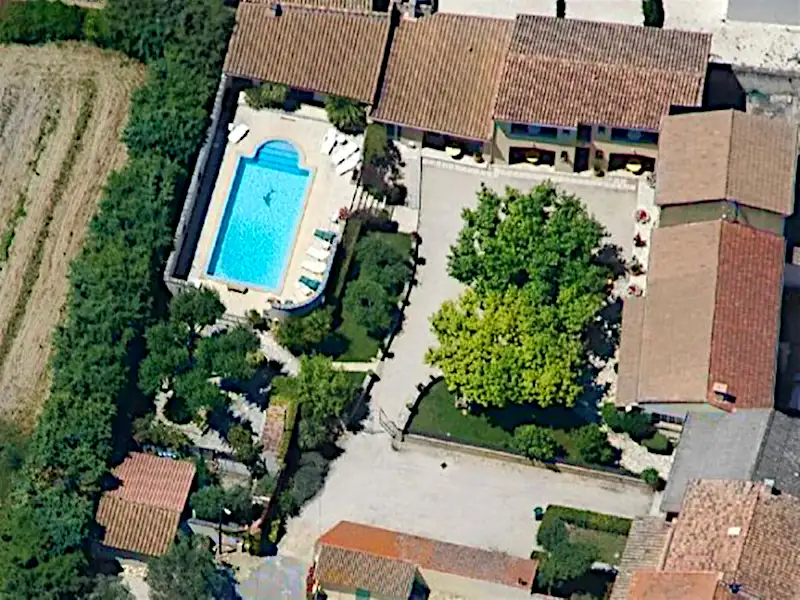
Le Mas de l'Amandier
Charming Bed and breakfast and holiday rental
St Saturnin lès Avignon
Visit website