


A getaway in the Ubaye valley
The Mexican villas in Barcelonnette and the Ubaye valley
Text and photographs by Vincent Flachaire
In Barcelonnette and Jausiers, large villas surrounded by parks bear witness to the fortunes built in Mexico by families from the Ubaye valley.
From trade in Mexico to the villas of the Ubaye
Accustomed to itinerant trading and the cloth trade, people from the Ubaye left for the Americas in the 19th century. Jacques Arnaud, originally from Jausiers, settled in Louisiana in 1805. In the 1820s, he and his brothers were among the pioneers of Ubaye commerce in Mexico. In Mexico City, the fabric shop El cajón de las siete puertas, the chest with seven doors, paved the way for other merchants from the valley.
In 1845, the return of three former weavers from Jausiers who had become wealthy in Mexico encouraged further departures. Shops expanded, followed by investment in textile factories and banking. Some emigrants returned to the Ubaye and built homes that displayed their success. These villas still bear names linked to Mexico, such as Puebla, Morélia and La Tapatia.
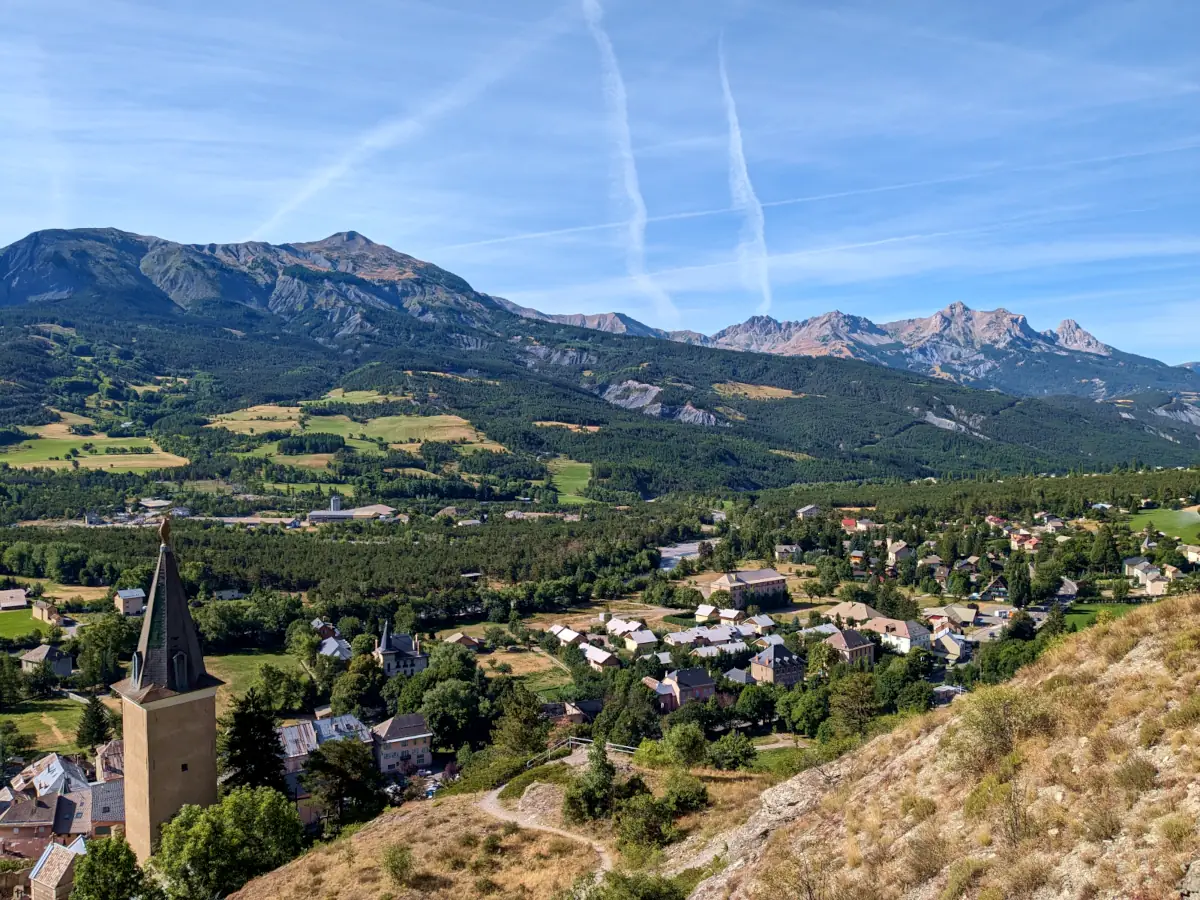
Country houses at the foot of the mountains
The first villas appeared from the 1870s onwards. Their symmetrical façades initially followed the models of local bourgeois houses. Later buildings adopted more ambitious forms, with towers, verandas and complex roofs, inspired in particular by houses in French seaside resorts.
The parks are as important as the houses in this landscape. They separate the villas from the street and provide the space needed to appreciate them from a distance. In Barcelonnette, the avenues around the old town lead through these residential districts. In Jausiers, the houses are scattered around the village and its outskirts.
In Barcelonnette, from La Sapinière to the Villa Bleue
La Sapinière offers a starting point for the visit. Alexandre Reynaud had it built in 1878 on his return from Mexico. The house was later remodelled and enlarged. It now houses the Musée de la Vallée, whose collections tell the story of migration and the occupations of the people of the Ubaye. A visit also takes you inside a villa, with its wood panelling, parquet floors and decoration.
On Avenue Porfirio-Diaz, the Villa Bleue belongs to the last generation of these houses. Completed in 1931 for the merchant Camille Jean, it adopts the Art Deco style. Its large stained-glass window by Jacques Gruber celebrates looms, factories and the owner’s Mexican store. The house is private, but its façade can be seen from the public road.

At the Villa Puebla, Eugène Lions, founder of a department store in the Mexican city of the same name, wanted to modernise his house in 1903. The architect Francis Girard proposed turning it into a château with two turrets. The owner ultimately chose more restrained work on the façade, enriched with decorative ceramic tiles.

In Jausiers, the Château des Magnans
In Jausiers, the Château des Magnans gives this commercial success the outline of a castle. Louis Fortoul, founder of the Las Fábricas de Francia store in Guadalajara, commissioned it in the early 20th century. The name Magnans recalls the silkworm farming that had contributed to the village’s prosperity.
The discovery of the villas can continue with a climb to the Rocher du Chastel, from the village and Saint-Nicolas-de-Myre church. The viewpoint helps you locate the houses and their parks within the valley, then look back towards the village at the foot of the mountains.

The tombs of the Mexican families
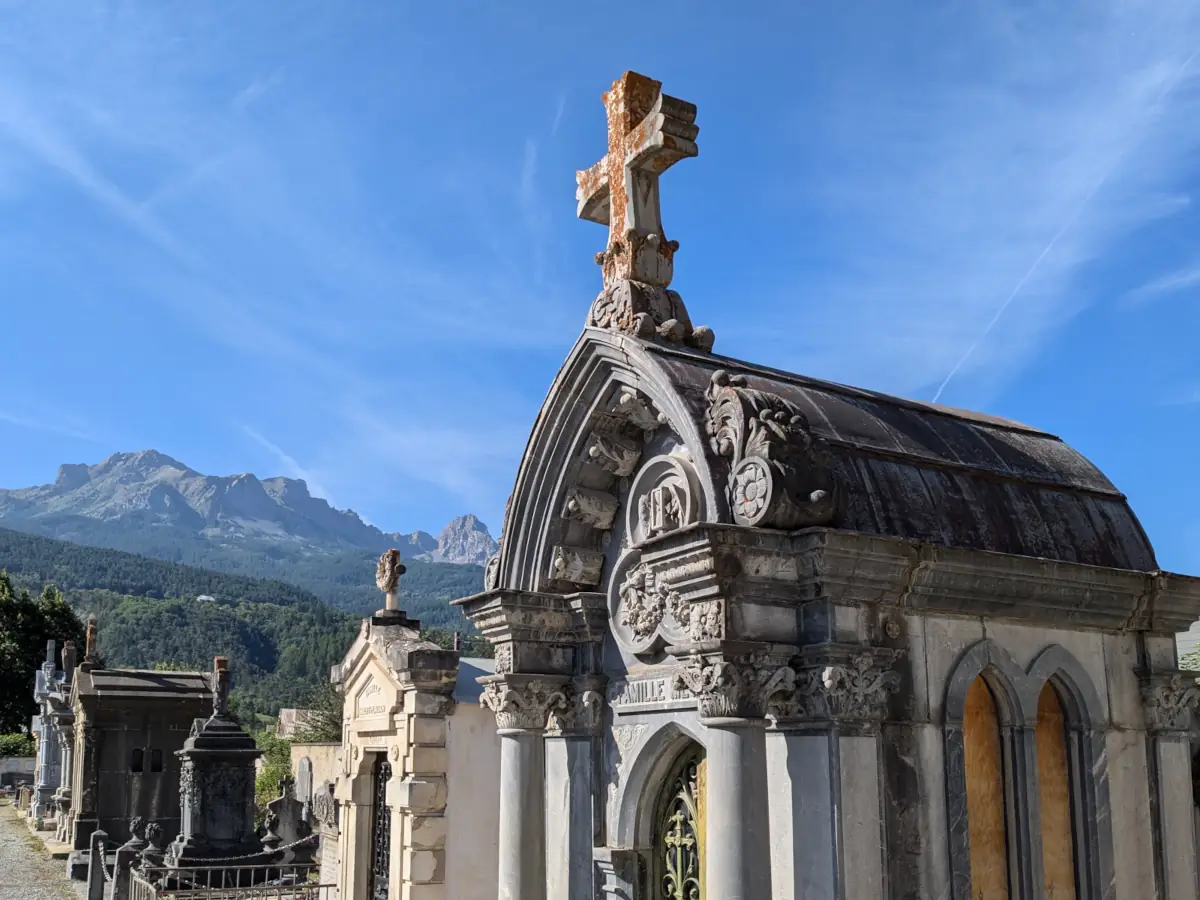
The villa and the family tomb were sometimes designed in the same years. In Barcelonnette cemetery, the funerary chapels echo the ambition of the houses, with columns, pediments and neo-Gothic or Egyptian-inspired decoration. The Piedmontese marble workers Pierre Rossetto and Luigi Rinaldi contributed to this ensemble, which combines stone and marble from the Alps and Carrara. This stop adds to the story of the families who returned from Mexico.
The Latino-Mexican festivities in August
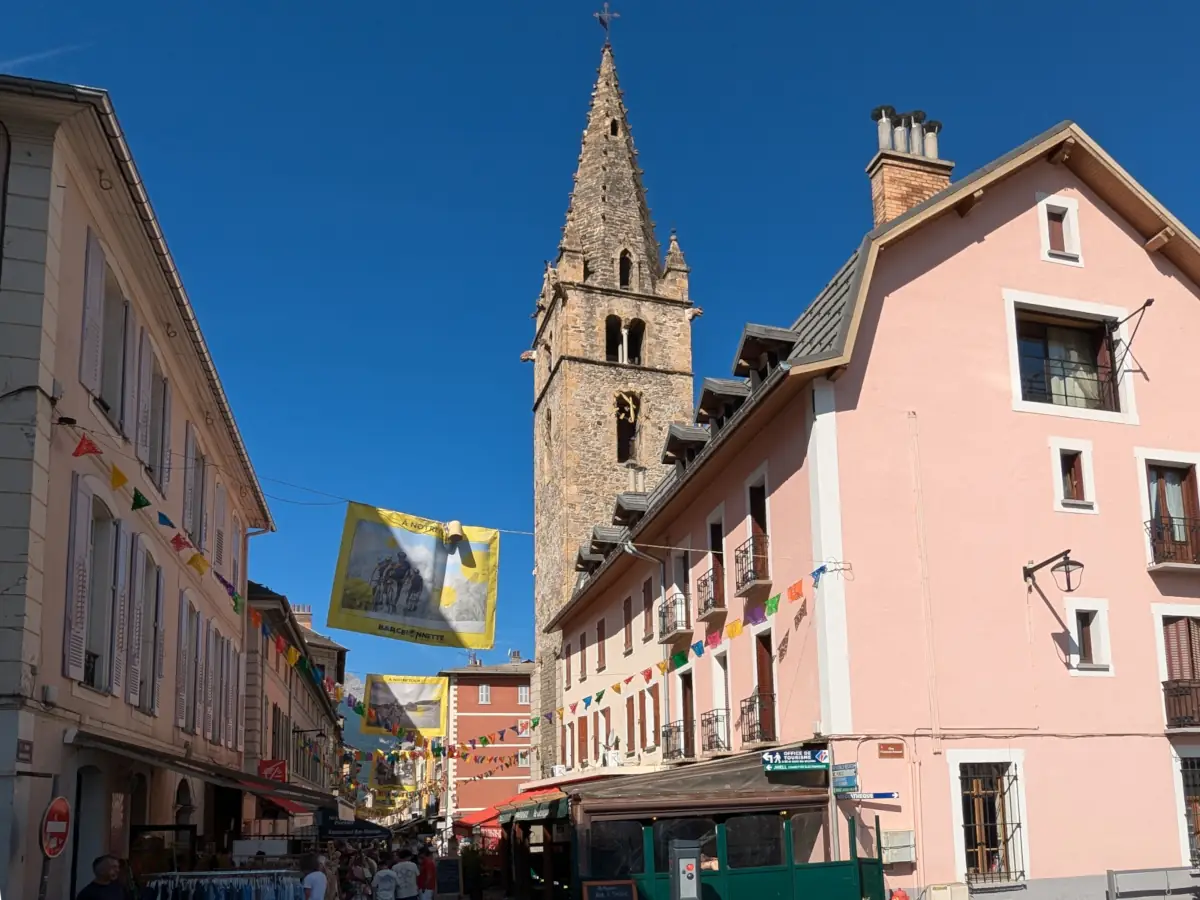
The links with Mexico also live on in Barcelonnette’s festivities. Every August, the Latino-Mexican festival brings concerts, dances and events to the town. Garlands of papel picado, the traditional cut paper, decorate the streets around Place Manuel and the Cardinalis tower.
Continue your outing in the Southern Alps
From Jausiers, the road over the Col de la Bonette leads to Saint-Étienne-de-Tinée and the Mercantour. The Col d’Allos opens onto the upper Verdon valley. Upstream, the upper Ubaye valley offers more villages and mountain landscapes to explore. The Bonette and Allos roads are subject to winter closures.
Practical information
Seeing the Mexican villas in Barcelonnette and Jausiers
- Musée de la Vallée — La Sapinière
- 10 Avenue de la Libération in Barcelonnette. Visit the villa and the museum collections. Opening hours and prices are on the museum website.
- Discovering the villas
- Most houses and parks are private. Their façades can be viewed from public roads. Guided tours of Barcelonnette, Jausiers and the monumental tombs are offered according to Ubaye Tourisme’s calendar.
- Rocher du Chastel in Jausiers
- The viewpoint can be reached on foot from the village, passing Saint-Nicolas-de-Myre church.
- Latino-Mexican festivities
- Every year in August in Barcelonnette. Dates and programme are on the official festival page.
Local information and guided tours are available on Ubaye Tourisme’s pages about the villas in Barcelonnette and Jausiers and the Jausiers discovery route.
Extend your stay
Guest houses in the Ubaye and the Alpes-de-Haute-Provence
Discover guest houses in the area and visit the owners’ websites directly to plan your stay.
Last updated: