


A getaway at the foot of the Maures
Bormes-les-Mimosas, from the hilltop village to the beaches
Text and photographs by Vincent Flachaire
Bormes-les-Mimosas is a flower-filled balcony on the slopes of the Maures hills. The sea appears beyond the rooftops, and umbrella pines line the beaches along the coast.
A village set back from the sea
Backed by the first slopes of the Maures and overlooking the plain and coast, old Bormes stands several kilometres from the beaches. Wooded hills surround it, while its slopes face the Mediterranean and the Hyères islands. This hilltop setting also offered protection against attacks from the sea: people took refuge on the hillside, then behind the walls of the medieval village.

Rue Carnot runs through the old village between shops and workshops. On either side, narrow lanes climb flights of steps or pass beneath houses. These covered passages, known as “cuberts”, allowed residents to move between homes without taking long detours.
Rendered façades alternate with walls built from local mica schist. Its layers and brown tones give the houses and old ramparts a different appearance from the limestone villages of inland Provence.

Saint-Trophyme and Francis of Paola
Saint-Trophyme church was built between 1775 and 1783 in a style inspired by Romanesque architecture. A sundial adorns its façade above the Georges-Pompidou forecourt. Inside, restoration work in 1999 revealed frescoes dating from the church’s construction, long hidden beneath layers of plaster.
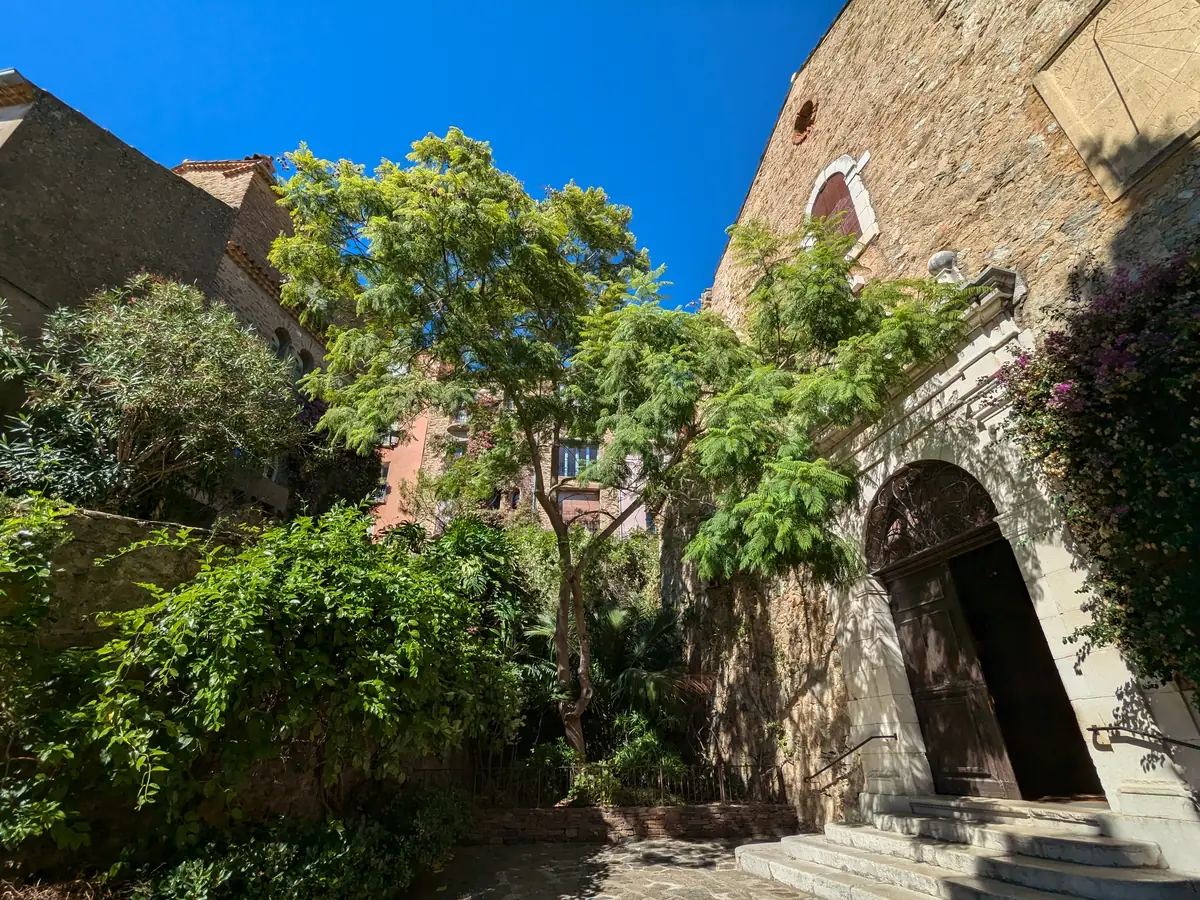
In the late 15th century, Francis of Paola travelled through Provence to join Louis XI, who had summoned him. According to local tradition, Bormes offered him hospitality while plague closed the gates of other towns. In gratitude, the friar is said to have obtained protection for the village against the epidemic through his prayers.
The Saint-François-de-Paule chapel, built in the 16th century at the foot of the village, commemorates this episode. The painter Jean-Charles Cazin is buried in the adjoining old cemetery; his works feature in the collections of the Bormes museum.
How Bormes became “les Mimosas”
The name Bormes-les-Mimosas dates only from 1968. It recognises the importance of this tree native to Australia, acclimatised in the region’s gardens during the 19th century. Its winter blossom colours the hillsides and gardens, while greenery fills the village streets well beyond this short season.

Gonzalez Park continues this history of acclimatisation. Its terraces hold collections of Australian plants: acacias, eucalyptus, banksias and grevilleas. In the lanes, bougainvillea and other climbing plants cover façades, while trees shade the small squares.
The museum, from painters to village history
On Rue Carnot, the Bormes Museum of History and Art, or MHAB, brings together art collections and local history. Works by Jean-Charles Cazin and Henri-Edmond Cross sit alongside historical reconstructions viewed on a tablet. The visit explores the medieval village, activities along the coast and presidential stays at Brégançon. The museum terrace overlooks the plain and the sea.
From the castle at the top of the village
Above the rooftops, the castle remains recall the lordship of the Fos family. Roger de Fos settled here in 1257, in a fortified residence overlooking the village. The castle is now privately owned; its walls and tower remain visible from the surrounding area.

The village viewpoints overlook the Batailler plain, the La Favière neighbourhoods and Cap Bénat. Offshore lie the Hyères islands. From these heights, the village keeps watch over the plain and coastal beaches.
The beaches of L’Estagnol and Brégançon
South of the village, the road reaches a coast of pine woods, rocky headlands and sandy beaches. At L’Estagnol, the rounded bay shelters shallow water near the shore. Umbrella pines line the cove and separate the beach from the parking areas.
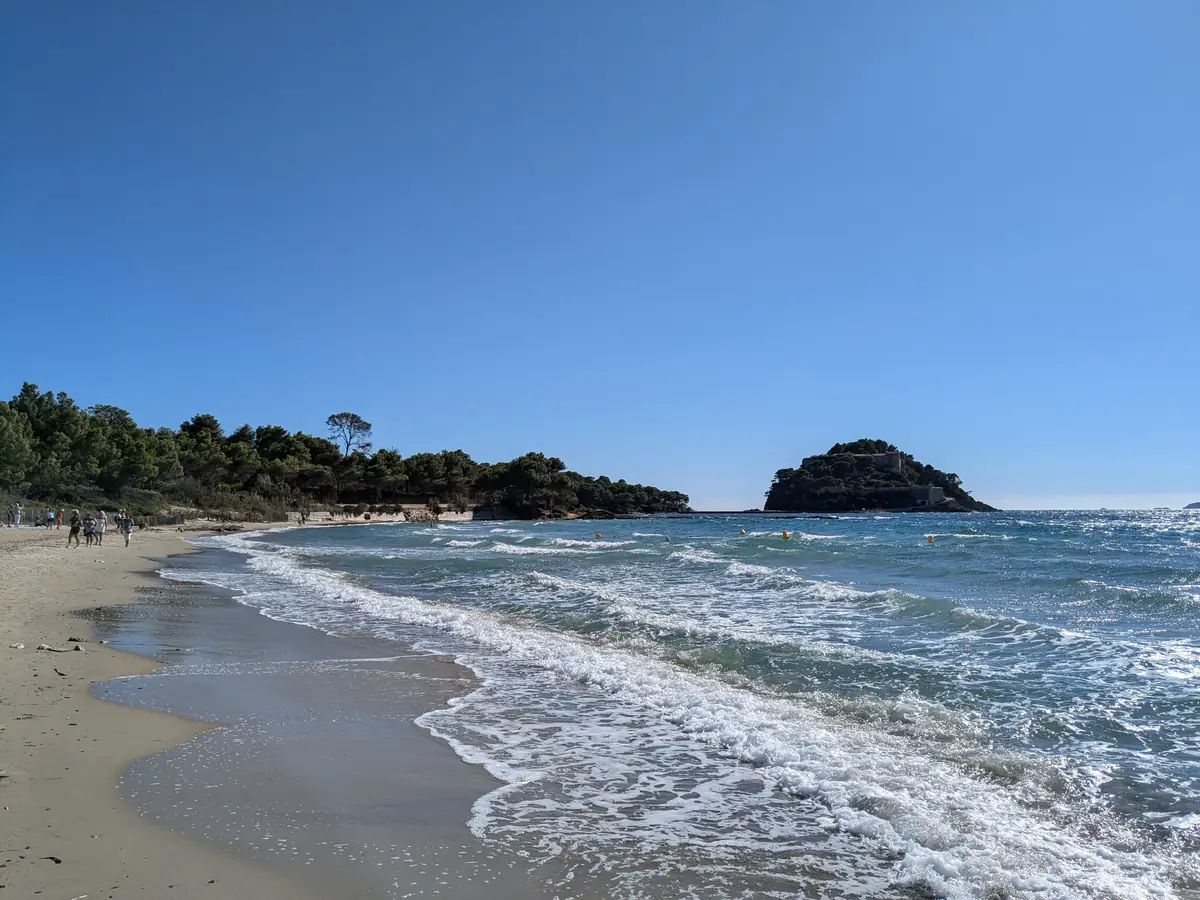
Further east, the Cabasson area and the small beach of Brégançon face the fort. Standing on a rocky islet linked to the shore, it has commanded this stretch of coast since the Middle Ages. It became an official residence of the presidents of the French Republic in 1968. Its silhouette remains visible above the sea from the beach.
The beaches of Le Lavandou, a shared history
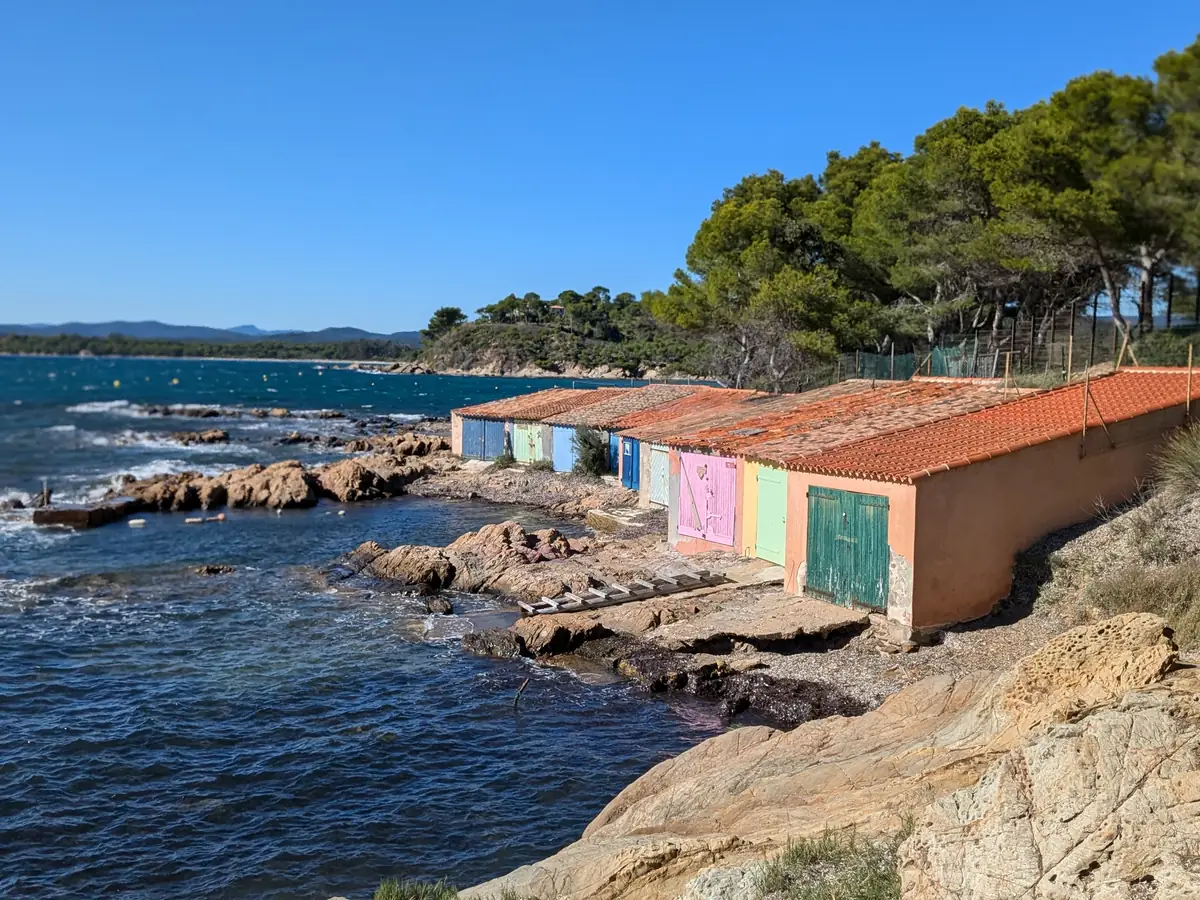
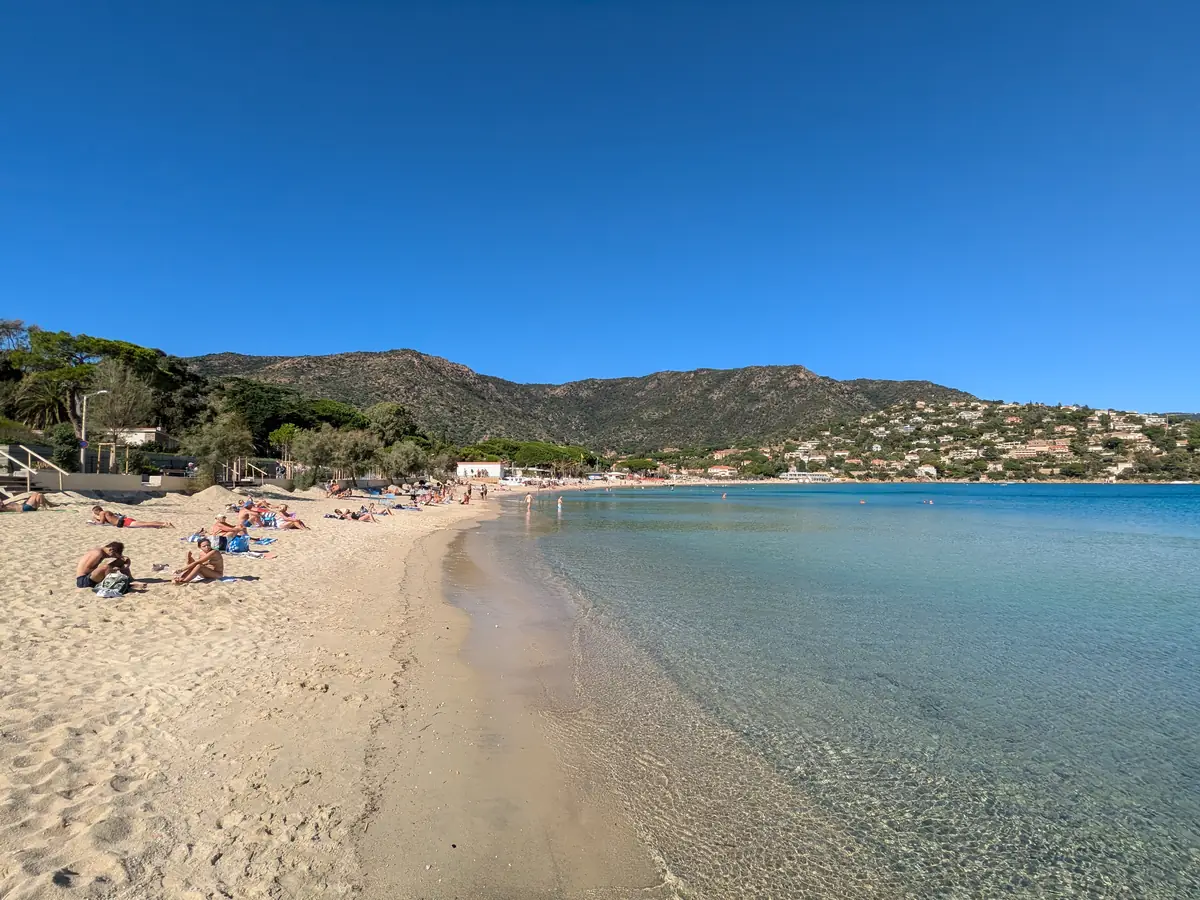
Further east, the beaches of Le Lavandou continue this coast of bays and hills. The former fishing quarter belonged to Bormes until 1913, when it became an independent municipality.
Continue towards Giens or the mimosas of Tanneron
Towards Hyères, the Giens peninsula continues the coastal exploration with salt marshes, harbours and coastal paths. In winter, the mimosas of Tanneron offer another getaway devoted to the flowering trees, further east in the Var.
Further east, the harbour of Saint-Tropez leads from traditional pointus to racing yachts, then up to the citadel and its maritime history museum.
Practical information
Planning a getaway to Bormes-les-Mimosas
- Suggested duration
- Allow an hour and a half to two hours for the village and its viewpoints. Visiting the museum or gardens, or stopping at the beaches, takes extra time; the village and coast can fill a whole day.
- Parking and walking
- Car parks are on the outskirts of the village. The P1 Saint-François car park charges in season; P2 remains free all year. Check the parking arrangements. The lanes have paving stones, steps and slopes. The official tourist route shows the monuments and viewpoints.
- Museum and gardens
- Opening times, admission prices and exhibitions are available on the MHAB — Bormes Museum of History and Art website. The tourist office also presents the parks and gardens and the botanical tours on offer.
- Beach access
- The beaches are several kilometres from the old village. Parking and access arrangements vary with the season: check the information for L’Estagnol and Cabasson. Road access to L’Estagnol is through a paid park open in season.
- Fort de Brégançon
- Guided tours must be booked in advance, subject to availability. See the fort’s visiting arrangements and ticket office.
- Seasons and heat
- Mimosas bloom in winter, generally between January and March depending on the variety and weather. In summer, mornings or evenings are preferable for walking the sloping lanes; water, comfortable shoes and sun protection are useful in both the village and along the coast.
To plan your visit: Bormes-les-Mimosas tourist office.
Extend your stay
Guest houses in the Maures hills
Discover guest houses in the area and visit the owners’ websites directly to plan your stay.
Last updated: