


A Christmas getaway in Haute-Provence
The Christmas nativity scene in Banon
Text and photographs by Vincent Flachaire
In Banon’s lower church, several hundred santons dressed in traditional costumes populate a miniature village. Around the Nativity, the café, school, workshops and lavender distillery tell the story of life in Haute-Provence.
Banon in miniature
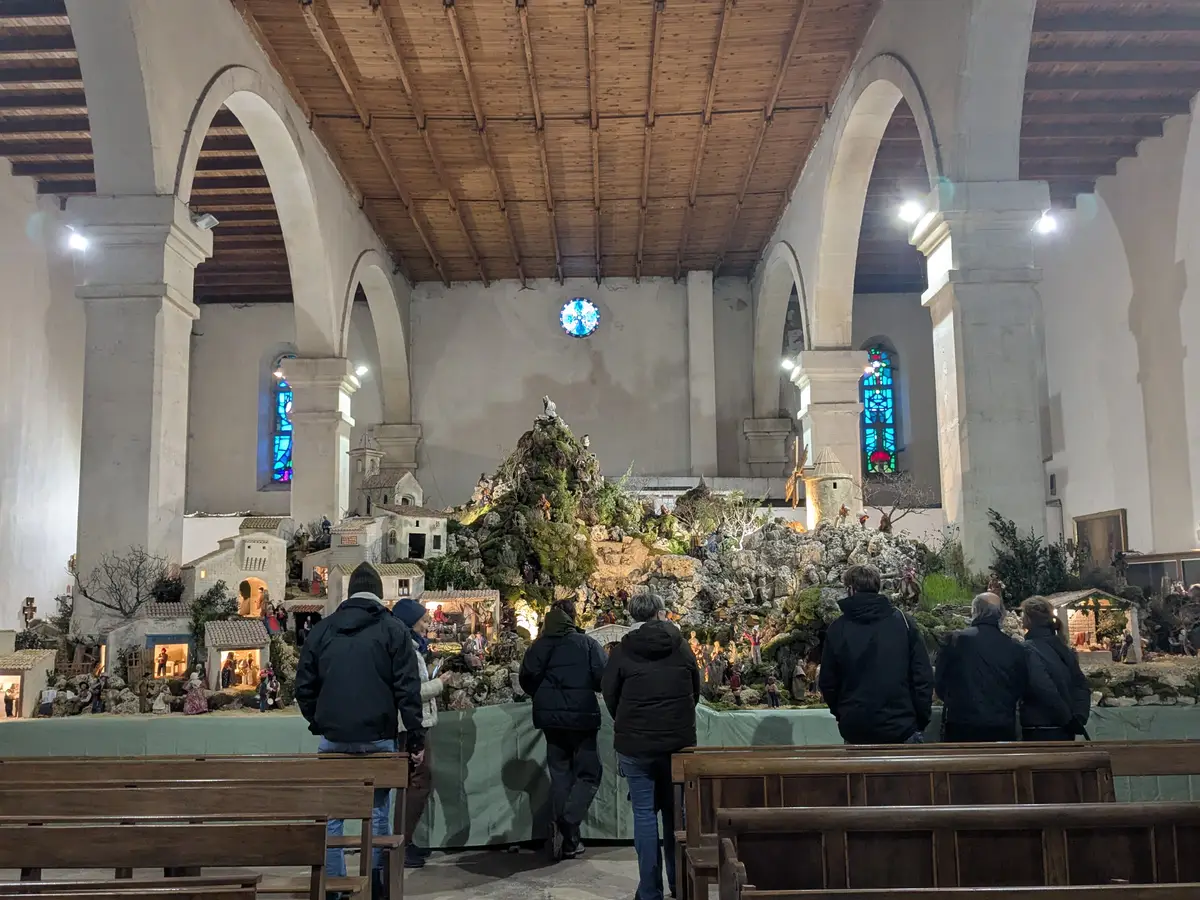
The display covers around 80 m² and rises to a height of four metres. You can walk all the way around it to discover the scenes on its different sides. Paths climb between the houses, cross a bridge and lead to buildings perched above the shops.
The setting includes recognisable buildings from Banon: the medieval gateway, the shops and the upper church overlooking the village. The Nativity takes its place amid this everyday life, among shepherds and villagers in Provençal dress.

From the café to the school
At the Café de Provence, the santons sit at tables outside the brightly lit room. Shops display their goods, and villagers bring their bread to be baked in the communal oven. Some shop signs bear names, such as “Chez Irène” or “G. Martin”: these businesses pay tribute to local figures.


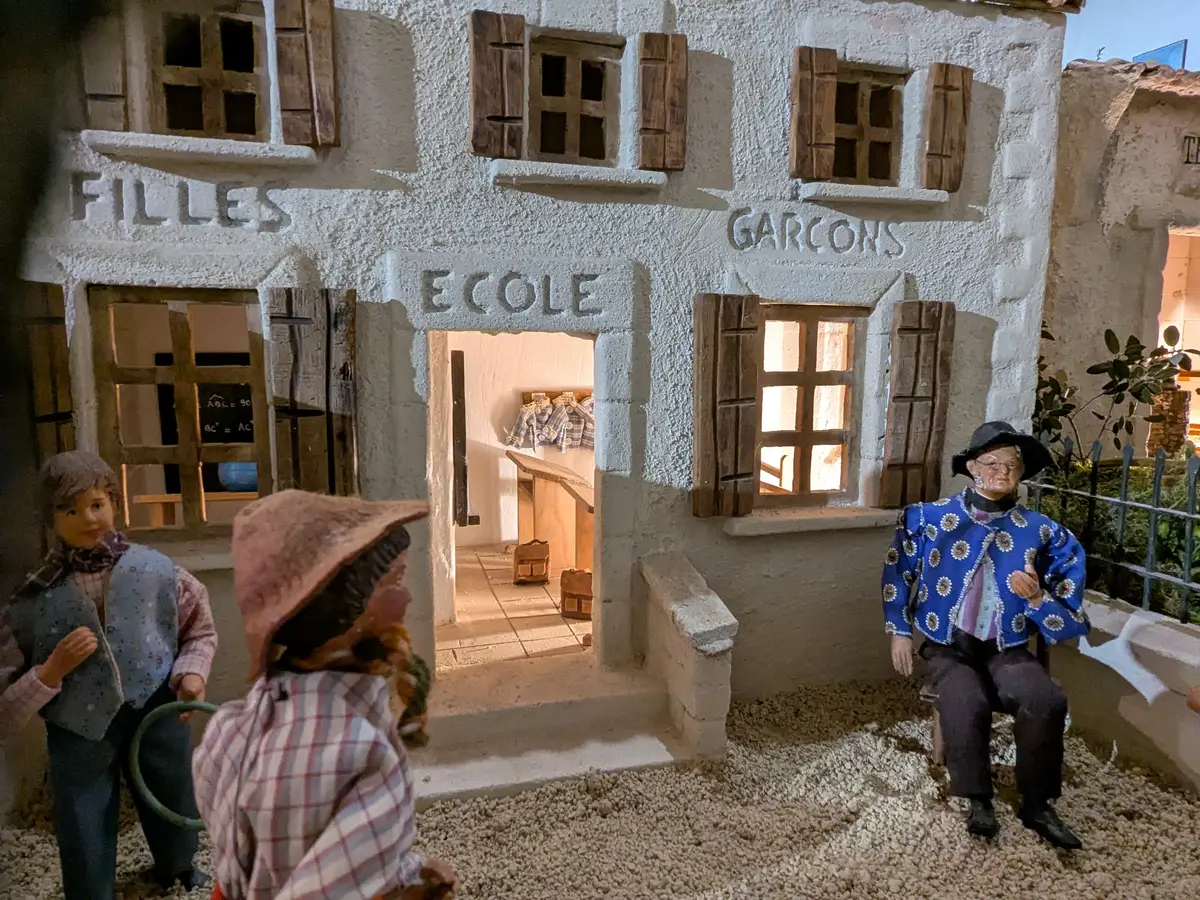
The words “Filles” and “Garçons” on the school façade recall the days when girls and boys were taught separately. Through the open windows, you can see the desks in the classroom.
Lavender and charcoal
The distillery recalls the importance of lavender around Banon and on the neighbouring plateaus. Bundles gathered beside the equipment evoke the work that follows the harvest: steam distillation extracts the essential oil from the flowers.

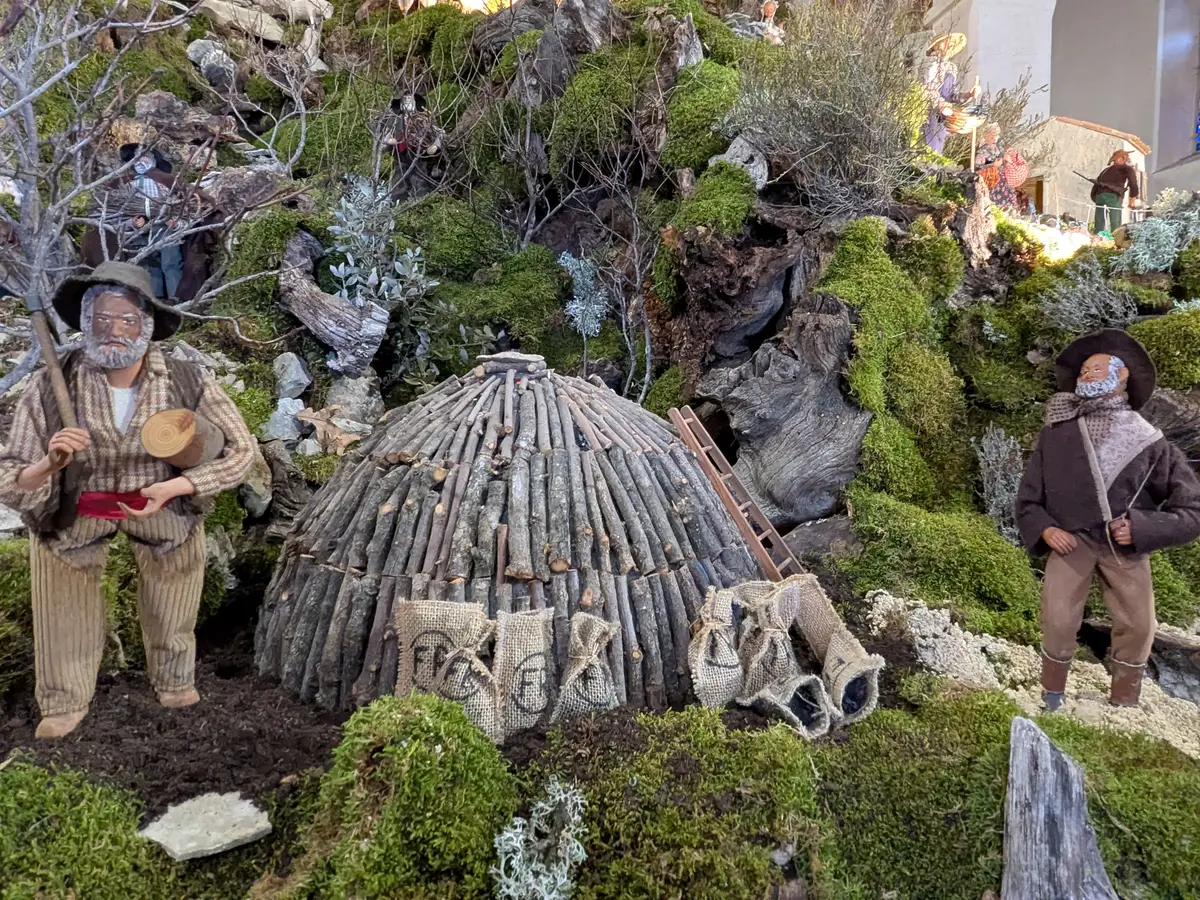
Further on, charcoal burners stand beside a stack of wood. To make charcoal, the stacked wood was heated slowly beneath a covering of earth and plant material that restricted the air supply. On the Montagne de Lure, this activity provided a livelihood for poor farmers and Italian immigrants from the late 19th century onwards.
A nativity scene made by volunteers
This Christmas event began in 2002. For the 2025 edition, La Provence reported a team of around fifteen volunteers and more than 500 hours of preparation. Before placing the santons, the team builds the supports for the landscape, installs the houses and arranges the scenes. Moss, stones and branches cover the structure.
The same newspaper reported 9,850 visitors in 2024. By recreating these familiar trades and landscapes, the volunteers tell the story of the place where they live.

Exploring Banon and the surrounding area
After leaving the church, you can walk up to the medieval gateway and the streets of the upper village, then stop at Le Bleuet bookshop or discover Banon cheese. The walk reveals the façades and passageways that inspired the miniature setting.
The surrounding roads lead to the medieval rotunda of Simiane-la-Rotonde, the Plateau d’Albion or the villages of the Montagne de Lure.
In Arles, the Notre-Dame-de-la-Major nativity scene continues this discovery of Provençal traditions in a church associated with shepherds and the horsemen of the Camargue.
Practical information
Visiting the Banon nativity scene
- Location and duration
- Notre-Dame-de-l’Assomption Church, known as the lower church, in Banon. Allow around 30 to 45 minutes to look at the scenes and their details, longer for photography. Add time for a walk around the village.
- Christmas 2026–2027
- The opening ceremony is scheduled for 13 December 2026 at 11 am. Open daily from 19 December 2026 to 3 January 2027, from 2 pm to 5 pm, then on Saturdays and Sundays from 9 to 31 January 2027 at the same times. Free admission. Check the programme and opening times before your visit.
- Access and village walk
- Use the car parks in the village and walk to the church. The climb to the upper village follows sloping streets and is separate from the visit to the nativity display.
- The Ronde des crèches
- Other villages around Forcalquier and the Montagne de Lure set up nativity scenes for the festive season. Ask the tourist office for the annual programme: venues and opening days vary between villages.
Extend your stay
Guest houses around Banon and Forcalquier
To explore the nativity scene and the villages of Haute-Provence, browse the guest houses in the area and visit their owners’ websites.
These properties listed on the Portal are within 25 km as the crow flies of the location featured in this getaway. Visit their websites to plan your stay.
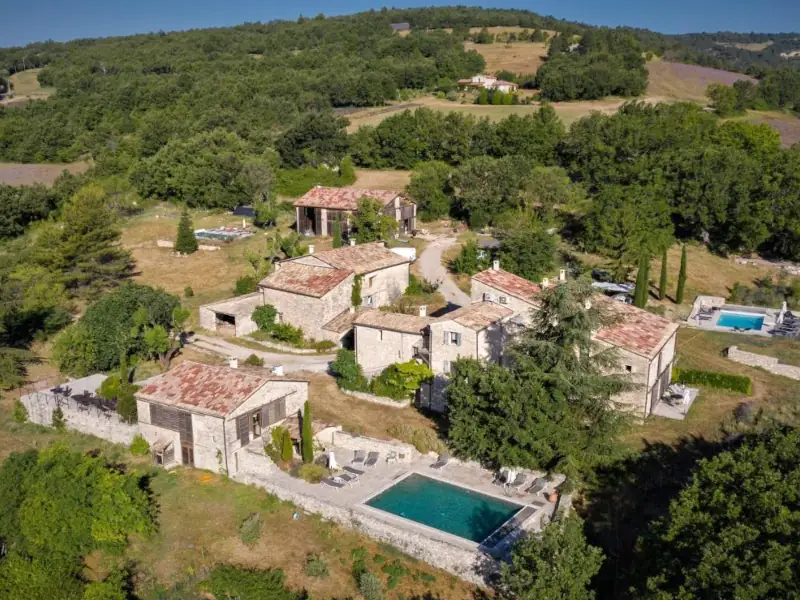

La Lauren
Charming vacation rental
Ferrassières
Visit website
Last updated: