


A getaway in the Haut-Var
The windmills of Régusse, from grain to flour
Text and photographs by Vincent Flachaire
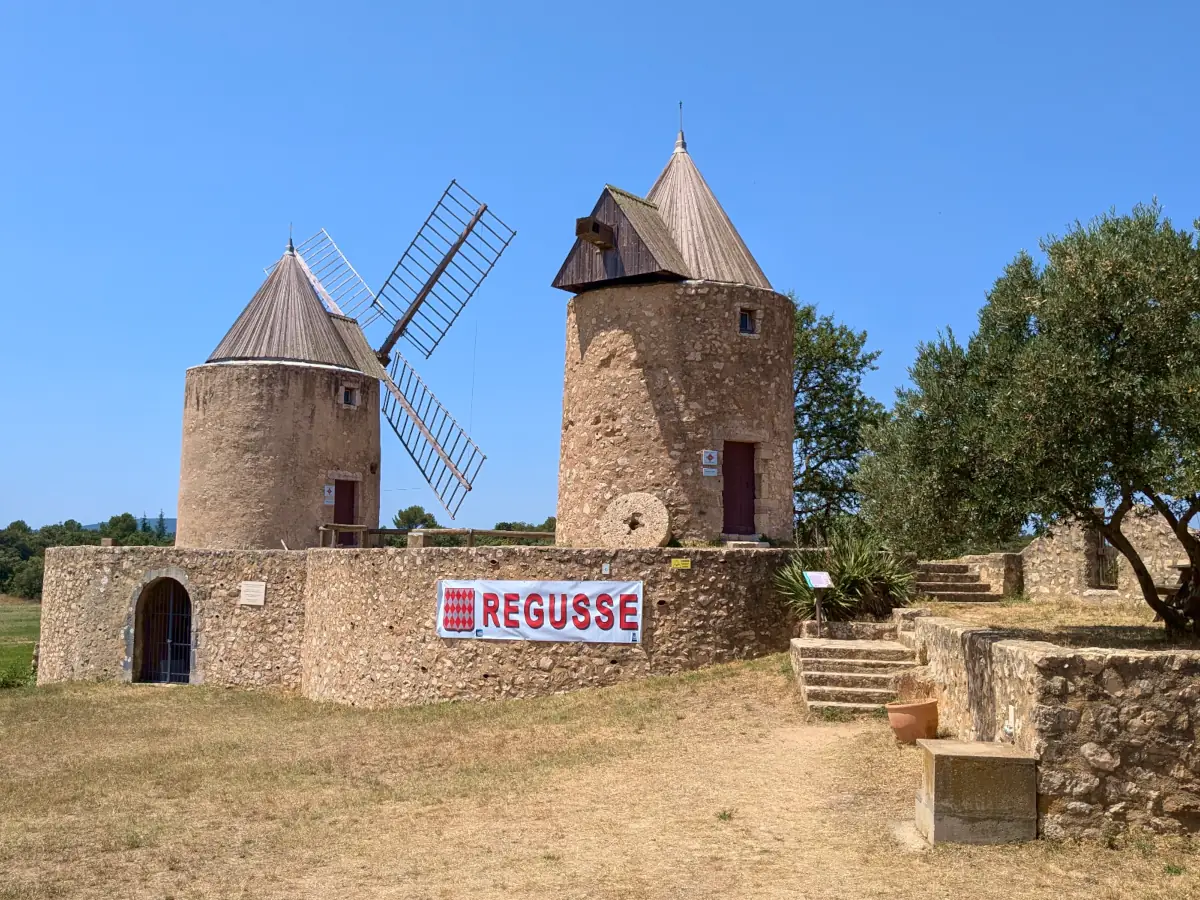
In Régusse, the village’s windmills have regained their roofs. One of them has also regained its mechanism, so it can grind grain and pass on the milling heritage of this Haut-Var village.
Two windmills beside the village
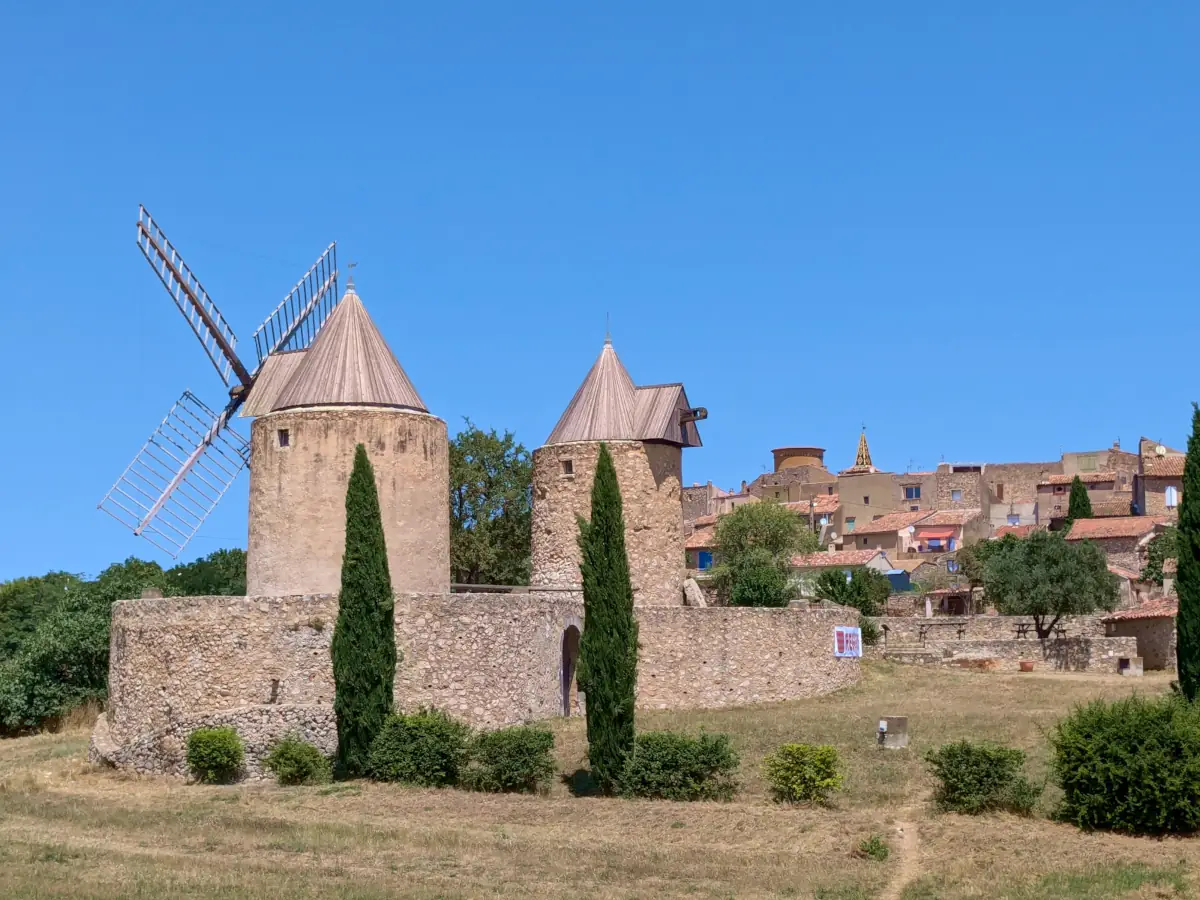
South of Régusse, the two towers stand on a stone terrace a few minutes from the houses. The old threshing floors lie below them: grain was separated from the ears here before being taken to the mill. The site brought together the final stages of cereal processing, close to the fields and the village.
Today, the two buildings serve different purposes. The windmill with sails has had its machinery restored and can produce flour. Its neighbour, on the village side, holds a collection of agricultural tools. A visit explains both milling and work in the fields.
Turning the roof to catch the wind
The tower stays still, but its roof turns to bring the sails into the wind. Inside, wooden levers are used to rotate the structure on a circular track. The millers then fit canvas to the sails, adjusting its area to the strength of the wind.
The movement drives an oak shaft and then a large toothed wheel, which transfers the rotation to the millstone. The gearing increases the speed: for each turn of the sails, the millstone makes five revolutions.
From grain to flour
Grain is poured into the hopper and then drops between two millstones. The lower stone stays still while the upper one turns. The miller adjusts the gap between them to produce a finer or coarser meal. The flour then travels down a chute to the ground floor. It still contains bran, the outer layer of the grain, which is sifted out if a whiter flour is required.
A millstone found in the rubble
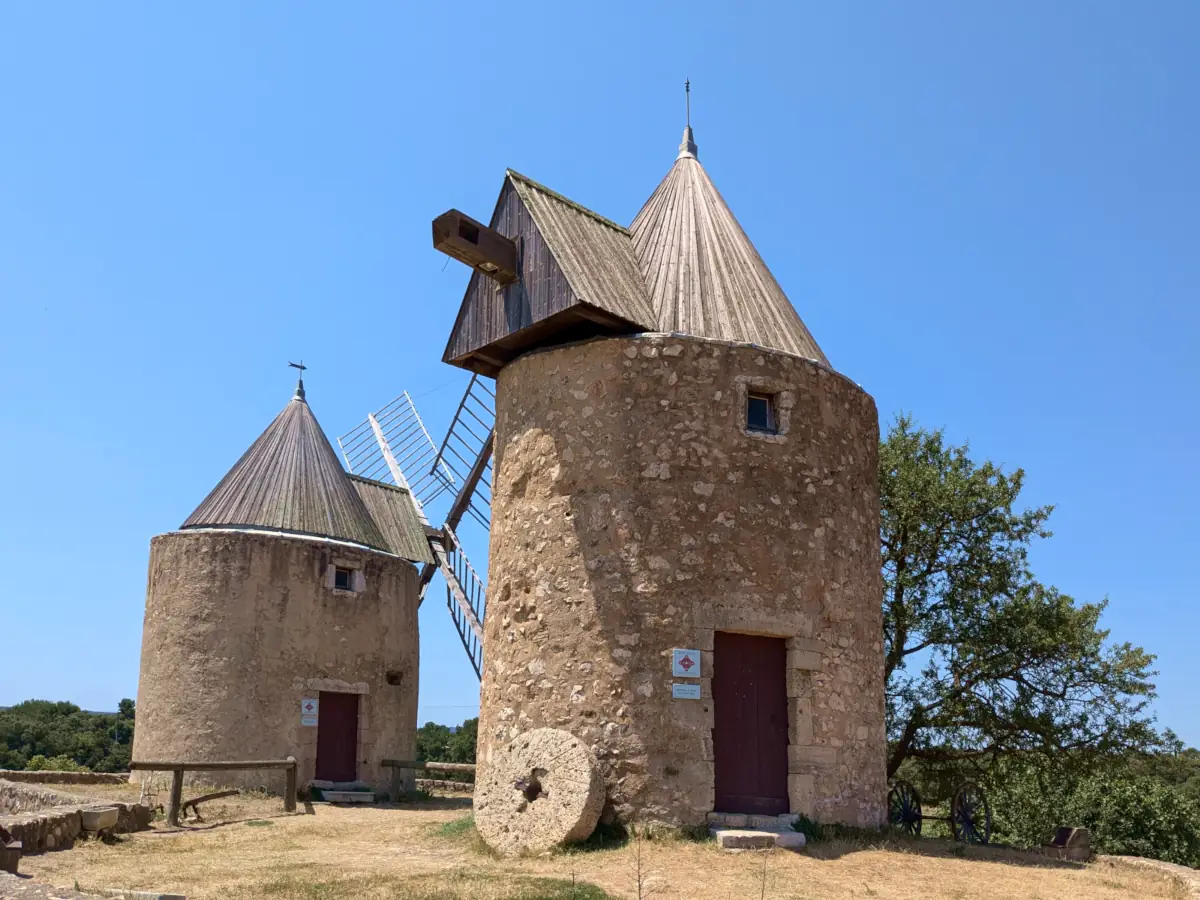
Before restoration, the windmills had lost their roofs and some of their equipment. In the one closest to the village, a millstone lay among the rubble of the collapsed upper floor. It now rests against the tower: a part of the machinery that you can examine even when the doors are closed.
Restoring a working windmill
The origins of the windmills remain uncertain. Les Amis des Moulins cite a document from 1565 mentioning a mill already in ruins, followed by a reference to mills in the plural in 1687. These records do not establish that the buildings were built by the Knights Templar. The two towers and their base have been listed as historic monuments since 1978.
The work begun in 1995 involved masons from Régusse and Les Charpentiers du Haut-Var, based in Le Muy. To reconstruct the timber frame and machinery, the craftspeople used plans of Provençal windmills dating from 1640. The windmills at Grimaud and Fontvieille served as models.
After around six months of work, the windmill with sails was able to operate again. The restored site was inaugurated in 1996. In the other tower, agricultural tools donated by local residents complement the visit.
Volunteers at the controls
Les Amis des Moulins de Régusse lead tours and help maintain the site. Their work goes beyond explanations: a demonstration requires turning the roof, fitting the canvas and monitoring the grinding. Operation therefore depends on the wind and an available team.
On the first weekend of August, the Fête des Moulins brings Régusse to life around its milling heritage. The programme combines visits and festivities. Even when the windmill is at rest, the volunteers’ explanations of its machinery and the miller’s work help you understand how grain becomes flour.
Explore more of the Haut-Var
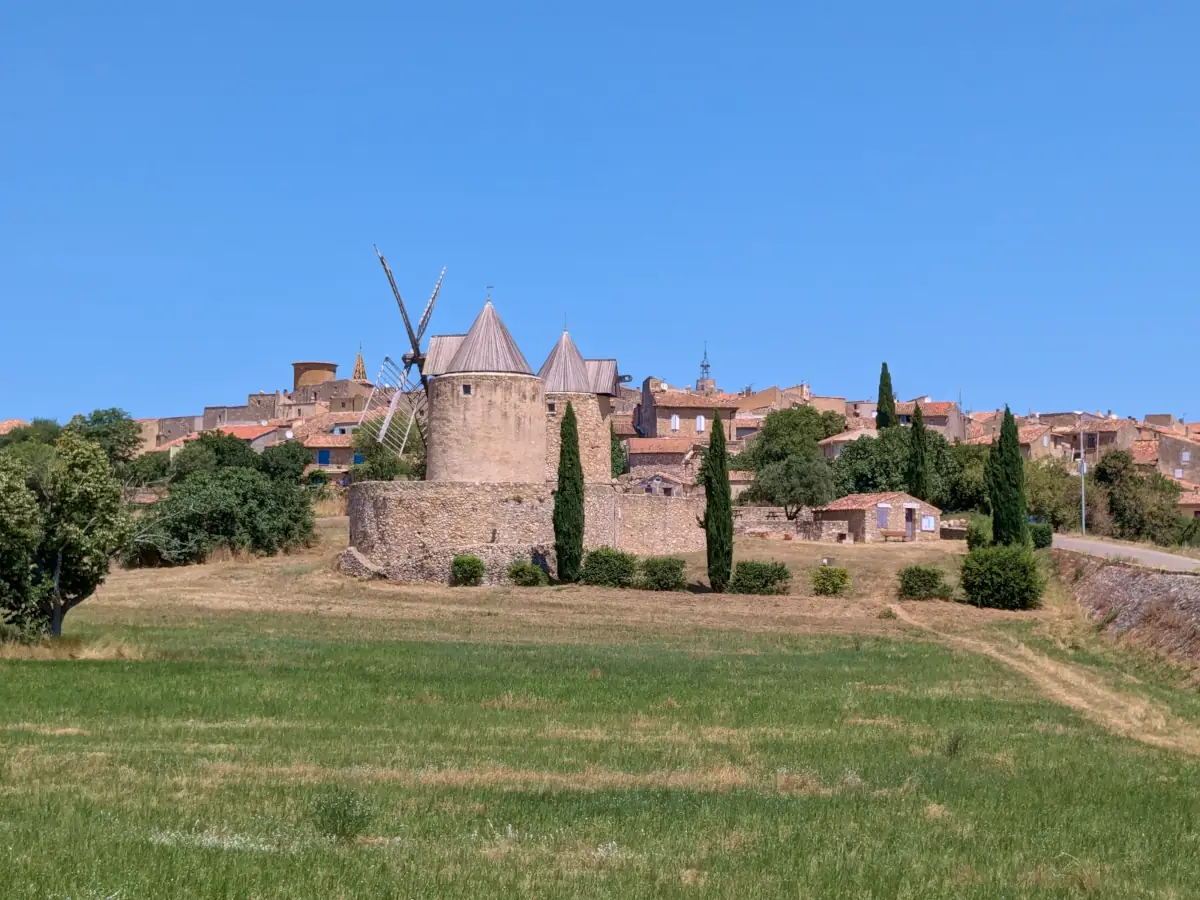
Walk back up Rue des Moulins to reach the village streets. In Aups, old gates, fountains and markets offer another stop in the Haut-Var. Roads also lead to Lake Sainte-Croix and the Verdon Gorges.
In Cotignac, Cours Gambetta and its fountains lead into a visit to the old village at the foot of the tufa cliff.
In Fontvieille, Daudet’s windmill offers another example of the Provençal windmills used as models for the restoration.
Practical information
Visiting the windmills of Régusse
- Duration and access
- Allow thirty minutes to an hour for the exterior and photographs, and longer for a guided tour and a walk around the village. From the centre, follow Rue des Moulins to the site. Park in authorised spaces in the village and continue on foot.
- Windmill visits
- Individual visits are advertised as free during opening hours, generally from May to September. Times vary with the season; groups are welcomed by appointment under specific conditions. Consult the official windmill visitor information before travelling.
- Demonstrations and the windmill festival
- The Fête des Moulins traditionally takes place on the first weekend of August. Demonstrations depend on the weather and the availability of volunteers: an open windmill does not necessarily mean its sails will turn. Check dates and the programme for the festival and heritage days with Les Amis des Moulins de Régusse.
- What to bring
- Comfortable shoes, water and sun protection: the grounds are exposed to the sun. Follow instructions and keep clear of moving sails. The windmill interior is not wheelchair accessible; ask the guides about access to the other areas.
To plan your stay: Lacs et Gorges du Verdon tourist office.
Extend your stay
Guest houses around Régusse and the Verdon
These properties listed on the Portal are within 25 km as the crow flies of the location featured in this getaway. Visit their websites to plan your stay.
Last updated: