


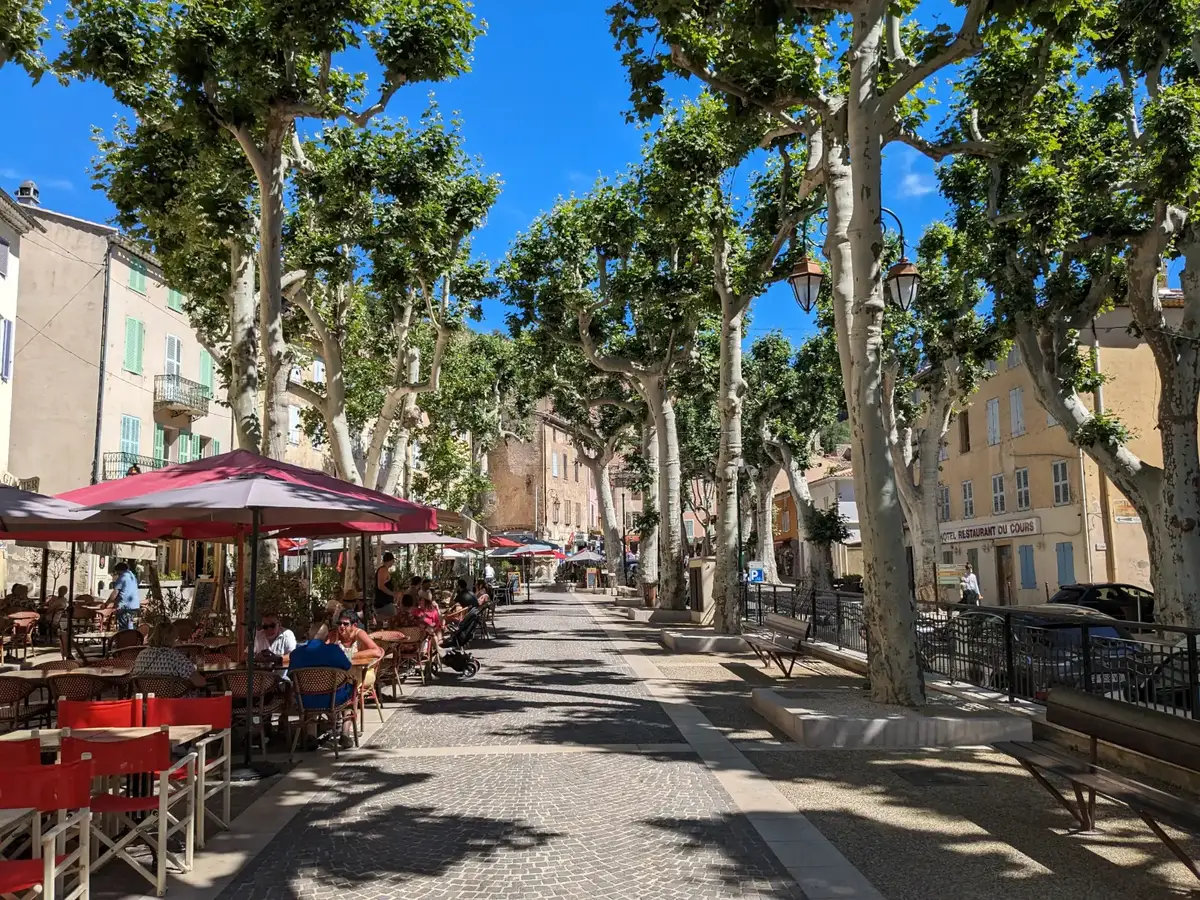
In the shade of the plane trees on Cours Gambetta, people linger at a terrace before making their way towards the old village, nestled at the foot of the cliff.
A shaded course at the heart of the village
Cours Gambetta occupies what was once a seigneurial pasture. In 1770, the town planted an avenue of elm trees; during the nineteenth century, they were replaced first by hackberries and later by the plane trees that now shade the promenade.
Along the aligned houses, the course is a place to pass through and meet. Terraces line the promenade, while benches beneath the plane trees offer places to pause before the first streets of the old village.
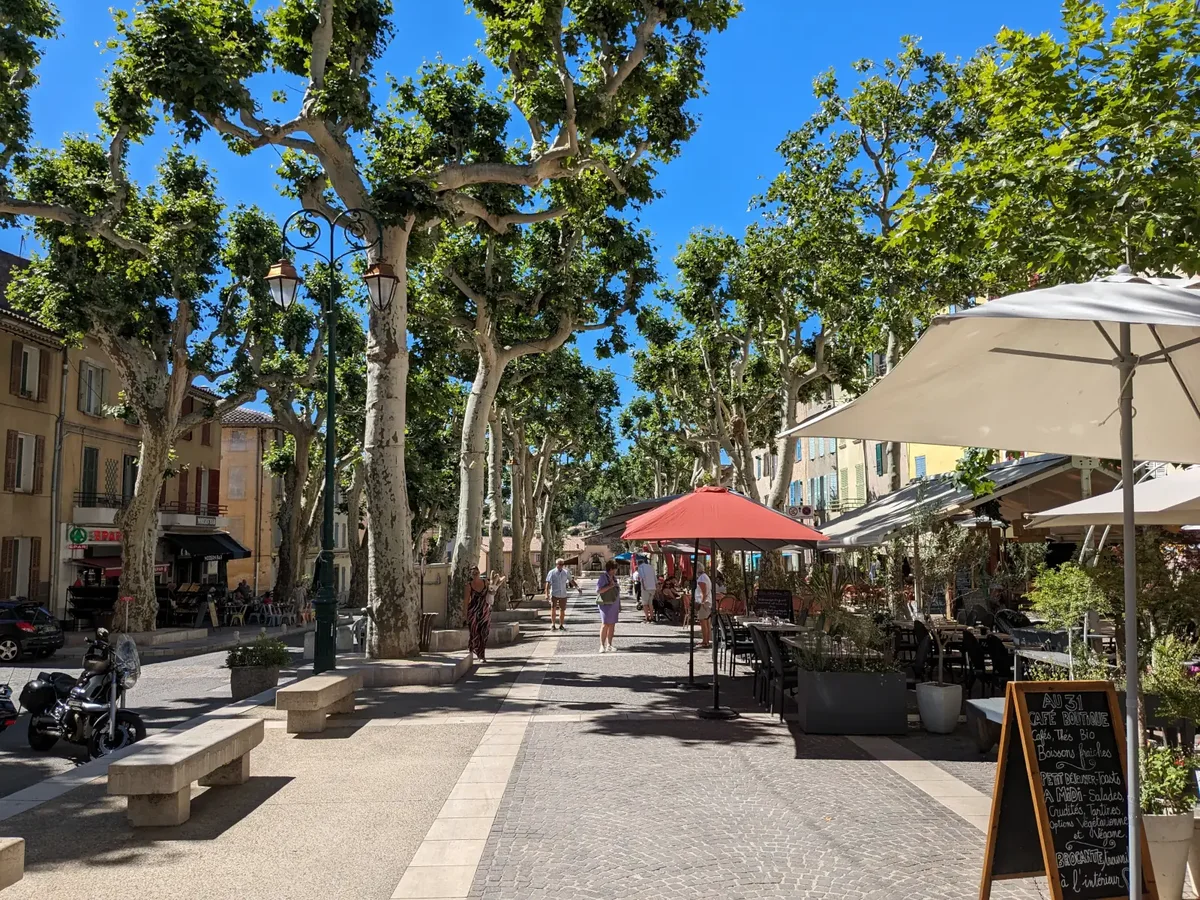
Two fountains mark Cours Gambetta. At the lower end of the course, beside the washhouse, the Cascade fountain dates from 1850. It recalls the essential role water played in village life.
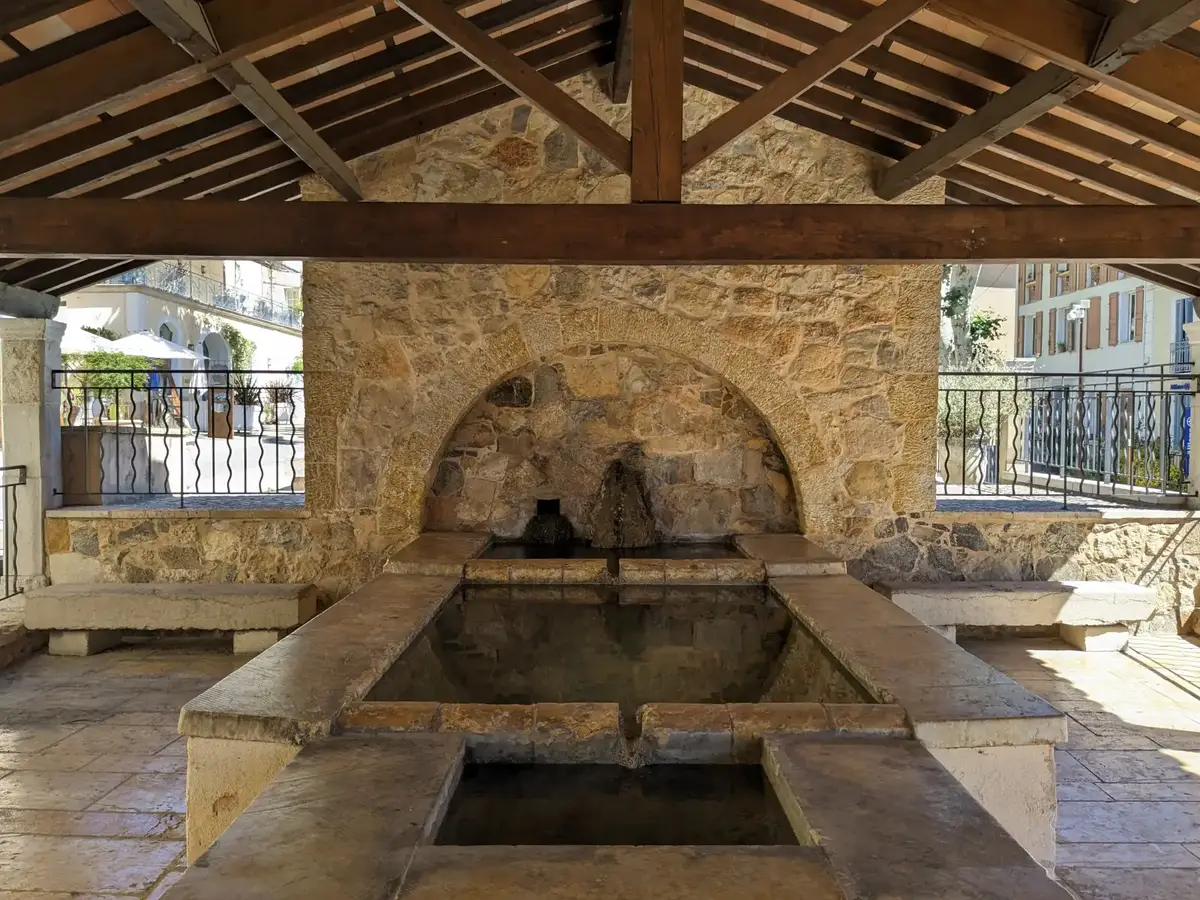
The Four Seasons fountain stands at the upper end of the course. It came from the gardens of the Dominican convent on the Cours Mirabeau in Aix-en-Provence. Acquired in 1810, it was installed in Cotignac some years later. Its four white-marble faces evoke the four seasons that give the fountain its name.
From the bourgeois quarter to the old lanes
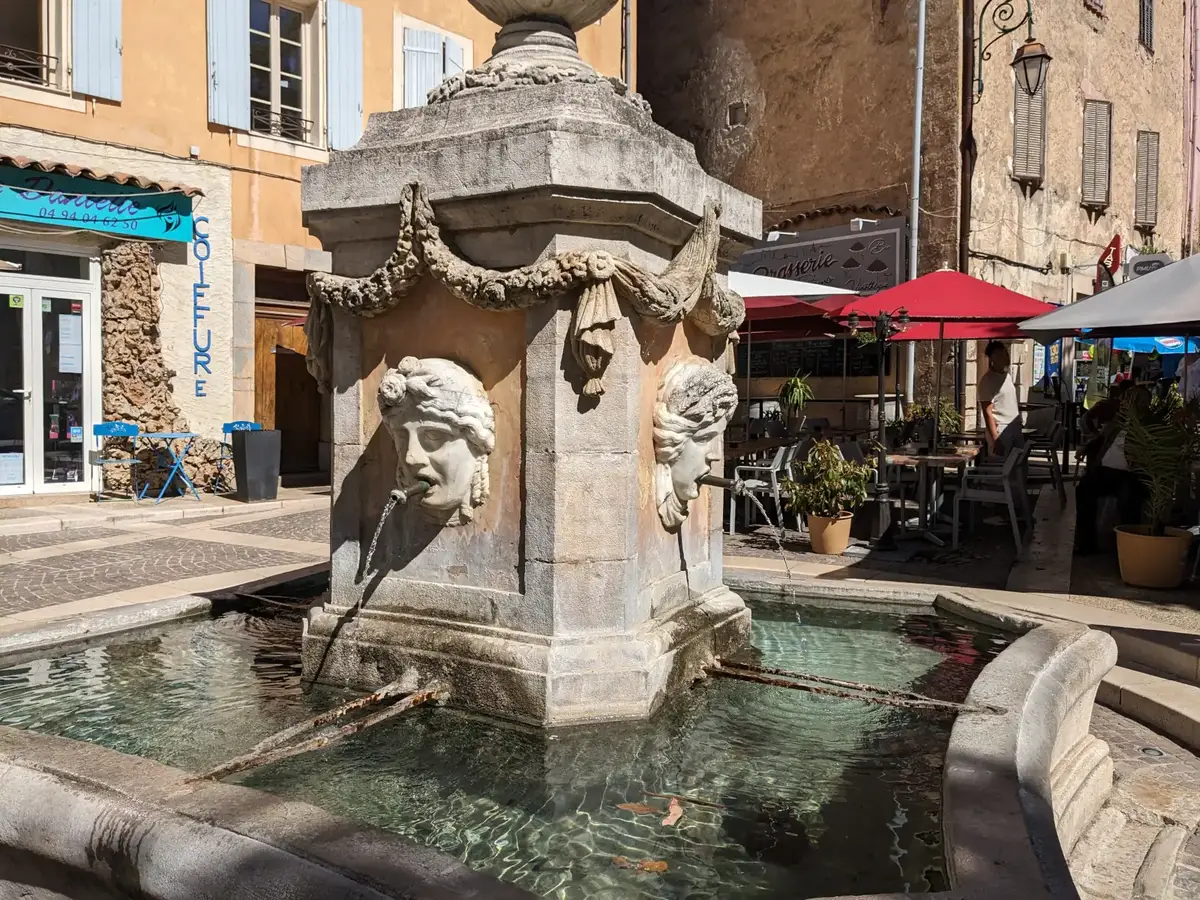
The aligned houses along Cours Gambetta formed Cotignac’s bourgeois quarter from the nineteenth century onwards. Their regular façades bear witness to the village’s prosperity, supported by trade, manufactures and agriculture.
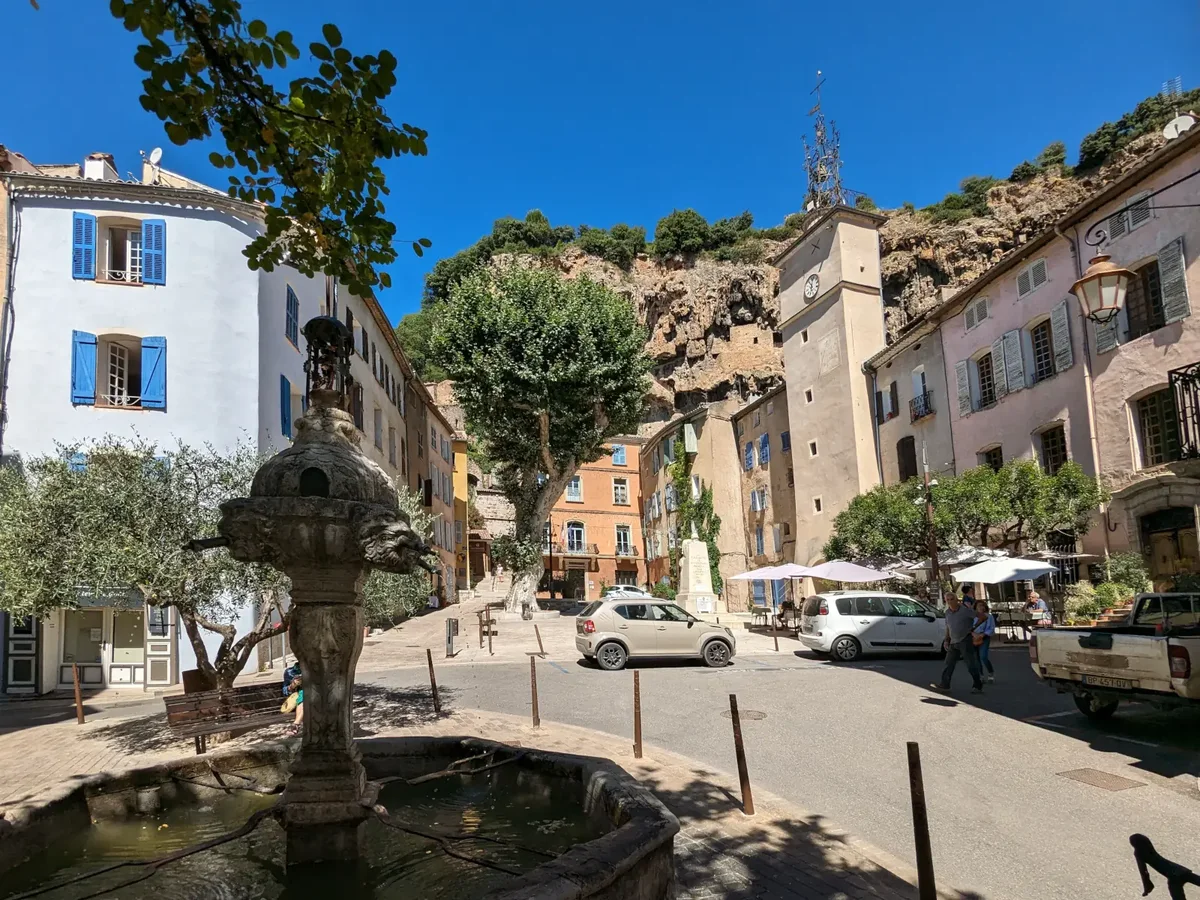
Leaving Cours Gambetta, the route continues into the old lanes. The façades draw closer and the rocky wall appears again behind the houses.
Cotignac between village and cliff
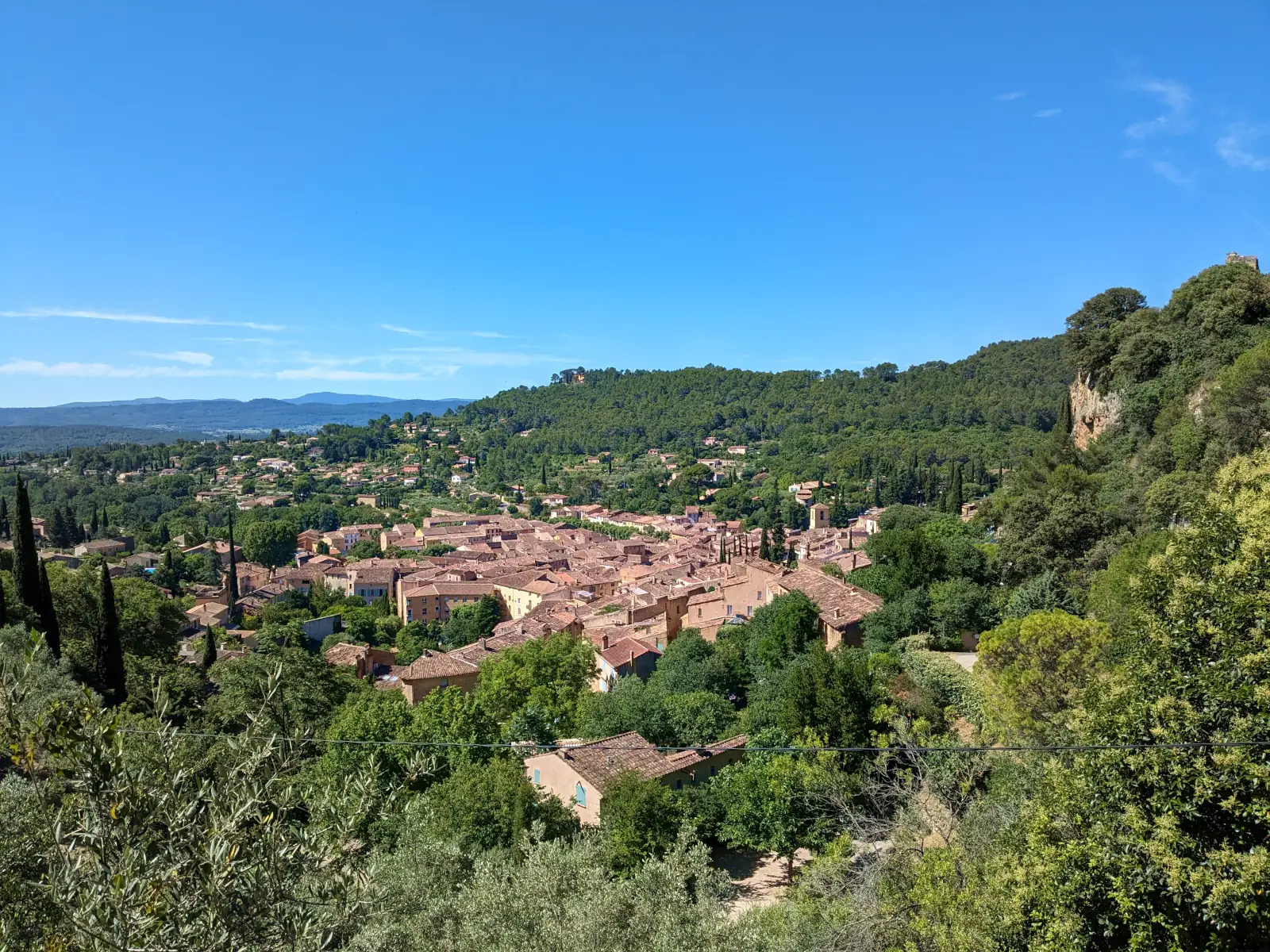
Cours Gambetta forms the centre of Cotignac. It connects the modern, industrious quarter born in the nineteenth century with the old village nestled beneath the cliff.
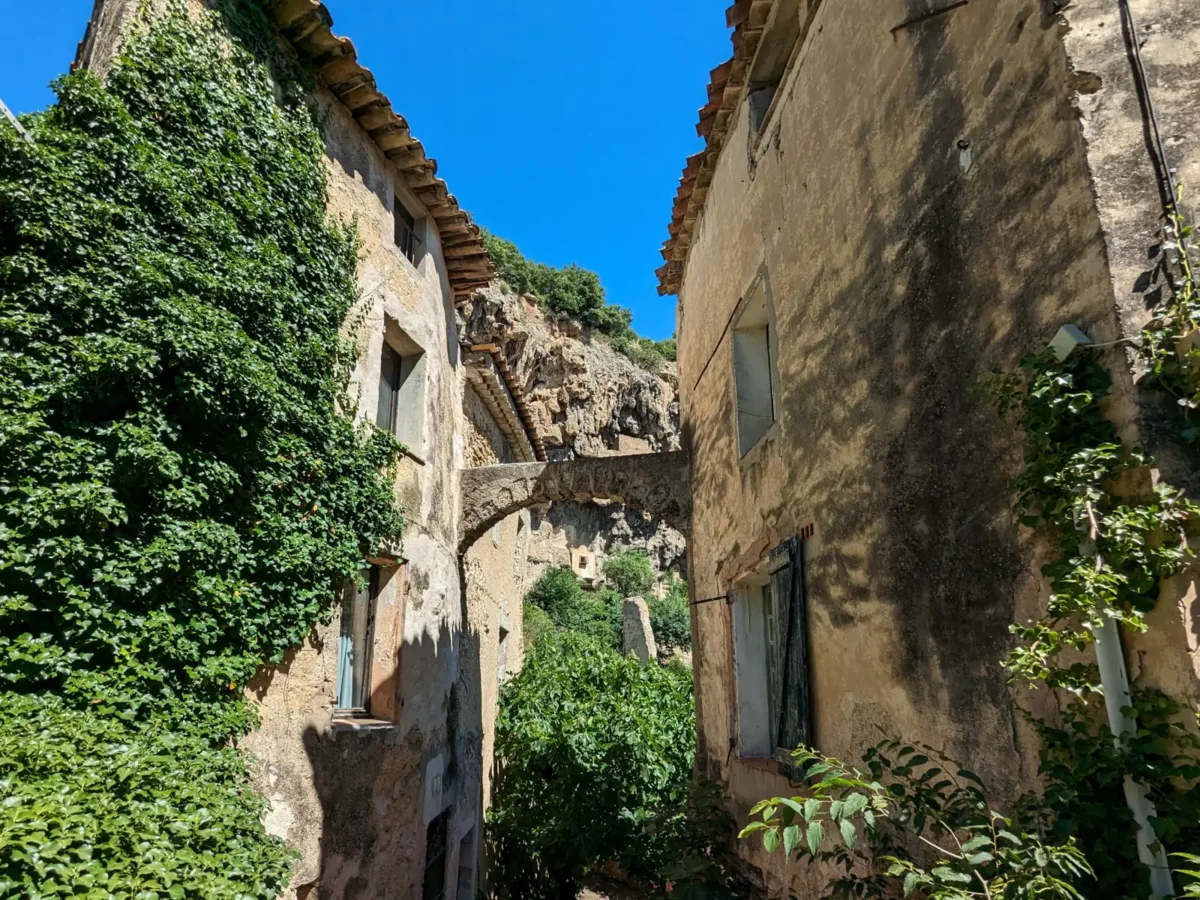
Cours Gambetta is a natural starting point for discovering Cotignac’s other faces. The rock, its caves and troglodyte dwellings overlook the old village; lower down, the open-air theatre and former mills extend the walk. Beyond the centre, the road leads to the Notre-Dame-de-Grâces sanctuary and the Saint-Joseph du Bessillon monastery.
Practical information
Preparing your walk in Cotignac
- Parking
- Parking is limited in the old centre’s lanes. It is best to use a public car park on the edge of the village centre, then continue on foot.
- Before your visit
- Access conditions for the caves, the rock and the sanctuaries may vary. Check the tourist office information before setting out.
For current information, consult Provence Verte & Verdon tourism and the Cotignac town council.
Extend your stay
Guest houses to extend the getaway
To experience this getaway, discover guest houses in Cotignac and Green Provence.