


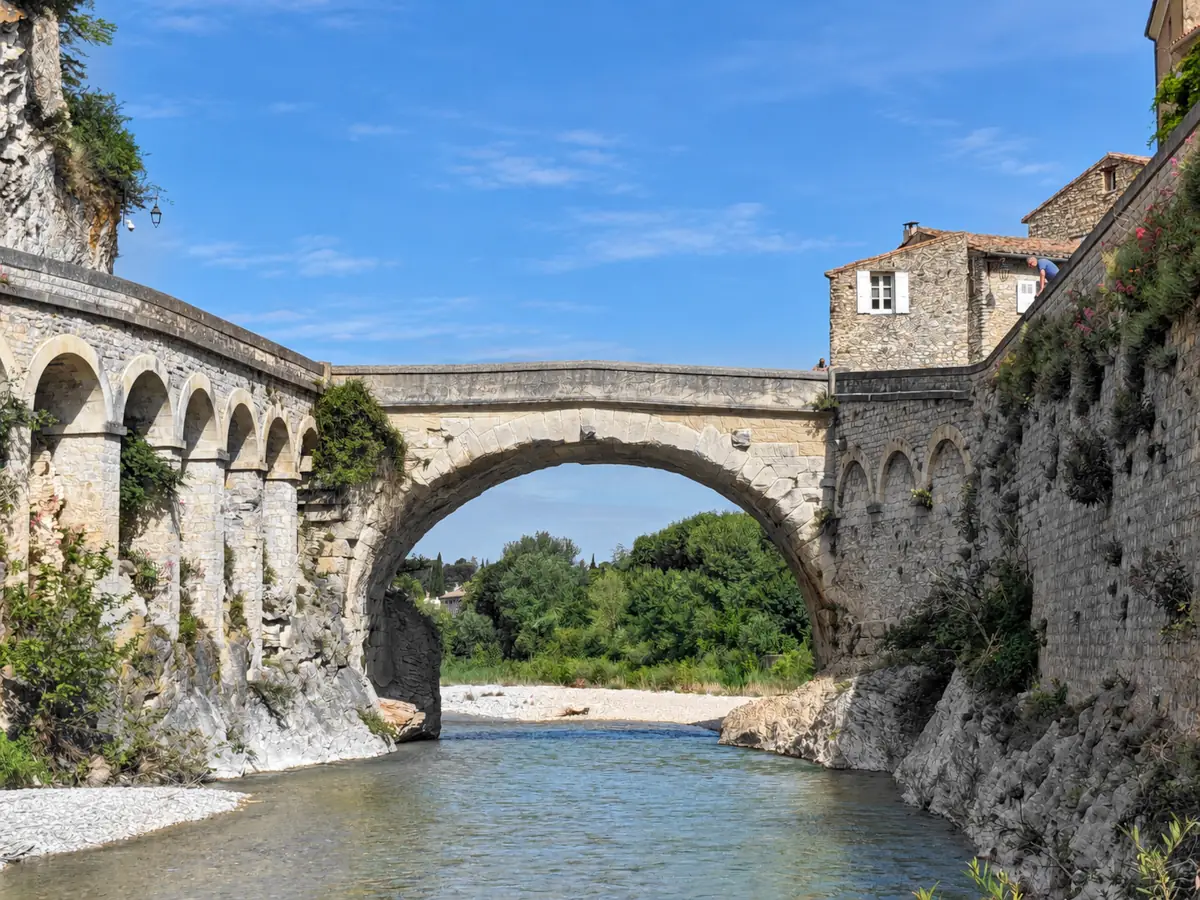
A getaway in Vaison-la-Romaine
Vaison-la-Romaine, from the Roman bridge to the ancient town
Text and photographs by Vincent Flachaire
In Vaison-la-Romaine, the bridge over the Ouvèze leads towards the shops and squares of the lower town. Nearby, the streets and houses of ancient Vasio can be explored at Puymin and La Villasse, alongside the theatre and the museum collections.
The Roman bridge over the Ouvèze
The bridge crosses the Ouvèze where the river narrows between two limestone faces. Built in the 1st century AD, it rests directly on the rock. Its single arch leaves the water free to flow without a central pier. From Quai Paul-Gontard, you can examine the vault and its large stone blocks, then cross the bridge to look down at the river from the parapet.
Floods and war put the bridge to the test
The floods of 1616 and 22 September 1992 submerged the bridge. The 1992 flood devastated the town and claimed many lives. The arch held, but the structure has needed repairs on several occasions throughout its history.
In 1944, the German army tried to blow it up. The explosion damaged the roadway and some of the voussoirs, the shaped stones that form the vault, without bringing down the arch. Local people then restored a crossing using railway sleepers and earth.
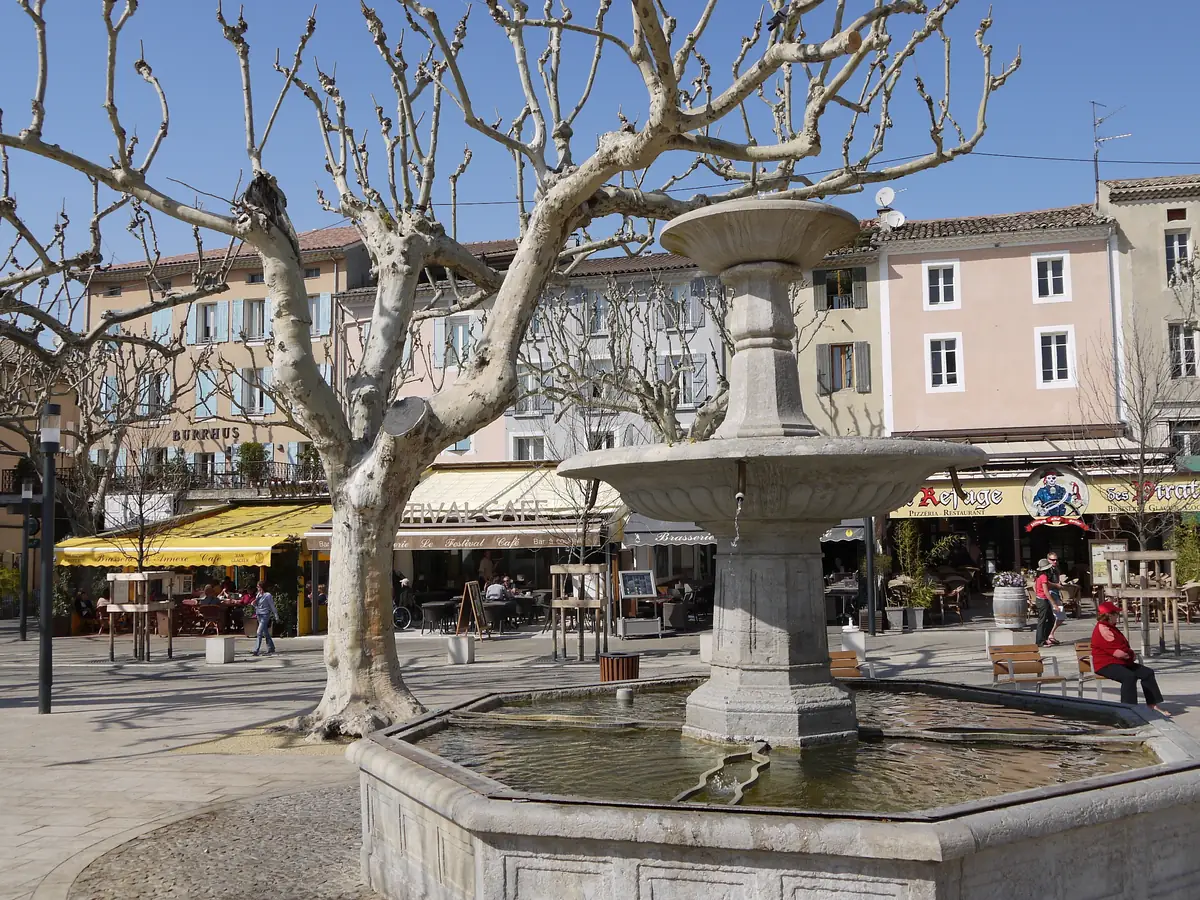
Grand’Rue and Place Montfort
On the lower-town side, Grand’Rue climbs from the bridge towards the shops and Place Montfort. Café terraces surround the fountain beneath the plane trees. On Tuesday mornings, market stalls fill the streets of the centre.
Today’s town covers much of ancient Vasio. Remains appear among the houses and streets: in a few minutes, you can walk from a shopping square to an excavated quarter. The sights of the lower town are within walking distance of one another, leaving you free to stop and explore as you please.
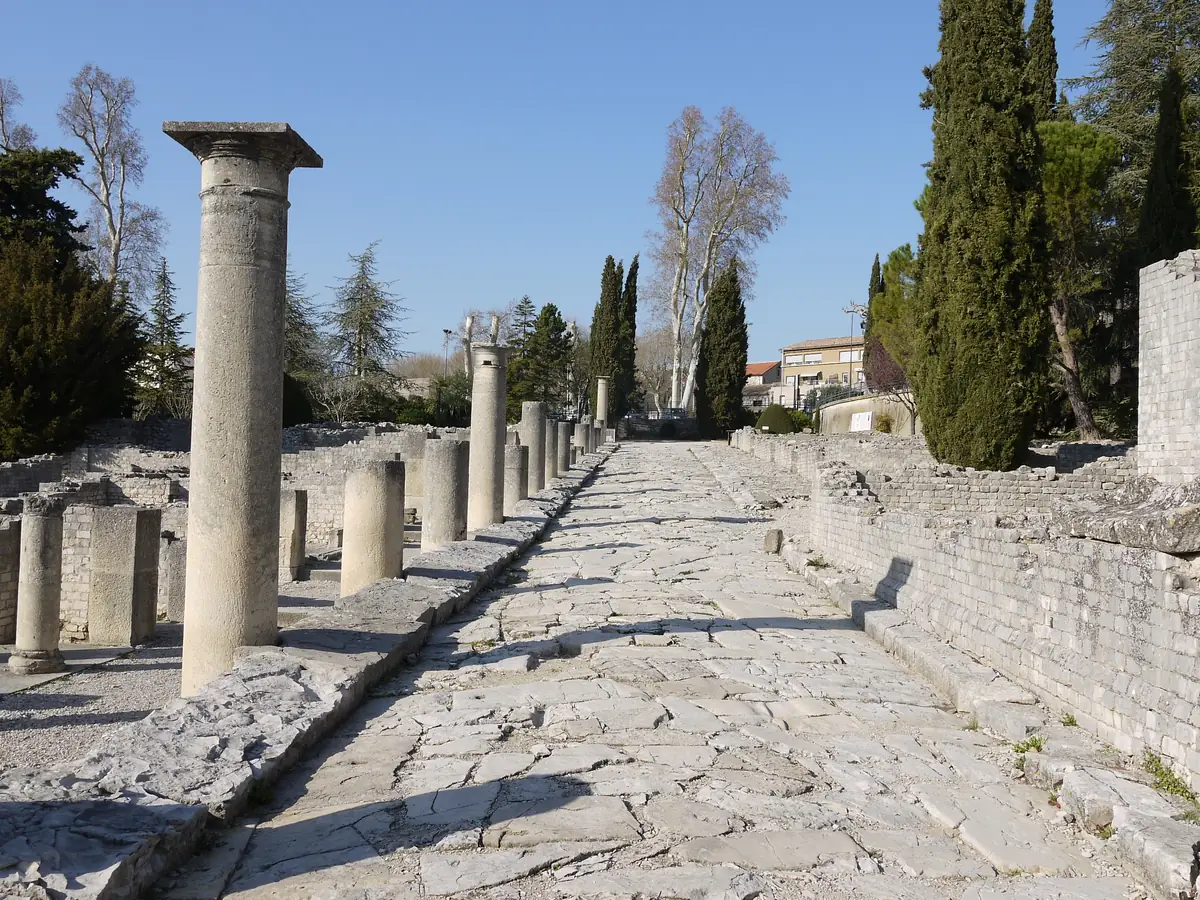
Vasio, the town of the Vocontii
The town of the Vocontii, known as Vasio Julia Vocontiorum, extended over around 70 hectares, mainly on the right bank of the Ouvèze. It reached its height between the late 1st and late 2nd centuries AD. The quarters of Puymin and La Villasse now reveal part of this town: streets, houses, places of trade, baths and public monuments.
Excavations led by Canon Joseph Sautel from 1907 onwards made these remains known far beyond the region. In 1924, Vaison officially took the name Vaison-la-Romaine.
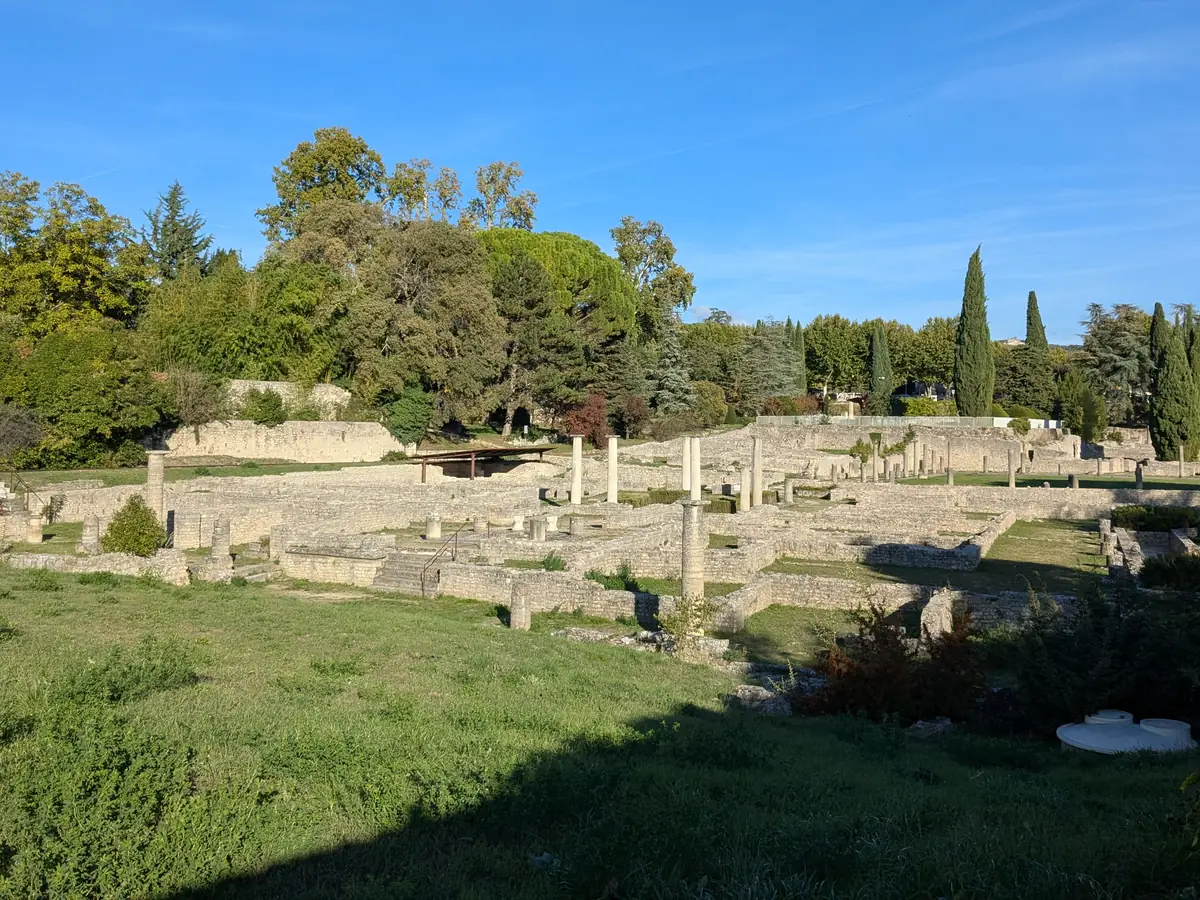
La Villasse, shops and grand houses
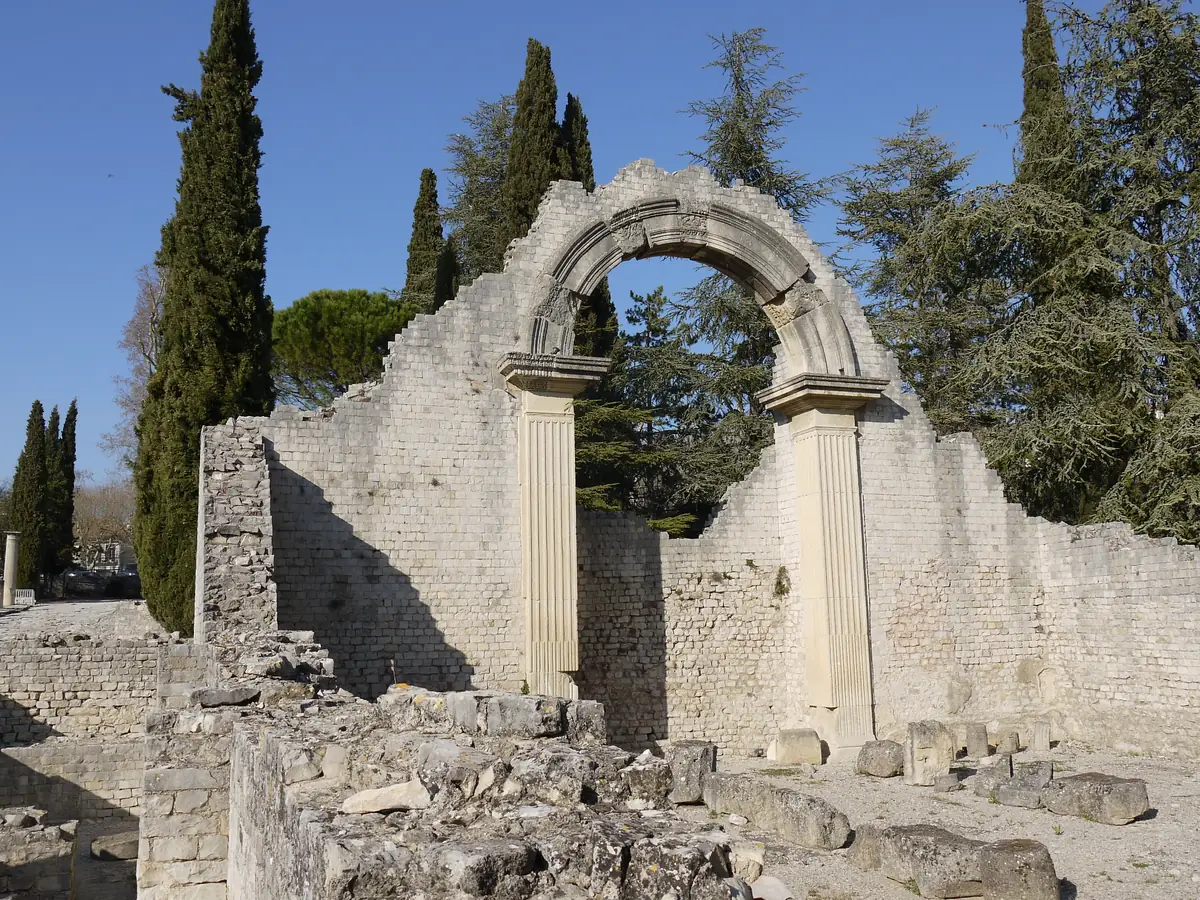
At La Villasse, a paved street runs past the remains of shops and a colonnade that once lined a covered walkway. The shop thresholds open onto this street. Further on, houses are arranged around gardens, reception rooms and baths.
The House of the Dolphin began as a rural dwelling with farm buildings. Successive extensions turned it into an urban residence of around 2,700 m². Its name comes from a sculpture found on the site, showing a small Cupid riding a dolphin. A pipe in the animal’s mouth reveals its purpose: it supplied a fountain.
Puymin, the houses of Vasio
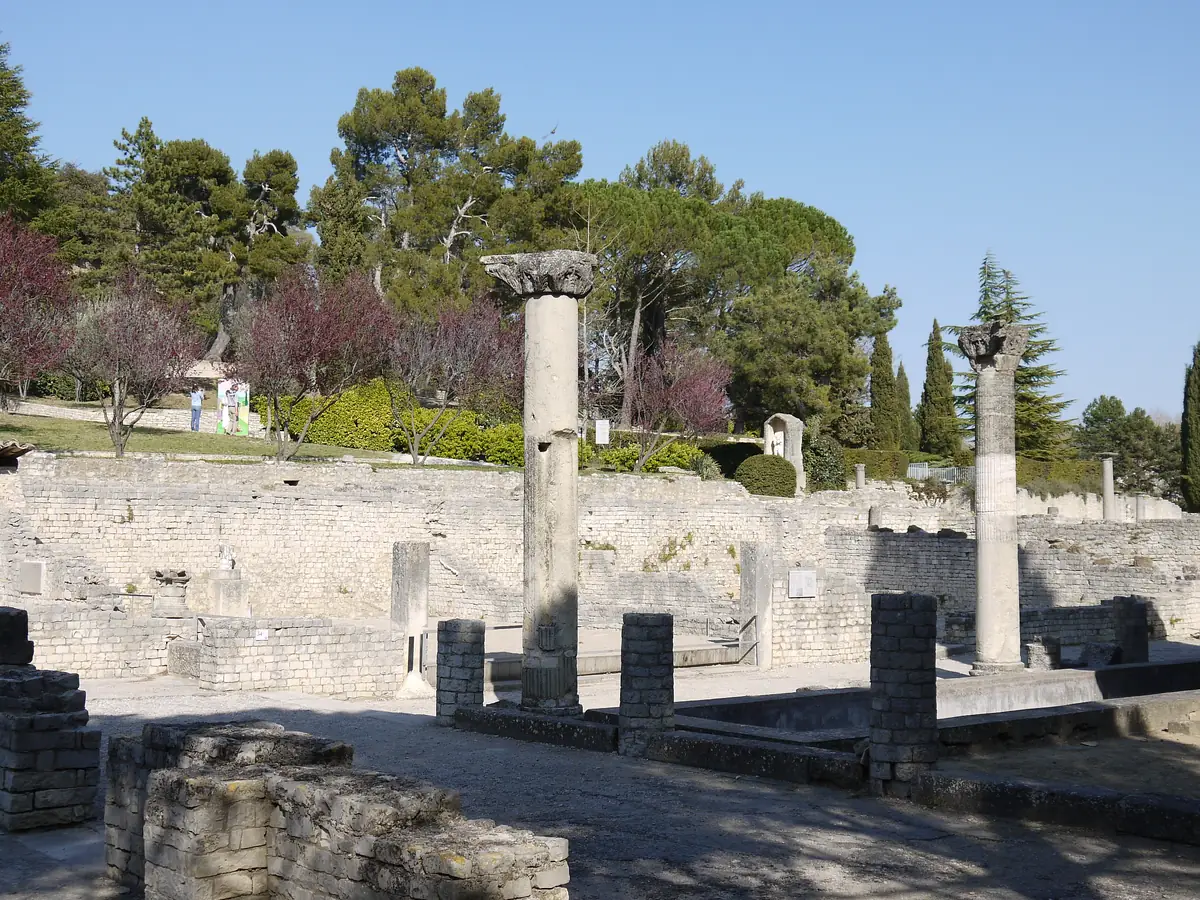
On Puymin hill, the remains spread among the trees. The House of the Laurel-Crowned Apollo and the House of the Arbour are among the quarter’s large residences. Their courtyards and porticoes stand alongside service rooms and craft areas.
Kitchens and baths shed light on life in these houses, as do the rooms where visitors were received. Information panels and reconstructions help identify the function of the rooms among the surviving low walls and floors.
The Roman theatre
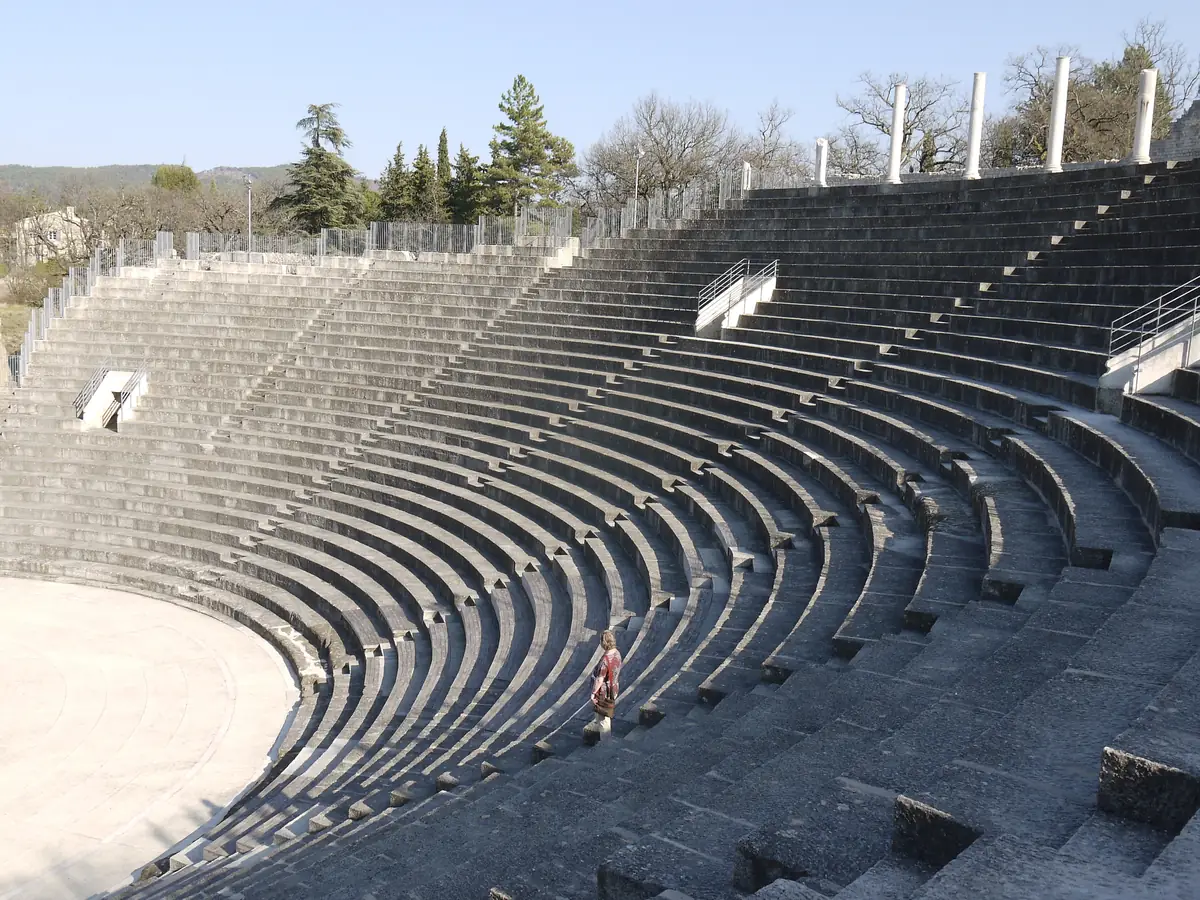
The theatre occupies the side of Puymin hill. Its tiers could hold several thousand spectators. The rows follow the curve of the hillside around the performance area. The tall wall that once enclosed the stage has disappeared, opening up the view beyond the theatre.
Excavated in the early 20th century and later restored, the monument still hosts performances, including Vaison Danses and Les Choralies. Depending on the cultural programme, you can return to sit in the tiers on the evening of a performance.
The Théo Desplans Museum
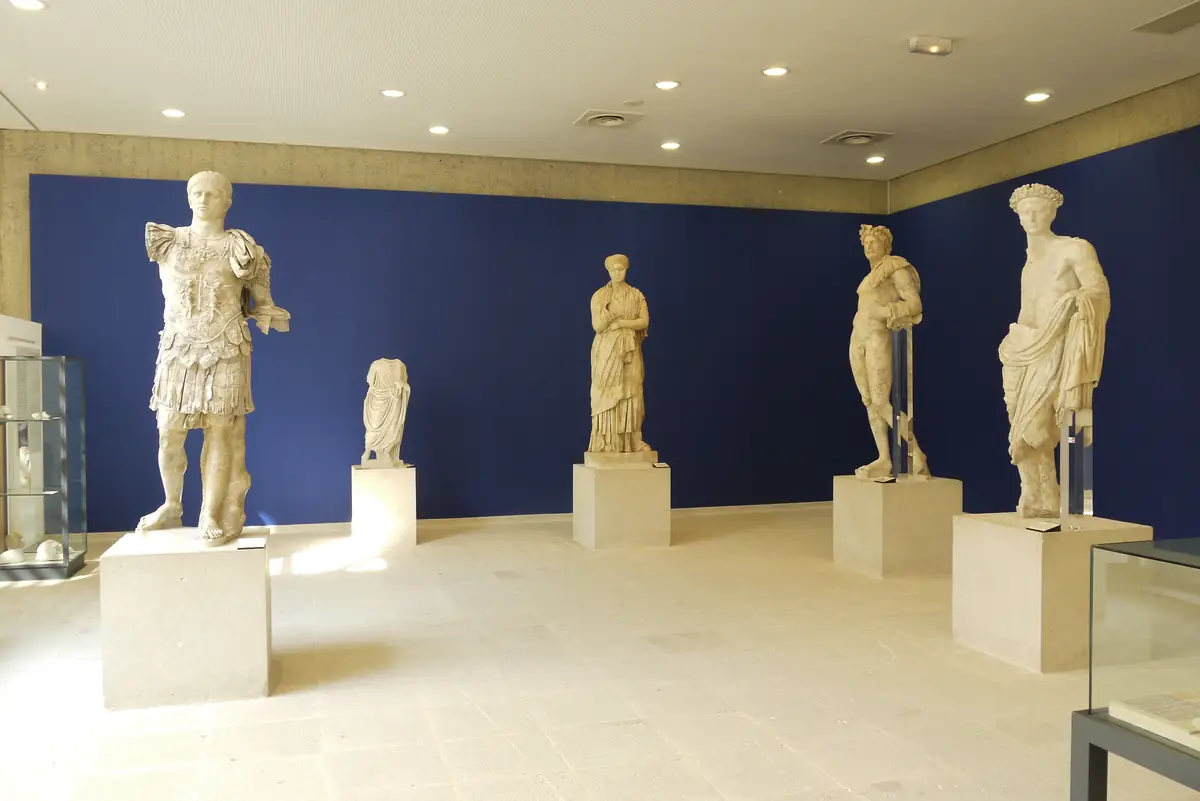
The archaeological museum stands within the Puymin site. Marble statues, mosaics and decorative elements are displayed alongside tableware, jewellery, tools and toiletry items. Tableware and toiletries tell of everyday routines, while the mosaics restore part of the houses’ decoration.
The imperial statues, including those of Hadrian and Sabina, also recall the presence of Roman power in the town. The collections explore worship and funerary practices as well as domestic life. The objects and decoration thus complement the buildings explored outside.
Notre-Dame-de-Nazareth and its cloister
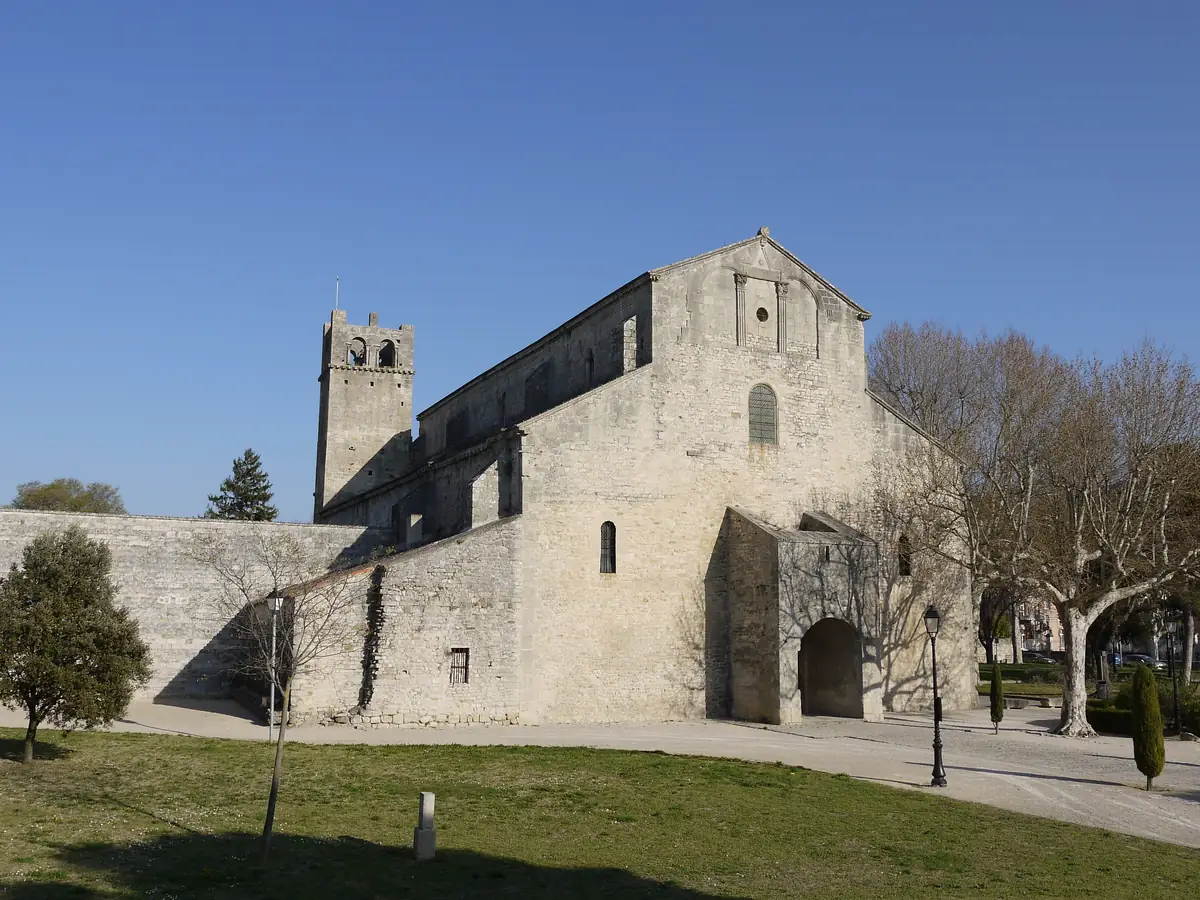
Near La Villasse, Notre-Dame-de-Nazareth Cathedral and its cloister bear witness to the town’s development in the Middle Ages. The population had gathered around the first Christian buildings in this area. The Romanesque complex belongs to the episcopal town established on the right bank before the upper town grew.
Ancient building materials were reused in the cathedral’s construction, notably at the base of its eastern end. In the cloister, four galleries with carved capitals surround the garden, away from the shopping streets.
Exploring around Vaison
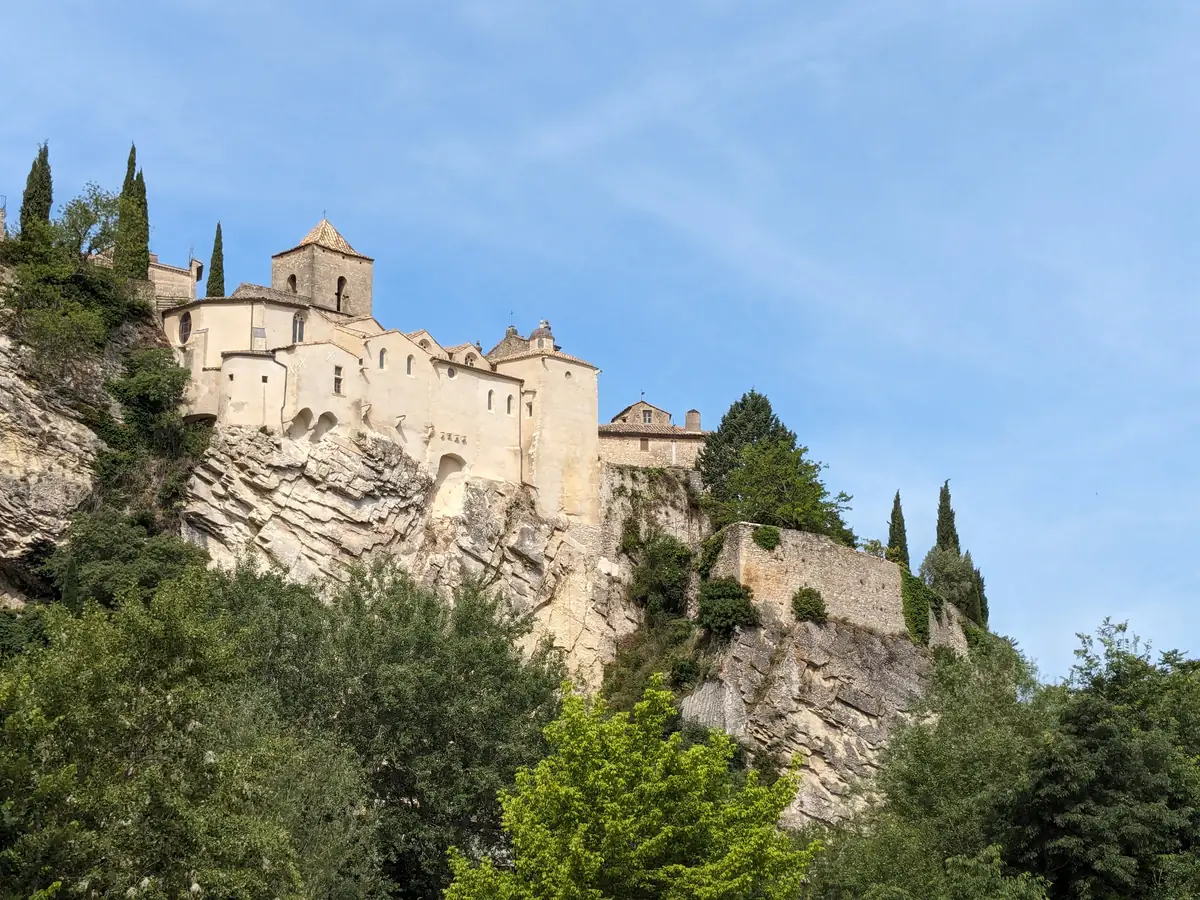
From the quays, the upper town stands on its rocky outcrop on the other side of the Ouvèze. Medieval conflicts between the bishop and the Counts of Toulouse encouraged people to settle on this height. The bridge leads to its narrow streets for another walk, to add to your visits to the Roman sites.
To extend your stay around Vaison, the villages of Crestet and Séguret, the vineyards of the Dentelles de Montmirail and Mont Ventoux offer further outings. To the north, Vaison also opens onto the Drôme Provençale, notably Nyons. In Orange, the Roman triumphal arch offers a way to continue exploring Roman Provence. In summer, the lavender fields of the Baronnies can be explored along the valley roads.
Practical information
Visiting Vaison-la-Romaine
- Suggested duration
- Half a day for the bridge and lower town; allow a full day with both ancient sites, the theatre and the museum. Set aside more time for the upper town.
- Getting there and parking
- Explore the lower town on foot. Choose a car park on the town map; Tuesday’s market changes parking arrangements in the centre.
- Ancient sites and museum
- A joint admission ticket covers Puymin, La Villasse and the museum. Check seasonal opening hours, closures and guided tours on the official website.
- Visiting conditions
- Uneven surfaces, slopes and steps: good shoes, water and sun protection are recommended.
- Les Choralies
- Held every three years, this choral festival offers concerts, including performances at the Roman theatre. Check dates, the programme and ticket information on the official Choralies website.
Extend your stay
Guest houses around Vaison-la-Romaine and Mont Ventoux
Staying around Vaison gives you time to explore the ancient sites, the lower town and the villages around Mont Ventoux. Visit the owners’ websites directly to plan your stay.
These properties listed on the Portal are within 25 km as the crow flies of the location featured in this getaway. Visit their websites to plan your stay.
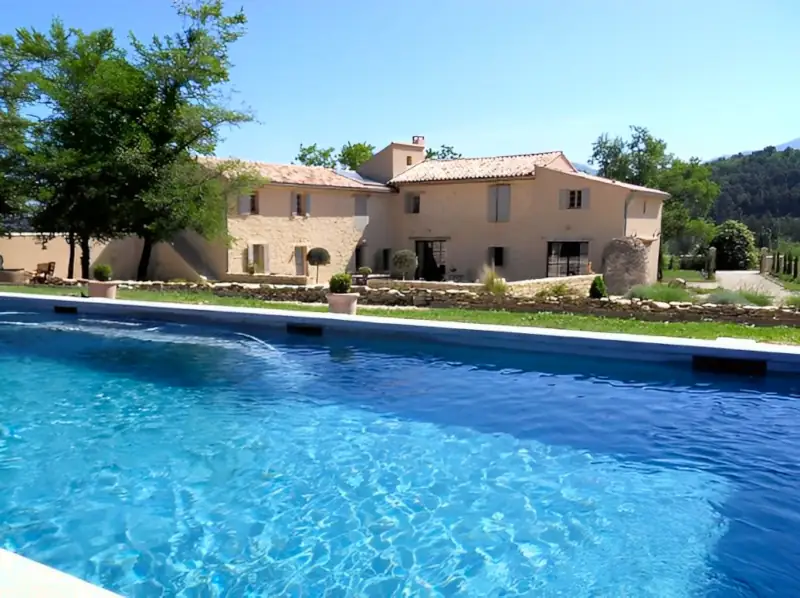

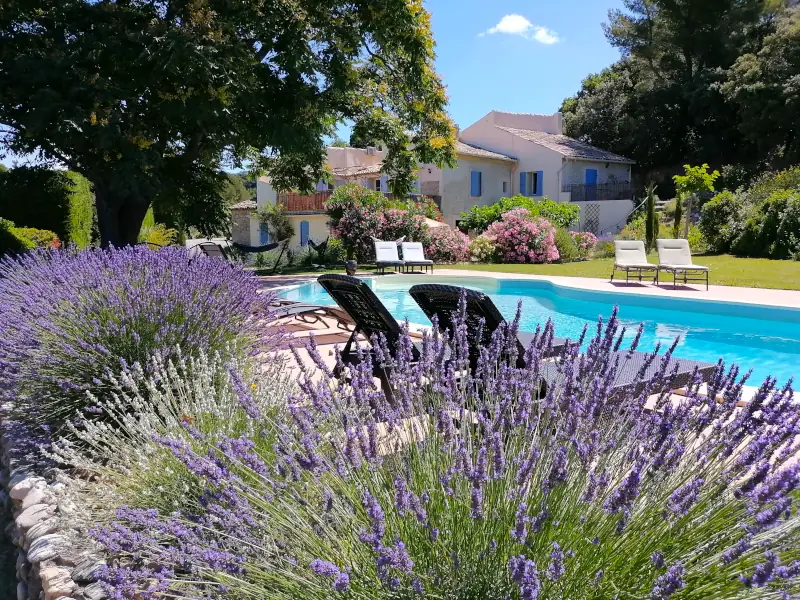
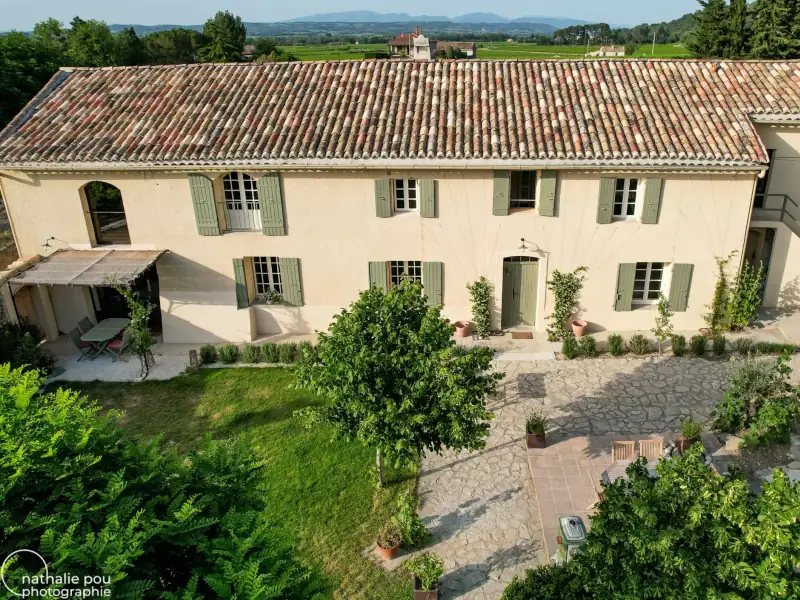
Le Mas des Poules
Charming bed and breakfast and Gîte
Saint-Roman-de-Malegarde
Visit website
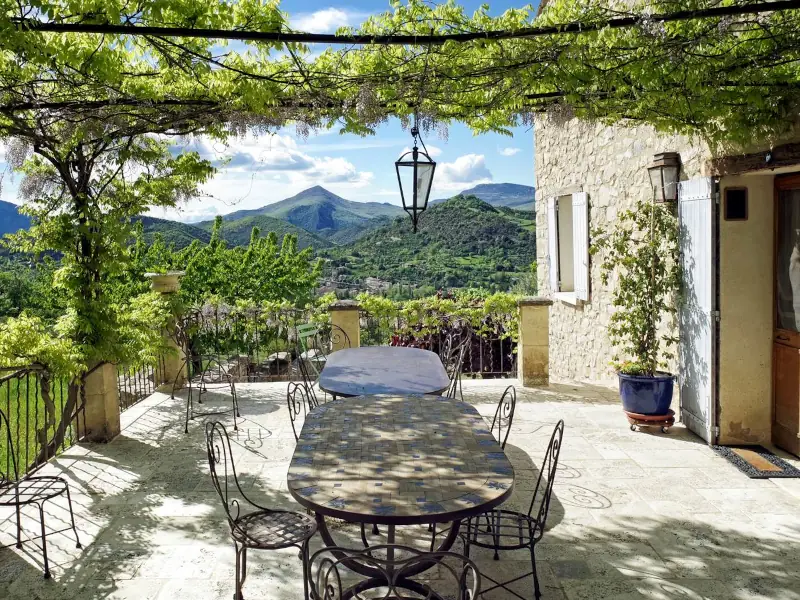
Le Deffends de Redon
Charming bed and breakfast
Montbrun-les-bains
Visit website
Last updated: