A getaway in the Luberon
The Ochre Trail in Roussillon, a visit to the quarries
Text and photographs by Vincent Flachaire
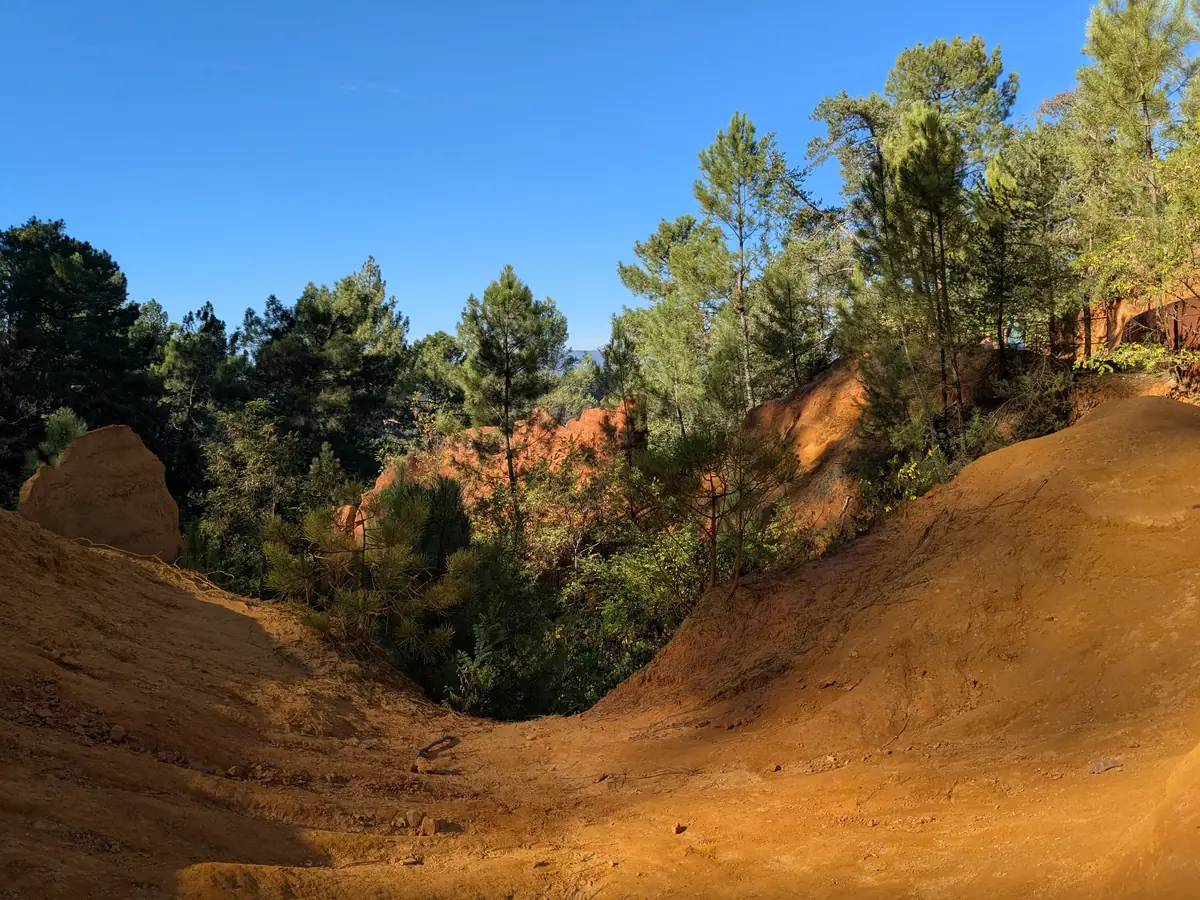
In Roussillon, the Sentier des Ocres leads down to the foot of the cliffs, then through woodland on coloured earth. In these former quarries, ochre workers extracted the sands used to make pigments.
Down into the former quarries
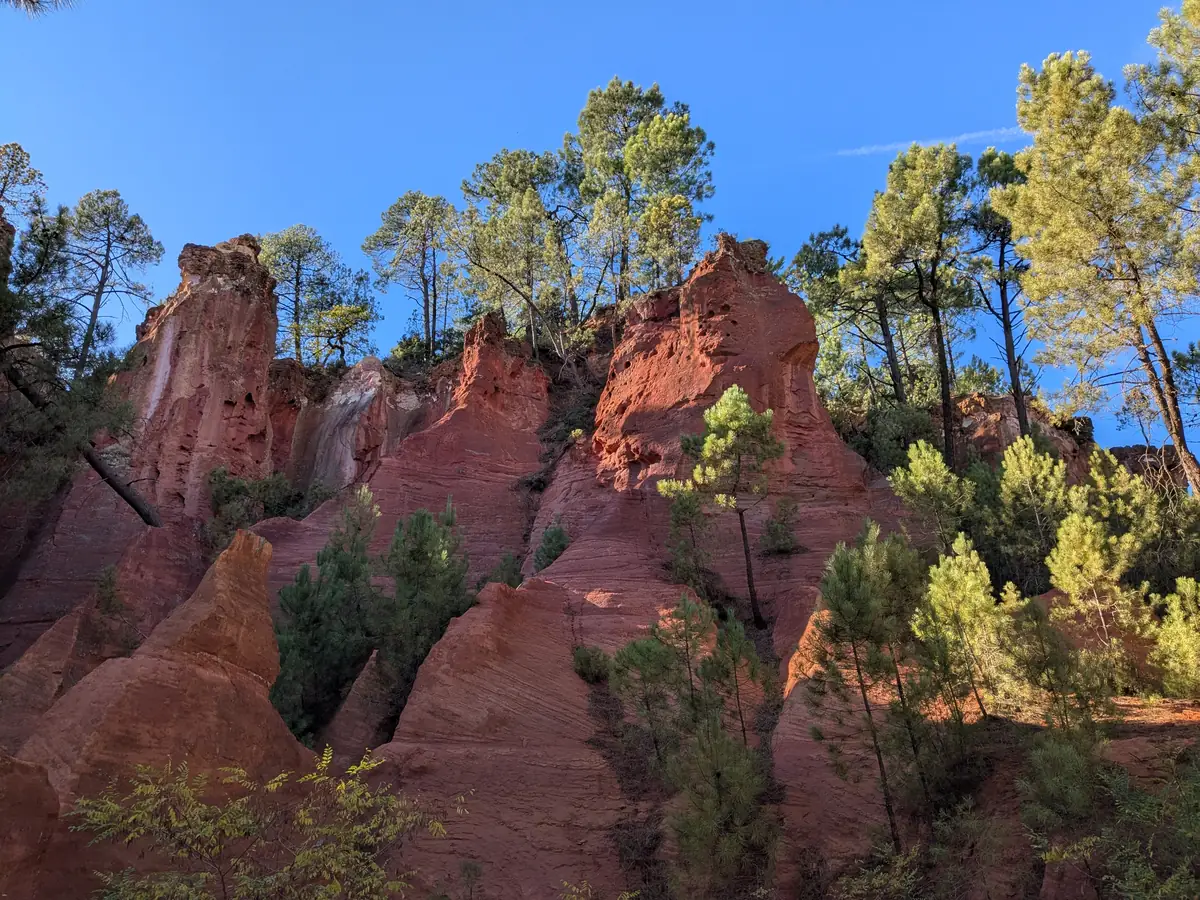
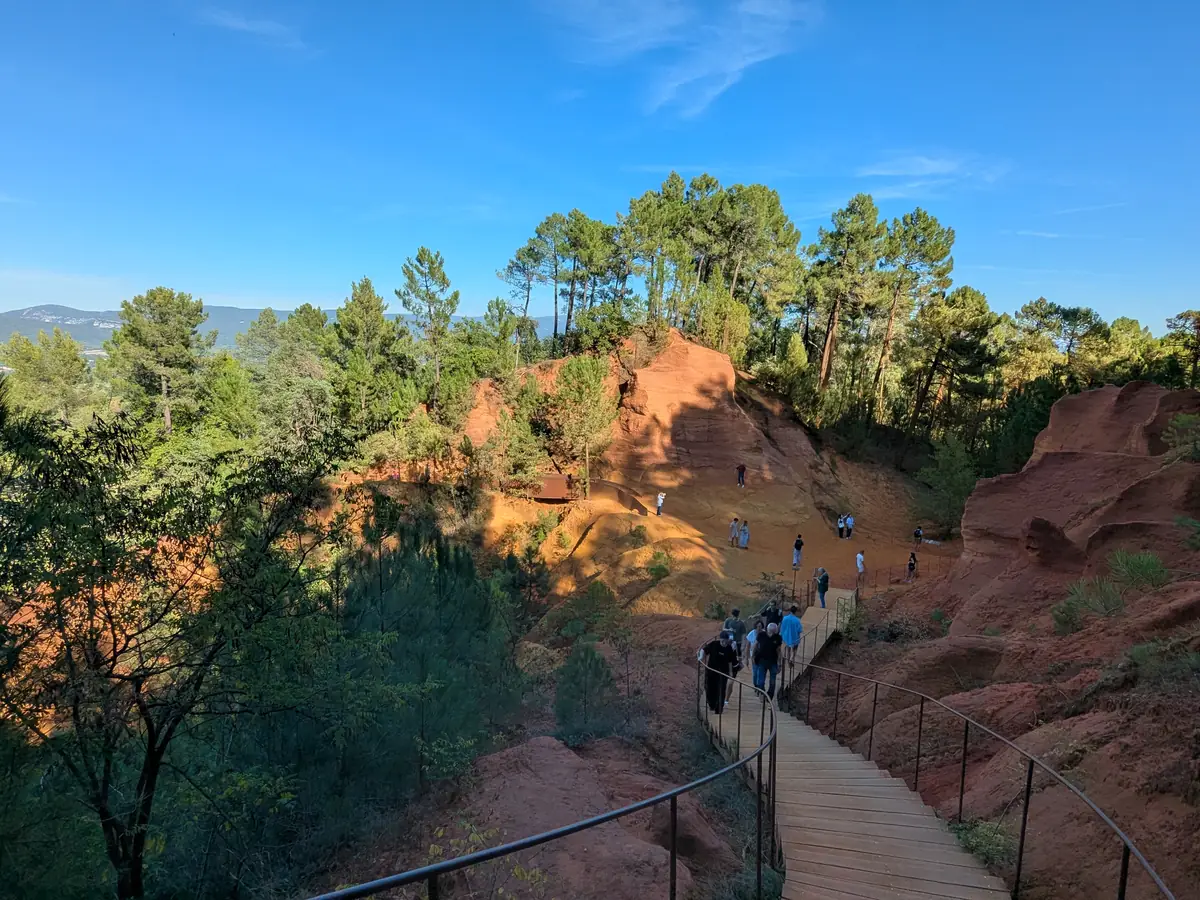
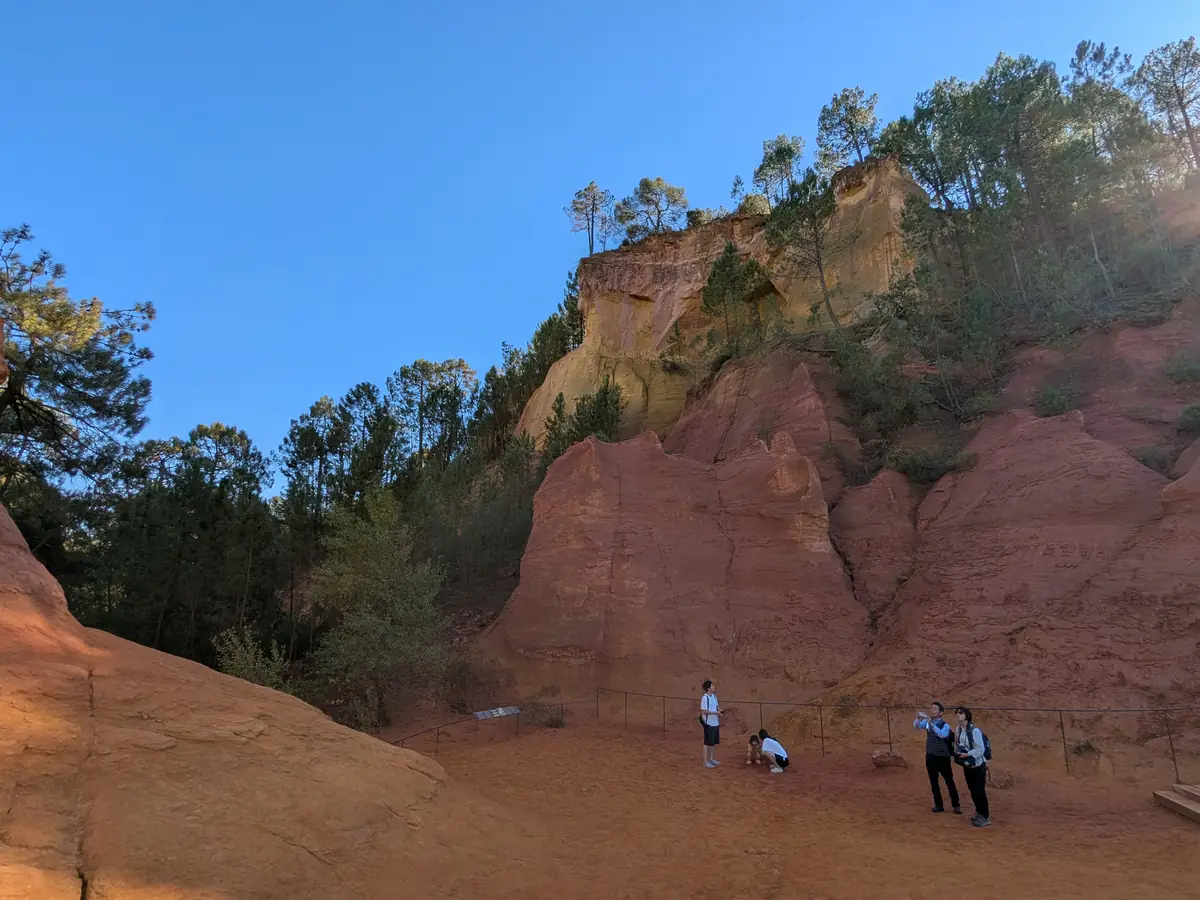
A short walk from the village, the first steps descend into the quarries among the pines. From the foot of the rock faces, shades of yellow, orange and red rise towards the trees along the top.
The information panels tell how children from Roussillon used to play here. They would return to the village with earth-stained clothes, risking a scolding. Even today, ochre dust settles on visitors’ shoes.
Marine sands transformed into ochre deposits
The story begins long before the quarries. Around 110 million years ago, sands were deposited in the sea that covered the region. They were green, owing to an iron-bearing mineral called glauconite. After the sea retreated, a warm, humid climate gradually altered these deposits.
Ochre sands contain a white clay, kaolinite, and iron compounds that give them their colours. Sand makes up most of these deposits; to obtain the pigment, it must be separated from the fine coloured particles.
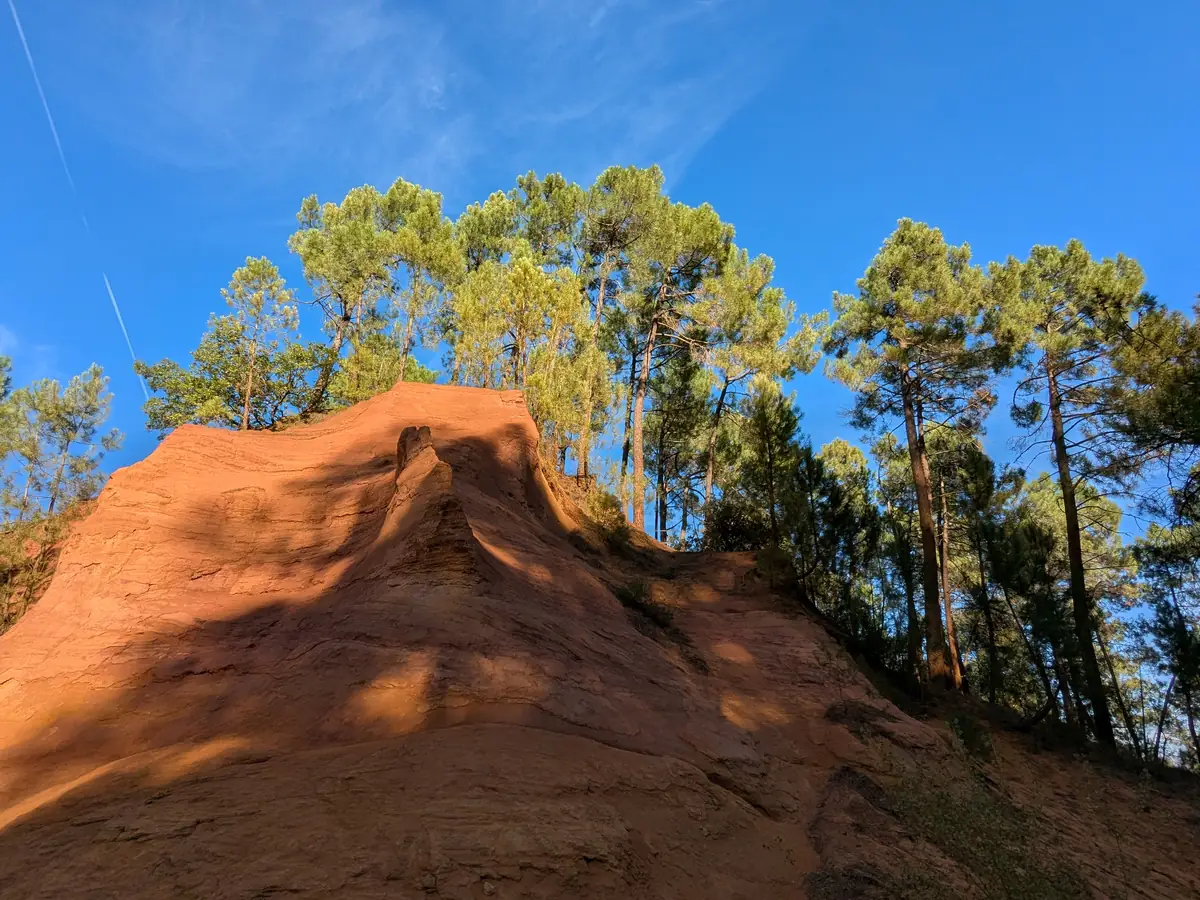
Cliffs shaped by people and water
Ochre workers cut into the hills to extract the coloured sand. After quarrying ended, rain and runoff continued to carve the faces, forming gullies, pinnacles and more rounded shapes.
At the foot of the cliffs, you can make out the grooves cut by water; from further back, the pinnacles stand apart. The more resistant sections remain while the surrounding sands are washed away. Erosion thus continues the work begun in the quarries.
Beneath the pines, an unusual soil for Provence
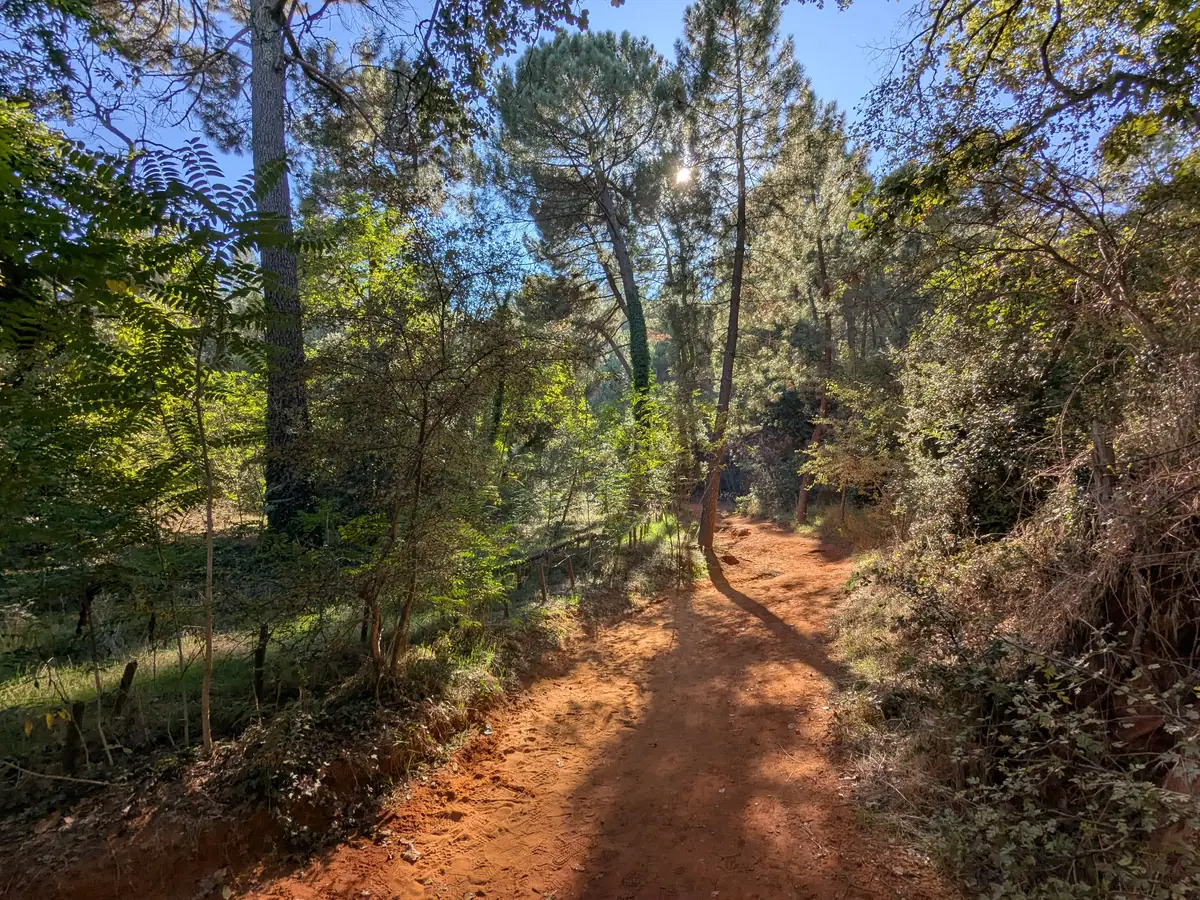
Between the rock faces, the path leads into the pines. Sand softens your footsteps, and roots sometimes cross the way between the red banks.
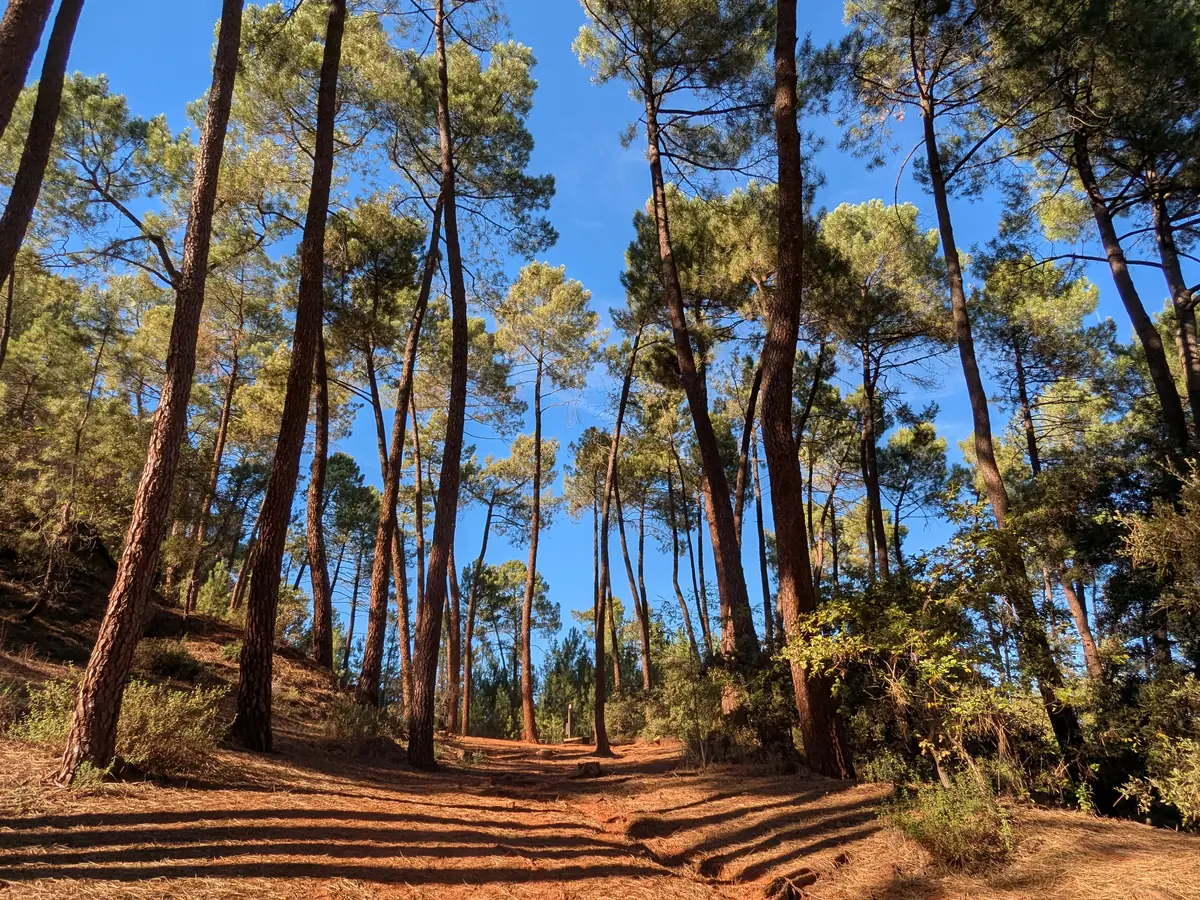
The sandy, acidic soil supports vegetation different from that of the neighbouring limestone terrain. Maritime pines, heathers and rockroses find suitable conditions here. Panels along the trail explain this link between the soil and the plants that grow in it.
Ochre workers and colours that travelled
In the late 18th century, Jean-Étienne Astier, a native of Roussillon, developed the washing of ochre sands to separate out the pigment. The heavier sand settles, while water carries the fine particles into settling basins. Once dried, the ochre is ground. It can also be heated to change its colour and produce reds.
Initially based on small operations and seasonal work, the activity became an industry in the 19th century. The railway later made it easier to ship the pigments. A panel on the trail recalls the destinations marked on the packaging: Bamako, Mexico City, Valparaíso… Ochre extracted from the hills of the Pays d’Apt was shipped far beyond Provence.
Its uses went beyond paint: ochre also went into paper and linoleum. It served as a filler to thicken rubber, used in bicycle inner tubes, jar sealing rings and even baby bottle teats. The colours of these hills thus found their way into everyday objects. Competition from synthetic colourants and economic difficulties gradually reduced the industry. The cut quarry faces still bear witness to this work.
At the Mathieu factory, discover how pigment was made
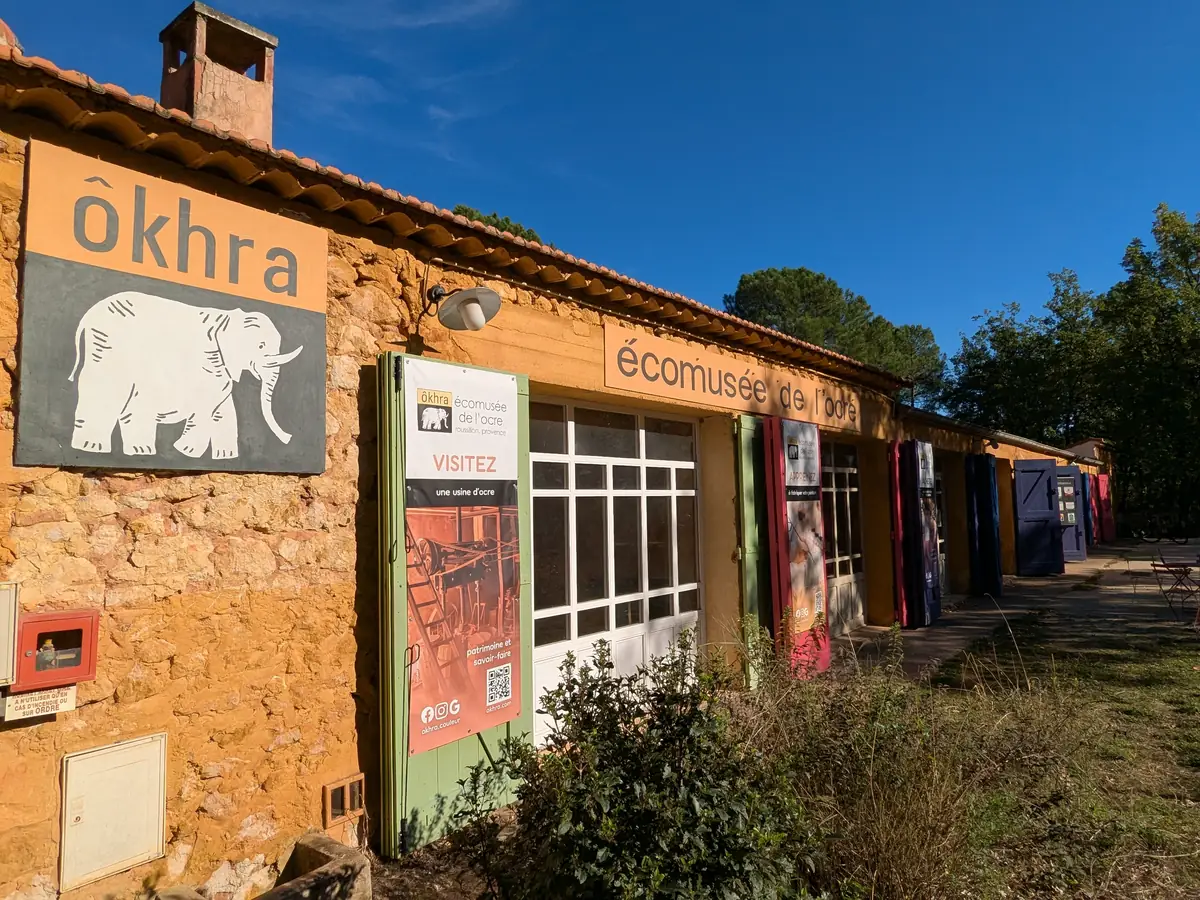
On the road to Apt, away from the centre of Roussillon, the former Mathieu factory houses Ôkhra, the Ochre Ecomuseum. Between 1921 and 1963, it produced around a thousand tonnes of ochre a year. After it closed, the equipment lay abandoned before being restored for visitors.
The restored equipment helps explain washing, settling, heating and grinding. Guided tours describe the process and the uses of ochre in paint; workshops also offer a chance to work with colours, depending on the programme. Allow extra time for this visit, which is separate from the walk through the quarries.
Back to the village and further into the Pays d’Apt
Before or after the quarries, a visit to the village of Roussillon takes you past coloured house façades, the Place de la Mairie and the views from the Castrum.
You can explore more ochre landscapes at Gargas or Rustrel. To continue your stay in the same area, Gordes and Apt market offer other ways to discover the Pays d’Apt.
Practical information
Planning your visit to the Sentier des Ocres
- Routes and duration
- Two waymarked routes are available, taking around 30 to 60 minutes depending on the circuit. Allow longer for photographs and reading the panels. Visits to the village and Ôkhra require extra time.
- Getting there and parking
- The trail starts near the village of Roussillon. The Parking des Ocres is close to the entrance; the Saint-Joseph car park is on the approach from Apt. Check the municipal map and parking arrangements.
- Opening times and tickets
- There is an admission charge for the trail. Opening hours vary by season, and closures are possible for maintenance, bad weather or fire risk. Check that the site is open before travelling.
- Walking conditions
- Sandy ground, slopes and numerous steps. The full trail is unsuitable for pushchairs or wheelchairs; if you cannot use the steps, ask about access to the panoramic viewing area near the entrance.
- What to bring
- Supportive shoes that you do not mind staining with ochre, water and sun protection. Keep to the paths, without climbing the rock faces or collecting sand.
- Continue your visit at Ôkhra
- The Ochre Ecomuseum is at 570, route d’Apt. Factory visits and workshops are separate from admission to the trail: check the opening times, duration and booking arrangements for your chosen activity.
Sentier des Ocres, opening times and tickets · Parking in Roussillon · Ôkhra, visits and workshops
Extend your stay
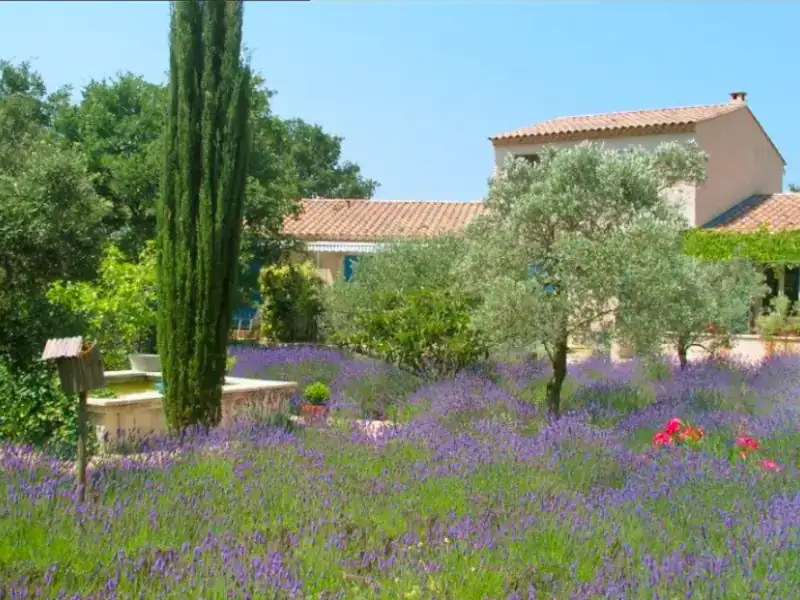
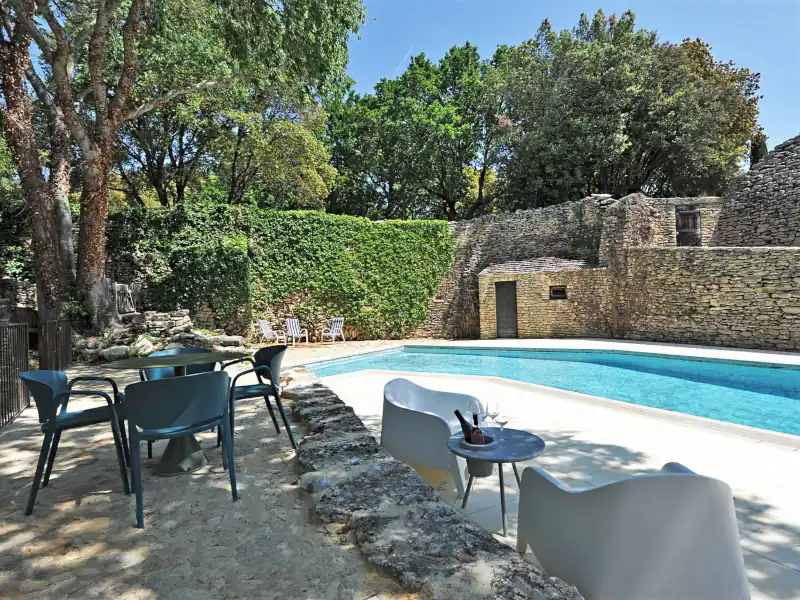
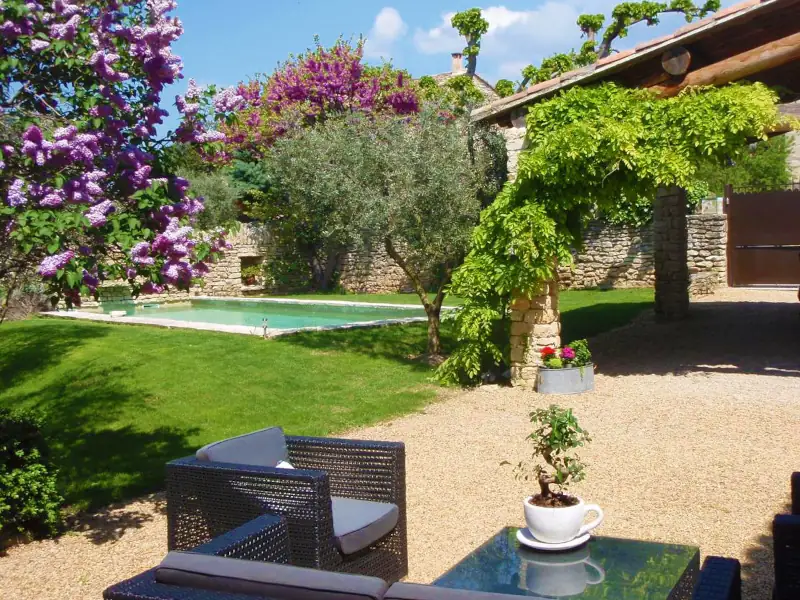
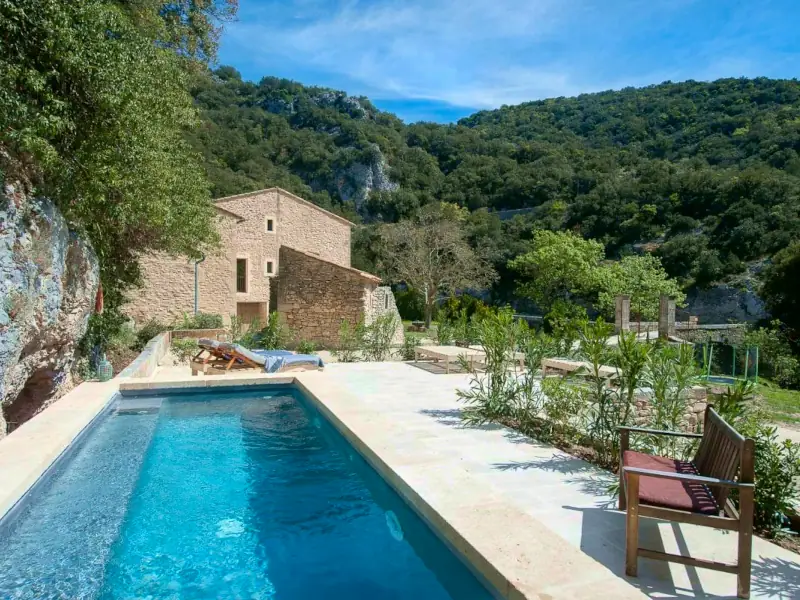
Guest houses around Roussillon and in the Luberon
These properties listed on the Portal are within 25 km as the crow flies of the location featured in this getaway. Visit their websites to plan your stay.

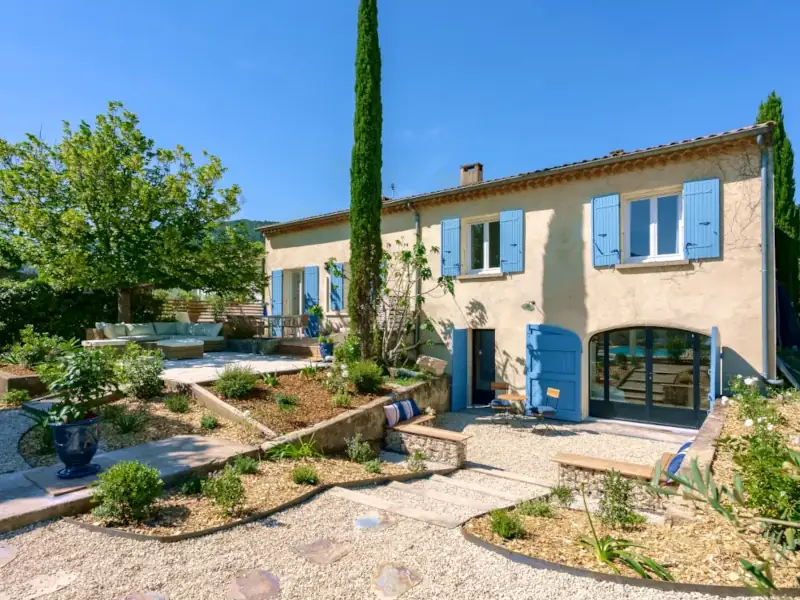
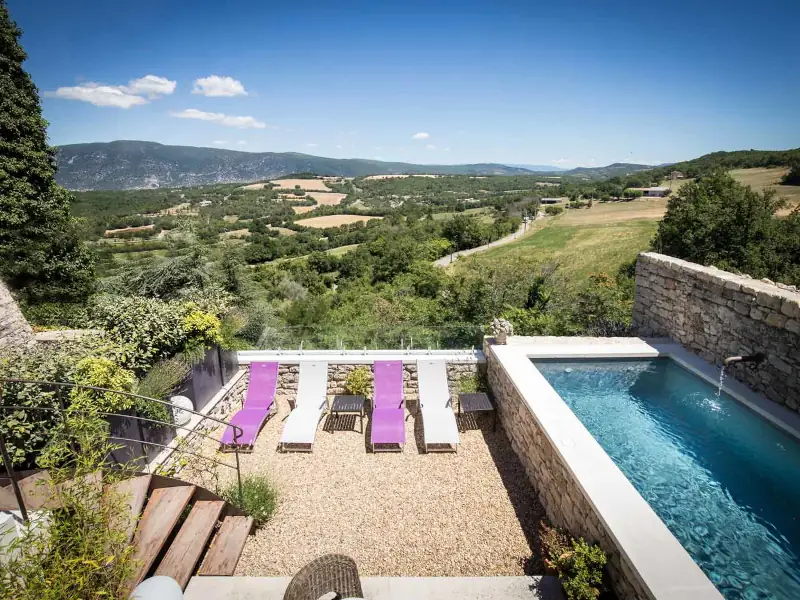
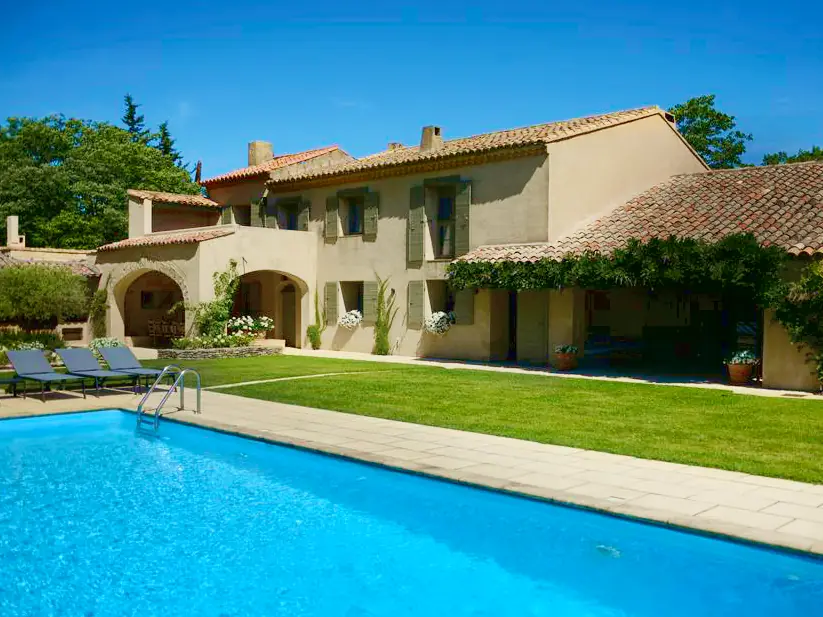
Gîte des Demoiselles
Charming Gite
Roussillon
Visit website




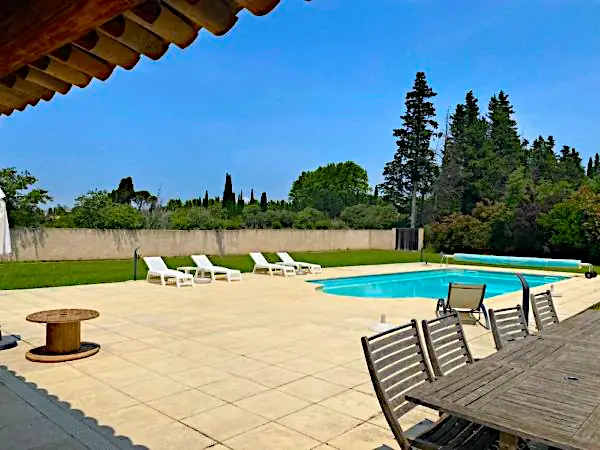
Four de Cony
Charming bed and breakfast
Saumane de Vaucluse
Visit website


Le Pavillon du Lantana
Holiday home
Les Taillades
Visit website
La Bergerie du Luberon
Charming holiday home
Les Taillades
Visit website