


A getaway in Old Aix
Aix-en-Provence from fountain to fountain
Text and photographs by Vincent Flachaire
Walking from fountain to fountain takes you through Old Aix, from the Rotonde to the lanes around the cathedral. The basins recall the part water played in the city’s history.
From the Rotonde to the watering trough on Cours Mirabeau
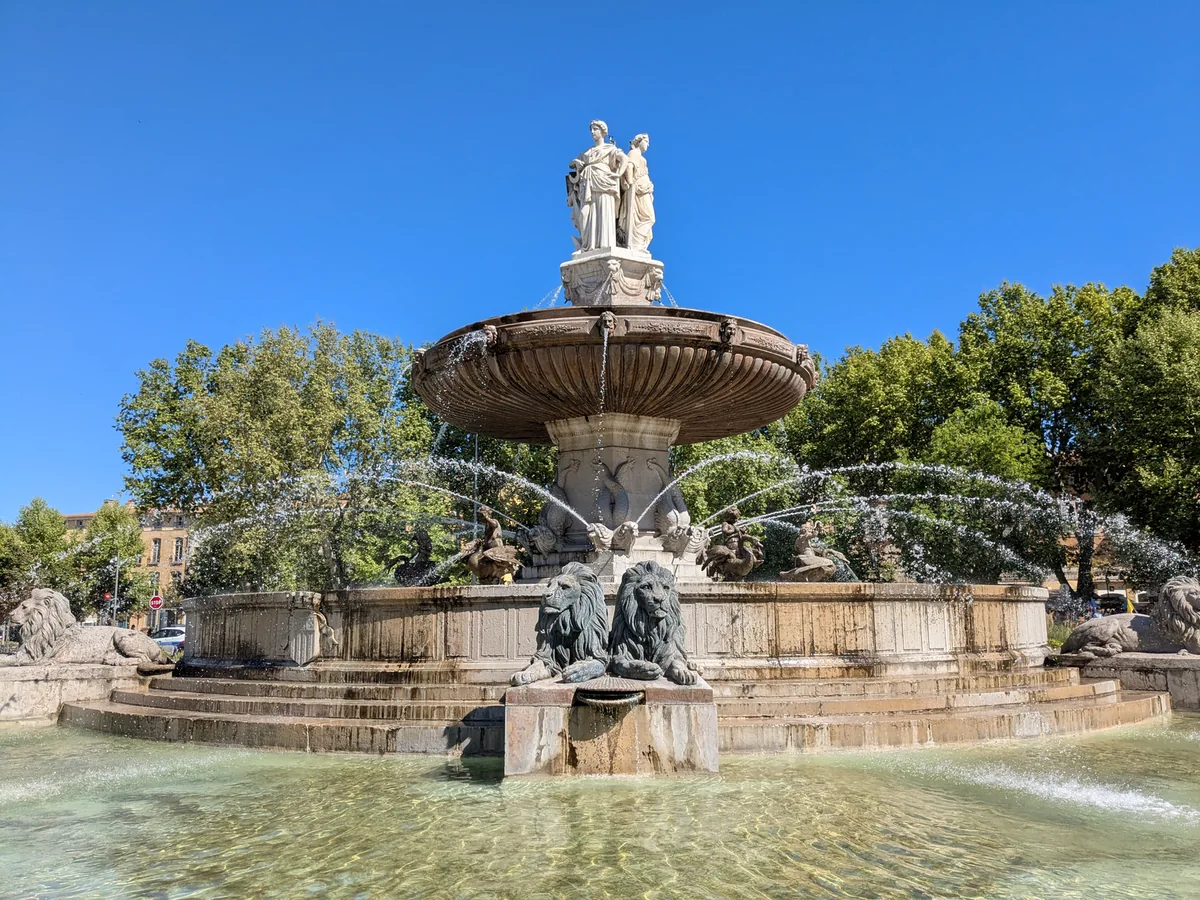
From the edge of the square, you can see the lions in profile and, above them, three statues facing in different directions. Justice looks towards Cours Mirabeau, Agriculture towards the road to Marseille and the Fine Arts towards Avignon. The fountain opened in 1860 with a limited water supply. When water from the Verdon Canal arrived in 1875, its jets could run at full strength every day.
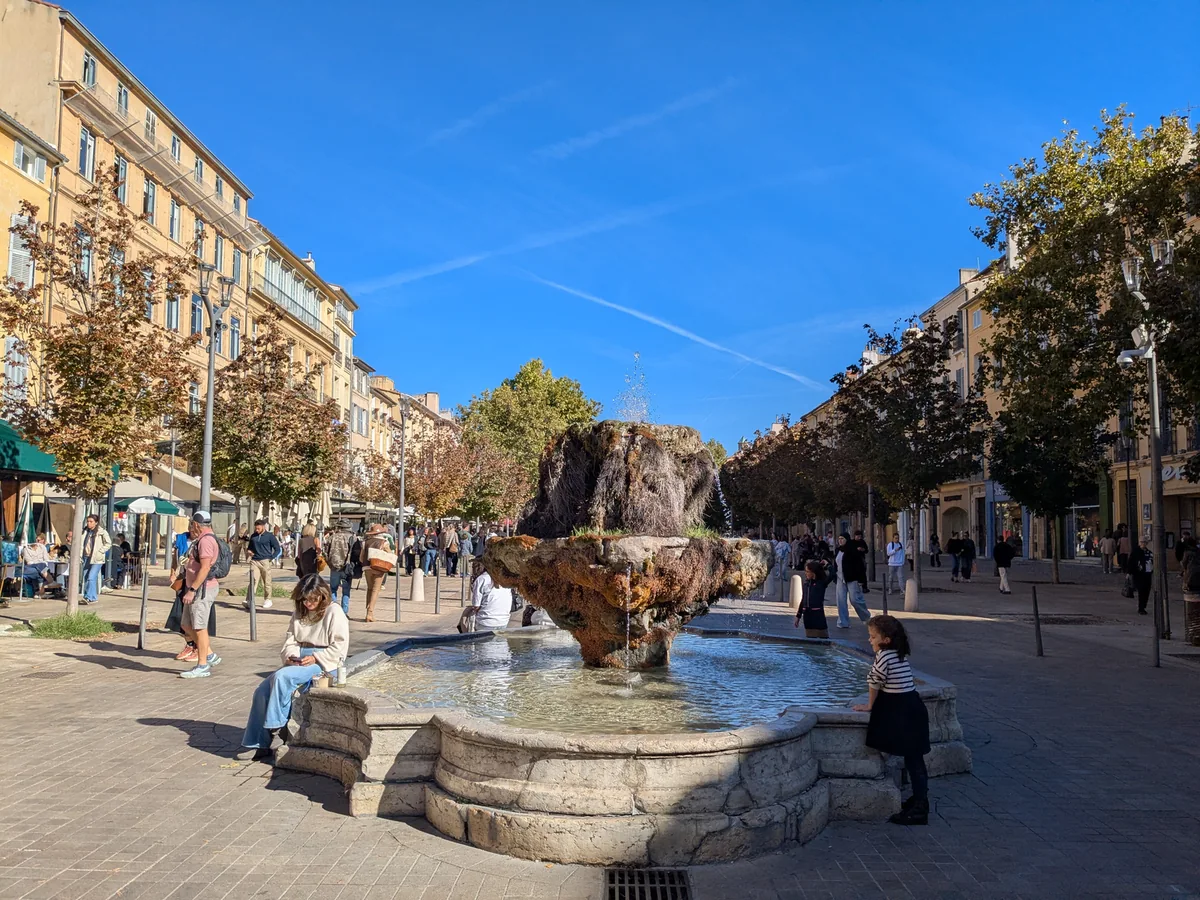
As you walk up the avenue, notice how low the basin of the Neuf-Canons fountain sits. Its low rim let sheep drink as they passed through on their seasonal migration. Picture the flocks heading for the Alps between the façades of the townhouses.
Warm water beneath the moss
The Fontaine Moussue is recognisable by its two bowls, almost buried under vegetation. Warm spring water was piped to it in the 17th century and came in handy for people living nearby.
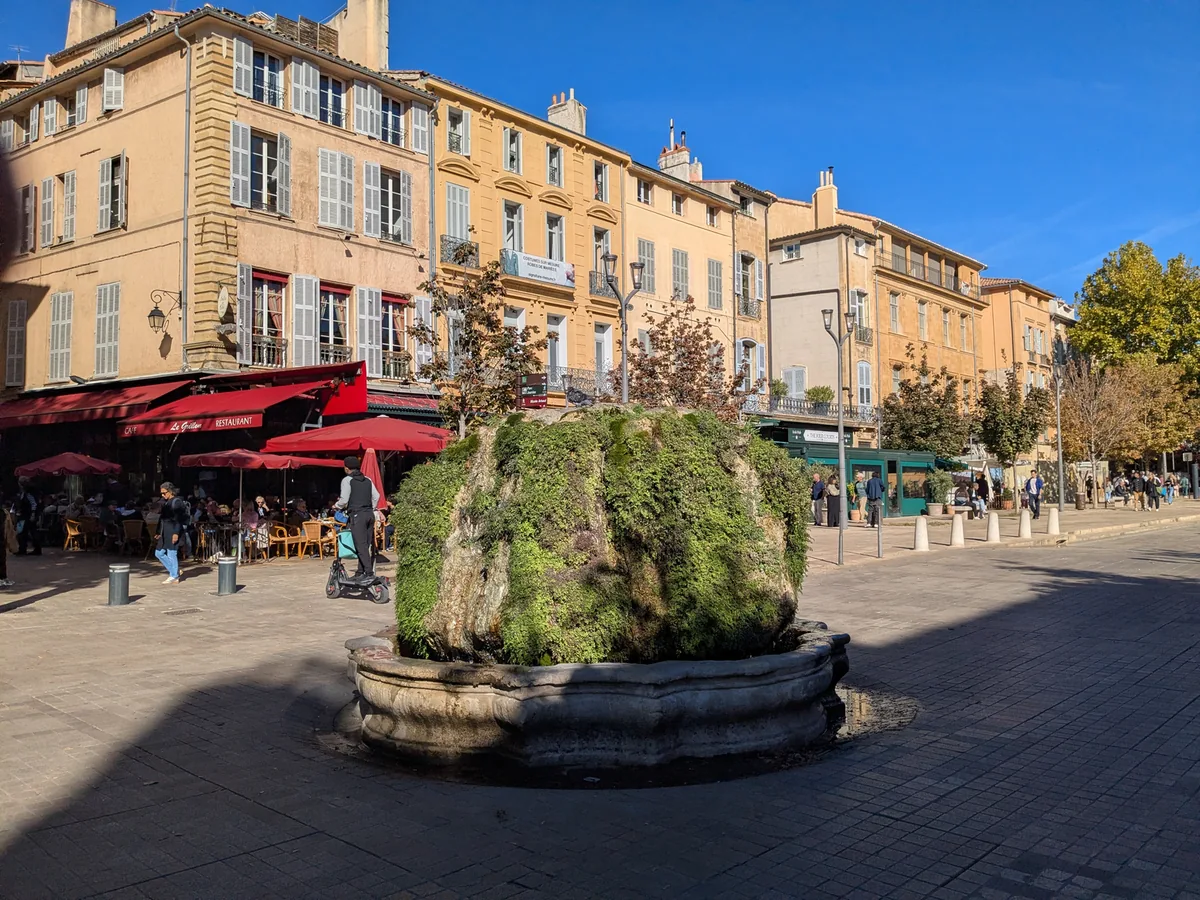
The city had to ban laundry at the fountain. For years, people still filled their buckets here to wash doorsteps and stairs.
As you walk up Cours Mirabeau, Rue du Quatre-Septembre opens to the right of the Fontaine Moussue and leads to the Four Dolphins Fountain and the Mazarin quarter, which have their own walk.
From Place des Prêcheurs to the Town Hall
At the top of Cours Mirabeau, Rue Thiers leads to Place des Prêcheurs. In front of the Madeleine church, the shells around the basin draw your eye down. Look up to the top of the obelisk for the eagle clutching a globe. Lower down, a medallion shows Sextius Calvinus, the Roman founder of Aix.
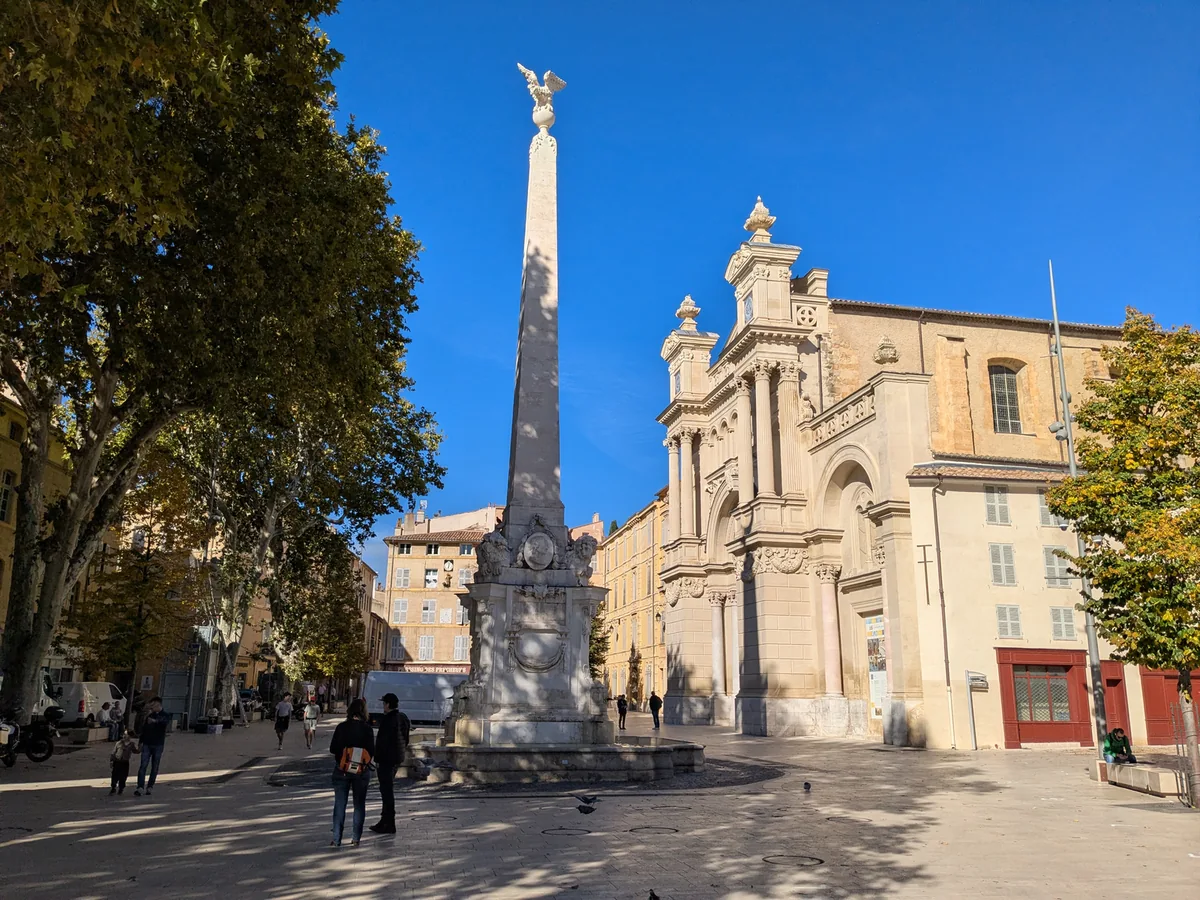
A reused Roman column rises from the middle of the basin. Come closer to the pedestal. One inscription recalls how water was brought to Aix in Roman times. The one facing the Town Hall changed as political regimes came and went.
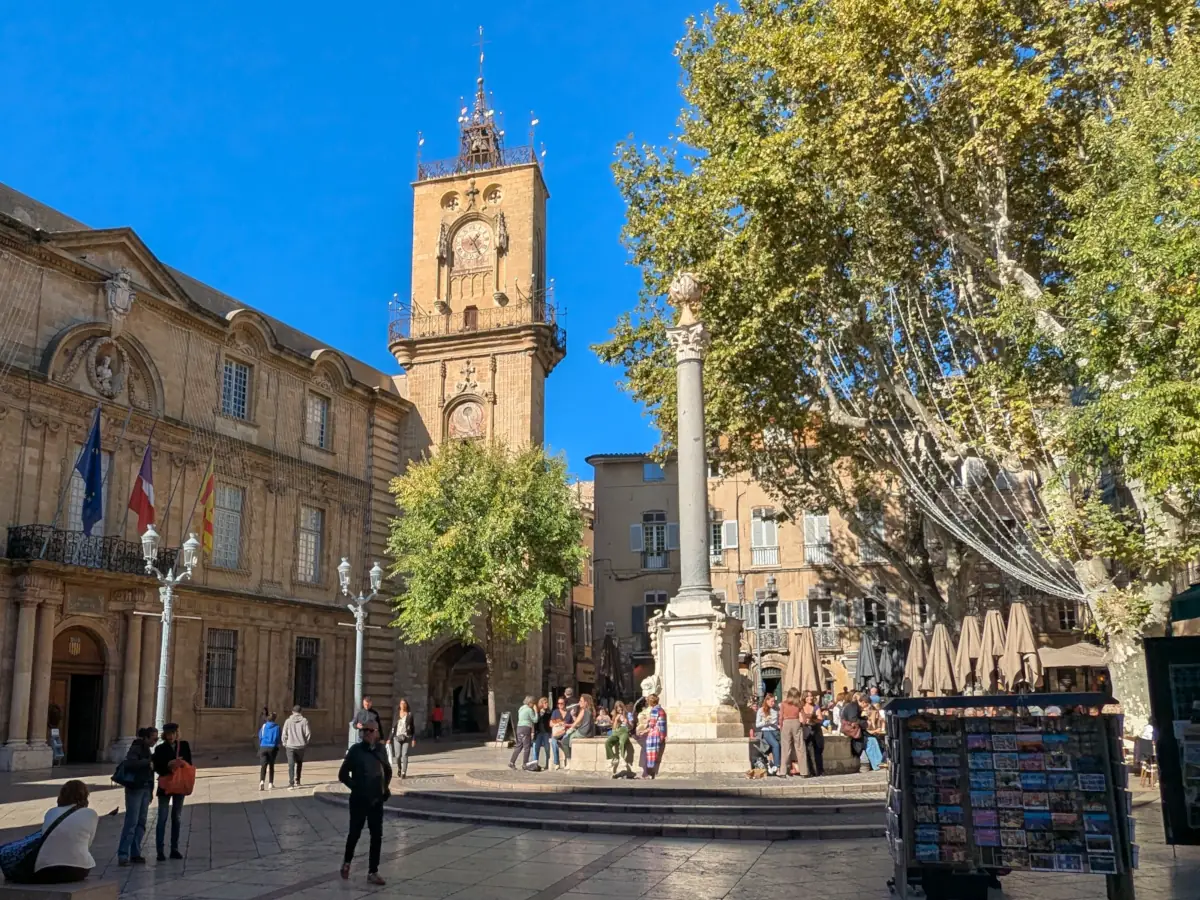
Behind the grain hall stands the Boar Fountain, featured in the getaway to the Place Richelme market.
Saint-Sauveur Cathedral
From the Town Hall, pass beneath the Clock Tower and follow Rue Gaston-de-Saporta up to Saint-Sauveur Cathedral. Its Gothic portal faces a street that follows the line of a Roman road. Inside, Romanesque, Gothic and Baroque naves stand side by side. The sixth-century octagonal baptistery incorporates columns from antiquity.

Aix, a city of springs
From the cathedral, Rue du Bon-Pasteur leads towards the upper end of Cours Sextius. In 122 BC, after defeating the Salyens, the Romans founded Aix below the hillfort of Entremont. The site was close to travel routes, and warm water rose naturally from the ground. Baths were built near the spring. The city’s Latin name, Aquae Sextiae, means ‘the waters of Sextius’, after its springs and its founder, Sextius Calvinus.
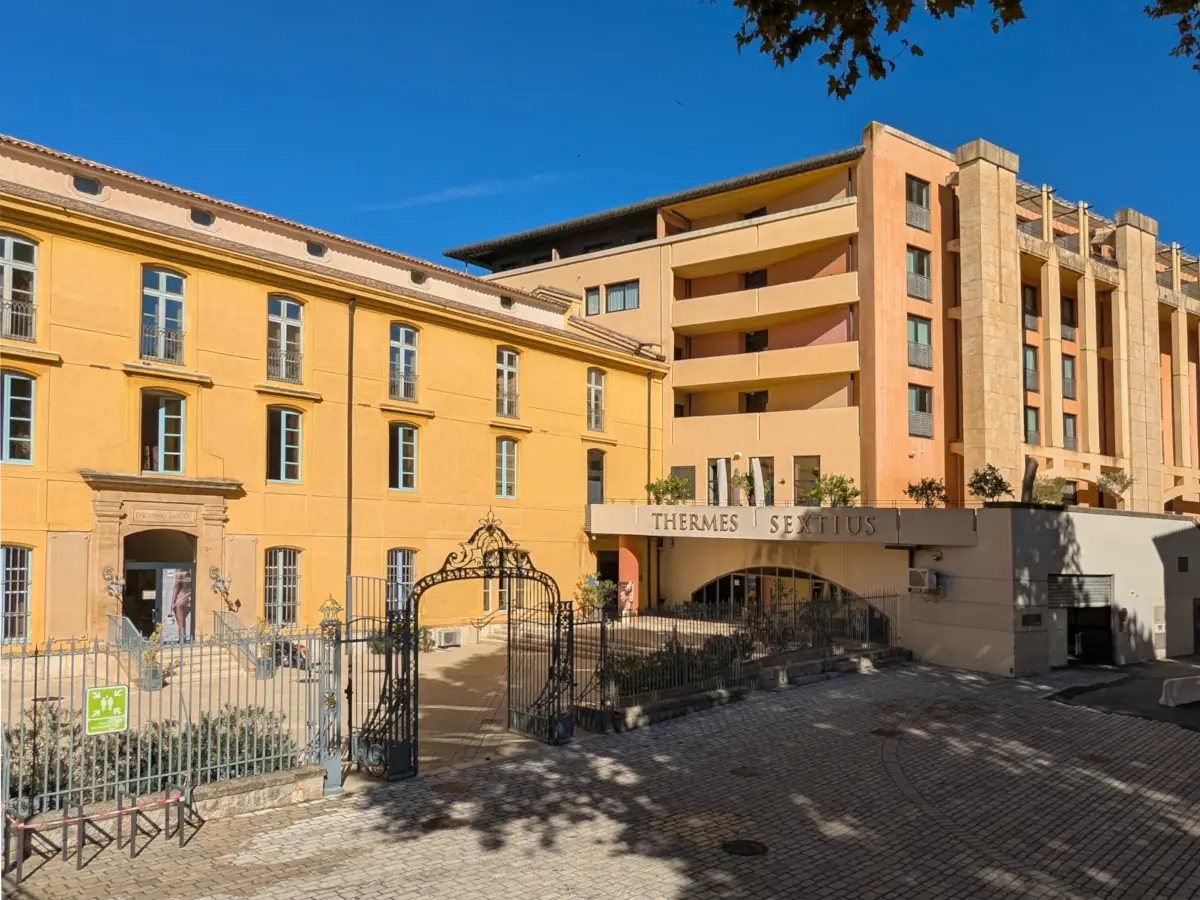
The Thermes Sextius spa now occupies the site of the Roman baths. A vaulted Roman pool can still be seen at the entrance.
The pool at the Pavillon de Vendôme
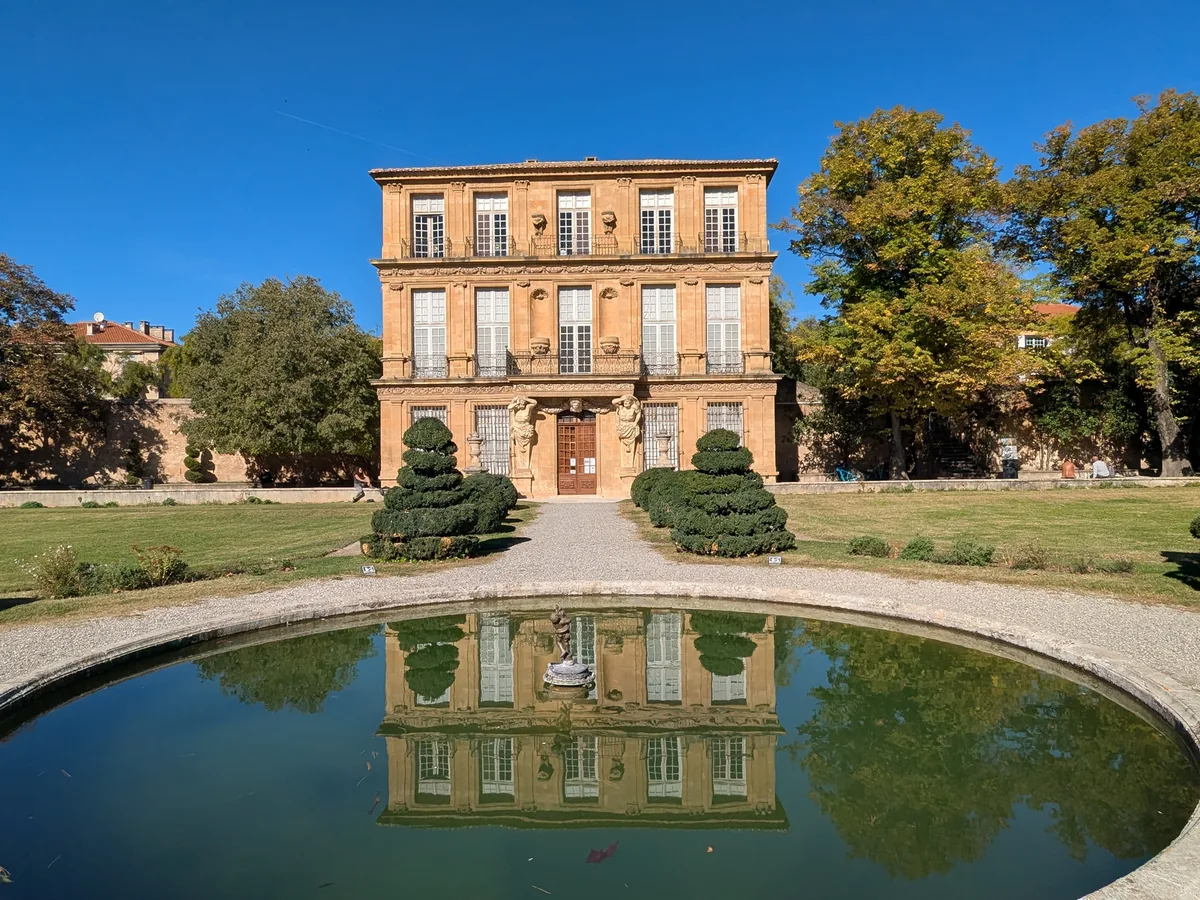
From the baths, take Rue Célony to the garden of the Pavillon de Vendôme. At the end of the box-lined paths, a round pool reflects the façade. In the 17th century, the Duke of Vendôme had this pleasure pavilion built for Lucrèce de Forbin-Solliès, known as La Belle du Canet.
The Fontêtes fountain
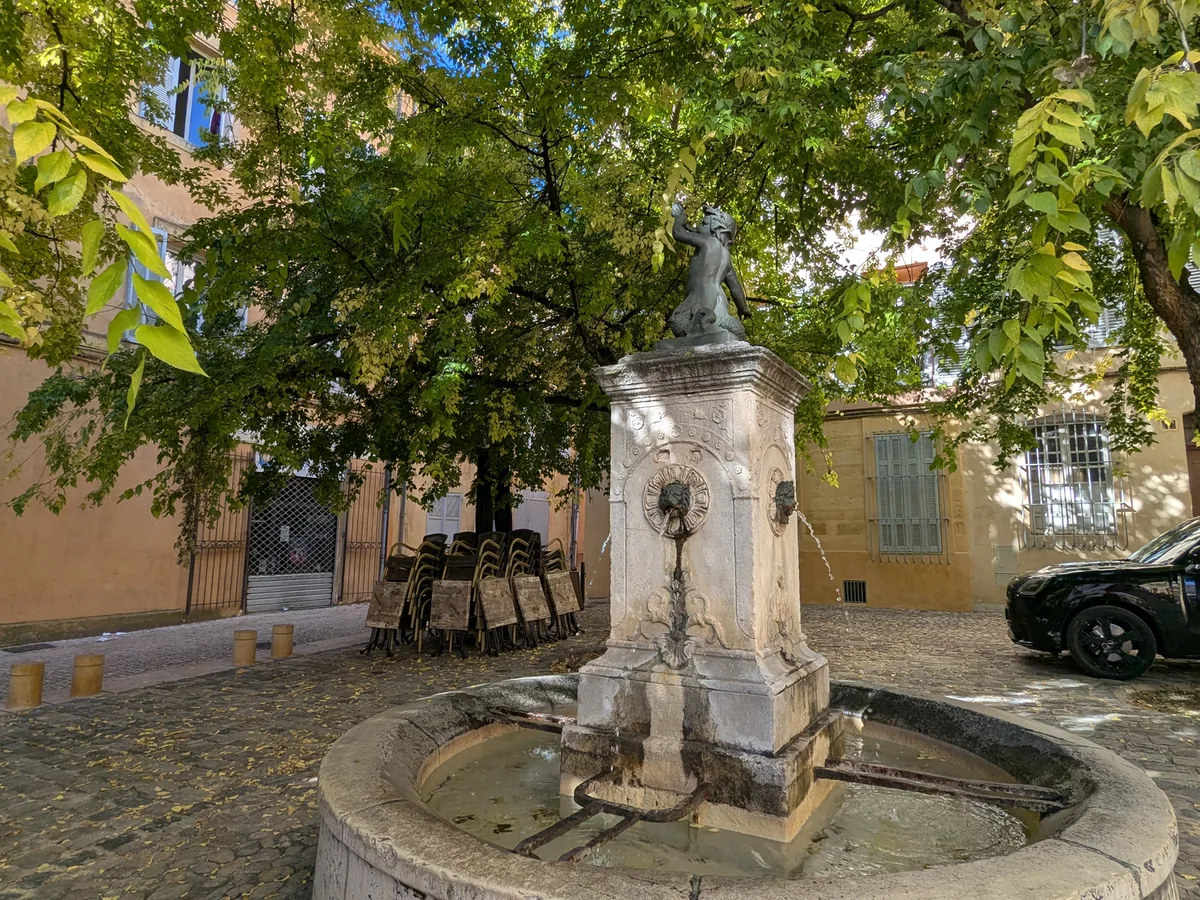
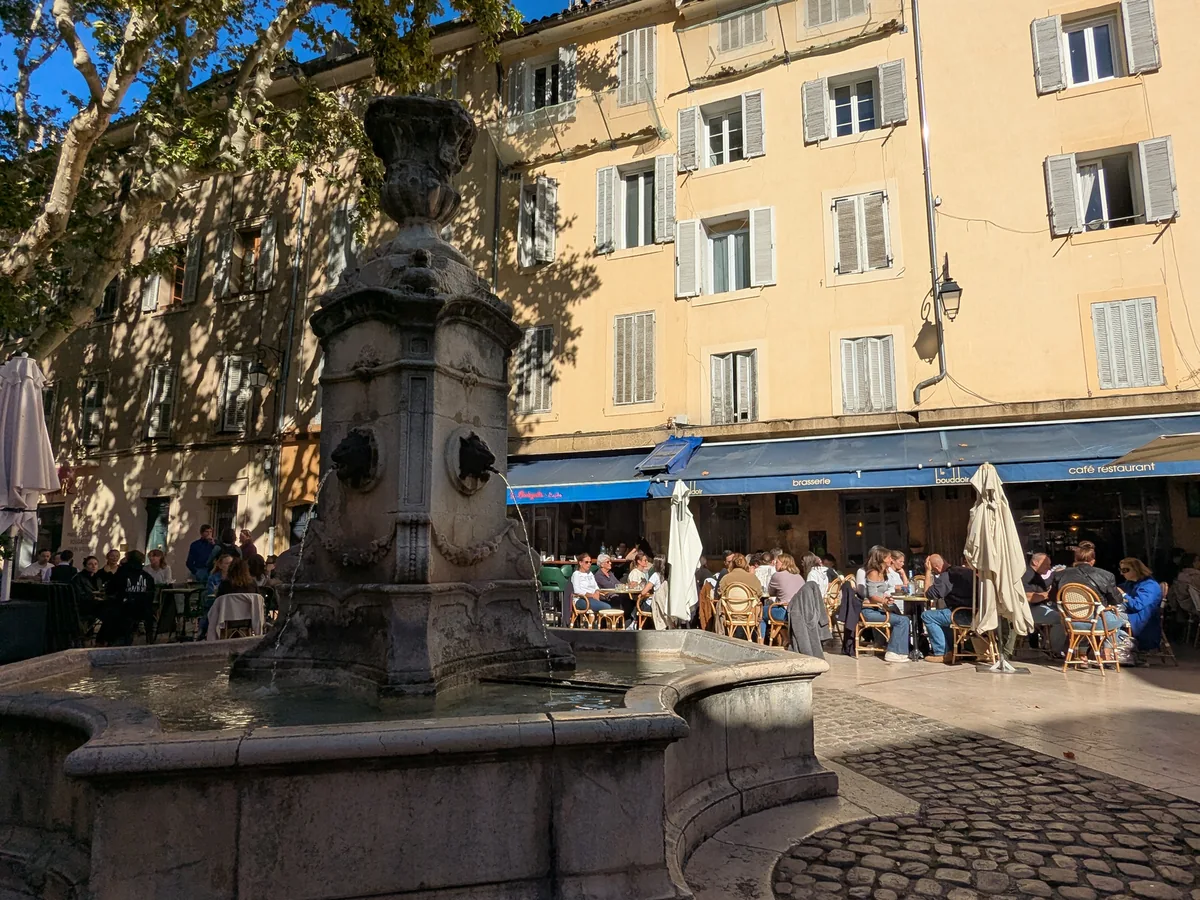
Back towards the old town, the little Place des Fontêtes lies at the western end of Place des Cardeurs. Its Provençal name means ‘little fountains’. According to the plaque on the square, the springs were brought together in a public well in 1676, which was followed by a first fountain in 1715. The one you see today dates from 1858. At the top, a bronze triton rides a turtle and blows into a conch shell.
From the Tanneurs to the Augustins
From the Fontêtes, the old town lanes lead to Place des Tanneurs. Six streets meet around the basin in a quarter named after its leatherworkers. Water flows from cast-iron lion heads. It once came from the Town Hall fountain you passed earlier.
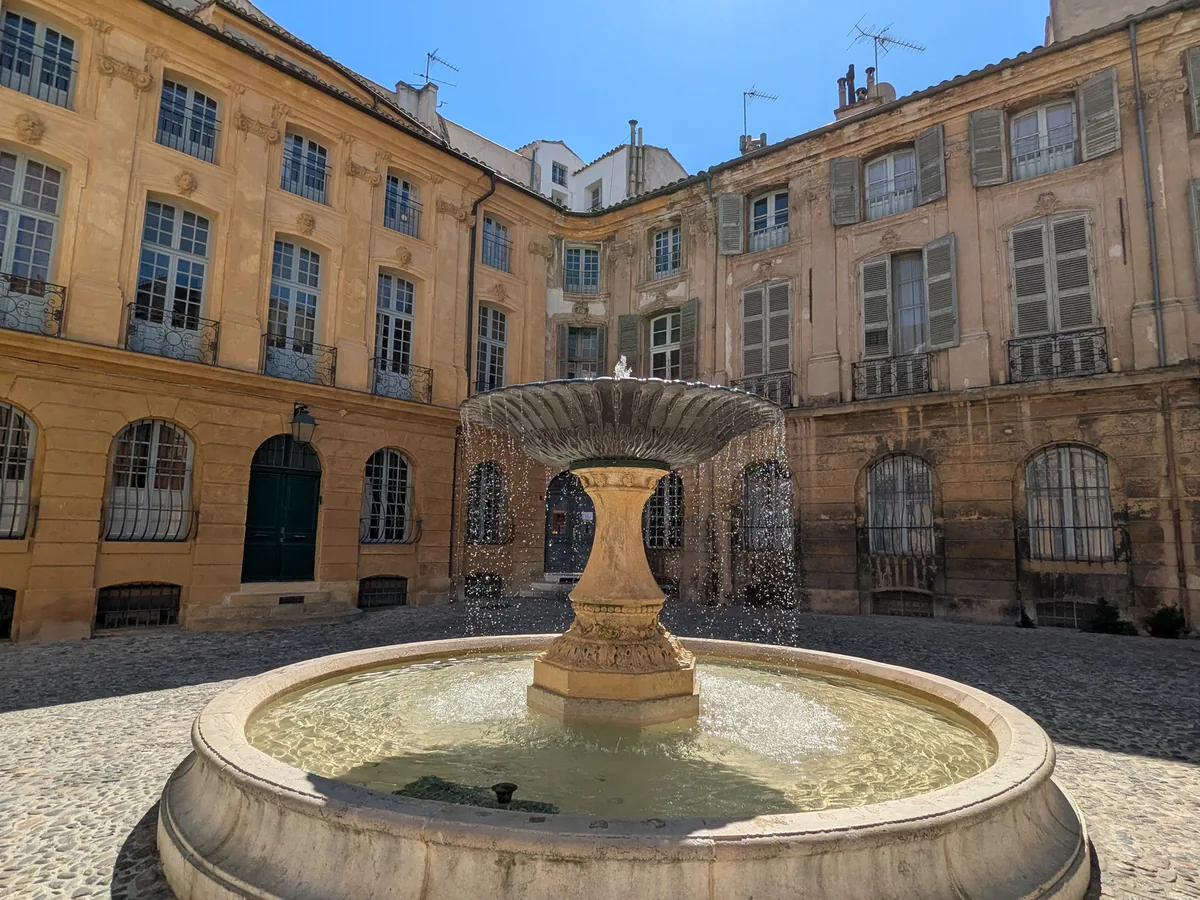
A few lanes lead from Place des Tanneurs to Rue Espariat and Place d’Albertas. The fountain looks as old as the façades around it. Its cast-iron bowl, however, was made in 1912 by students from the Arts et Métiers school to replace a damaged stone bowl.
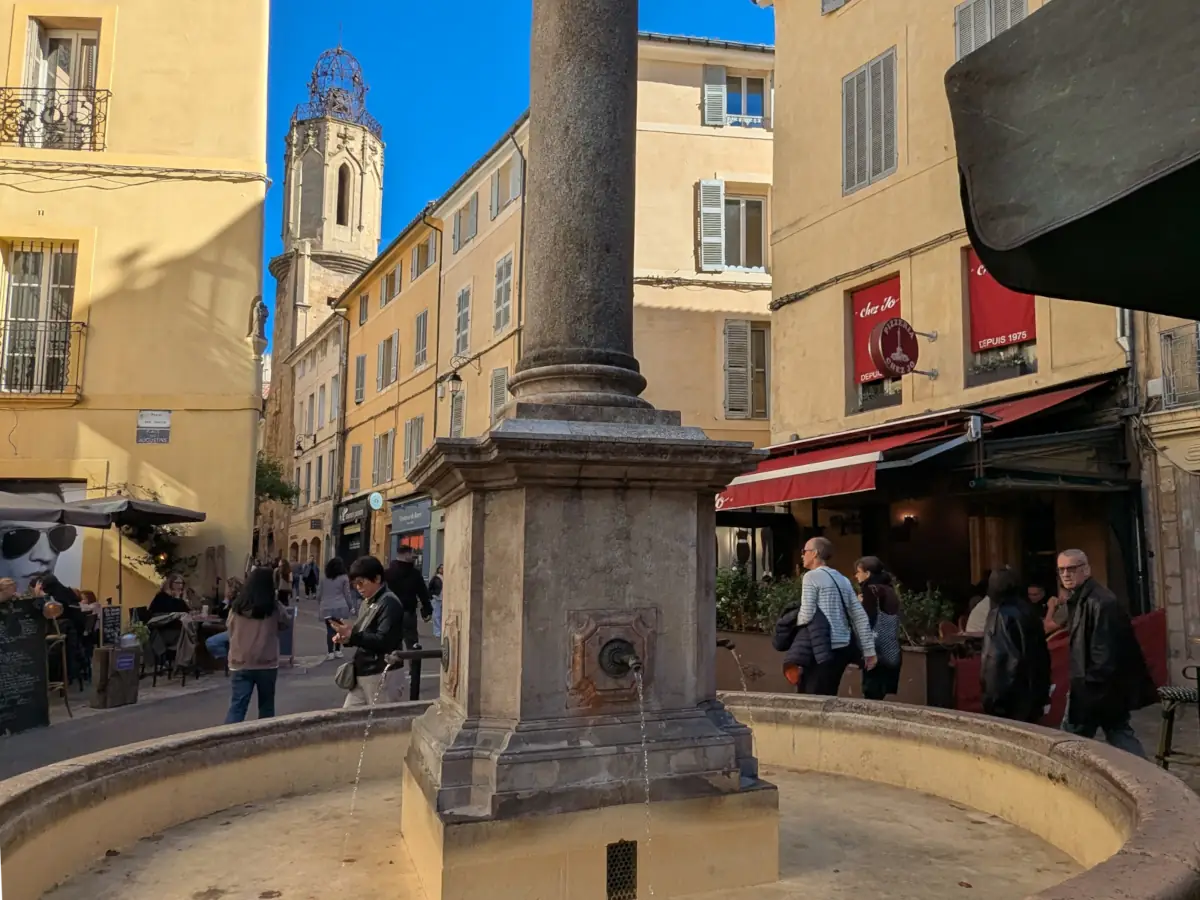
At the lower end of Rue Espariat, the Augustins fountain carries a twelve-pointed star. Its overflow once took a less visible route. The water went to the station, where it was used for steam locomotives. The Rotonde is just a few steps away.
Explore further
At Ventabren, three tiers of arches on the Roquefavour aqueduct carry the Marseille Canal across the Arc valley. After the fountains in central Aix, you can follow another course taken by water on a walk along the canal.
At the foot of the north face of Sainte-Victoire, the fountain in Vauvenargues looks towards the mountain. Further north, in Jouques, fountains line Boulevard de la République, near the Réal stream.
Visitor information
Visiting Old Aix
Between fountains, take time to sit at an outdoor café, browse the shops, step into Saint-Sauveur Cathedral or visit a historic townhouse open to the public.
- Route
- You can start anywhere in Old Aix and walk the loop in either direction. The fountains are landmarks along the old town streets. The suggested route starts at the Rotonde and returns there via Rue Espariat.
- Duration
- Allow around an hour and a half on foot, with a little extra time for the detour to the Pavillon de Vendôme.
Where to park in Aix
- In the centre
- The Rotonde car park, at 2 Rue Lapierre, puts you at the foot of Cours Mirabeau for the start of the walk. The Mignet car park is also close to the avenue.
- Arriving via the A8
- The Krypton park and ride is at the Aix–Pont de l’Arc exit. Bus line A takes you to the Rotonde.
The fountains of Aix on the city website · Map of squares and fountains
Extend your stay
Guest houses to extend your getaway
These properties listed on the Portal are within 25 km as the crow flies of the location featured in this getaway. Visit their websites to plan your stay.

Campagne Chastel
Charming bed and breakfast and Gite
Aix-en-Provence
Visit website
La Ferme
Charming bed and breakfast
Saint-Marc-Jaumegarde
Visit website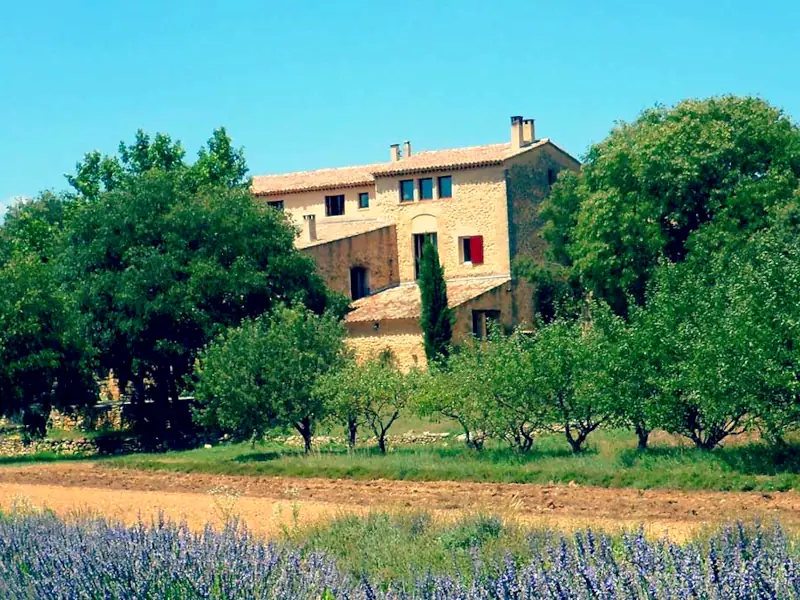

Last updated: