Getaway in the Luberon
Vieil-Oppède: cobbled lanes to Notre-Dame Dalidon
Text and photographs by Vincent Flachaire
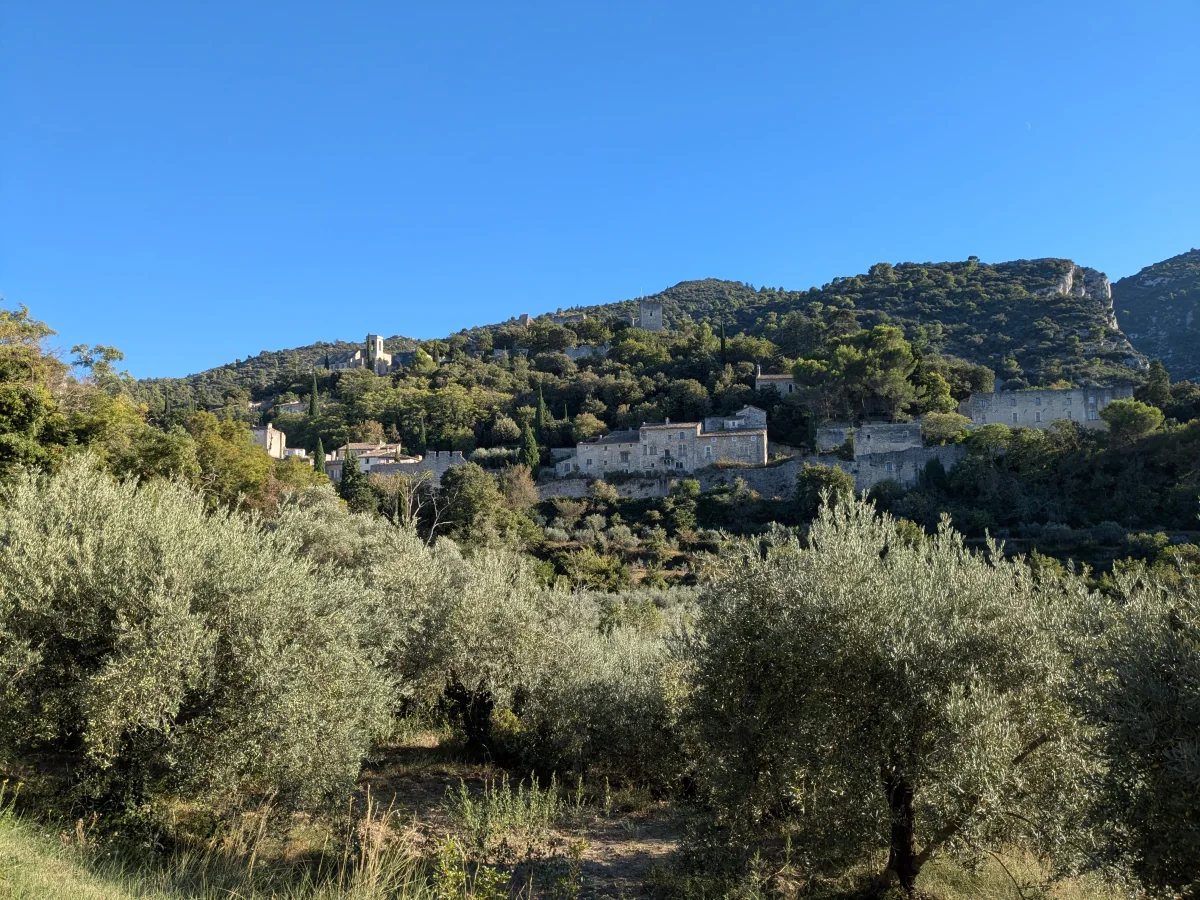
Vieil-Oppède is reached by climbing its cobbled lanes towards Notre-Dame Dalidon collegiate church and the castle ruins, above the Calavon plain.
Vieil-Oppède, a village clinging to the Petit Luberon
The commune now uses the name Vieil-Oppède for its historic village. The name Oppède-le-Vieux, still common on maps, in guidebooks and online searches, became established during the 20th century. Returning to Vieil-Oppède makes clear that this is not a separate village, but the historic heart of Oppède, built on a promontory on the northern side of the Petit Luberon.
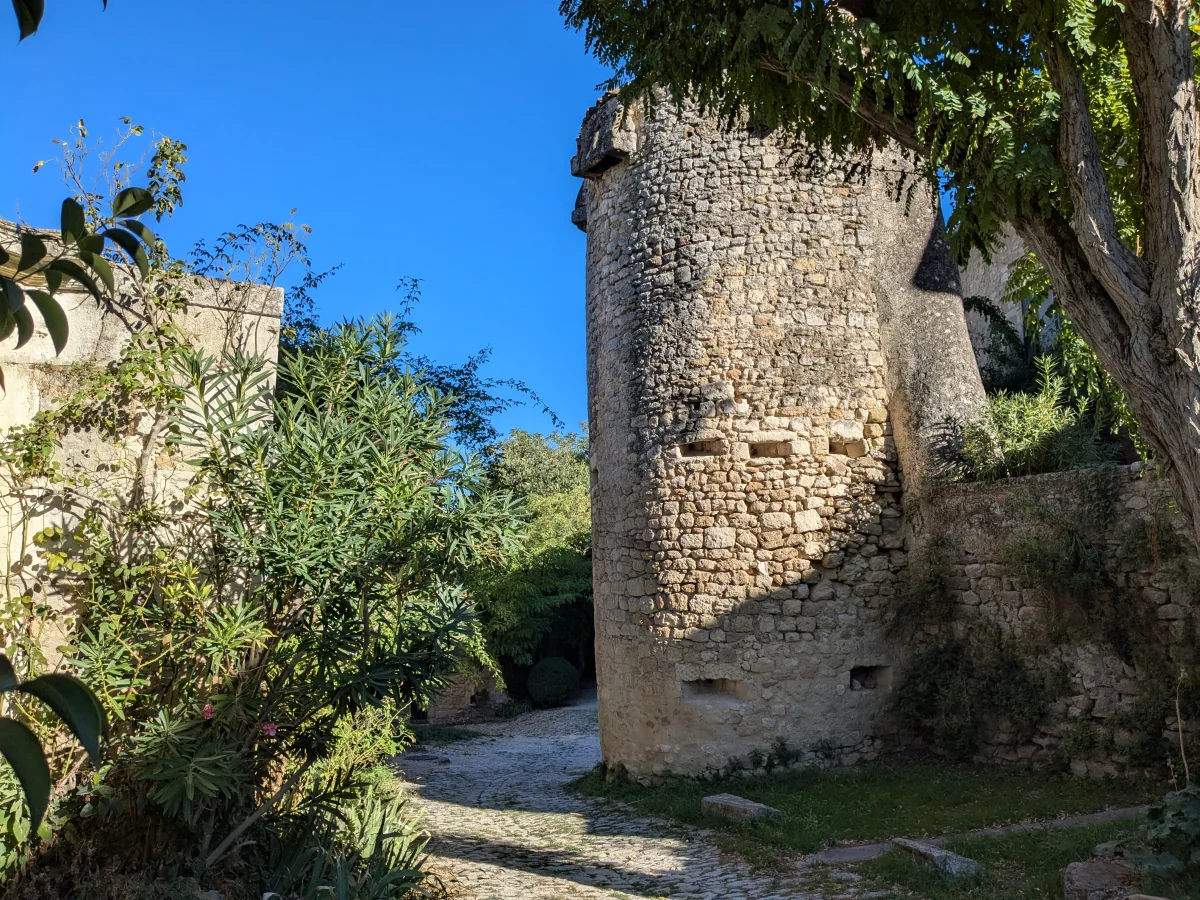
The steep terrain explains this early settlement. Above houses that are still occupied, the cobbled lanes lead to the collegiate church and the castle ruins at the top of the promontory. Between Cavaillon and Apt, the medieval village developed from the 12th to the 16th centuries behind its walls, around its church and fortress.
Place de la Croix and the move towards Les Poulivets
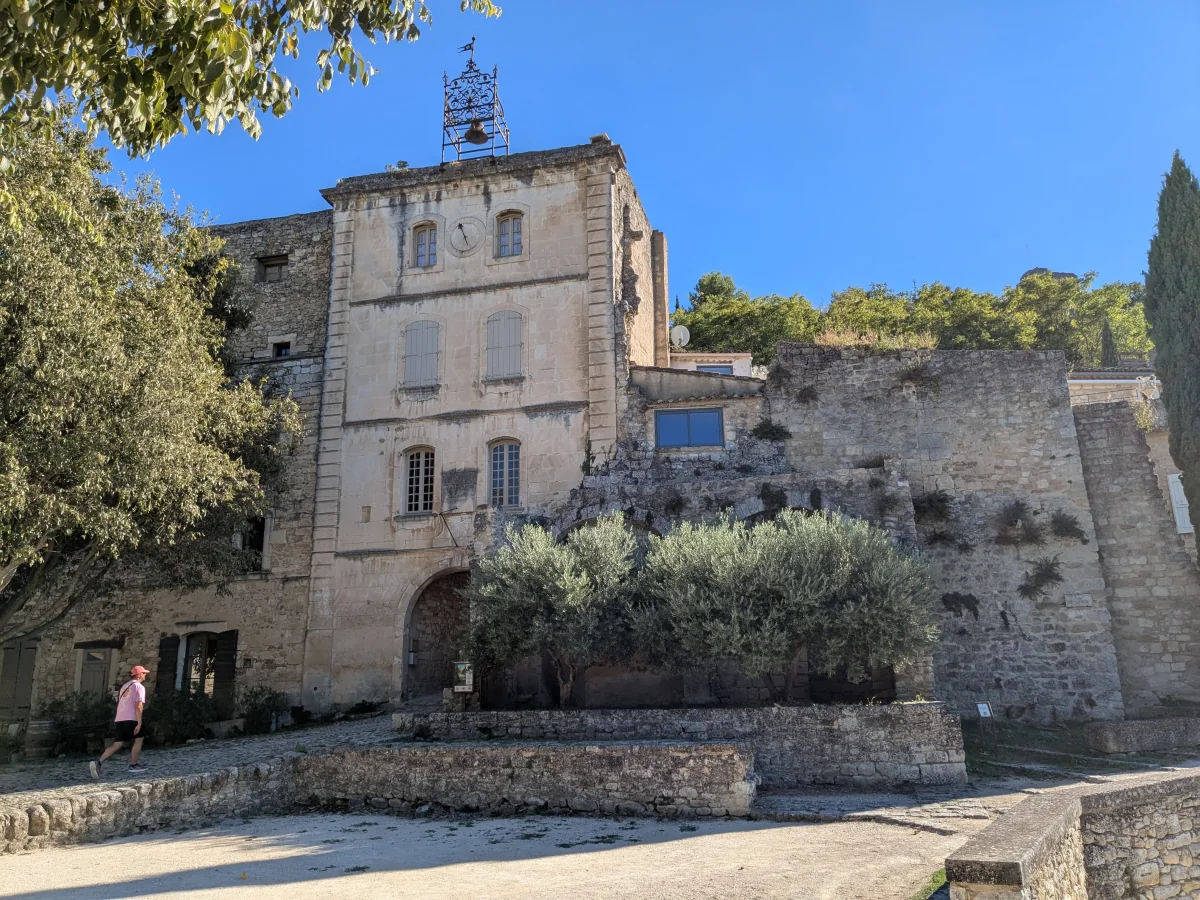
Laid out in the 18th century, Place de la Croix then became the centre of the village, with its belfry, or campanile, and its market hall. This was also when the population began moving down to the plain, where farmland, water and roads were more accessible. The move continued into the early 20th century and was confirmed when the town hall transferred to Les Poulivets in 1909.
The upper part of the hilltop village gradually emptied and fell into ruin, while the lower houses remained occupied or found residents again after restoration. This coexistence gives the walk its particular rhythm: behind a restored façade or a wall of large-cut stone, a passage may open onto a former plot reclaimed by vegetation.
Cobbled lanes, gardens and vaulted passages
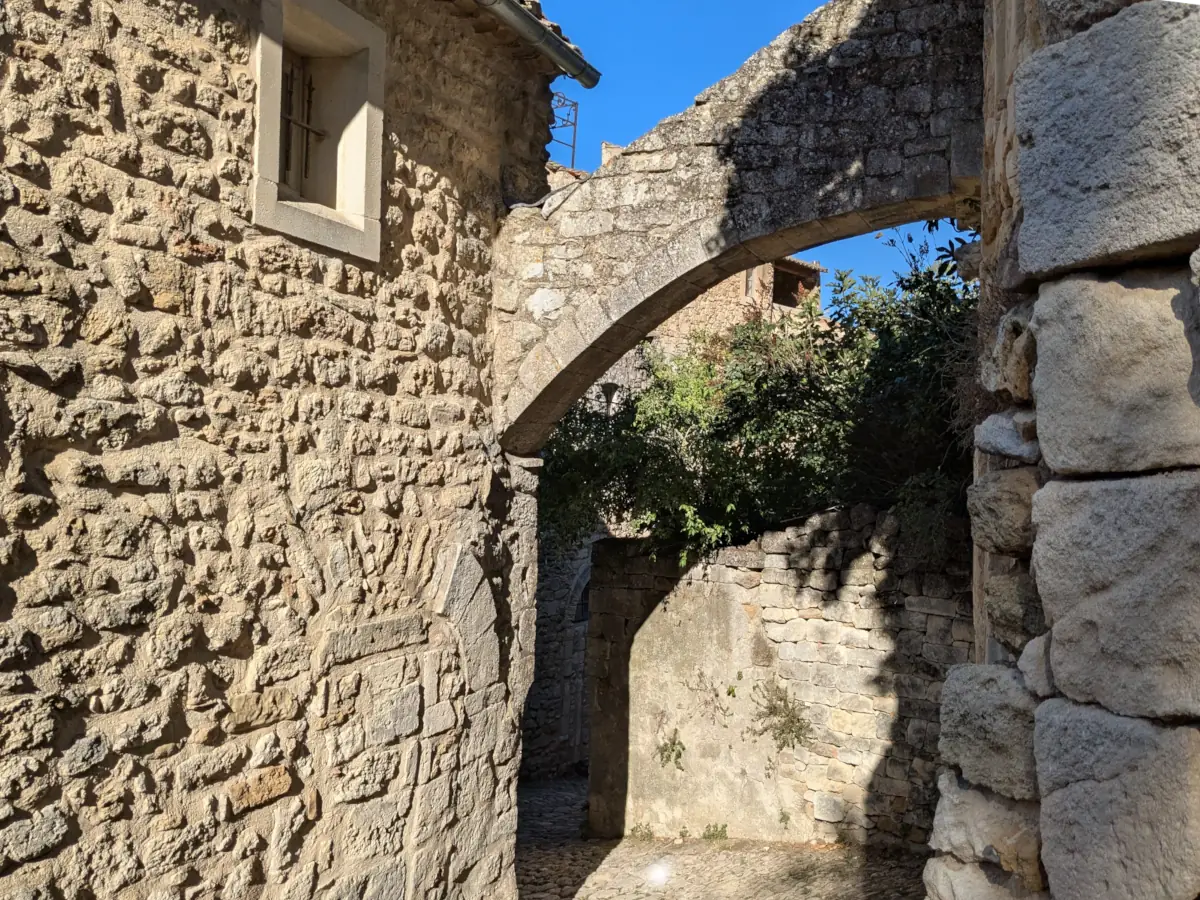
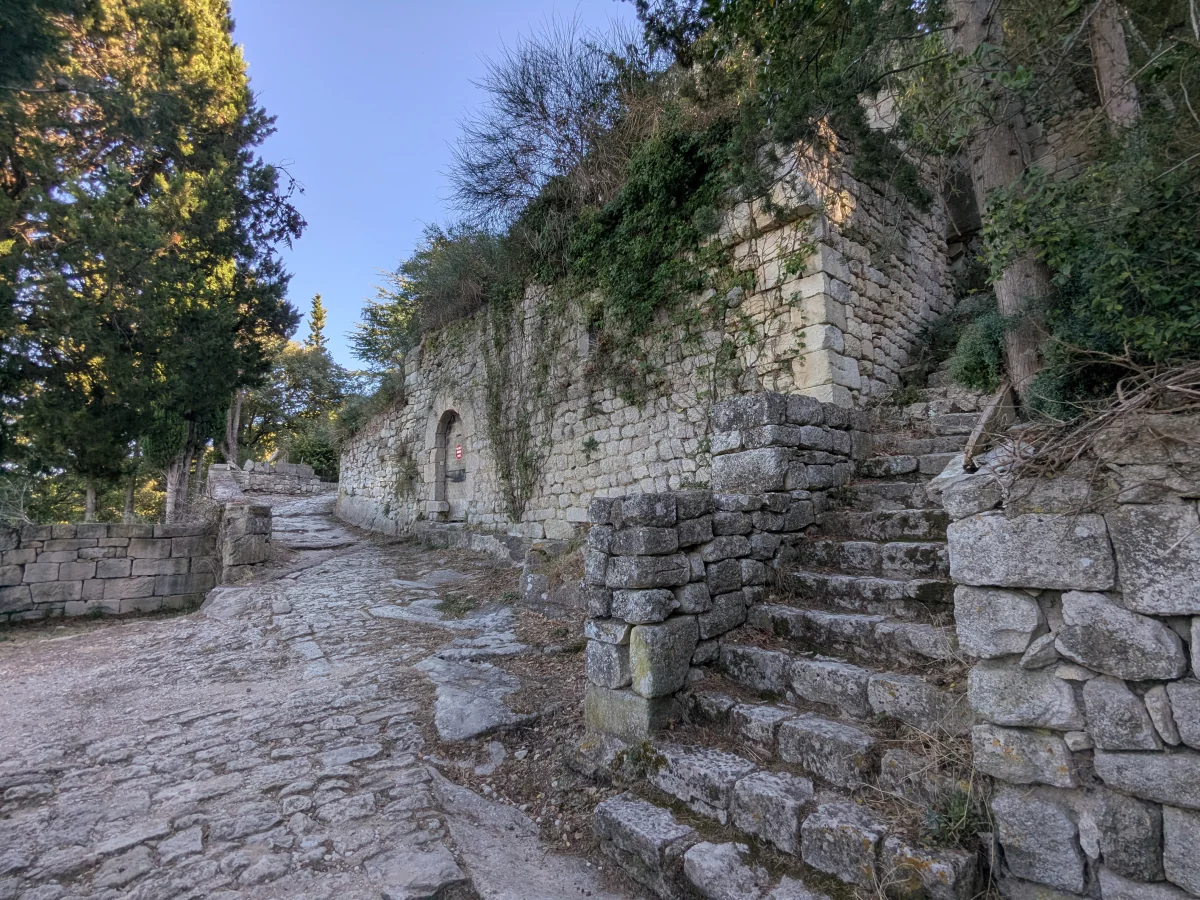
From Place de la Croix, the cobbled lanes rise between stone façades, porches and ivy-covered walls. Their uneven stones make the walk more deliberate. The route does not form one continuous street: it bends around houses, passes beneath arches, follows small gardens and, at times, reaches the rock and vegetation.
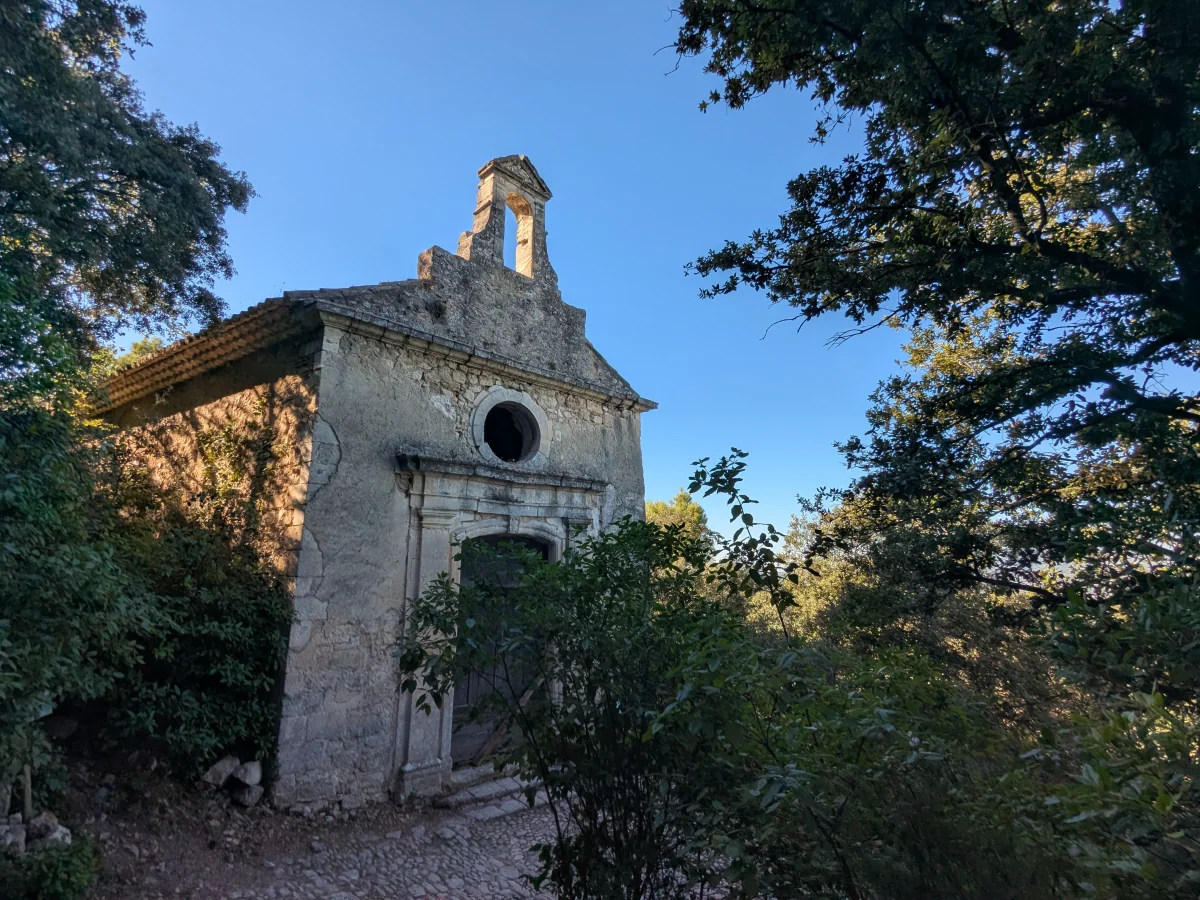
The Chapel of the White Penitents marks one of these stages. It comes before the climb to the collegiate church, where the built village gives way to embankments, cypresses and old retaining walls.
Notre-Dame Dalidon, the collegiate church on the promontory
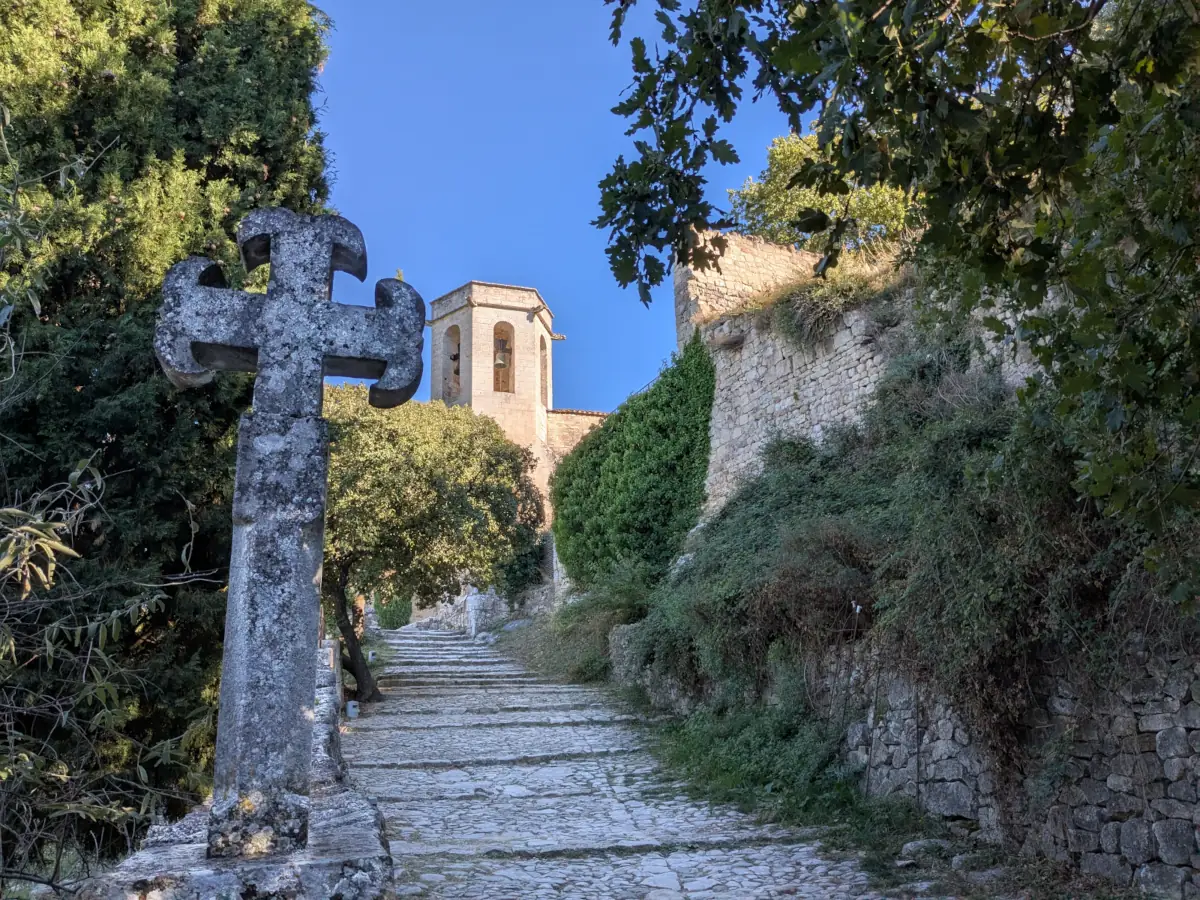
The climb opens out as it approaches the collegiate church. A stone cross, old walls and the last cypresses accompany the path. The Calavon plain appears between the trees before the church stands fully clear on its promontory.
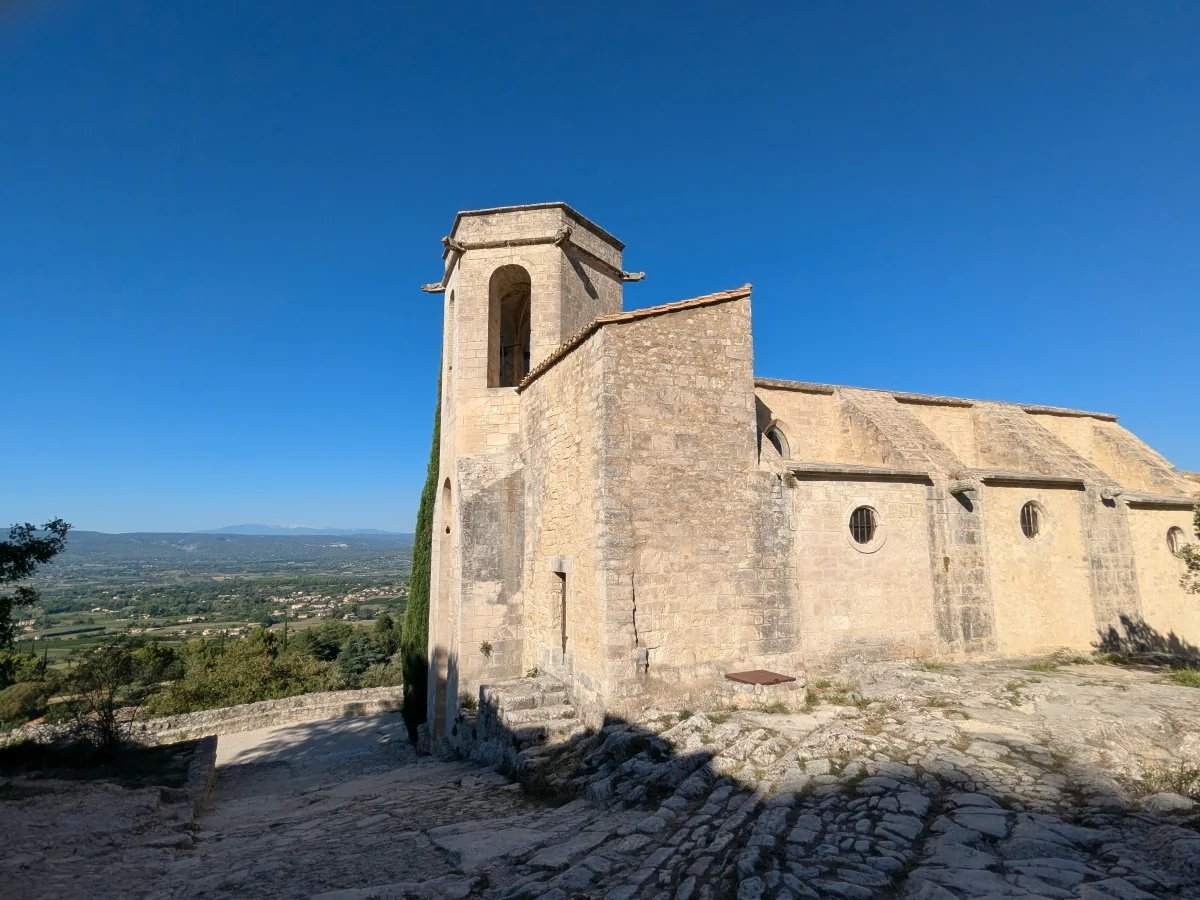
Of Romanesque origin, Notre-Dame Dalidon — a name derived from the Latin dolidus, meaning “pain” — was extensively altered in the 16th and 17th centuries. The establishment of a college of canons in 1546, on the orders of the Bishop of Cavaillon, gave it its collegiate status. Its sober, massive exterior contrasts with an interior where Renaissance and Baroque features stand alongside later additions.
The castle, the walls and the Maynier family
Above the collegiate church, the castle ruins occupy the highest part of the promontory. Built between the 11th and 13th centuries, the fortress was enlarged until the 16th century, first by the popes and then by the Barons of Oppède. The 1731 earthquake badly damaged it; it then gradually became a stone quarry.
Near Place de la Croix, a stretch of wall and a tower remain as vestiges of the former ramparts built from the 14th century onwards.
Jean Maynier, Baron of Oppède and first president of the Parliament of Aix, belongs to this seigneurial history. In 1545, he organised the repression of the Waldensians of the Luberon, leading to massacres and the destruction of several communities, notably at Mérindol and Cabrières-d’Avignon. The walls of the former stronghold thus recall that the history of this promontory extended far beyond the village.
A village reinvested in the 20th century
By the beginning of the 20th century, depopulation had left many houses empty. During the Second World War, a group of artists, architects and intellectuals settled here. Architect Bernard Zehrfuss and Consuelo de Saint-Exupéry, who wrote about this period in her book Oppède, were among them.
The abandoned houses then became places to live and work. Their presence contributed to the rediscovery of Vieil-Oppède and accompanied its gradual reinvestment, without erasing the alternation of inhabited areas, gardens, open walls and rocky passages.
From the promontory to the Calavon plain
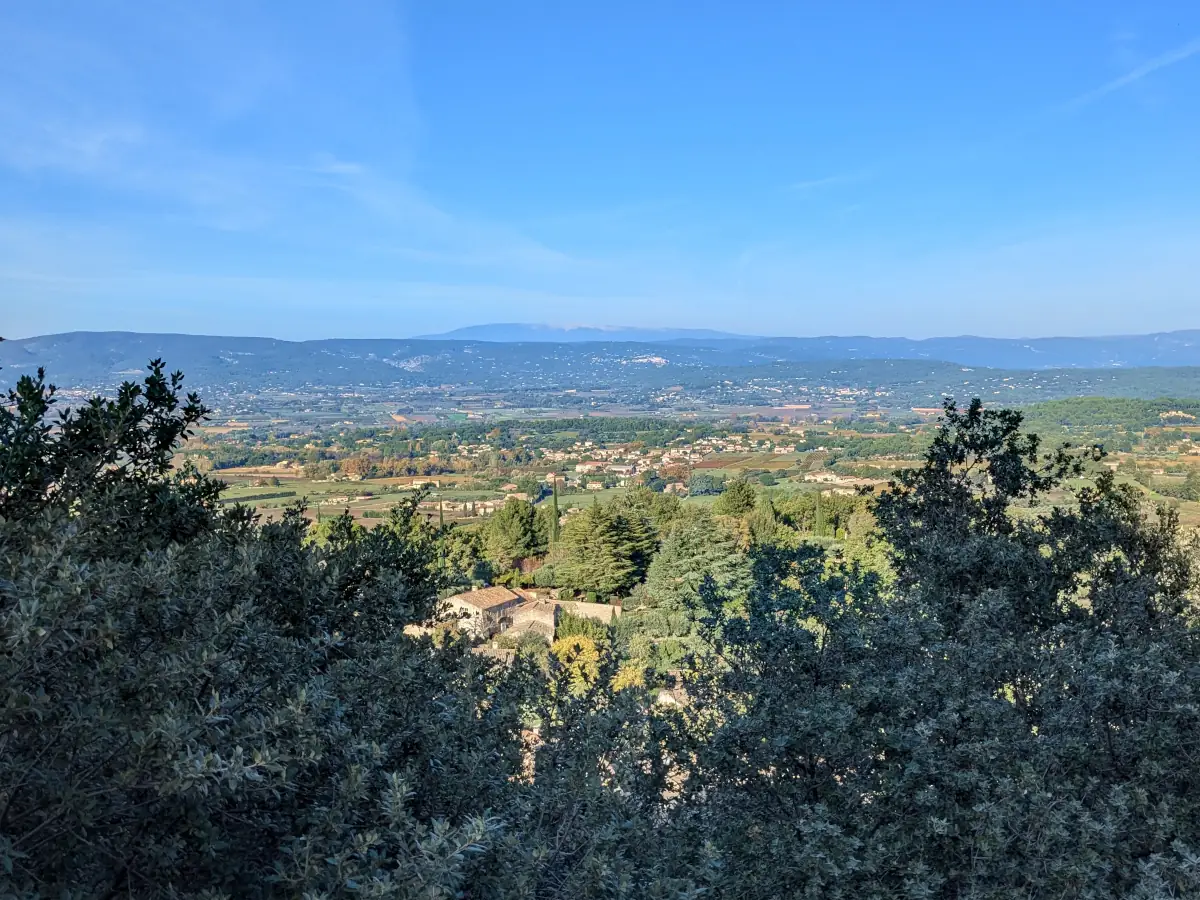
From the heights, the eye travels across vineyards, olive groves and orchards in the Calavon plain. This landscape explains the move towards Les Poulivets: below lie the cultivated land, water and roads that still shape the commune today.
Vieil-Oppède belongs to the western Luberon, close to Ménerbes, Robion and Les Taillades. From the promontory, the view crosses the plain towards Gordes and the Monts de Vaucluse. Further east, Lacoste, Bonnieux and the Calavon valley and Pont Julien offer further stages in the Luberon.
Practical information
Starting from the Sainte-Cécile terraces
- Starting point
- At the foot of the historic village, the paid Sainte-Cécile car park opens the route: a botanical trail crosses the former agricultural terraces and leads to Place de la Croix, where the cobbled lanes begin.
- Route
- The cobbled lanes are steep and their stones can be uneven. Sturdy footwear is advisable, particularly after rain or in hot weather.
- Collegiate church and castle
- The collegiate church is open seasonally by volunteers from Oppède Patrimoine. The castle remains closed to the public during safeguarding work: check visiting conditions before travelling. The work on the fortress is presented by the Association for the Safeguarding of the Oppède Fortress.
For opening times, access conditions and routes, consult the Oppède municipal website before your visit.
Extend your stay
Guest houses to extend the getaway
Vieil-Oppède is easy to explore from a guest house around Ménerbes, Gordes or the villages of the western Luberon. The portal favours direct links to owners’ websites: you can compare settings, locations and services, then contact the guest house that best suits your stay.
These properties listed on the Portal are within 25 km as the crow flies of the location featured in this getaway. Visit their websites to plan your stay.
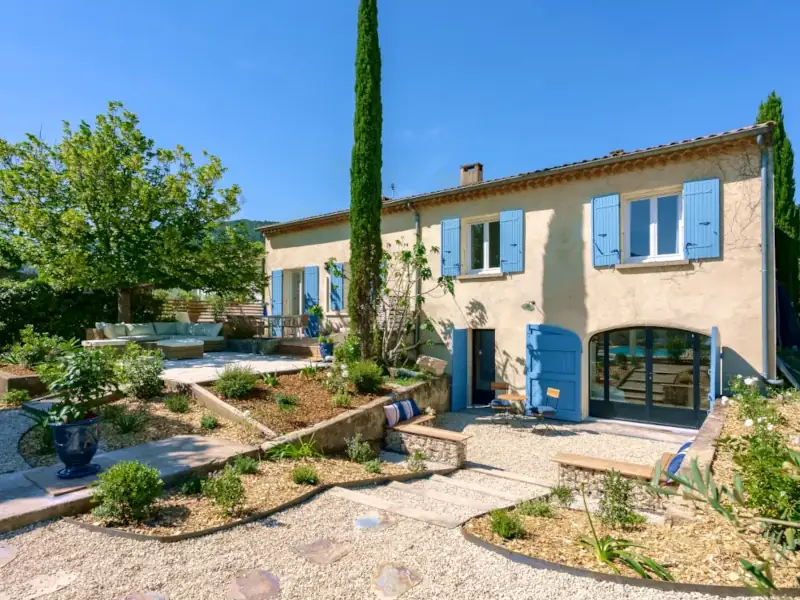
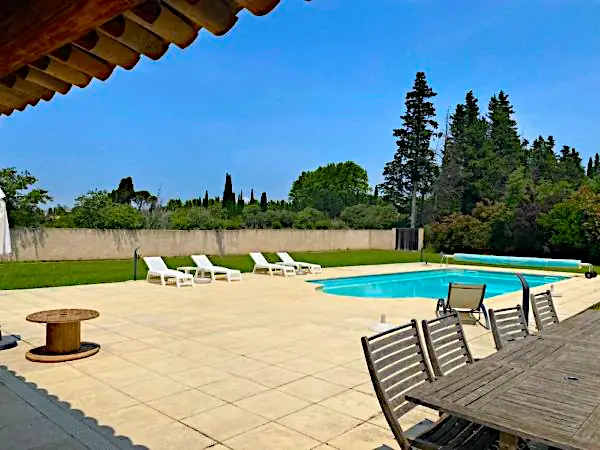
Le Pavillon du Lantana
Holiday home
Les Taillades
Visit website
La Bergerie du Luberon
Charming holiday home
Les Taillades
Visit website
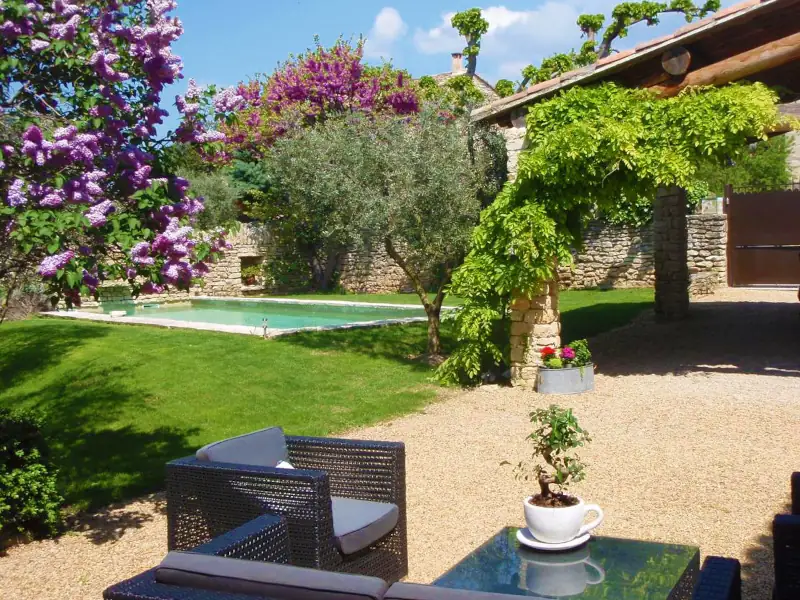


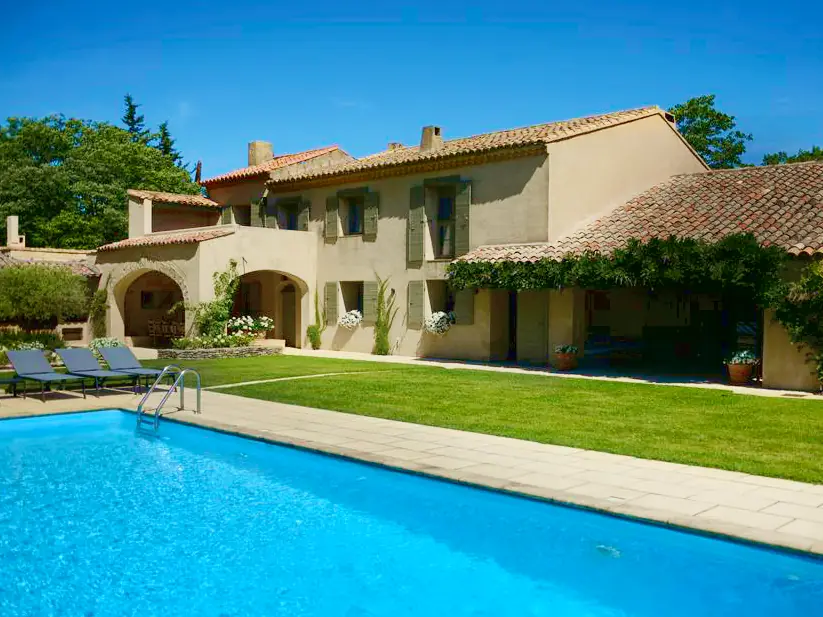
Four de Cony
Charming bed and breakfast
Saumane de Vaucluse
Visit website
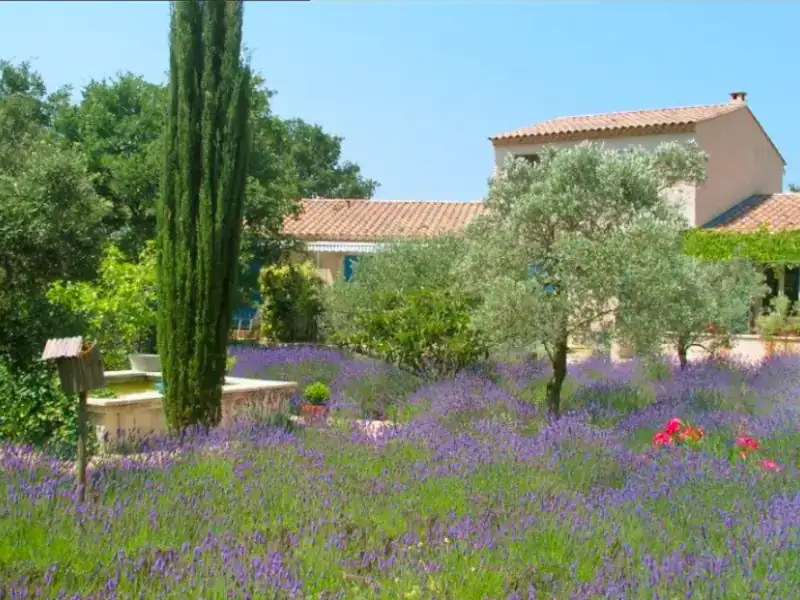

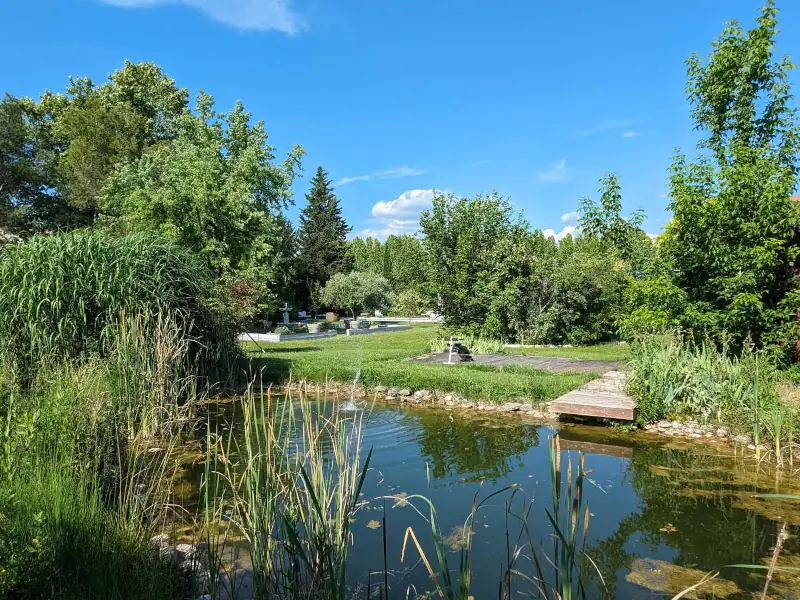
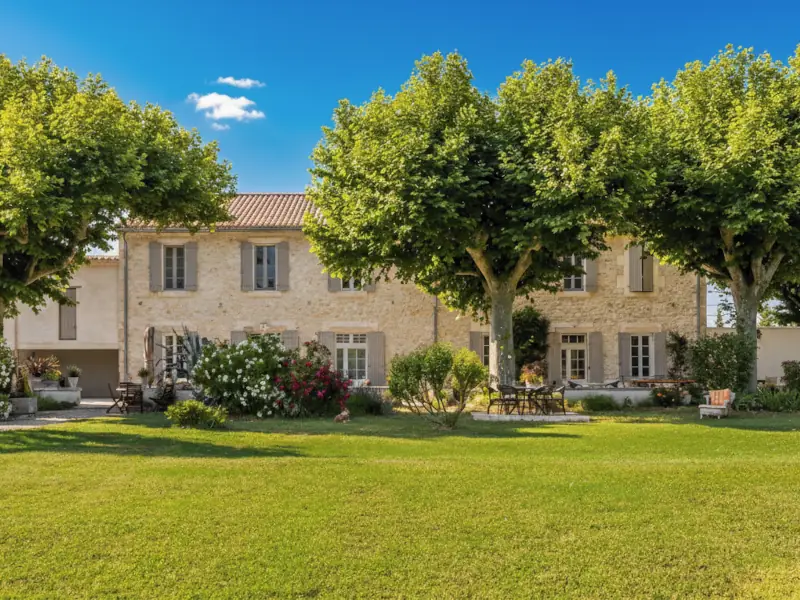
La Bastide des Amouriers
Charming bed and breakfast and Gite
Caumont-sur-Durance
Visit website

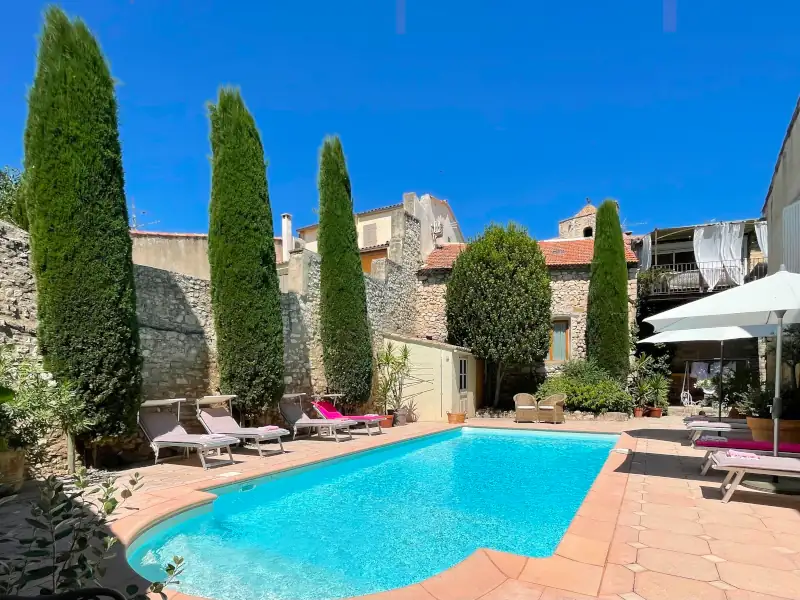

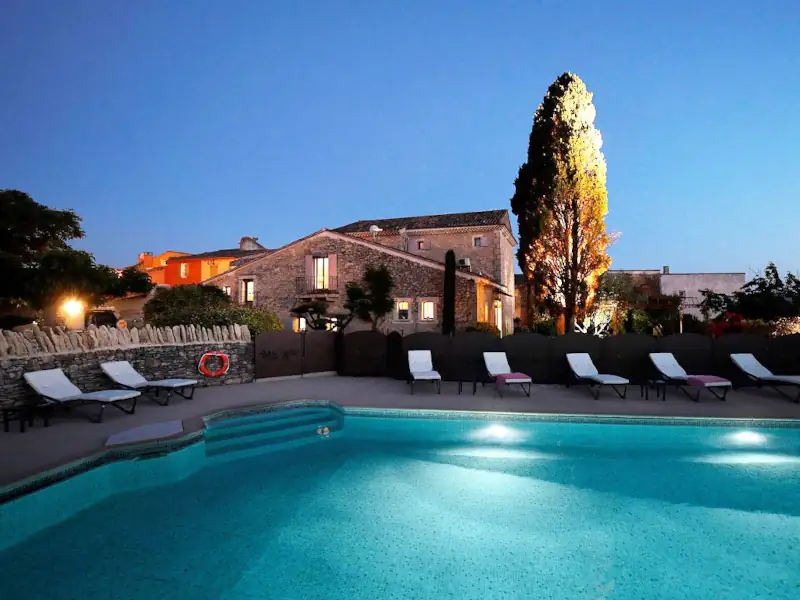
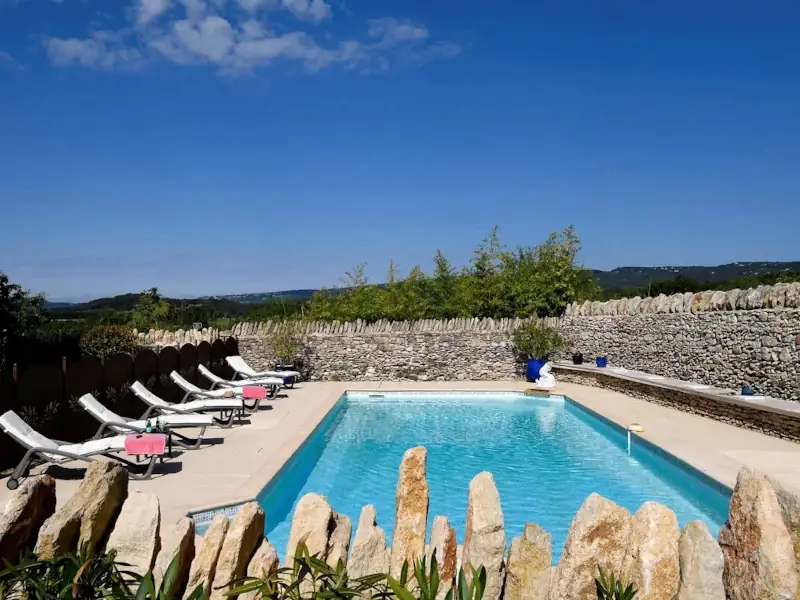
Gîte des Demoiselles
Charming Gite
Roussillon
Visit website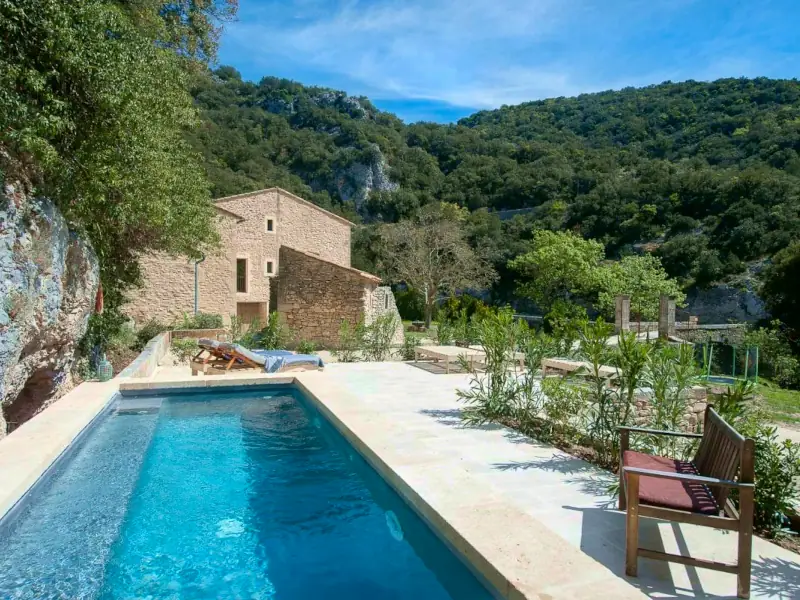
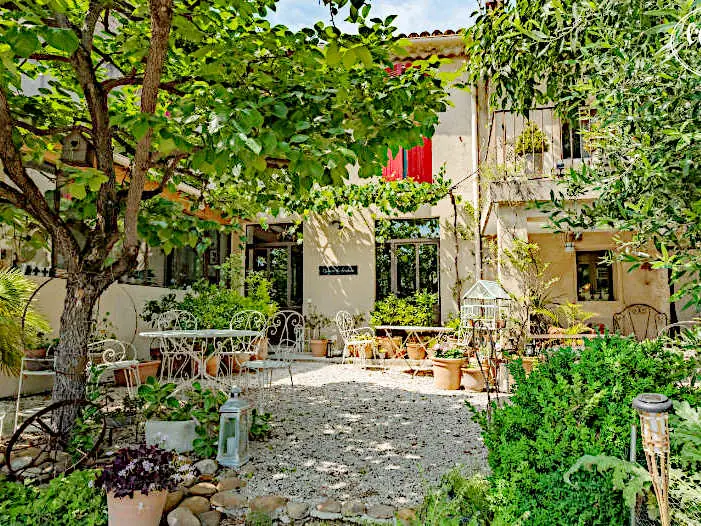
L'Oréliane
Charming Bed and breakfast
Châteauneuf de Gadagne
Visit website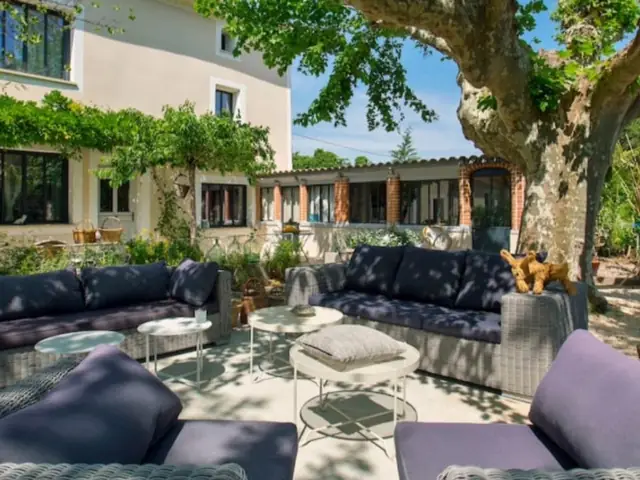
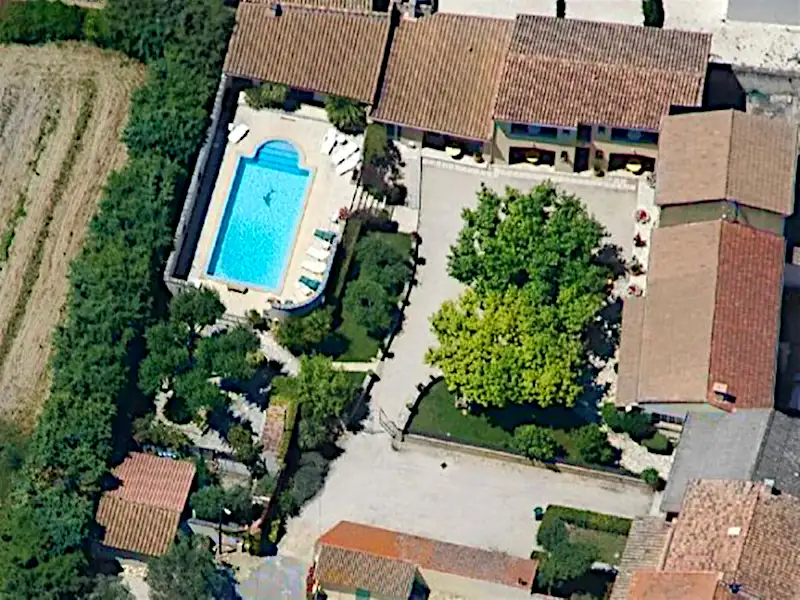
Le Mas de l'Amandier
Charming Bed and breakfast and holiday rental
St Saturnin lès Avignon
Visit website