


A getaway in the Uzège
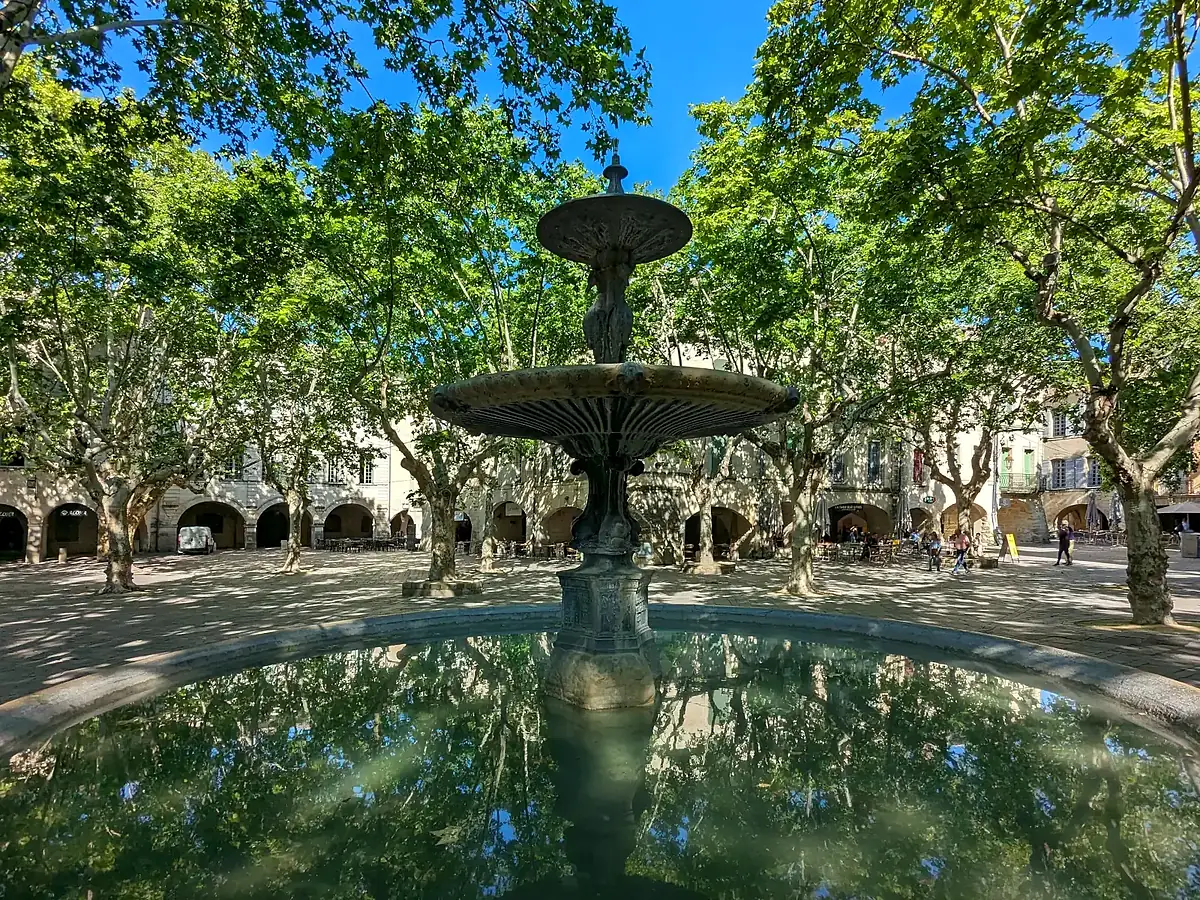
Place aux Herbes in Uzès, at the heart of the old town
Text and photographs by Vincent Flachaire
In Uzès, a visit to the old town begins on Place aux Herbes, in the shade of the plane trees and arcades. The shopping streets lead to the ducal castle, then to the cathedral and its round bell tower, the Tour Fenestrelle.
Place aux Herbes, at the heart of the old town
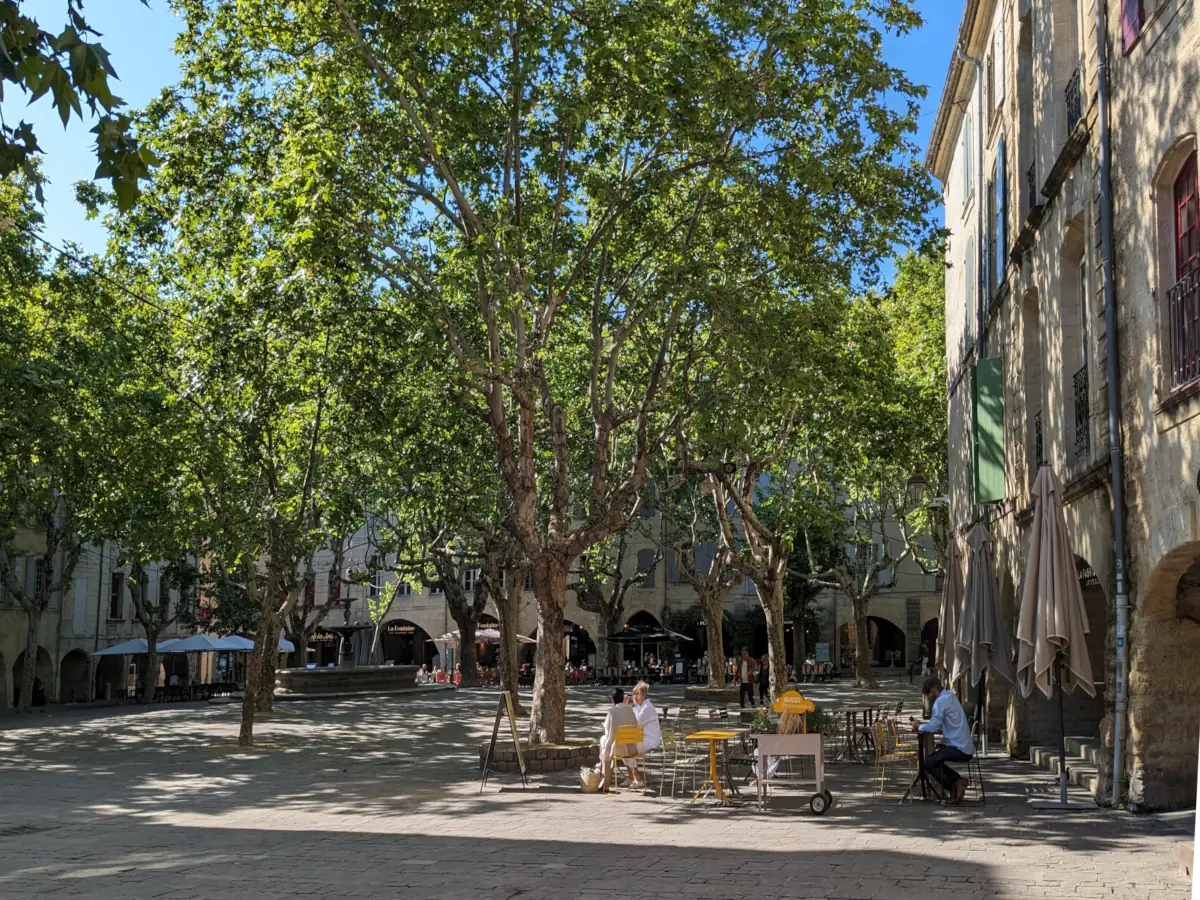
Place aux Herbes has hosted the market since the Middle Ages. Shops and café terraces occupy the ground floors beneath the arcades, with houses and elegant townhouses rising above them around the square. The fountain, installed in 1855, stands among the plane trees.
The square was once less open. Houses occupied its centre until their removal in the 19th century created the space we cross today. Before continuing towards the Duché, walk beneath the arcades to see the vaults and the passages into the neighbouring streets.

The façades of the old town
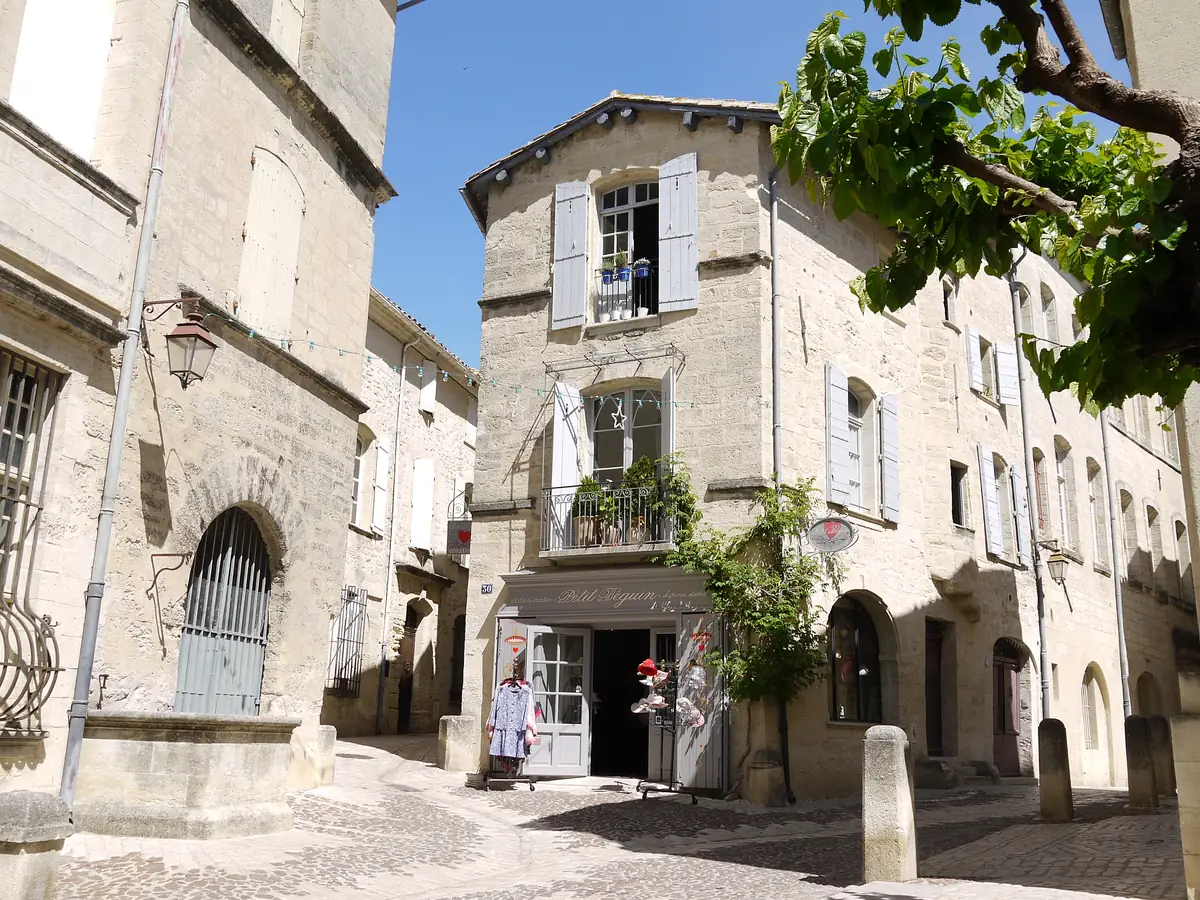
The streets around the square retain carved doorways, Renaissance windows and classical façades. In the 17th and 18th centuries, wool production and trade, followed by the growth of the silk industry, brought wealth to Uzès. Merchants built grand townhouses, sometimes by joining several houses together. Their large windows and entrance portals still stand out above and among the shopfronts.
Uzès, a pioneer in protecting historic districts
In 1960, two buildings collapsed on Place aux Herbes, exposing the poor condition of the old town. Five years later, Uzès became one of the first French towns to gain a protected historic district under the Malraux law. The Marquise de Crussol approached the minister to support this protection. Restoration now covered whole streets and groups of houses, uncovering façade decoration and improving homes that sometimes lacked running water and proper drainage.
The Duché in the heart of town
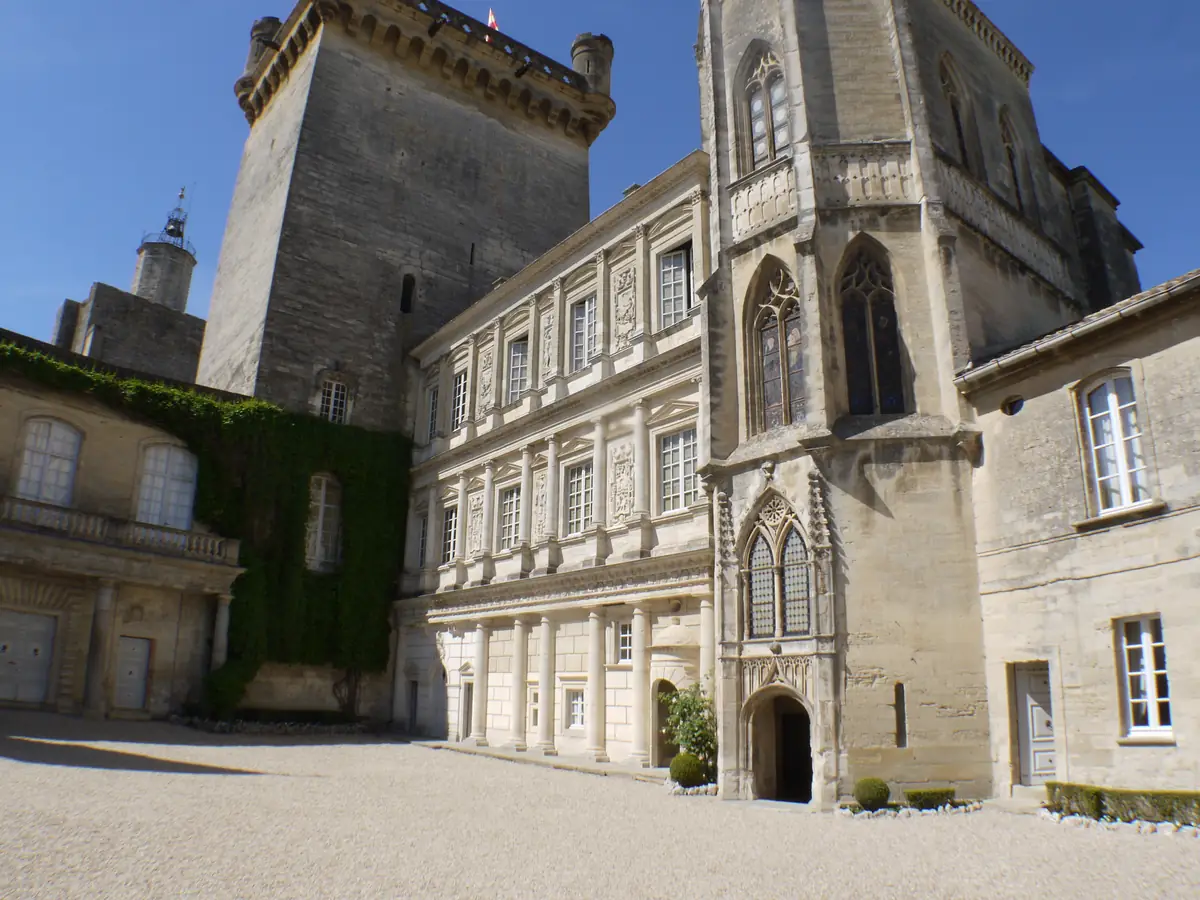
The ducal castle, known as the Duché, occupies an entire block in the centre of Uzès. Its enclosing walls and the Tour Bermonde recall its defensive role.
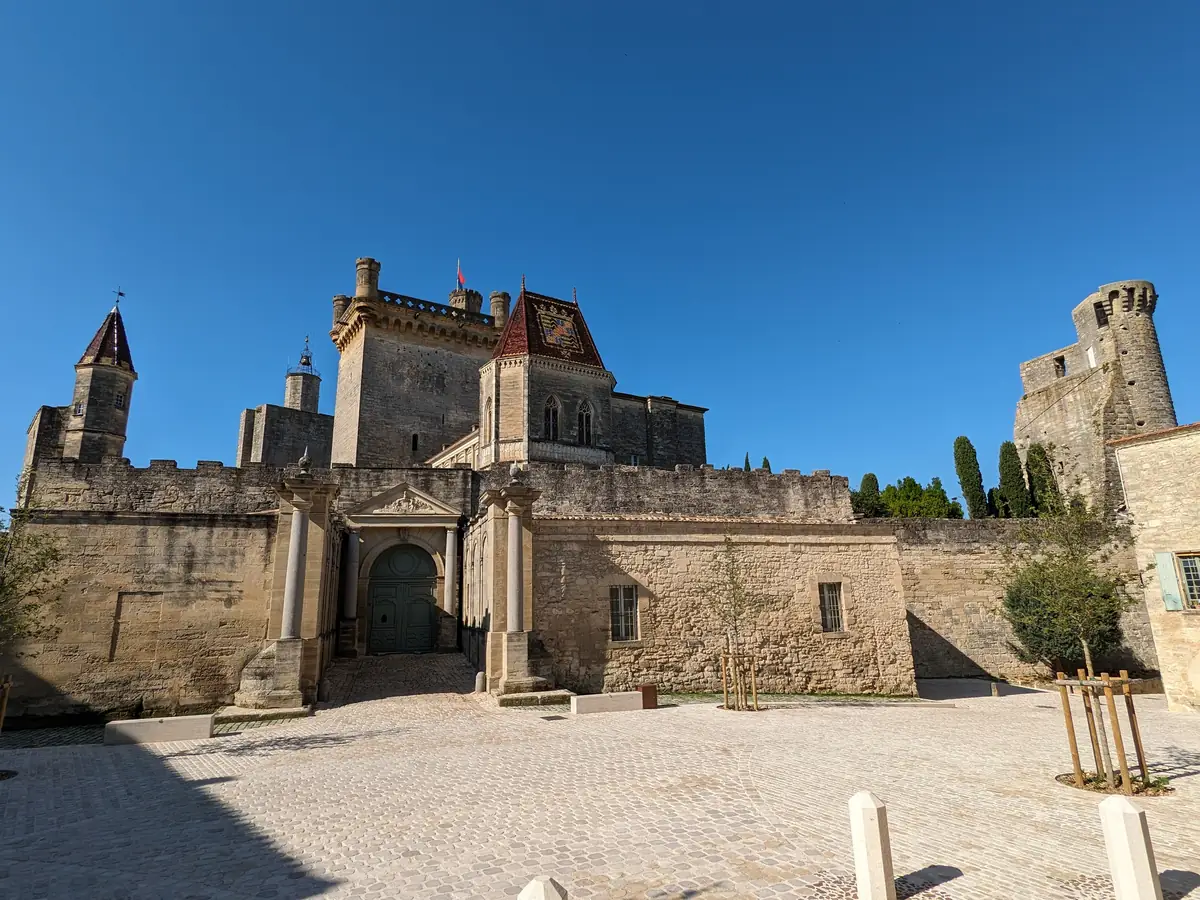
In 1565, Antoine de Crussol was granted the title of Duke of Uzès. The later description “first duchy of France” refers to precedence among the nobility, rather than the age of the castle. A visit takes in the furnished apartments and, depending on the tour chosen, the keep, with views over the rooftops and surrounding countryside.
Inside, the courtyard reveals another side of the building: a Renaissance façade with columns on successive storeys and a chapel with tall windows, remodelled in the 19th century.
Three towers, three powers
The Tour Bermonde is not the only tower associated with the rulers of Uzès. The nearby Bishop’s Tower and King’s Tower recall the authorities that shared control of the town. The bishop and the lord of Uzès disputed power for centuries; the King of France also acquired rights and buildings in the town.
At the foot of the King’s Tower and Bishop’s Tower, the medieval garden presents plants used for food, medicine and dyes. The old buildings later served as prisons and retain graffiti from their past. A visit complements the Duché, offering an introduction to the uses of plants and the changing functions of this fortified complex.
Fenestrelle, the bell tower that survived
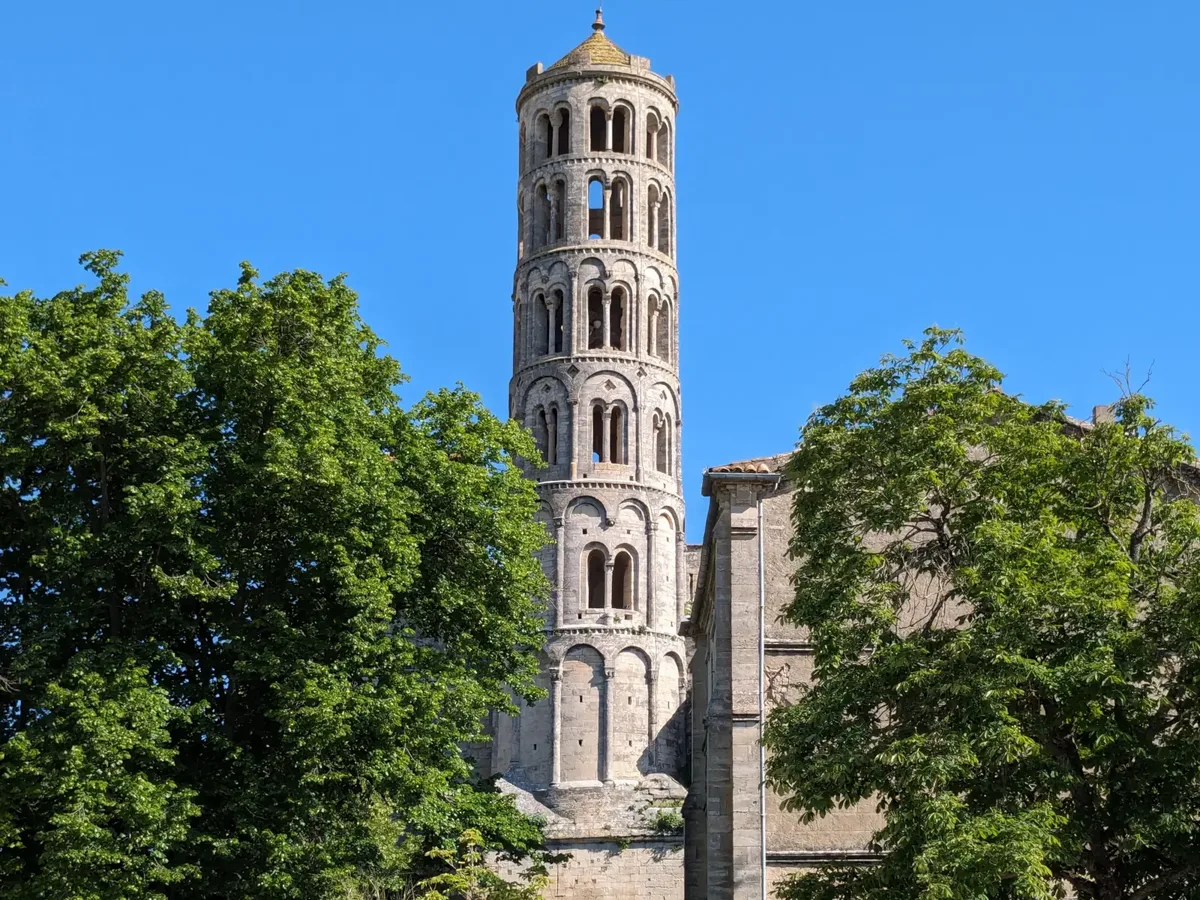
The Tour Fenestrelle is the bell tower of Saint-Théodorit Cathedral. Its circular shape and storeys of paired windows set it apart from the nearby towers. The Romanesque bell tower survived the destruction of the cathedral during the French Wars of Religion.
Uzès had become a Protestant stronghold. The present cathedral was rebuilt in the 17th century after the destruction, and its façade was remodelled in the 19th. These different dates explain the contrast between the church and its bell tower. From the Promenade des Marronniers, the tower rises above the trees.
When the cathedral is open, its interior is worth a look. The 17th-century organ retains the painted shutters of its case, used to protect the pipes. A gallery once gave the bishop direct access to the church from his palace. The former bishop’s palace now houses the Georges Borias Museum, devoted to the history and crafts of the Uzège, including ceramics by the Pichon family and mementoes of André Gide.
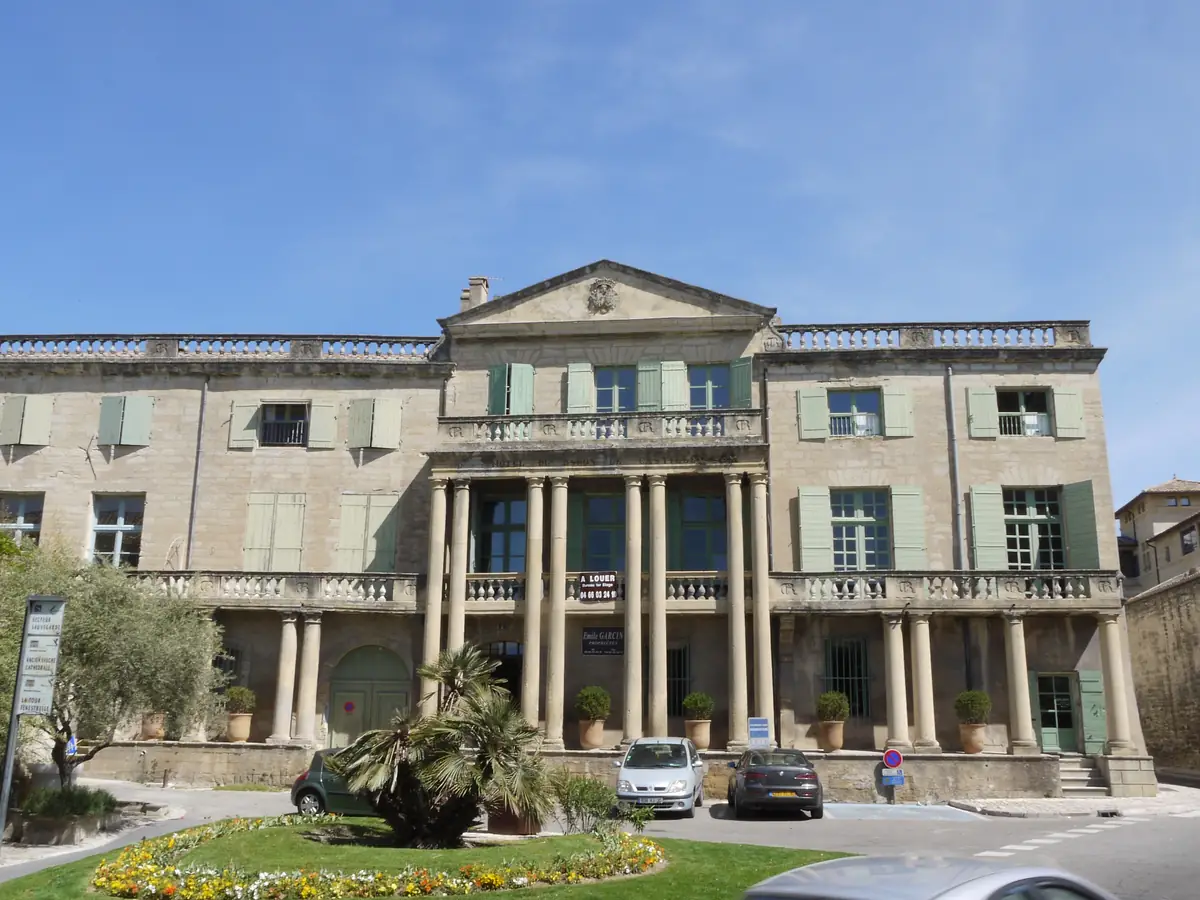
On Place de l’Évêché, the Hôtel du Baron de Castille stands out for its colonnades on successive levels. Gabriel-Joseph de Fromentès, Baron de Castille, also added numerous columns to his estate at Argilliers.
The market, another side of Uzès
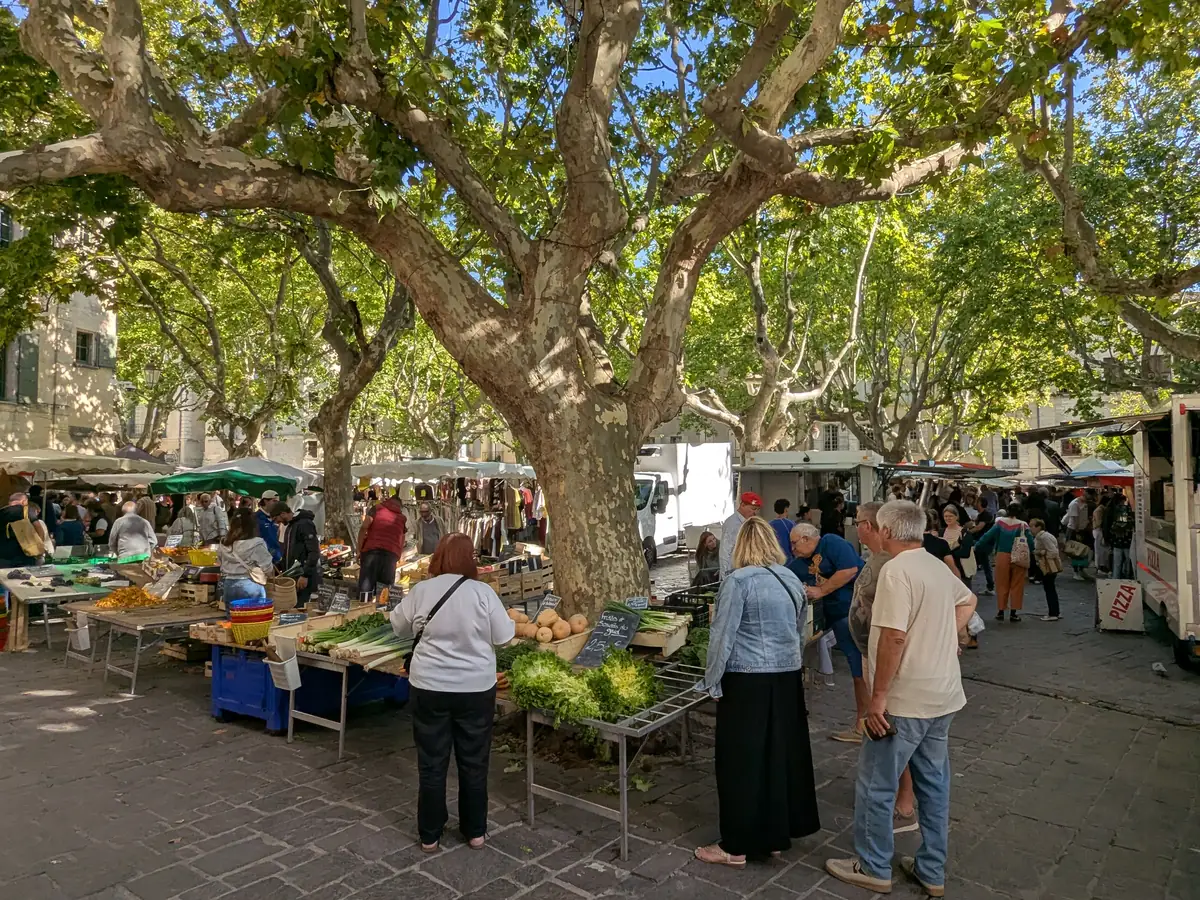
On Wednesday and Saturday mornings, stalls fill Place aux Herbes. The large Saturday market also spreads into the neighbouring streets and onto the boulevards surrounding the old town. The market is officially documented as early as 1226. The town takes on a different rhythm as residents and visitors shop and pause at the lively café terraces. For a quieter look at the monuments and façades, return after the market or choose another day.
Down to the Eure valley
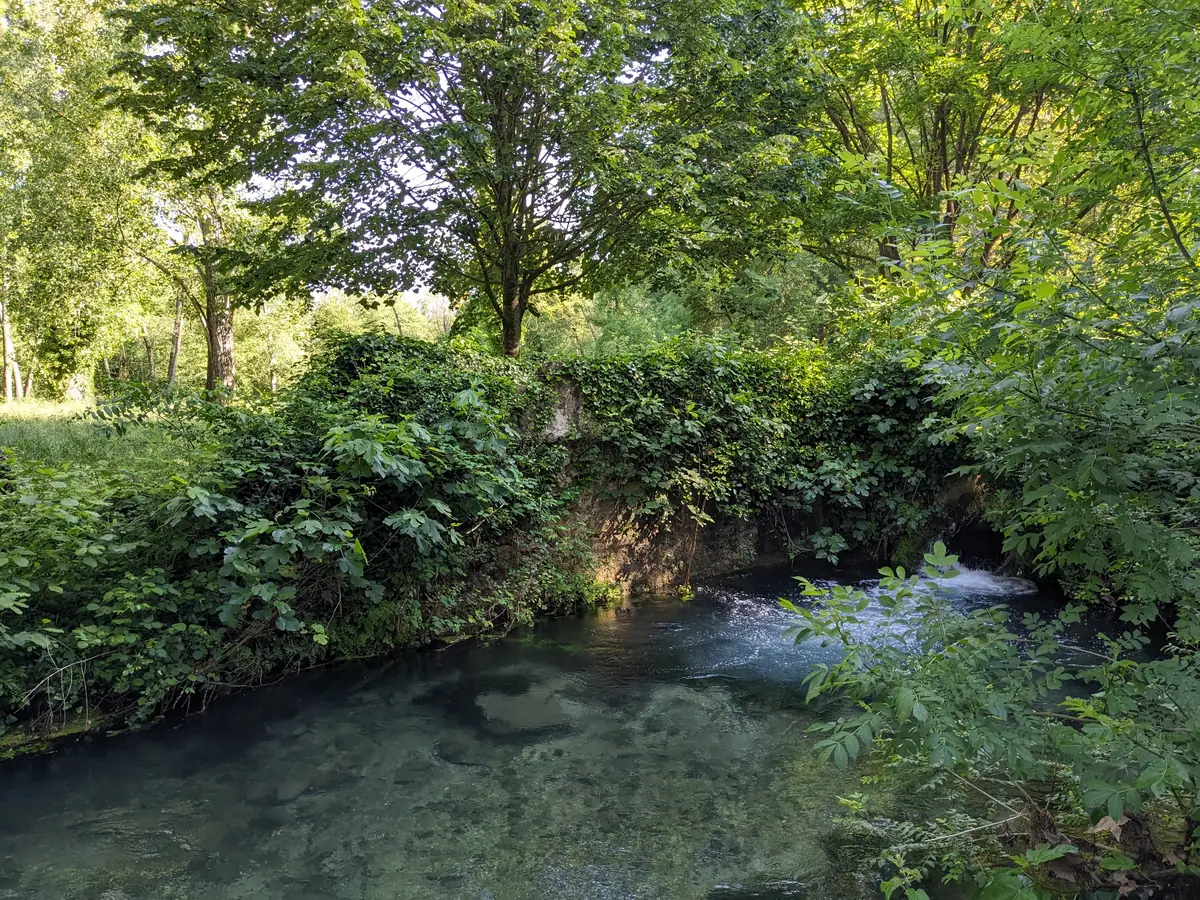
Below the town, the Eure valley offers a further walk along the Alzon. The Romans tapped the springs in this valley to supply Nîmes through an aqueduct whose best-known surviving section is the Pont du Gard. The paths, trees and water make a peaceful, leafy setting.
Explore the villages of the Uzège
Around Uzès, roads pass through vineyards, olive groves and the villages of the Gard. At Blauzac, the village houses and paths lined with dry-stone walls offer another opportunity for a walk. Staying near the Pont du Gard also allows time for a day in Uzès, followed by the aqueduct and the landscapes along the Gardon.
Practical information
Visiting the old town of Uzès
- Route and duration
- Allow one and a half to two hours to walk around the old town, including photography stops. Add time for visits to the Duché, the garden or the museum, and for a walk in the Eure valley.
- Parking
- The Cordeliers and Gide car parks are within walking distance of the centre. Arrive early on Saturday mornings: the market attracts many visitors and occupies some of the streets.
- What to bring
- Comfortable shoes for the cobbled streets and steps, plus water and sun protection in summer. The towers and the descent into the Eure valley involve additional steps or changes in elevation.
- Castle, garden and museum
- Check the tours, opening times and admission prices for the Duché and the medieval garden and its towers before your visit.
- Check opening times and admission prices for the Georges Borias Museum. Ask the tourist office about access to the cathedral. The Fenestrelle bell tower is not open to visitors.
To plan your visit: Destination Pays d’Uzès Pont du Gard tourist office.
Extend your stay
Guest houses around Uzès to extend the getaway
To stay near the old town, its market and the villages of the Uzège, the portal presents bed and breakfasts and guest houses with direct links to the owners' websites.
These properties listed on the Portal are within 25 km as the crow flies of the location featured in this getaway. Visit their websites to plan your stay.
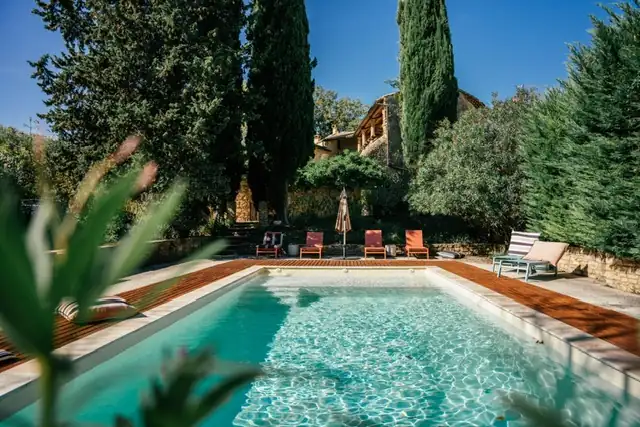
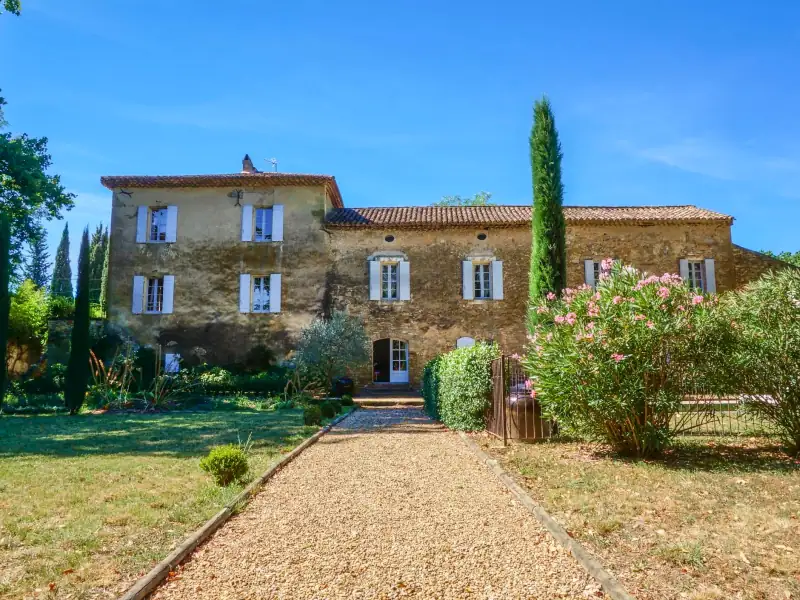
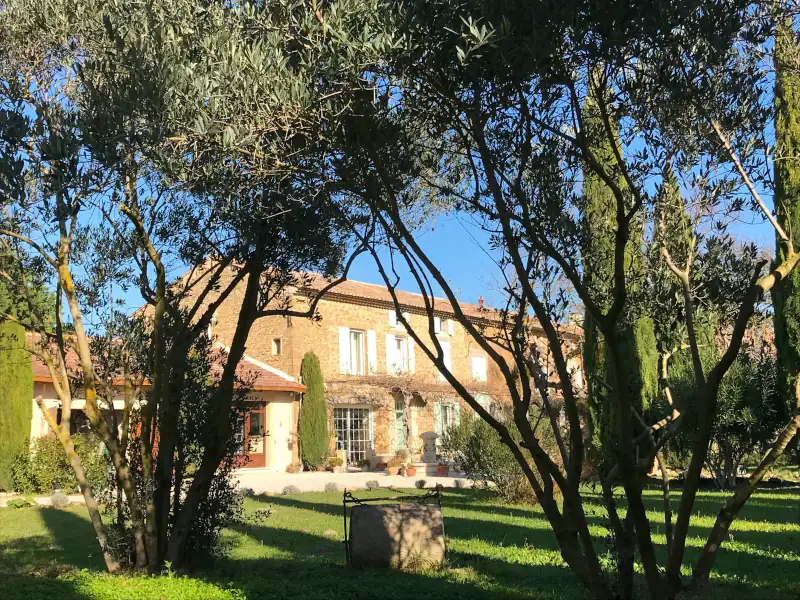
Fontaine des Magnarelles
Charming Bed and breakfast
Althen des Paluds
Visit website