


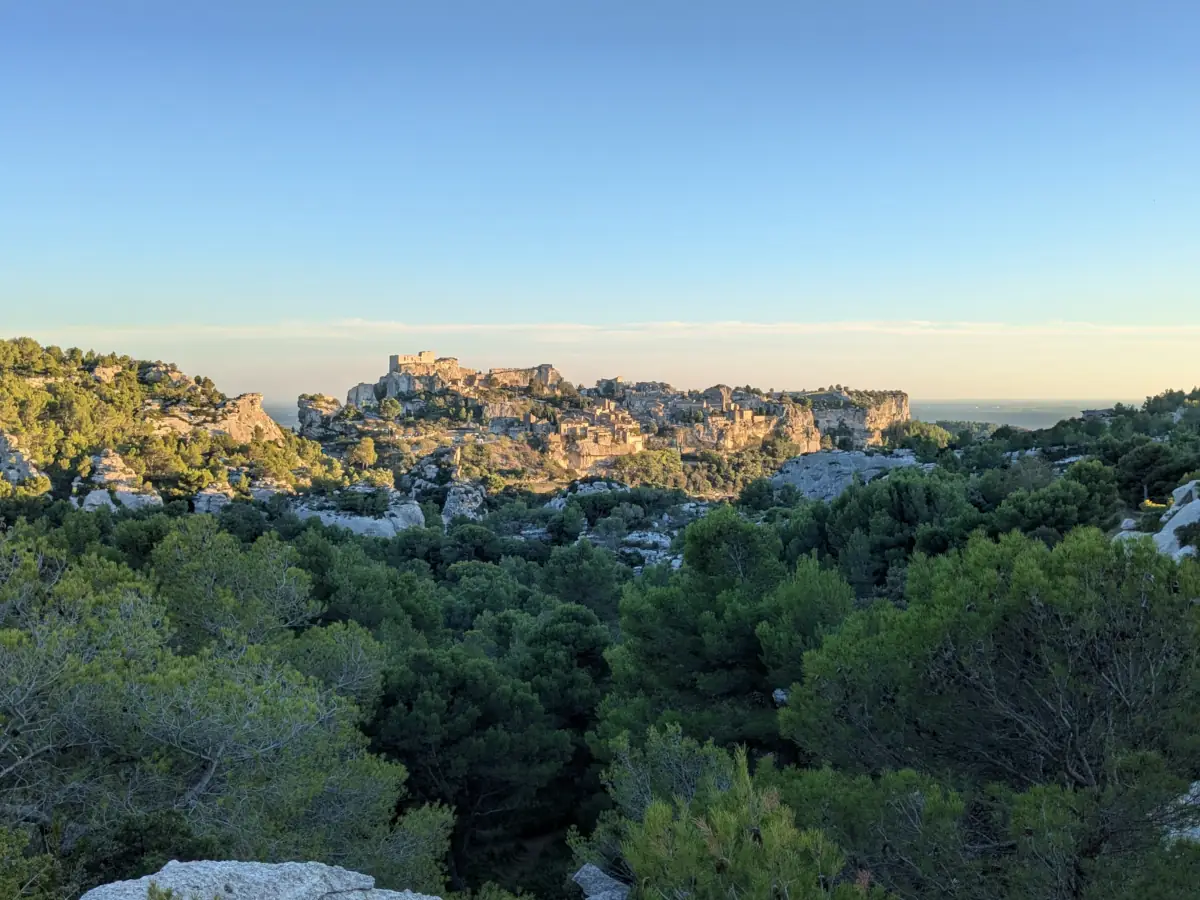
A getaway in the Alpilles
Les Baux-de-Provence, a visit to the village
Text and photographs by Vincent Flachaire
Built into the limestone cliffs, the houses and castle ruins tell the story of the lords of Les Baux and their ambitions, alongside the daily lives of the people who lived on this rock.
Through the village streets
Below the castle ruins, the streets of Les Baux lead past Renaissance houses now occupied by shops, galleries and restaurants. Mullioned windows and carved doorways reveal the care lavished on these homes, in a village more readily associated with a fortress.
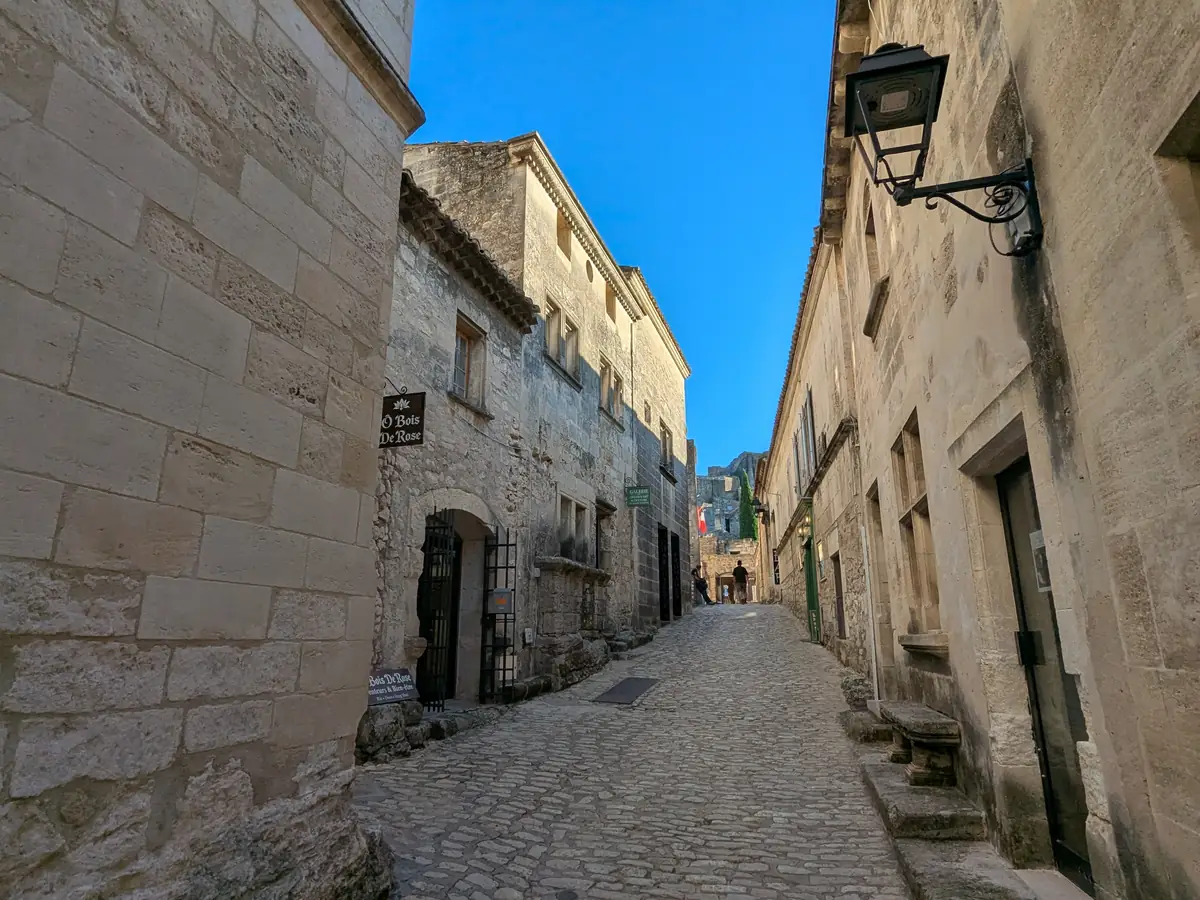
Hôtel de Manville, from private mansion to town hall
Built in 1571 for a wealthy Protestant family, the Hôtel de Manville now houses the town hall of Les Baux. Behind its façade with large mullioned windows, an arcaded courtyard reveals the elegance of this Renaissance mansion. In 1953, Prince Bianchi de Médicis de Manville donated it to the municipality to serve as its town hall.
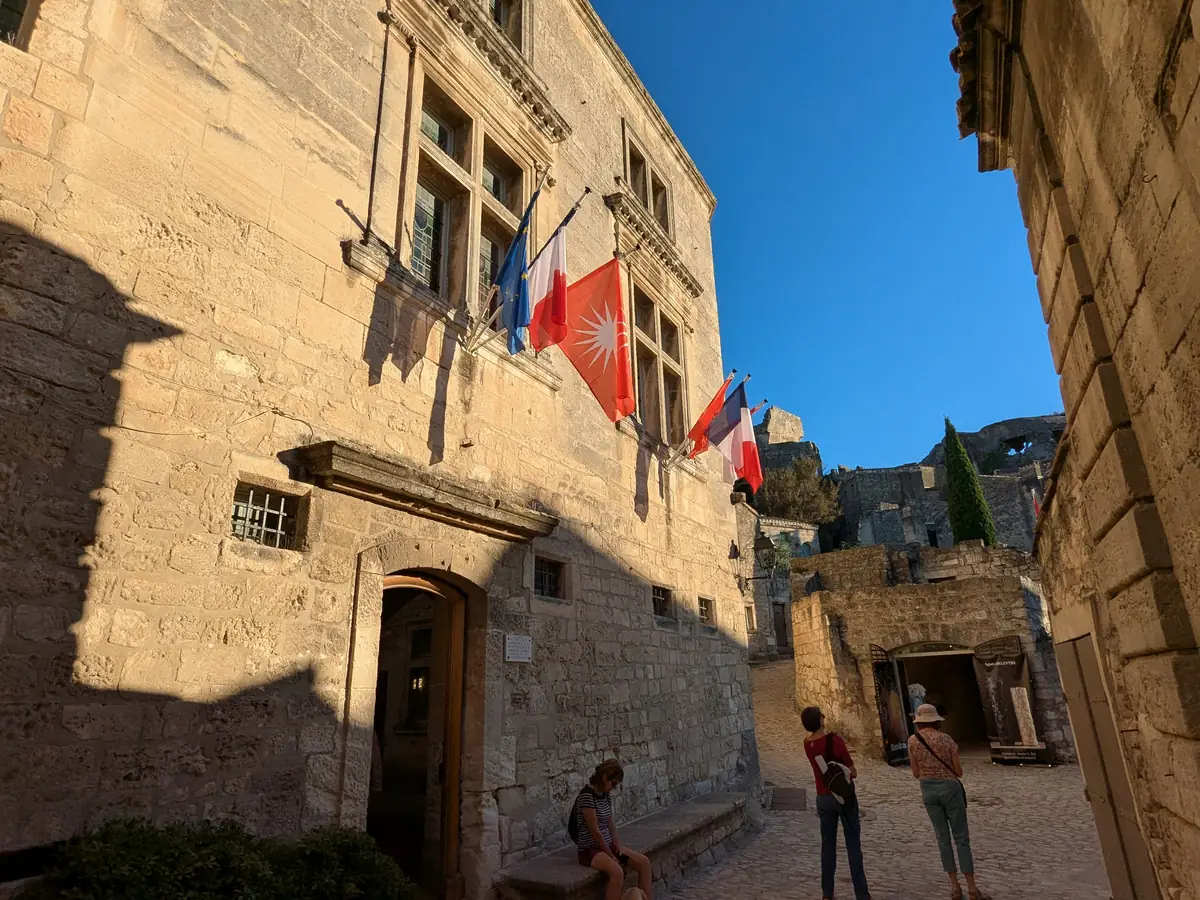
Opposite the mansion, a solitary window preserves the memory of the Brisson-Peyre residence. It bears the date 1571 and the inscription Post Tenebras Lux: “After darkness, light”. This motto associated with the Reformation recalls the important place of Protestantism in Les Baux. In the 16th century, the Manville family encouraged the spread of the Reformation here. The Protestant community also included people from the villages of the valley, as far as Maussane and Mouriès. The inscription may indicate a former place of worship.
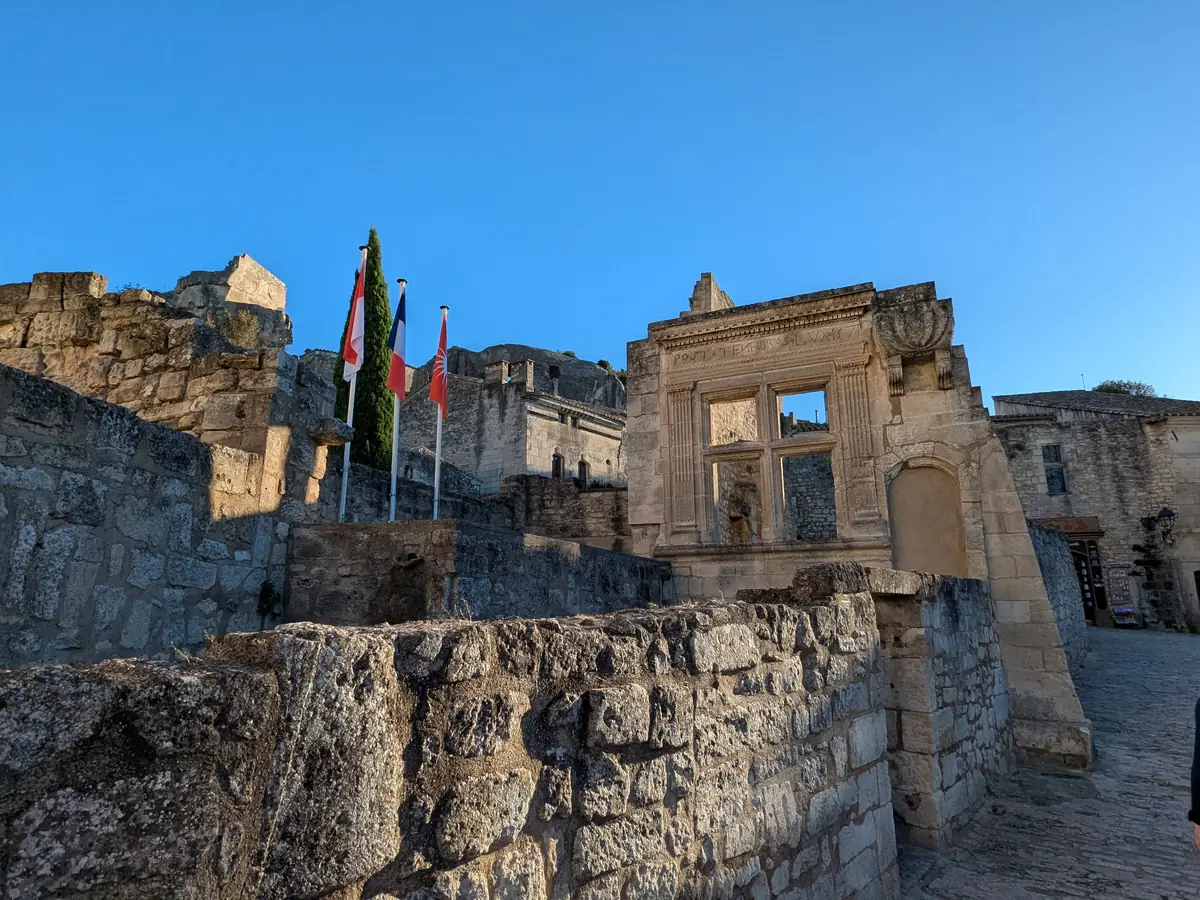
Saint-Vincent, a church built into the rock
Place Saint-Vincent brings together the church, the Chapel of the White Penitents and the façades bordering this square overlooking the landscape. The 12th-century church has a feature not immediately apparent from its façade: its southern section is partly hollowed out of the rock.
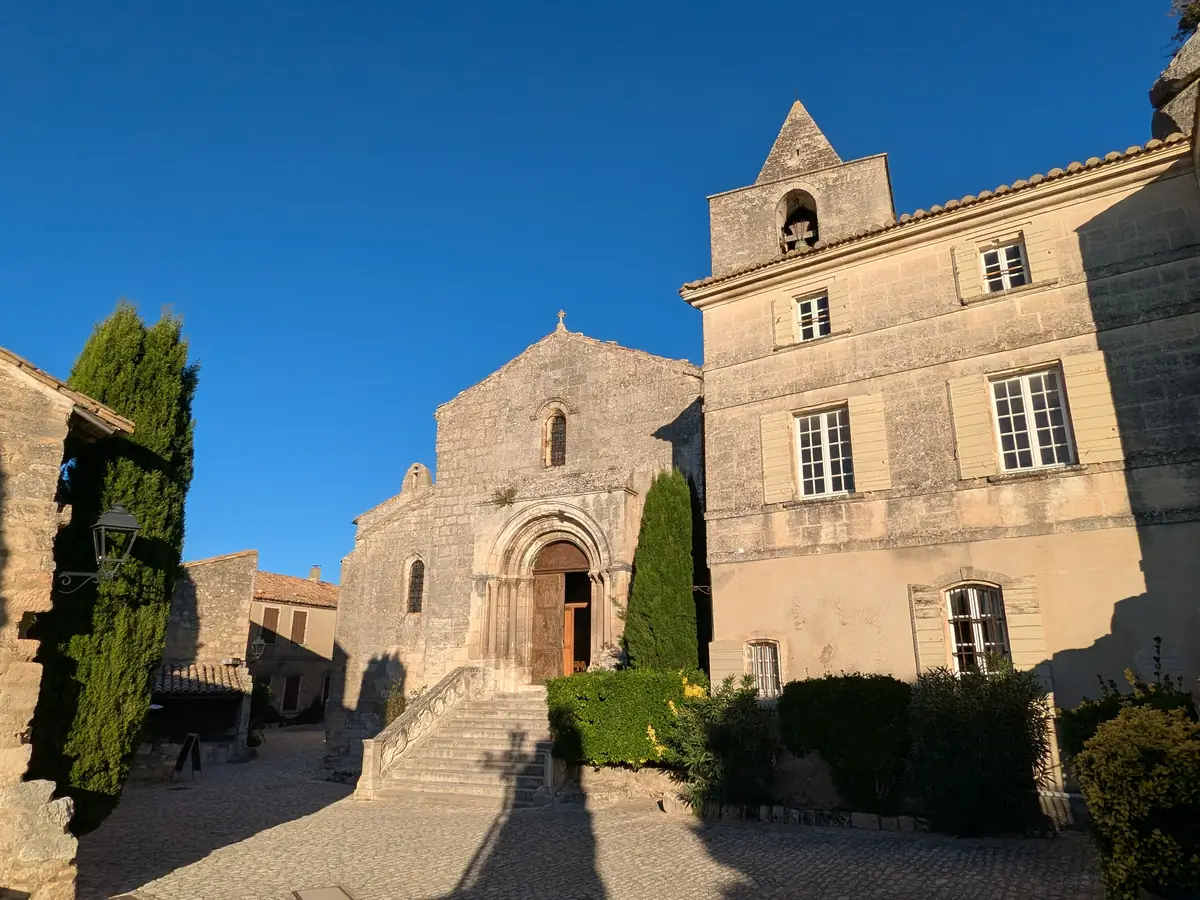
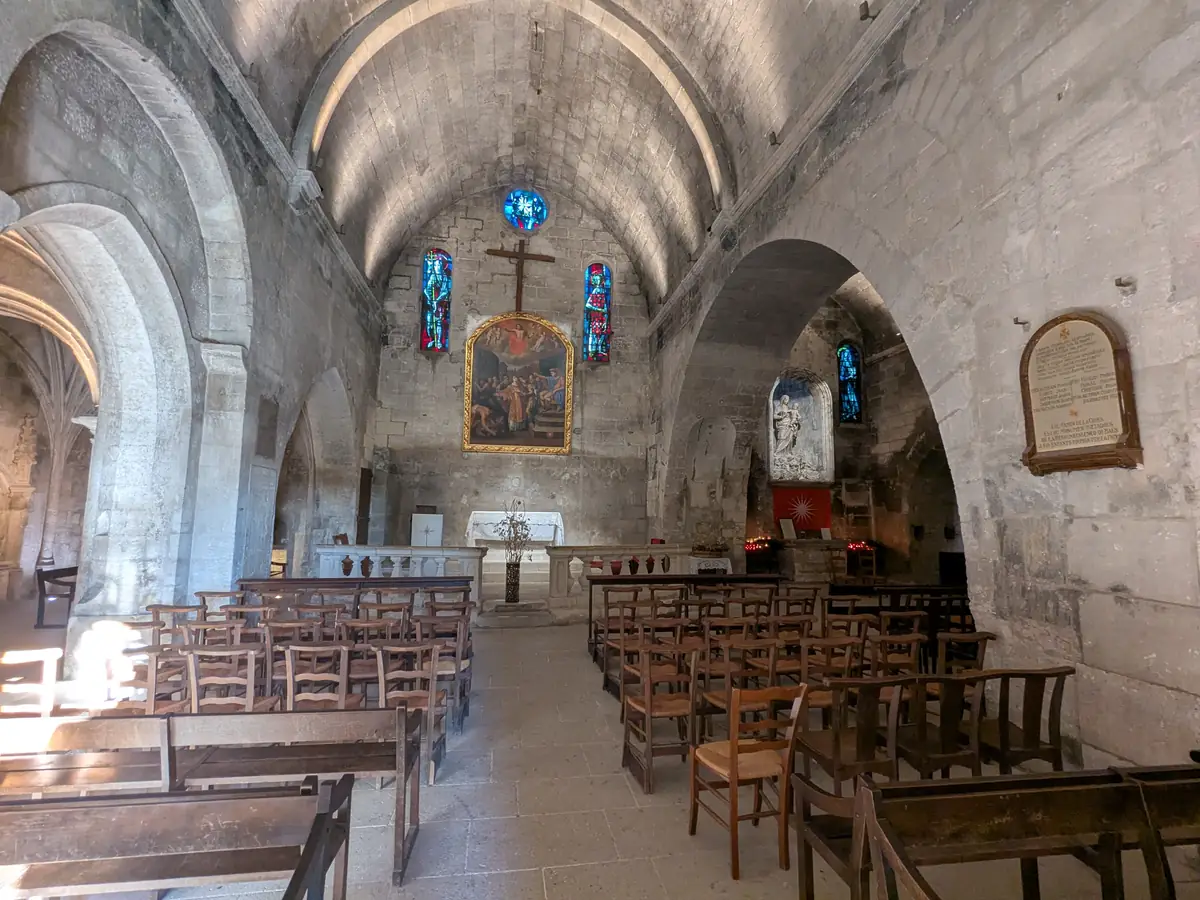
Inside, stone vaults stand alongside modern stained-glass windows by Max Ingrand, donated in 1962 by Prince Rainier III of Monaco. This gift continues a relationship dating back to 1642, when Louis XIII made Les Baux a marquisate for Hercule Grimaldi, son of Prince Honoré II.
The rock-cut chapel houses the cart used for the pastrage ceremony. During Midnight Mass, villagers perform a living Nativity scene accompanied by Provençal carols. The head shepherd, known as the bayle, presents the flock’s youngest lamb, resting in this little cart, to the Christ Child. This offering carries on the pastoral tradition of Les Baux; the galoubet pipe and tambourin drum accompany the carols during the Christmas Eve vigil.
Costapéra, the windmill and water
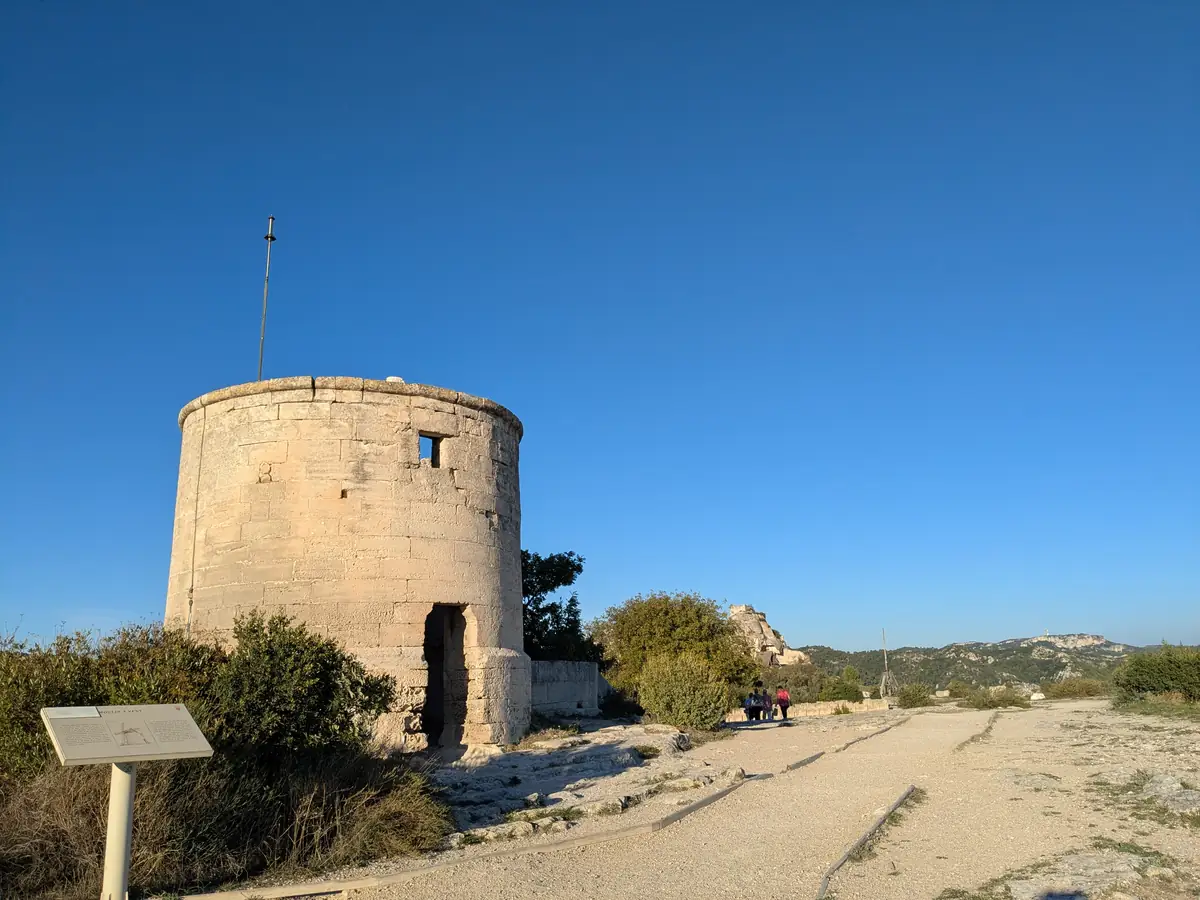
On the way to the Costapéra plateau, the streets give way to a rocky expanse exposed to the wind. The mill recalls how these heights also helped feed the village. Farmers arrived with donkeys loaded with wheat and left with flour, paying a fee to use the mill.
The surviving tower bears the date 1652. It belongs to the period following the destruction of the earlier mills of the castle and village in 1632.
Water presented another challenge. The upper town had neither a well nor a spring: residents collected rainwater in cisterns or went down to fetch water in the valley. Below the mill, a large paved surface, known as an impluvium, collected rainwater. The ground you walk across therefore helped supply the village.
The castle after the sieges
From the plateau, the castle’s towers and walls stand out among the limestone formations. The lords of Les Baux used the rock’s natural defences to establish a powerful fortress.
In 1631, insurgents who had taken refuge in Les Baux prompted another siege by royal troops. After twenty-seven days of resistance, the stronghold surrendered. Exhausted by wars and pillaging, the inhabitants themselves asked for the ramparts to be dismantled. Those defences had also become a cause of renewed fighting.
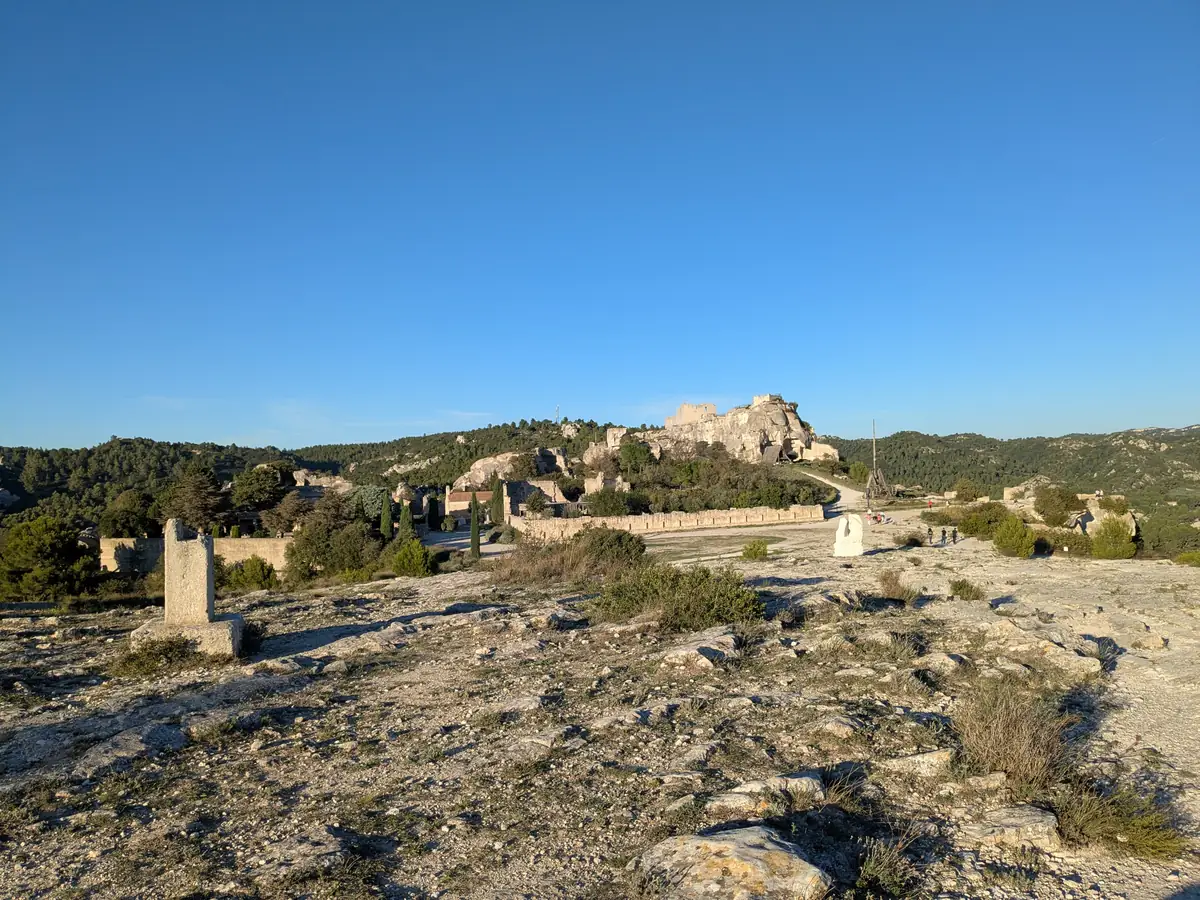
Today’s ruins are the result of this history as much as the passage of time. A visit to the castle extends the walk among the remains of homes, defensive structures and features cut into the rock.
The farmland of the valley
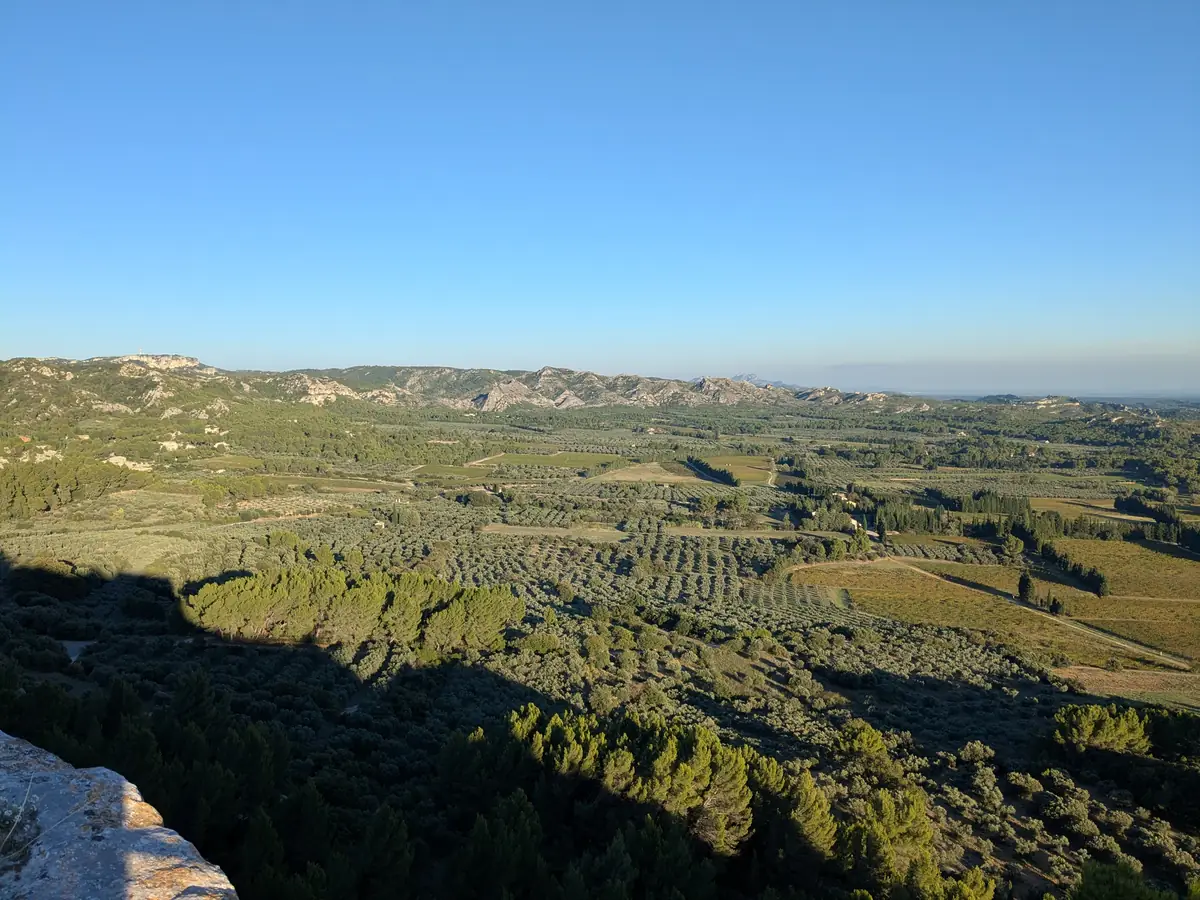
From the heights, olive groves and vineyards form a patchwork among the hills of the Alpilles. The valley’s harvests helped supply the people living on the rock.
The monument to Charloun Rieu also recalls this rural Provence. A farmer and poet from Le Paradou, he wrote in the local Provençal language. Sculptor Louis Botinelly created this monument to him in 1930, facing the landscapes he knew.
The Eyguières Gate
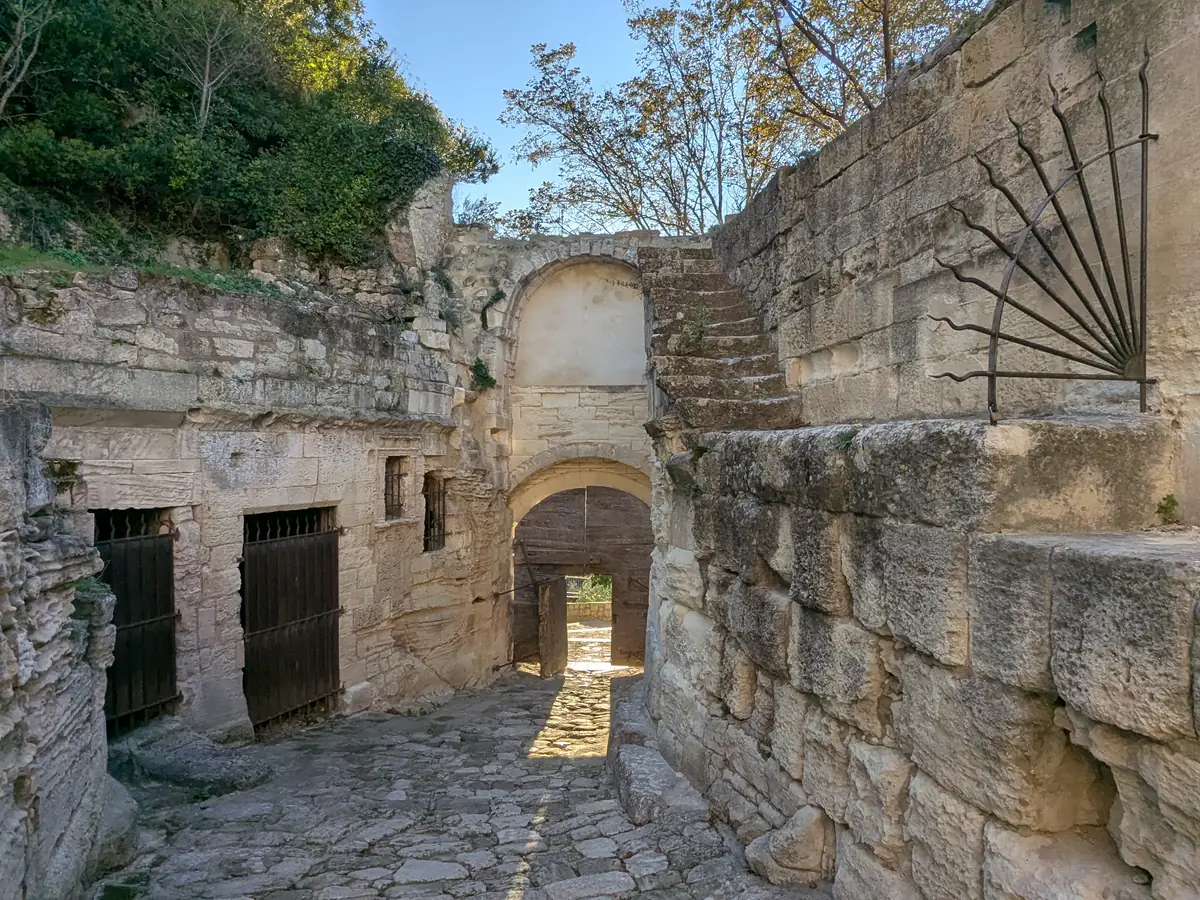
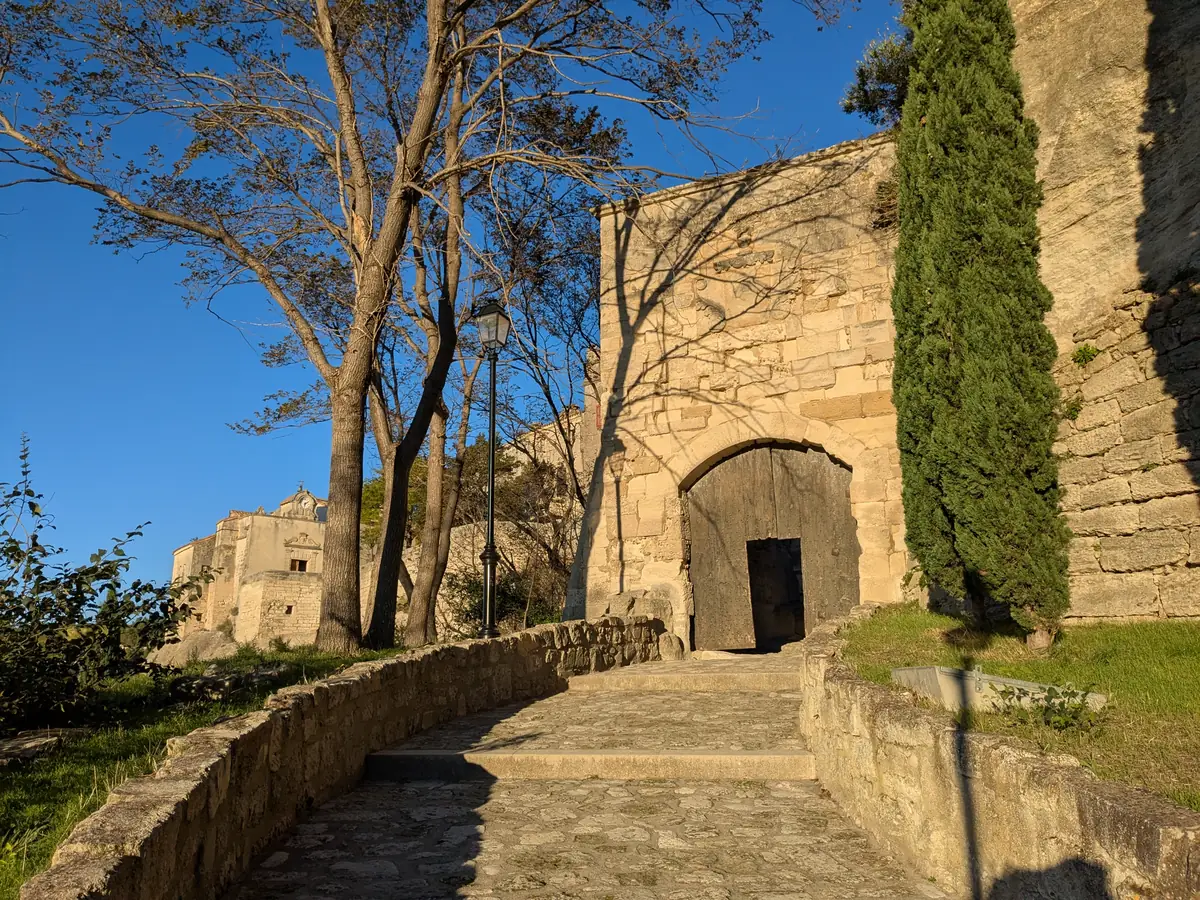
The walk returns to the cobbled passages leading to the Eyguières Gate. Until 1866, this “water gate” was the village’s only entrance. Residents passed through it on their way to the springs in the Vallon de la Fontaine.
The Grimaldi coat of arms survives above the opening. It recalls Louis XIII’s gift of the fief of Les Baux to Honoré II of Monaco in 1642.
Explore more of the Alpilles
Around Les Baux, roads cross the olive groves towards Le Paradou, Maussane and Fontvieille. Continue exploring at Daudet’s windmill or Saint-Gabriel Chapel, then head to Saint-Rémy-de-Provence, its Roman monuments and the streets of its old town.
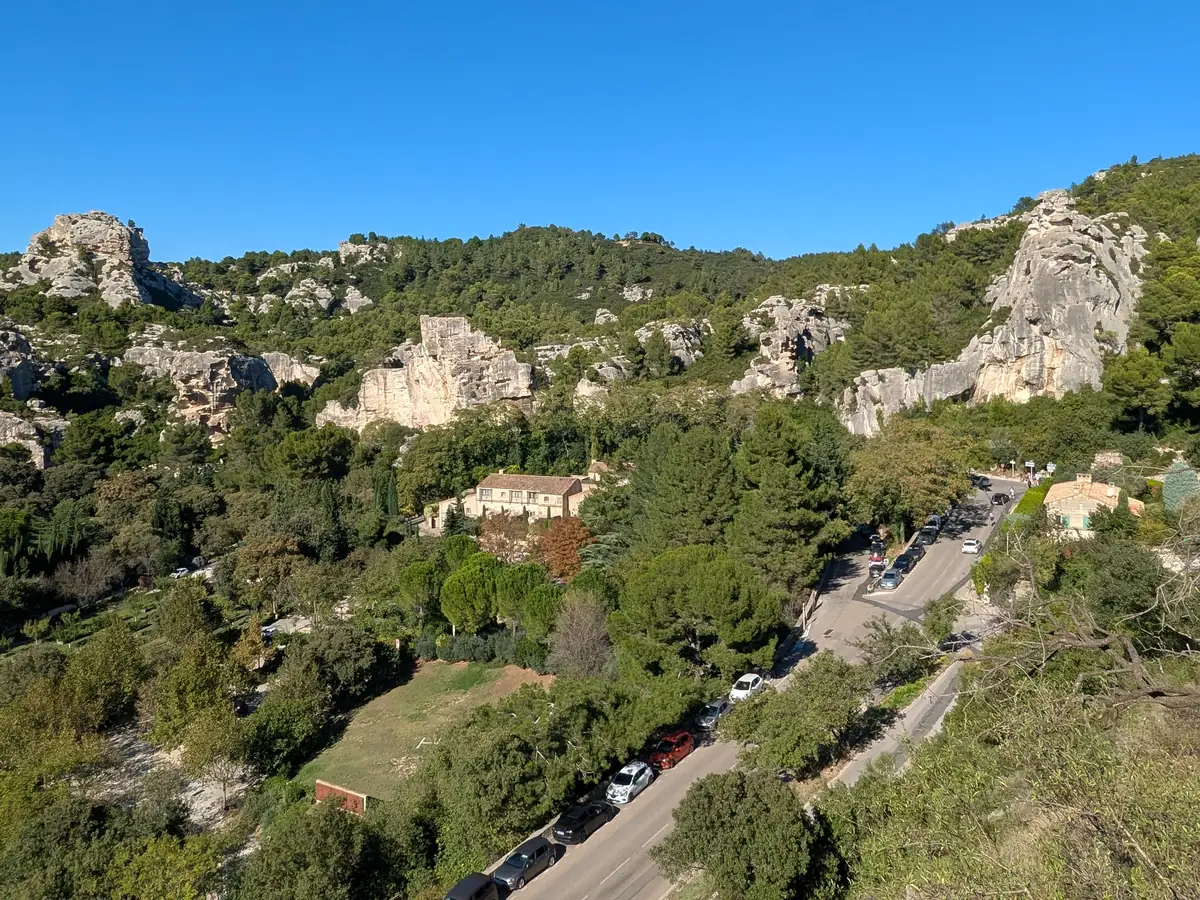
The Val d’Enfer also offers other views of the village and its cliffs.
Practical information
Visiting Les Baux-de-Provence
- Walk and suggested duration
- Allow around two hours to explore the village and the Costapéra plateau, with breaks and photo stops. Add extra time for visits to the castle or museums.
- Getting here and parking
- The village is explored on foot. Paid municipal car parks are located around the rock. Check the access and parking information before your visit.
- Castle and museums
- A separate ticket is required to visit the fortress; walking through the village does not include admission. Find opening times and tickets on the Château des Baux website.
- The Musée Yves Brayer presents paintings and exhibitions in the Hôtel de Porcelet.
- The Musée des Santons explores Nativity scenes and Provençal traditions.
- The Louis Jou Foundation is devoted to books, engraving and typography, with visits on request. Check the museums’ opening arrangements before your visit.
- What to bring and when to visit
- Wear shoes suitable for cobbles, steps and uneven rock, and bring water and sun protection. The plateau is exposed to the wind.
- Les Baux-de-Provence can become overcrowded, particularly in summer, during school holidays and on long weekends. For a quieter visit, choose a weekday outside school holidays, especially in autumn or winter, and come early in the morning or towards the end of the day.
To plan your stay: Les Baux-de-Provence tourist office.
Extend your stay
Guest houses around Les Baux and in the Alpilles
Staying around Les Baux gives you time to explore the villages and landscapes of the Alpilles. Discover guest houses and visit the owners’ websites directly.
These properties listed on the Portal are within 25 km as the crow flies of the location featured in this getaway. Visit their websites to plan your stay.

Mas des Marguerites
Charming Bed and breakfast
Maussane les Alpilles
Visit website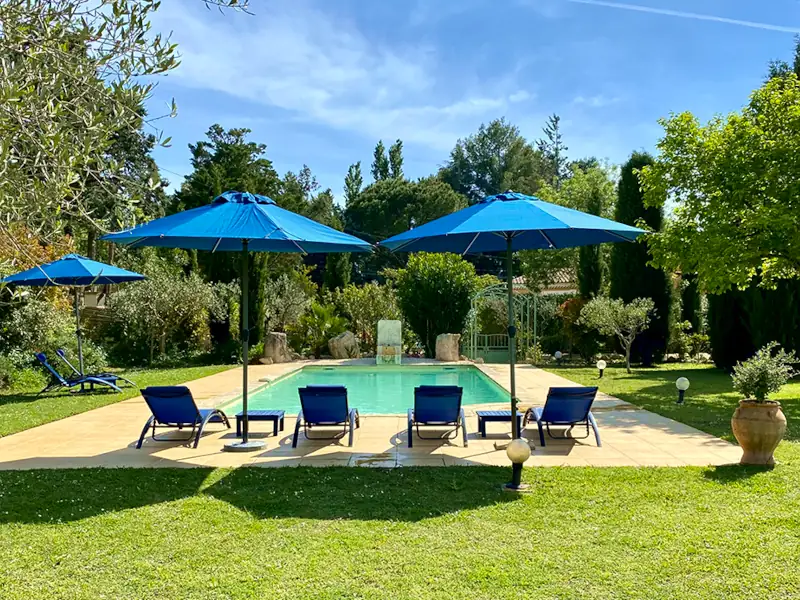
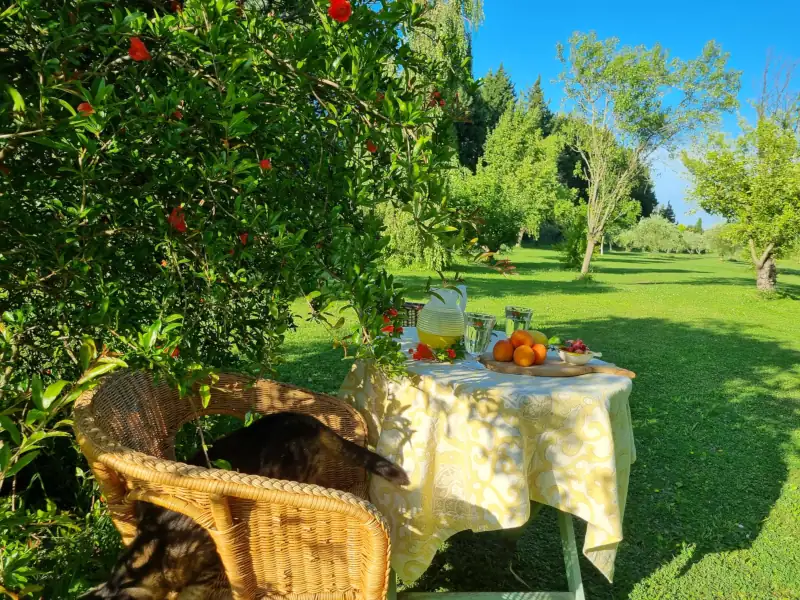
Au Coeur des Alpilles
Charming bed and breakfast
Maussane-les-Alpilles
Visit website
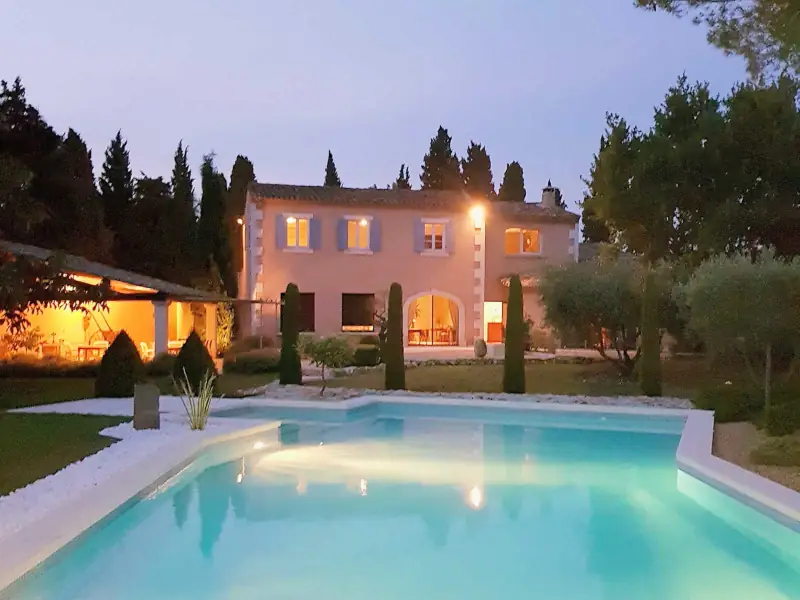
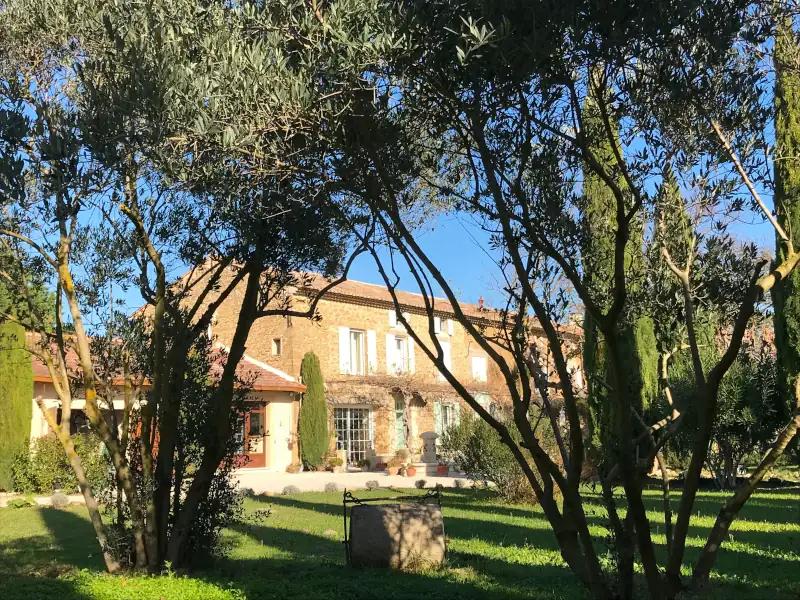
Fontaine des Magnarelles
Charming Bed and breakfast
Althen des Paluds
Visit website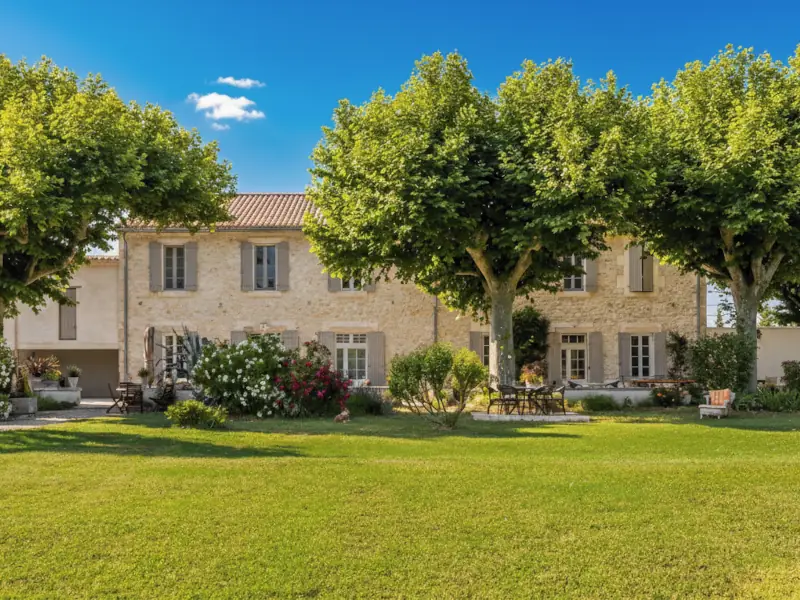
La Bastide des Amouriers
Charming bed and breakfast and Gite
Caumont-sur-Durance
Visit website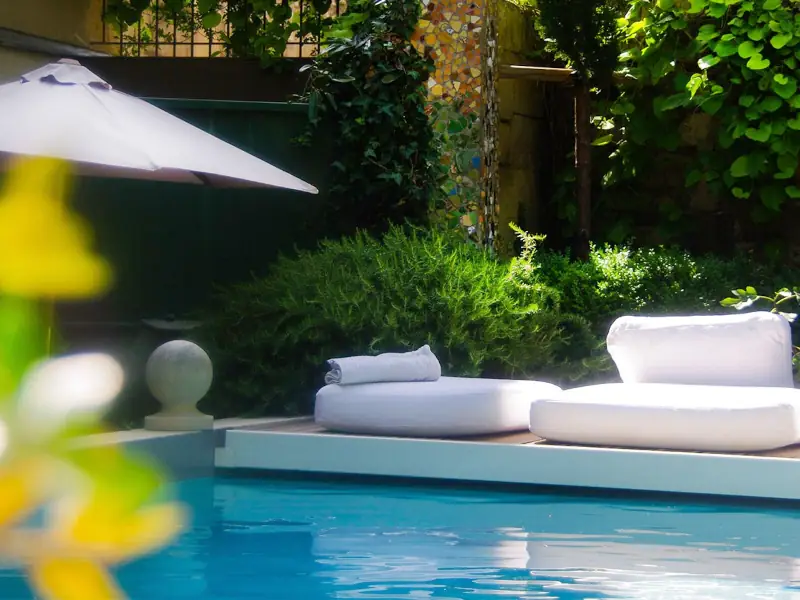
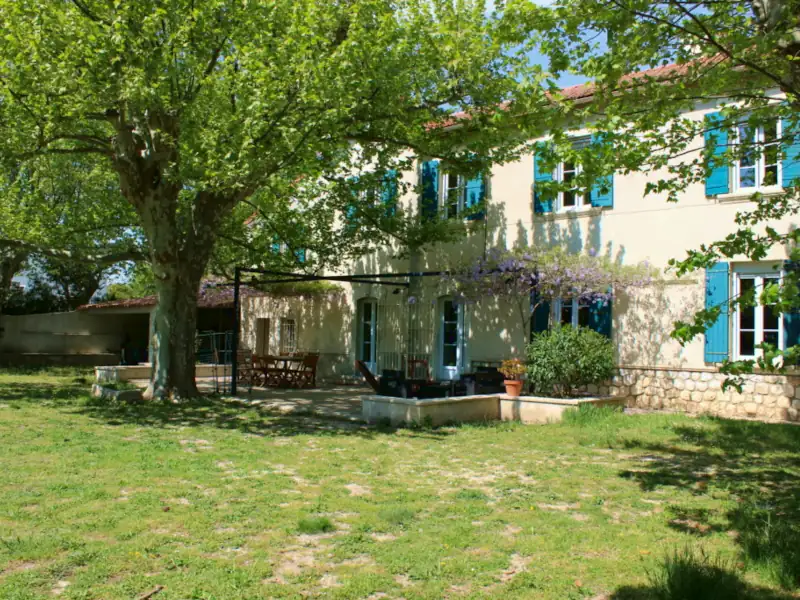
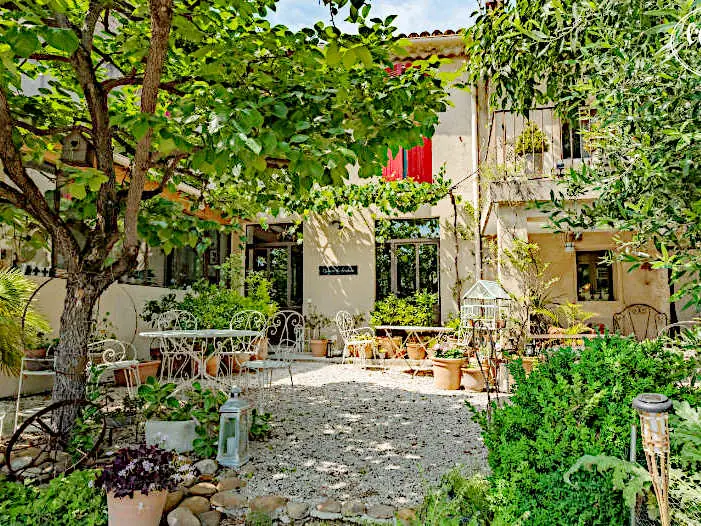
L'Oréliane
Charming Bed and breakfast
Châteauneuf de Gadagne
Visit website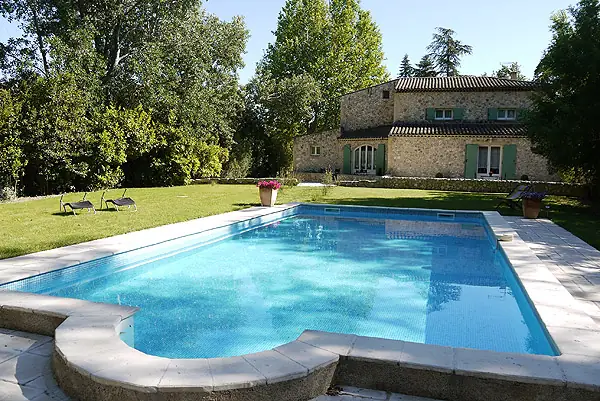
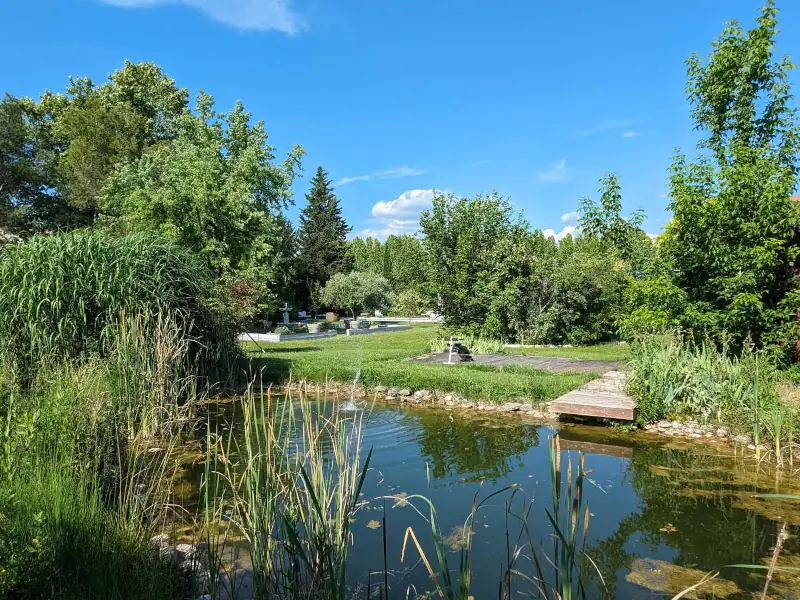

La Bergerie du Luberon
Charming holiday home
Les Taillades
Visit website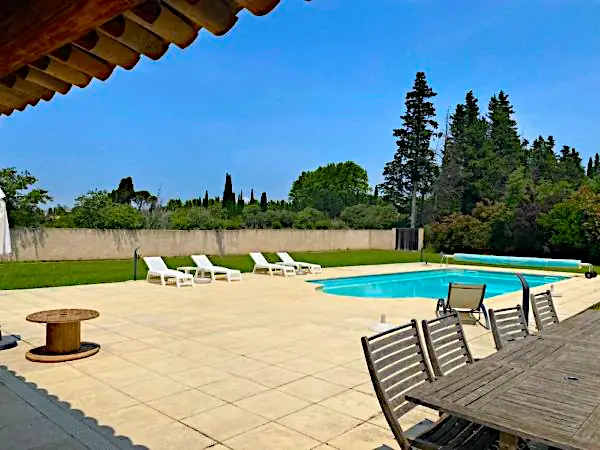
Le Pavillon du Lantana
Holiday home
Les Taillades
Visit website