


A getaway in the Dentelles de Montmirail
Gigondas, from the village to the castle vineyards
Text and photographs by Vincent Flachaire
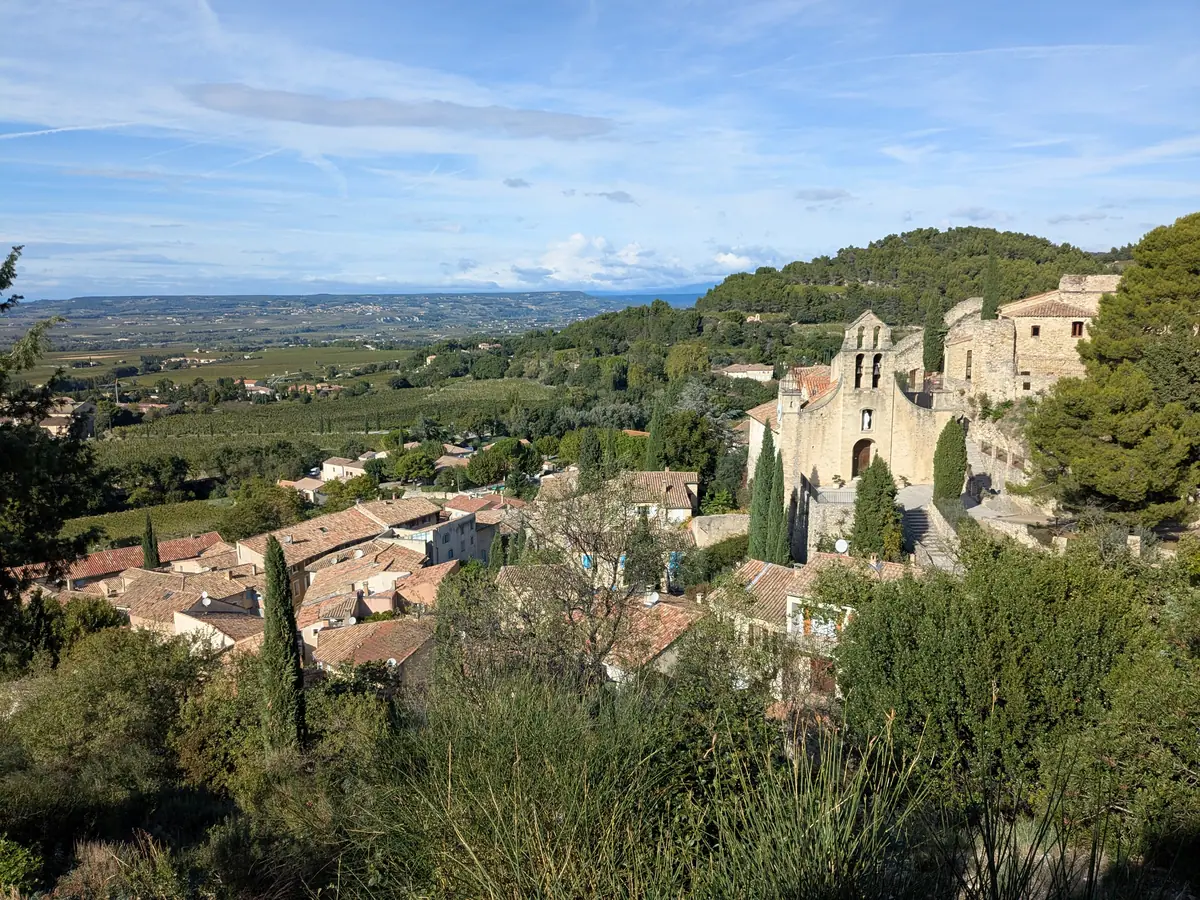
In Gigondas, rows of vines stretch right behind the castle ruins. From the path up from the village, you look out over the rooftops and across the vineyards of the Ouvèze plain.
Taste the village wines on the square
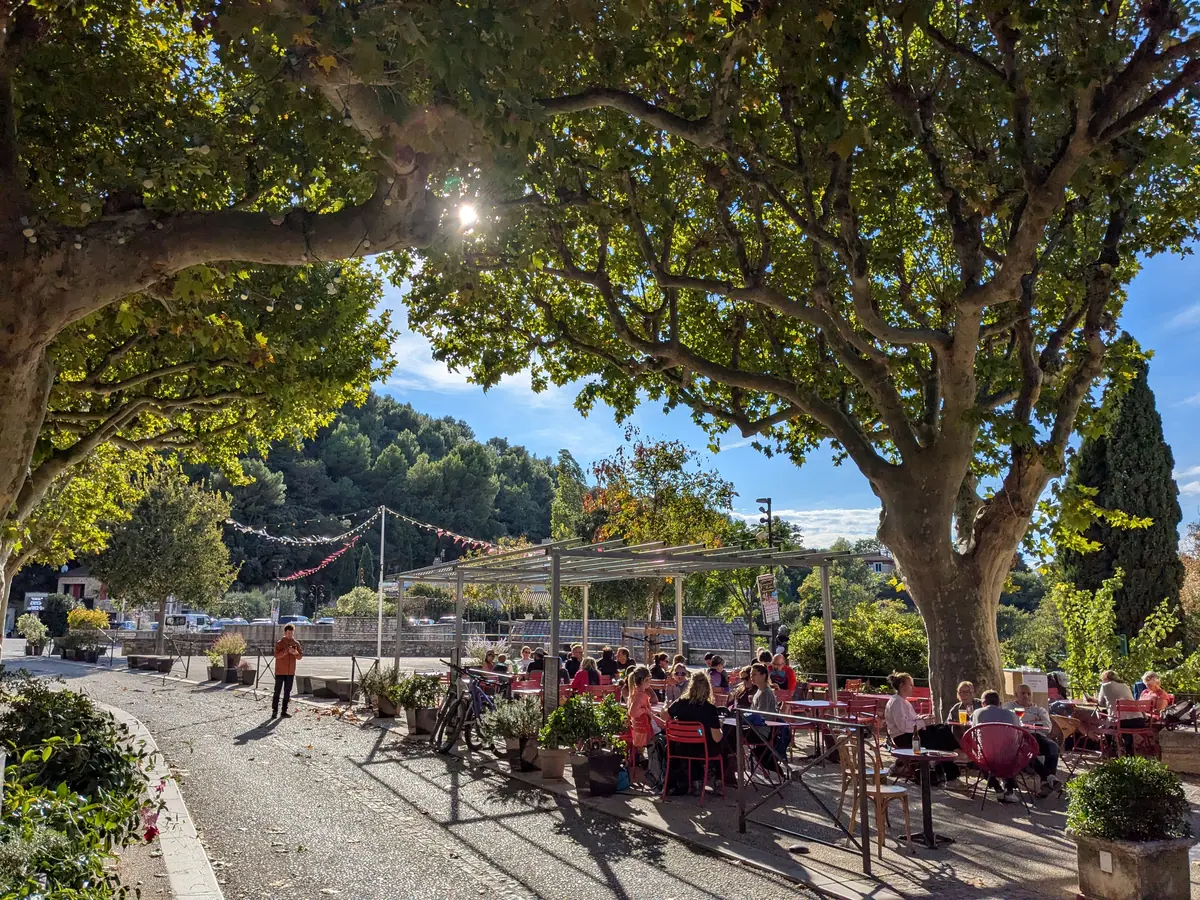
Under the plane trees of Place Gabrielle Andéol, café tables face the village houses. The wine cellar, which opened in 1972, brings together wines from many producers. You can compare wines made from grapes grown on the plain and on the hillsides.
Gigondas wine
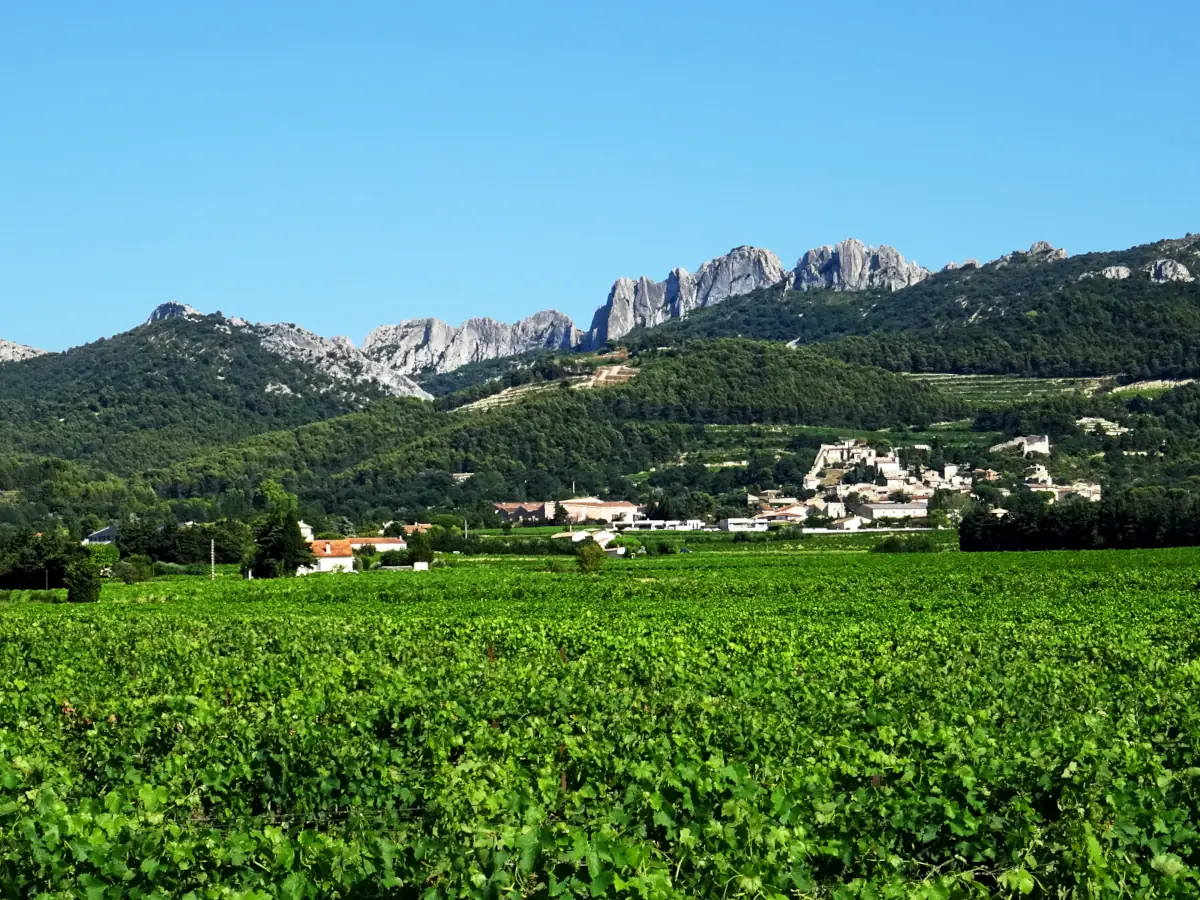
Below the village, rows of vines spread out across the plain. On the slopes of the Dentelles, some are planted on terraces.
In 1956, a severe frost devastated the olive groves. Vines replaced some of the olive trees, and that same year local winegrowers founded the cooperative winery.
In 1971, Gigondas gained its own appellation for red and rosé wines. White Gigondas has been available since the 2023 vintage and is made mainly from Clairette.
The old gateways and Sainte-Catherine church
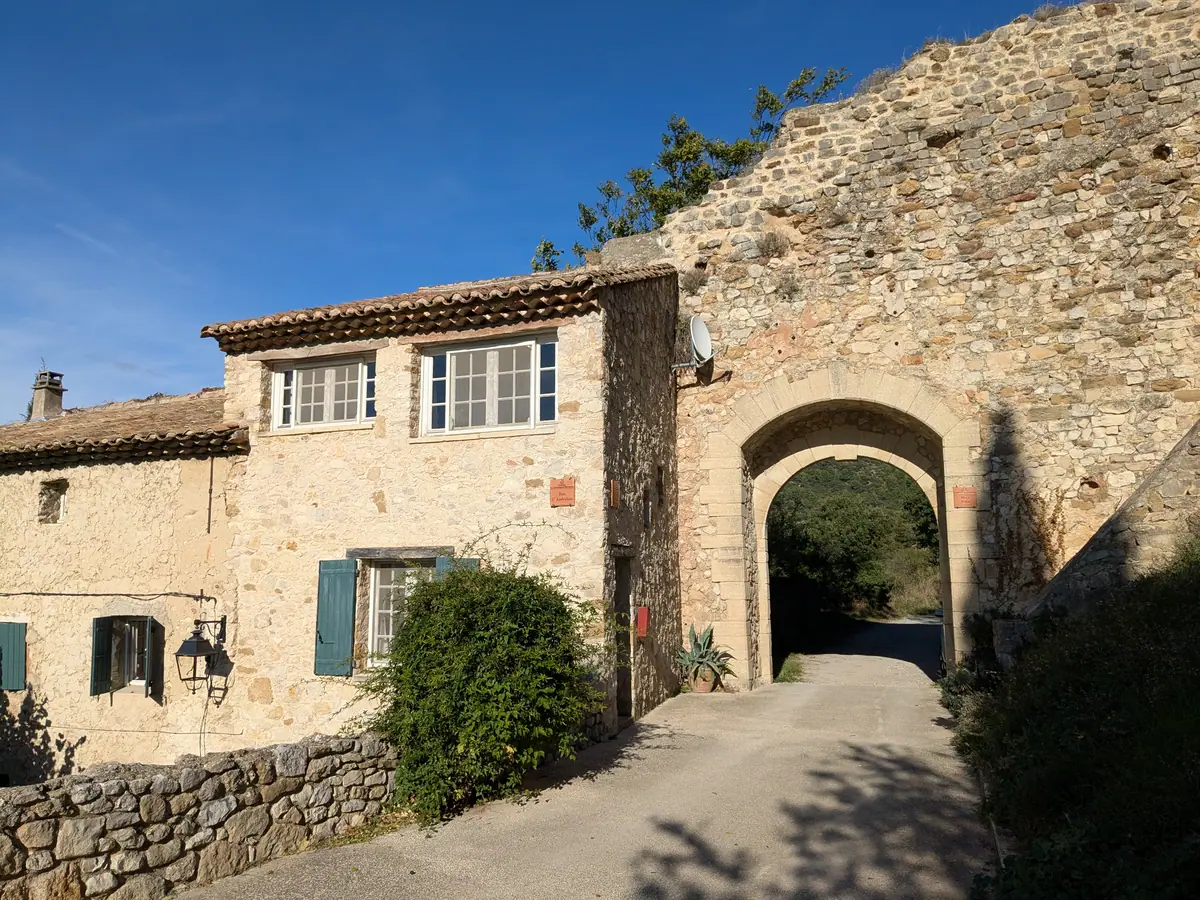
Above the square, the houses climb a hillside of the Dentelles de Montmirail. An arched gateway still leads through the rampart. In the Middle Ages, Gigondas belonged to the Princes of Orange. In 1341, Raymond V des Baux granted the villagers certain freedoms in exchange for a levy on their wine.
A stone staircase leads up to Sainte-Catherine church. On the classical façade, the belfry clock and the sundial flank the bell gable.
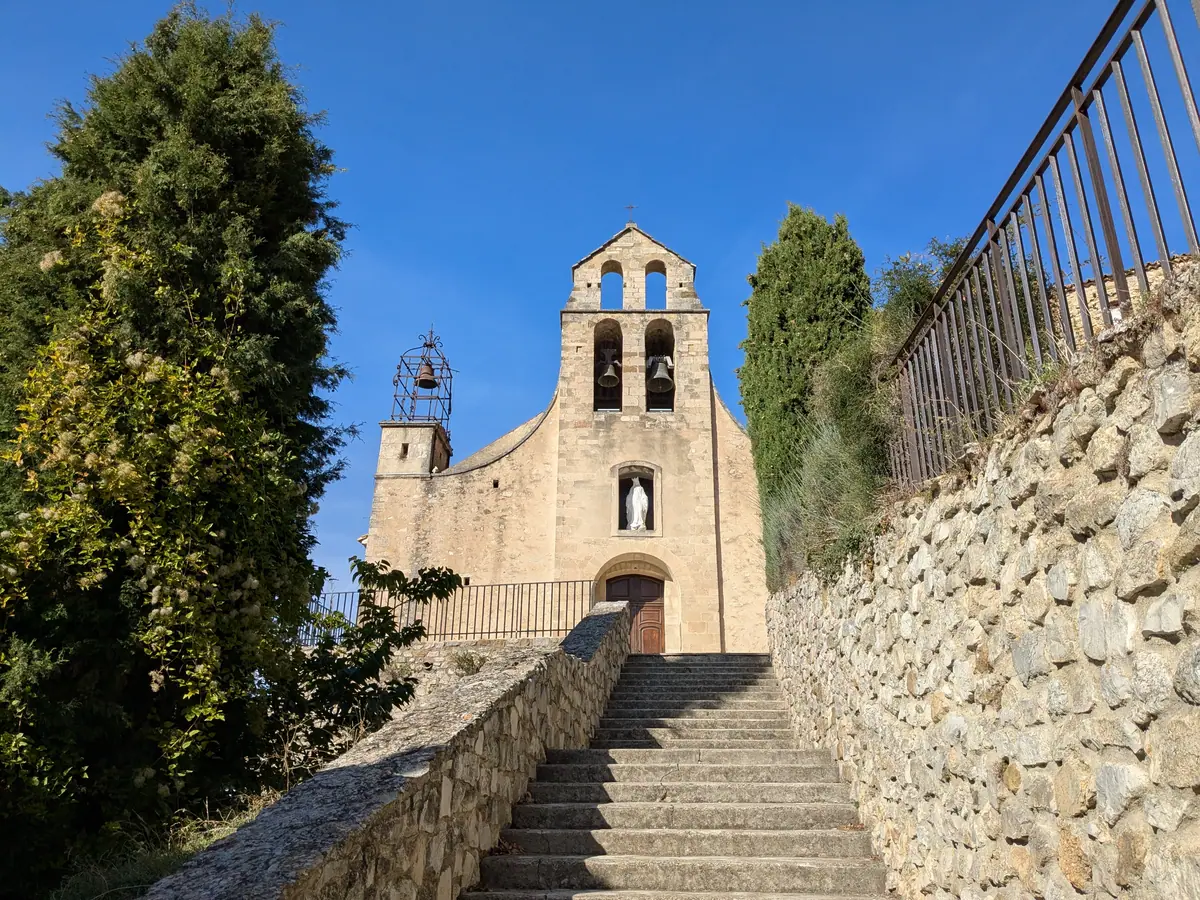
During the French Revolution, Sainte-Catherine became a Temple of Reason. The gilded wooden statues of Saints Cosmas and Damian, attributed to Jacques Bernus, survived that period. A Romanesque chapel outside the village is dedicated to the two saints.
The former hospice, from fortified house to sculpture gardens
Above Sainte-Catherine, the former hospice occupies a fortified house once known as the Château Neuf. In 1678, Father Albert founded a confraternity there to help the poor. The building became a hospice, then a girls’ school, before falling into disuse.
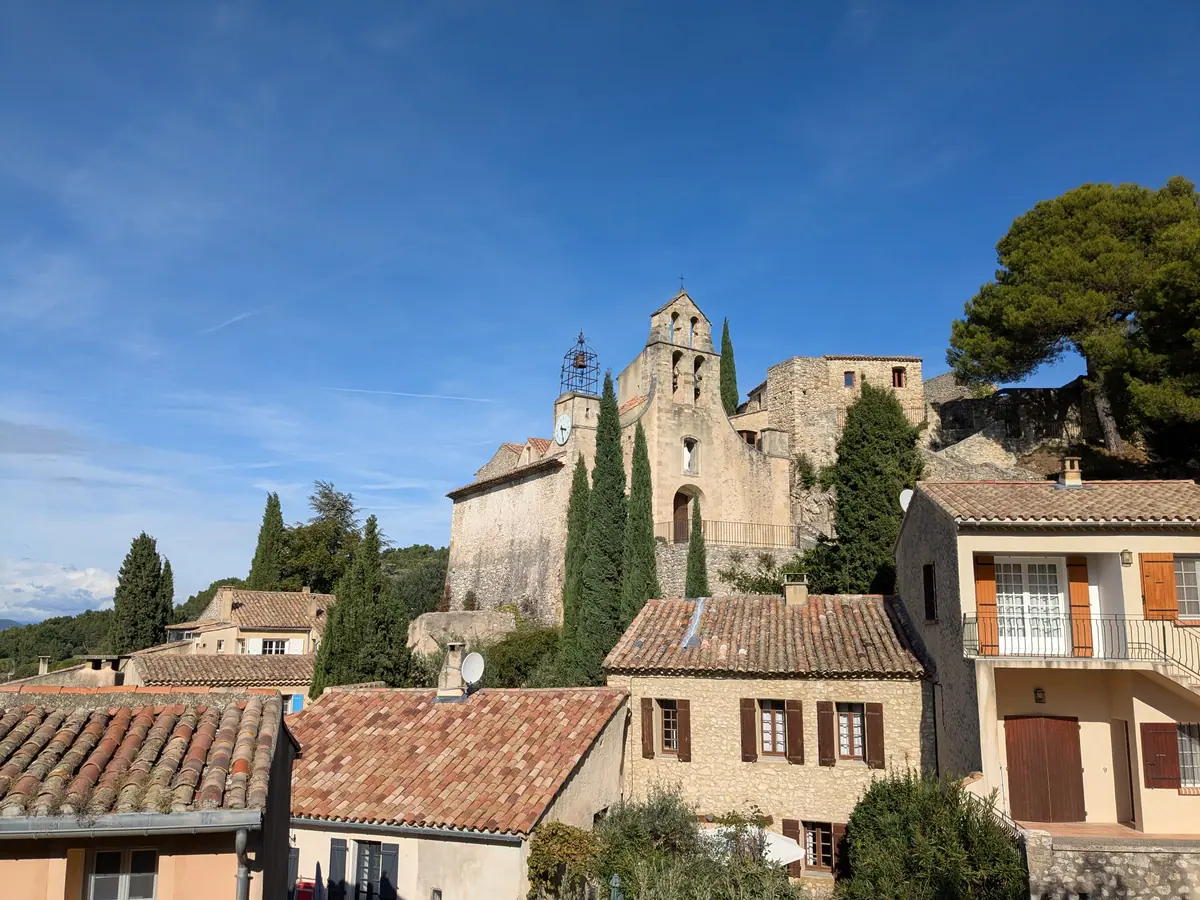
In the 1980s, a local association organised volunteer work to restore the ruined buildings. From 1994 to 2023, the terraces and gardens were home to an outdoor sculpture trail.
The vines on the castle terraces
Above the houses, a botanical trail climbs to the castle ruins. As you go up, the rooftops give way to the vineyards of the Ouvèze plain. Upstream, the river passes beneath the Roman bridge at Vaison-la-Romaine before eventually joining the Rhône near Sorgues, between Avignon and Châteauneuf-du-Pape.
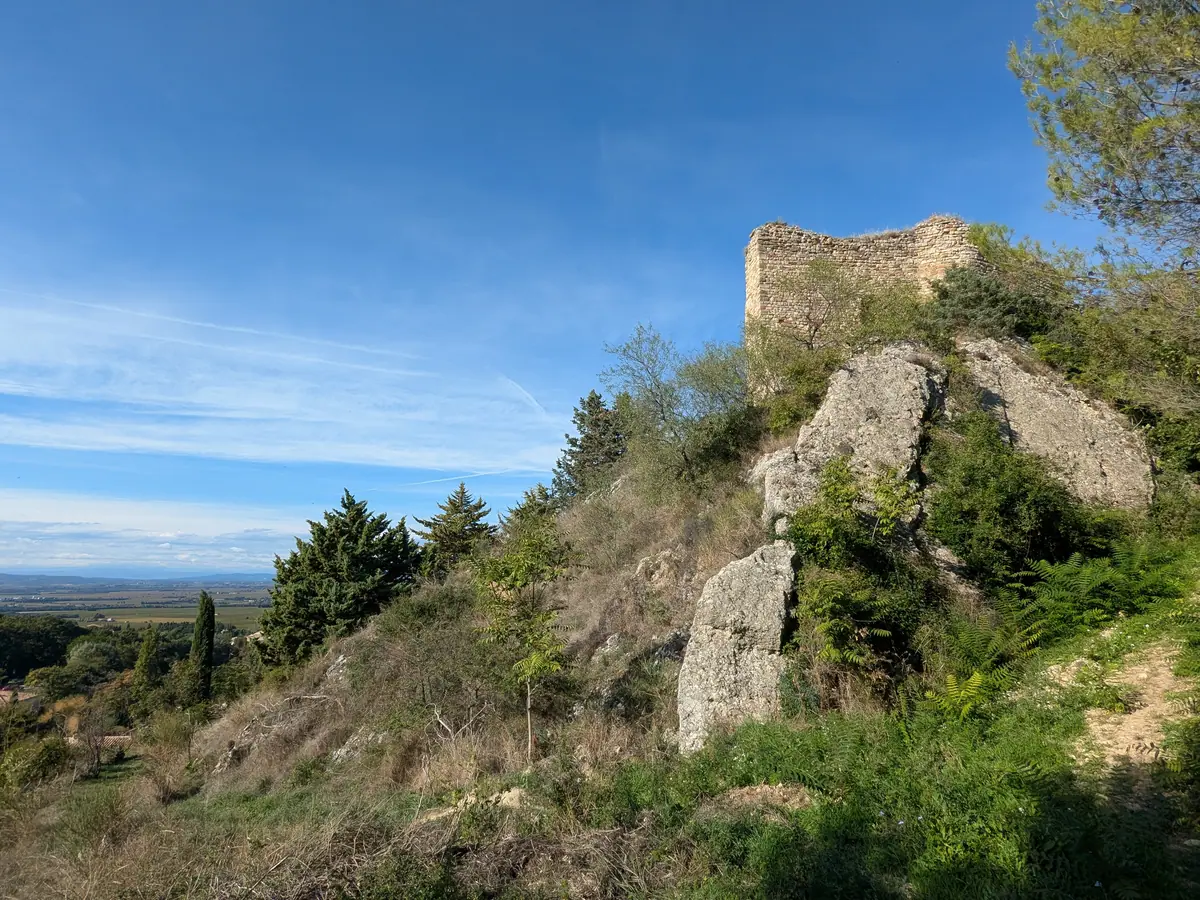
Low stone walls along the trail hold back small planted terraces. Here you can see wild vines, table grape varieties and wine grapes such as Grenache, Syrah and Mourvèdre.
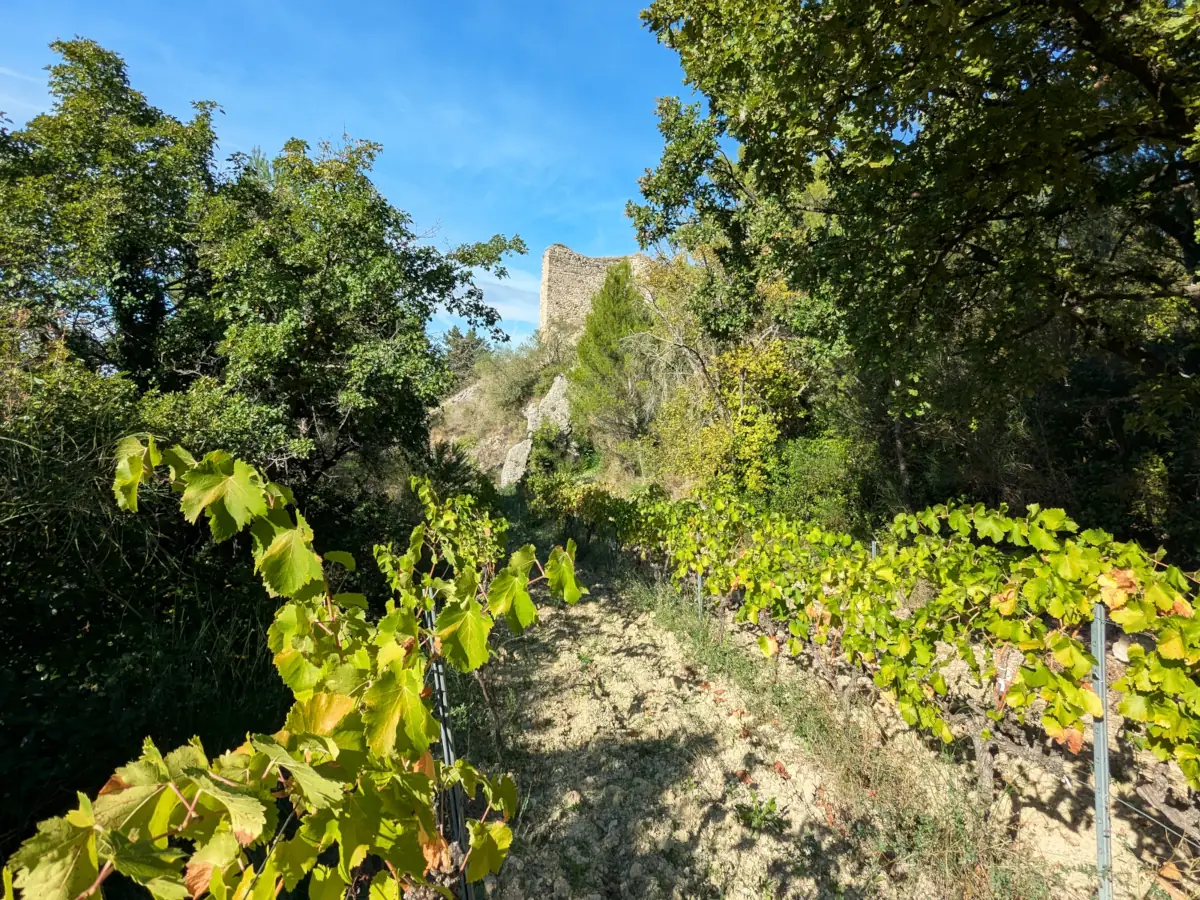
The trail also introduces plants once used in winemaking. An information panel mentions fenugreek, which was used to coat the inside of amphorae to help preserve wine.
Towards Saint-Côme, below the Dentelles
On the road to the Col du Cayron, the Chapel of Saints Cosmas and Damian stands apart from the village houses. This 12th-century Romanesque building has an unusual shape. The former transept now serves as the nave, and the present entrance was cut through one of its walls.
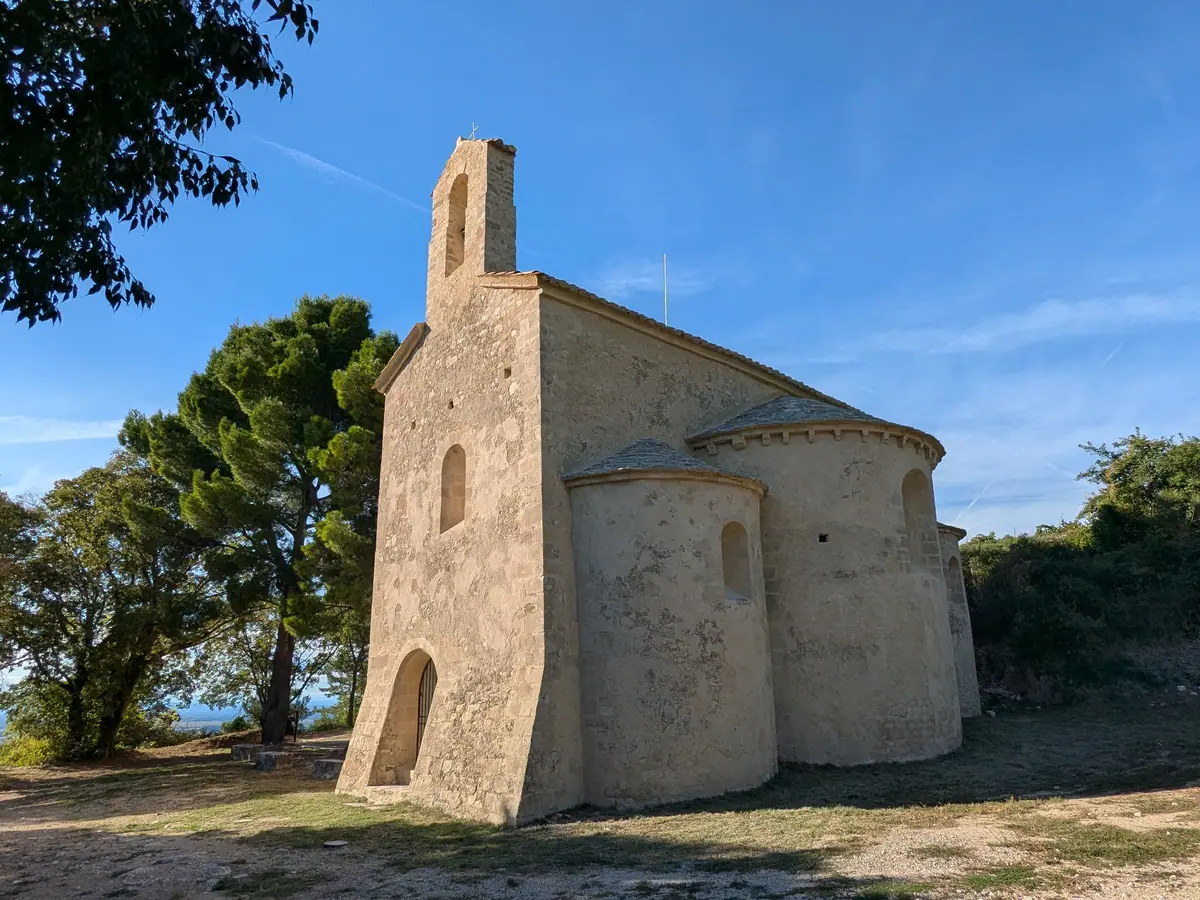
Walk around the east end to look for letters and signs carved into some of the stones. The marks identified the work of individual stonemasons.
Gigondas from above
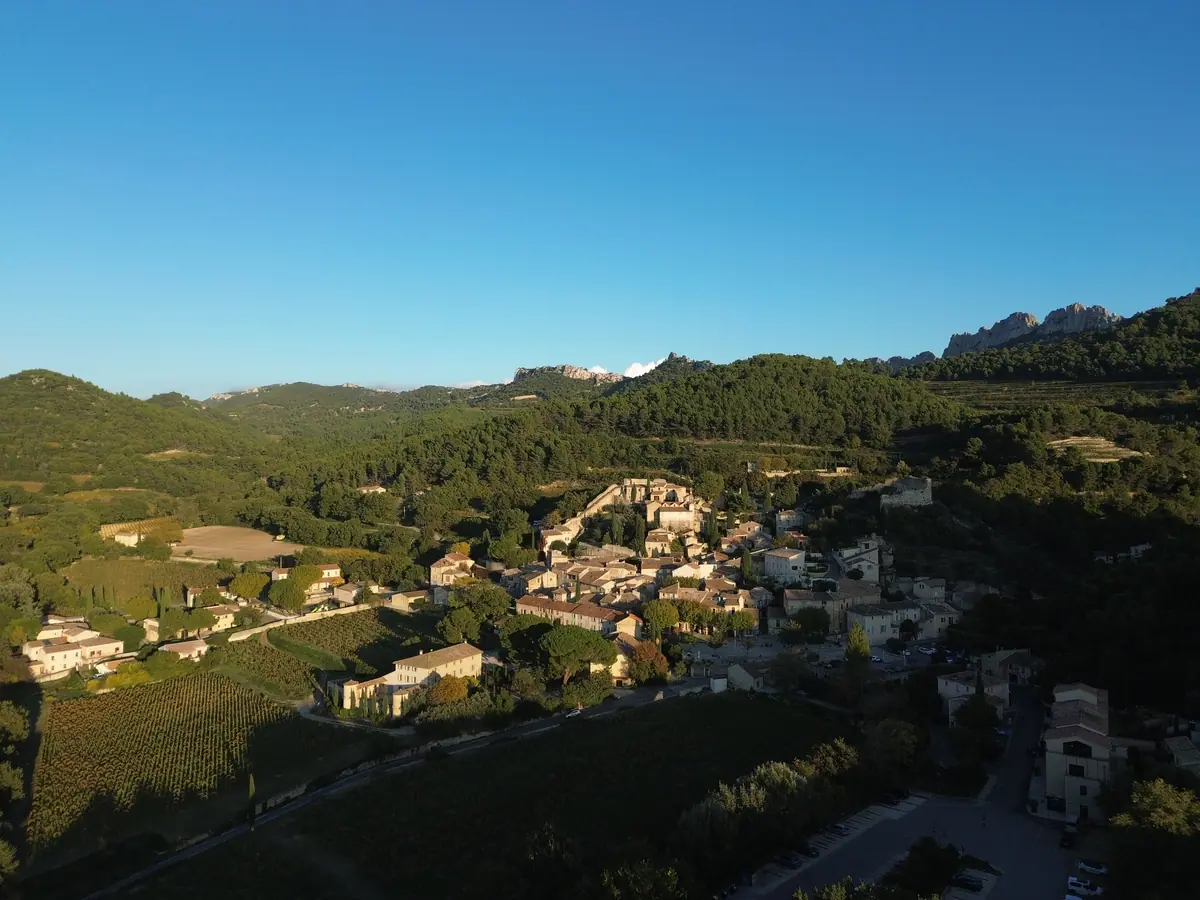
From above, Gigondas spreads up the hillside between vineyards and woodland, beneath the ridge of the Dentelles Sarrasines.
Explore further
To continue exploring the vineyards of the Rhône Valley, head to the old village of Cairanne, where the Dentelles rise beyond the vines. Further south, the castle of Châteauneuf-du-Pape overlooks vineyards that slope down towards the river. Below the castle, lanes lead to the Grande Fontaine and the wine cellars.
For a glimpse of Roman Provence, walk from the triumphal arch to the ancient theatre in Orange, or cross the Roman bridge at Vaison-la-Romaine below the upper town.
Visitor information
Planning a visit to Gigondas
- Starting point and duration
- From Place Gabrielle Andéol, allow about an hour on foot to reach the church, the former hospice and the castle ruins. The route includes steps and slopes. Allow extra time for the wine cellar or a detour to the Saint-Côme chapel.
- Access
- The archaeological and botanical trail is free to visit. The rooms of the former hospice open for scheduled events.
Extend your stay
Guest houses to extend your getaway
These properties listed on the Portal are within 25 km as the crow flies of the location featured in this getaway. Visit their websites to plan your stay.

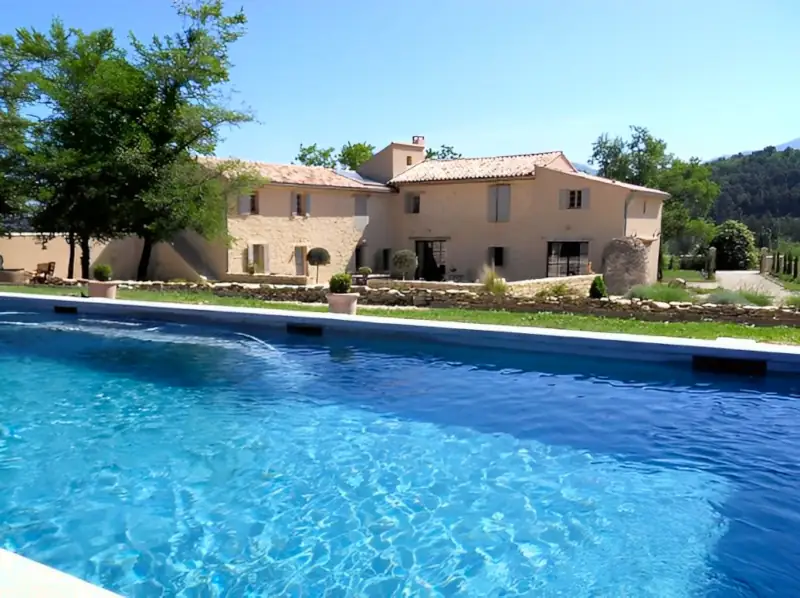
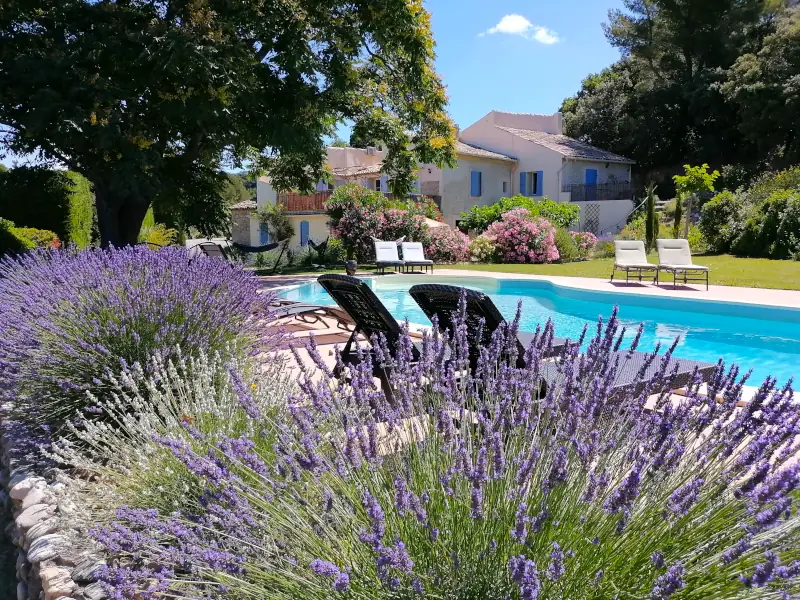

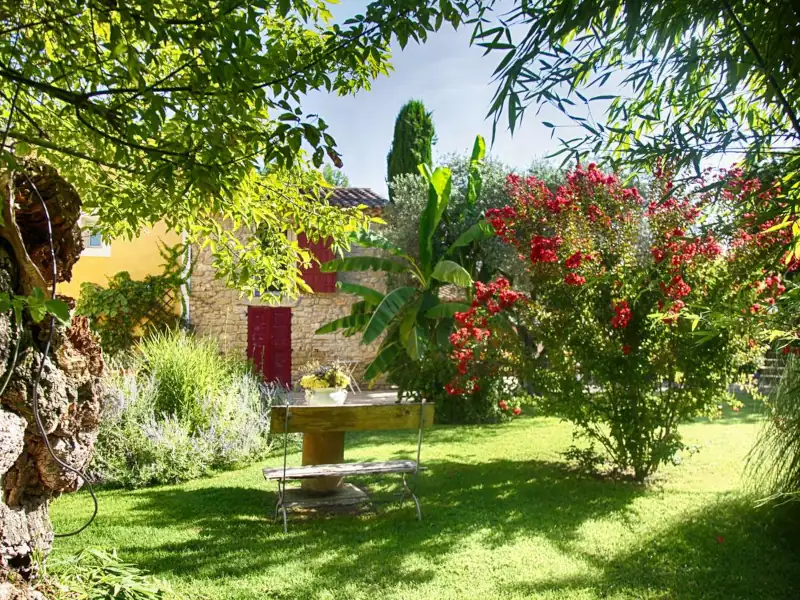
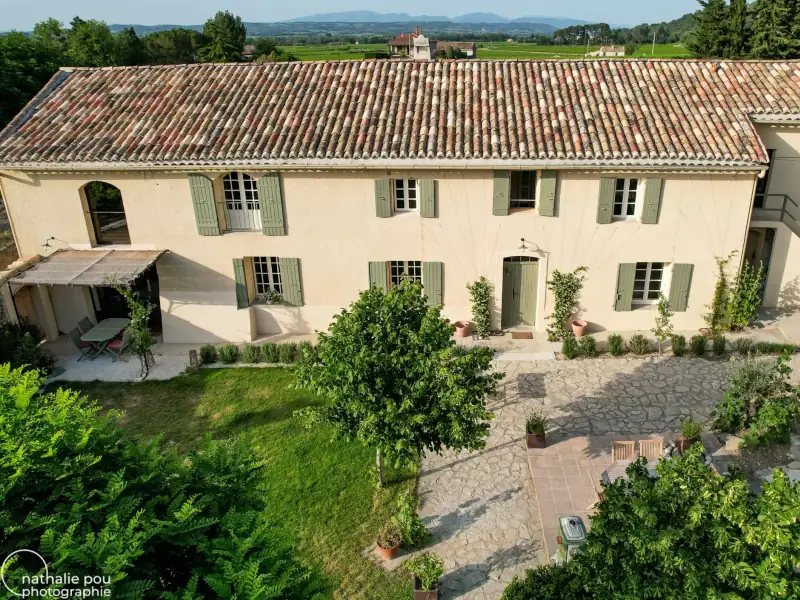
Le Mas des Poules
Charming bed and breakfast and Gîte
Saint-Roman-de-Malegarde
Visit website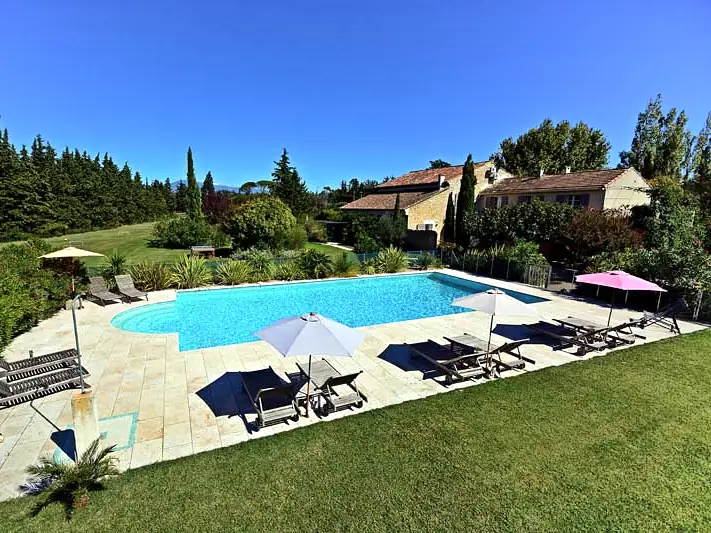
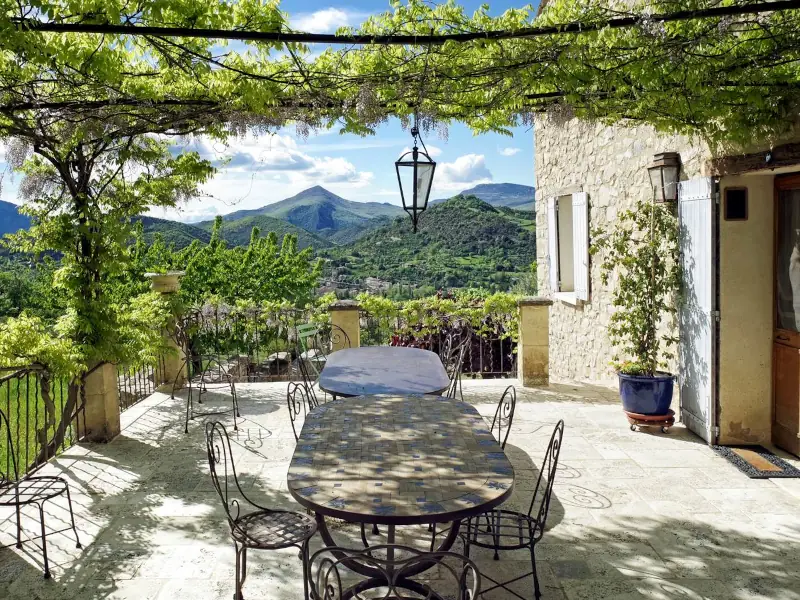
Le Deffends de Redon
Charming bed and breakfast
Montbrun-les-bains
Visit website
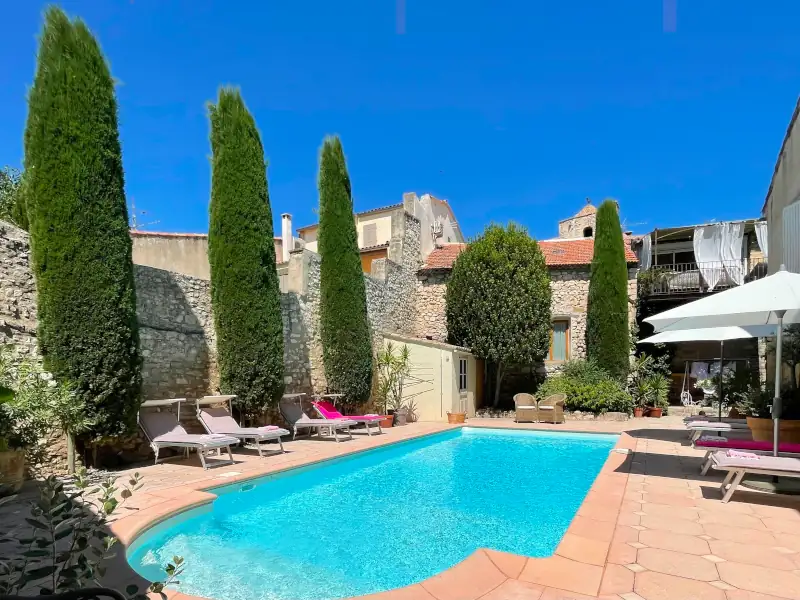
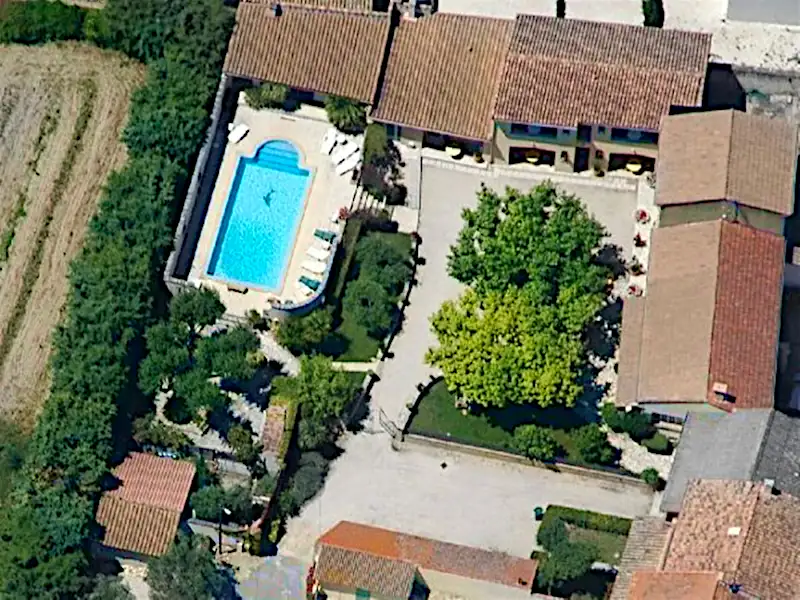
Le Mas de l'Amandier
Charming Bed and breakfast and holiday rental
St Saturnin lès Avignon
Visit website

Last updated: