


A getaway in the southern Luberon
Ansouis, from the Petit Portail to the castle
Text and photographs by Vincent Flachaire
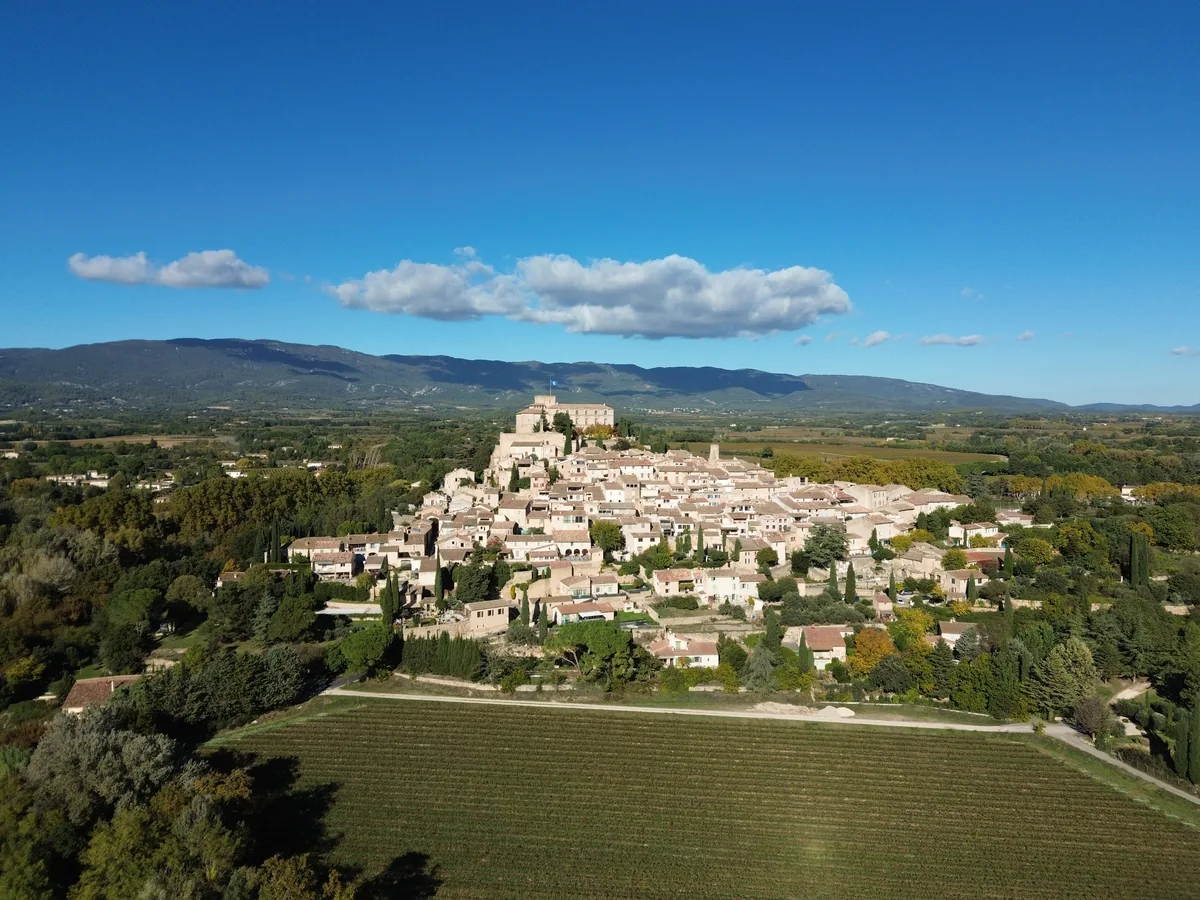
Below the castle battlements, boxwood gardens step down towards the rooftops of Ansouis. In this village in the southern Luberon, even the church has kept its arrow slits.
Ansouis at the foot of the Luberon
The vineyards of the Pays d’Aigues spread out below the hillside. Higher up, the castle overlooks the houses of Ansouis, one of the villages listed among Les Plus Beaux Villages de France.
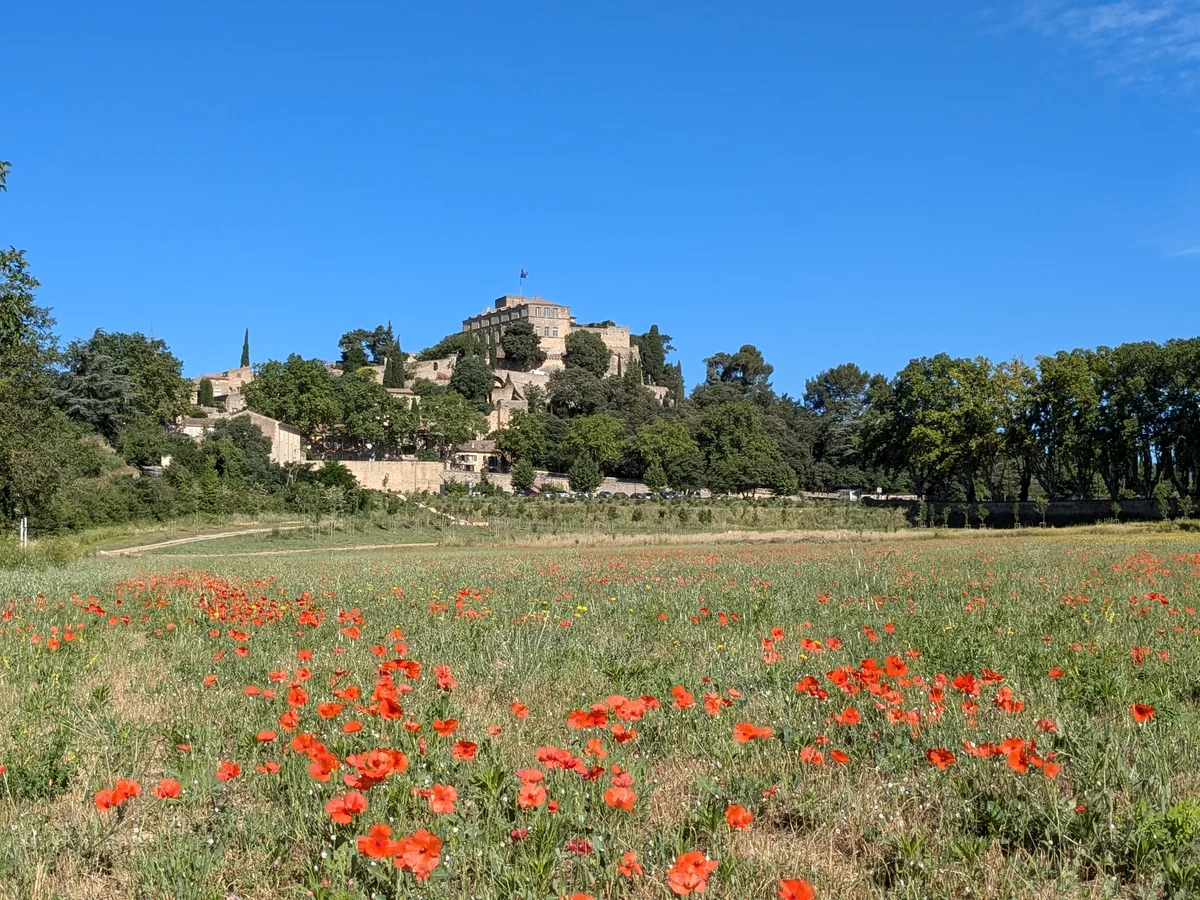
At the foot of the old village, a reservoir once stood where Place Saint-Elzéar is now. Its water supplied an olive mill and a wine press. In the early 1960s, the municipality filled it in to create the square. From here, the lane climbs between two houses to the old village gate.
From the Petit Portail to the consuls’ house
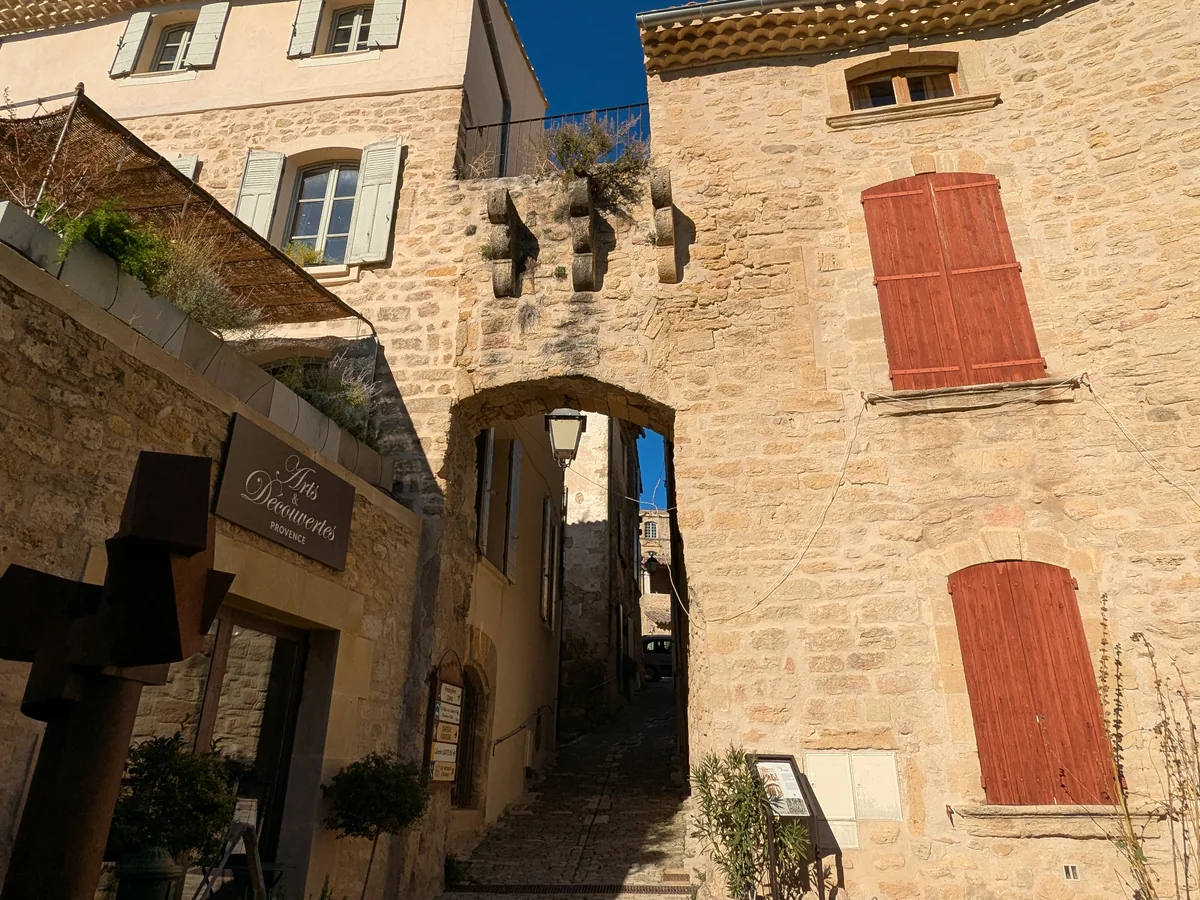
Three stone corbels above the arch of the Petit Portail are all that remain of its former machicolation. This is the last surviving gate in the village walls. Its portcullis was only removed in the late 19th century.
In the 15th and 16th centuries, the village council met in the consuls’ house. The consuls paid the village taxes to the lord in a lump sum and could recover some of the money by charging for the use of his oven. One of the ground-floor arches may once have opened onto a shop.
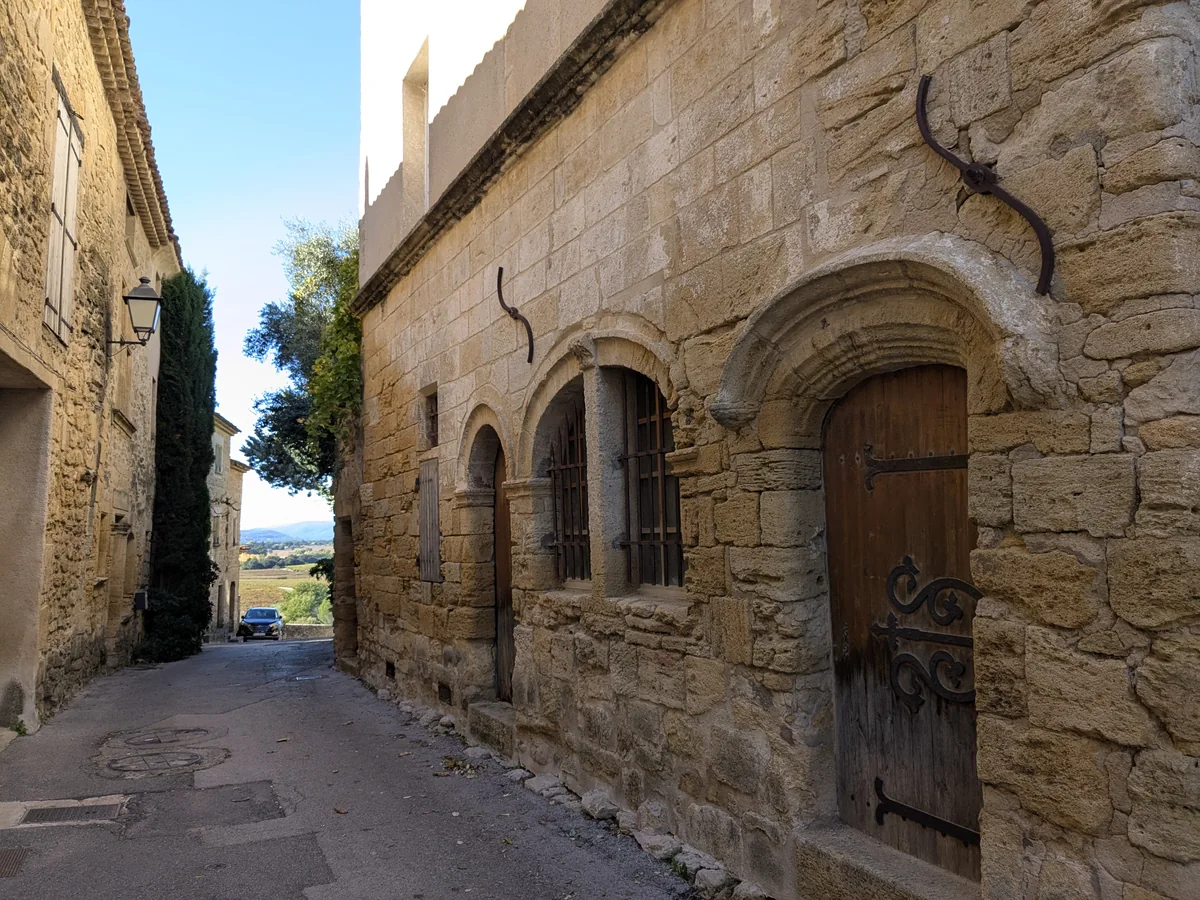
A small carved shrine on the corner of the house recalls the processions that once passed here. At the end of the lane, the wall of Saint-Martin rises above a semicircular flight of steps.
Saint-Martin, a church built into the defences
At the foot of the castle, narrow arrow slits pierce the thick walls of Saint-Martin. The church was built against the rampart, which shaped its layout. Inside, the chancel is slightly out of line with the nave.
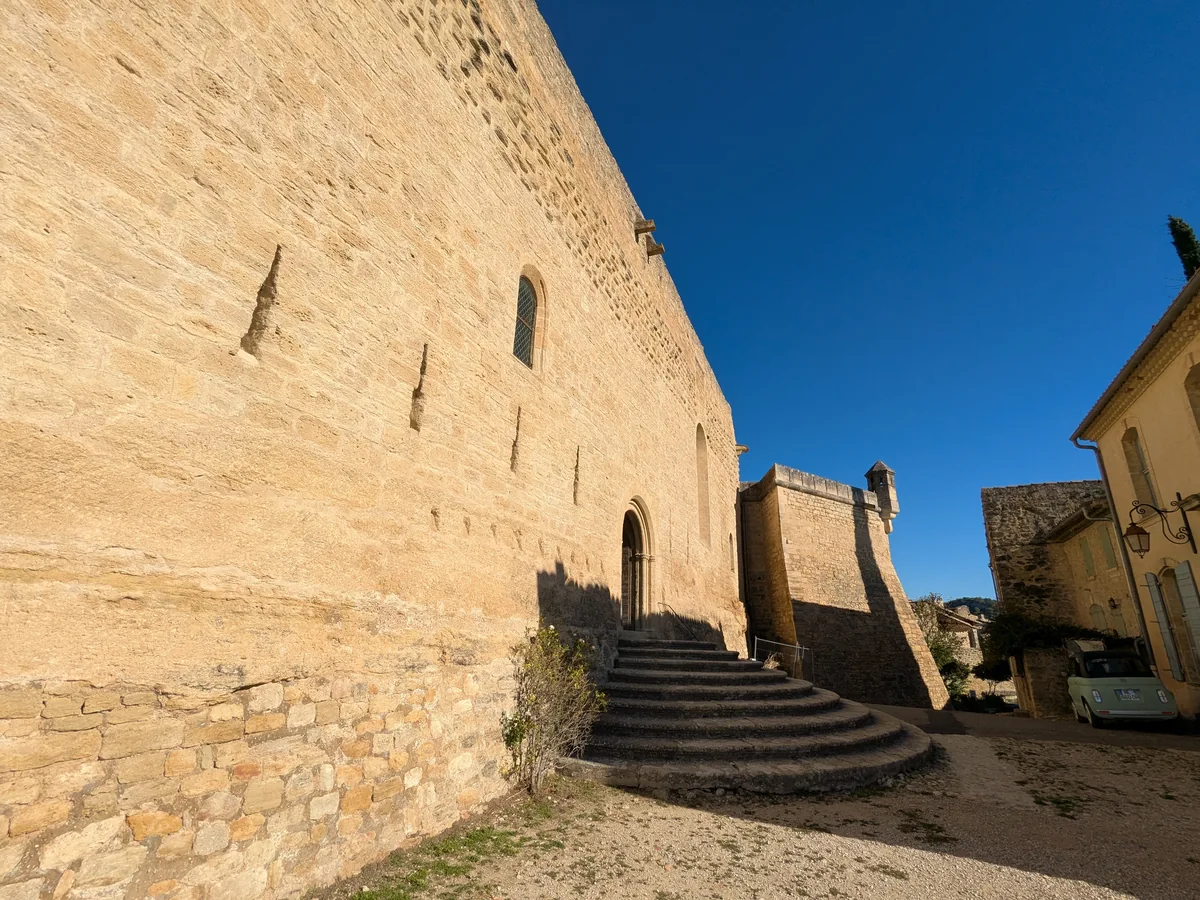
The church holds the relics of Elzéar de Sabran, lord of Ansouis in the early 14th century, and his wife Delphine. They were known for their piety and generosity to the poor. Elzéar was canonised in 1369. Every September, pilgrims gather for his feast to honour both Saint Elzéar and Blessed Delphine.
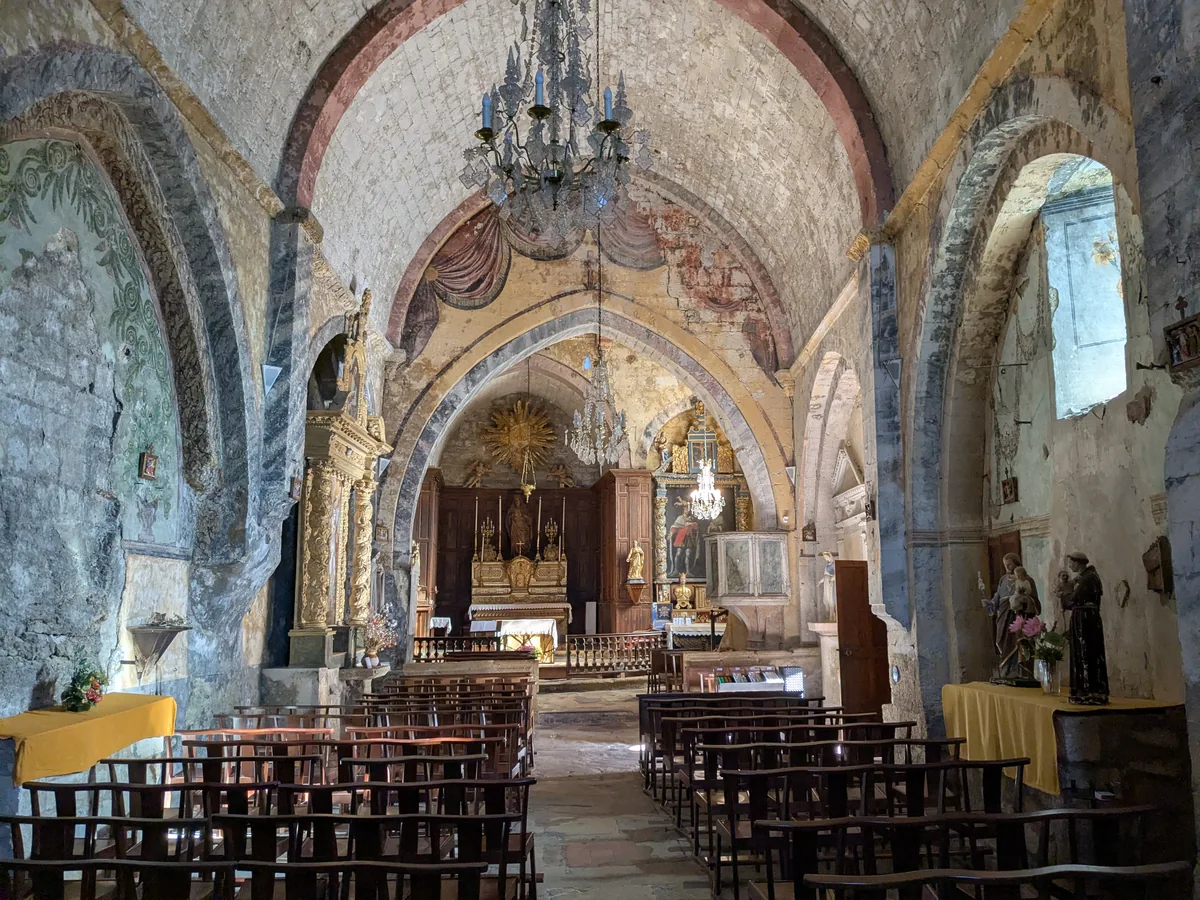
Claude Berri filmed interior scenes for Jean de Florette and Manon des sources inside Saint-Martin. For the exterior shots of the church, he used the neighbouring village of Vaugines.
From fortress to country residence
The castle gateway still has its battlements and machicolations. During the Wars of Religion, Ansouis was held by the Huguenot troops of the Sieur d’Oraison. In 1574, Catholic forces besieged the village to retake it.
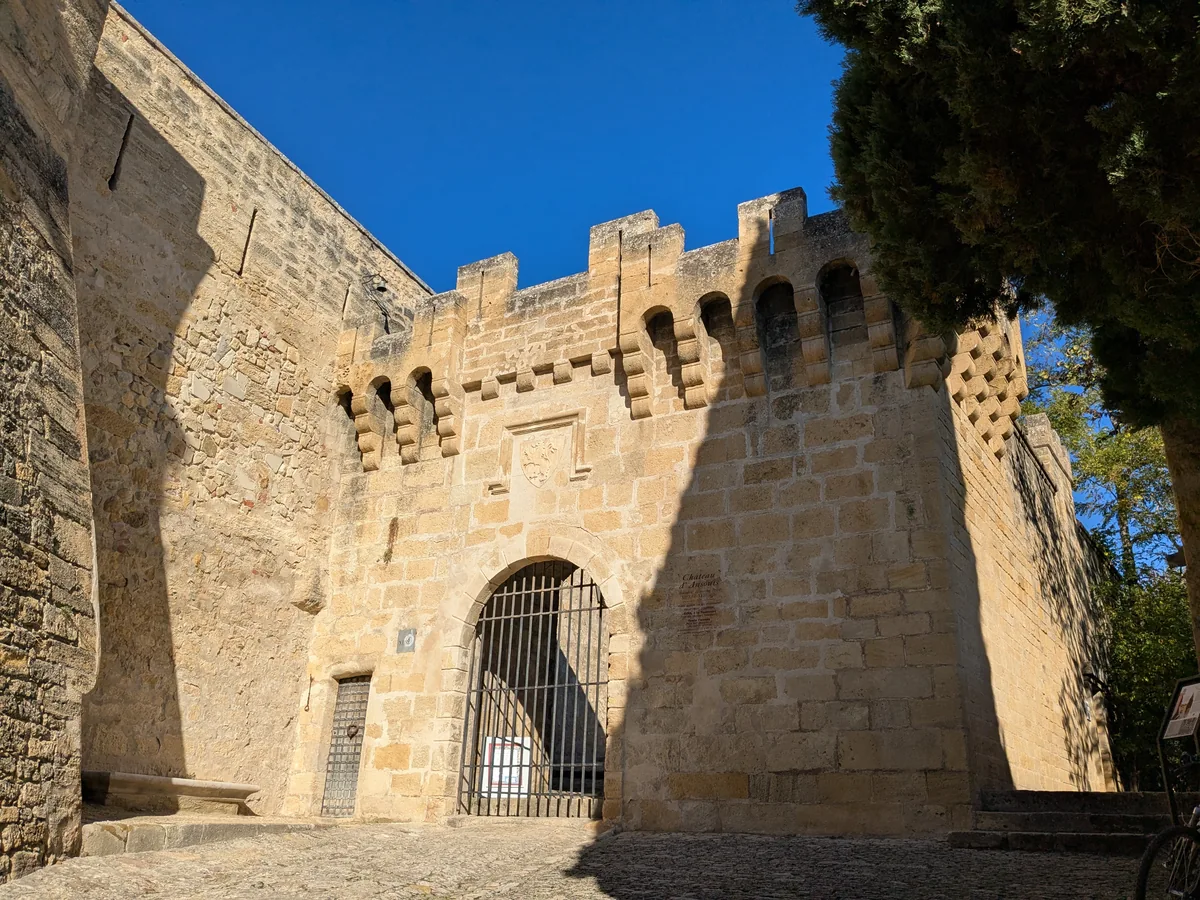
In the 17th century, the medieval fortress became a country residence. Its terraced gardens opened out over the Aigues valley. In the following century, the rooms were decorated with ornamental plasterwork of the kind found in the townhouses of Aix-en-Provence.
The Sabran family owned the castle for generations. A dispute among the heirs led to its sale at auction in 2008. It is still lived in, and guided tours take visitors through the furnished rooms and gardens.
Down the hill, a museum inspired by the sea
Farther down, sculptures stand outside a former stable that housed the mules used in the nearby quarry. Georges Mazoyer, an artist and diver from Marseille, turned it into his Musée extraordinaire.
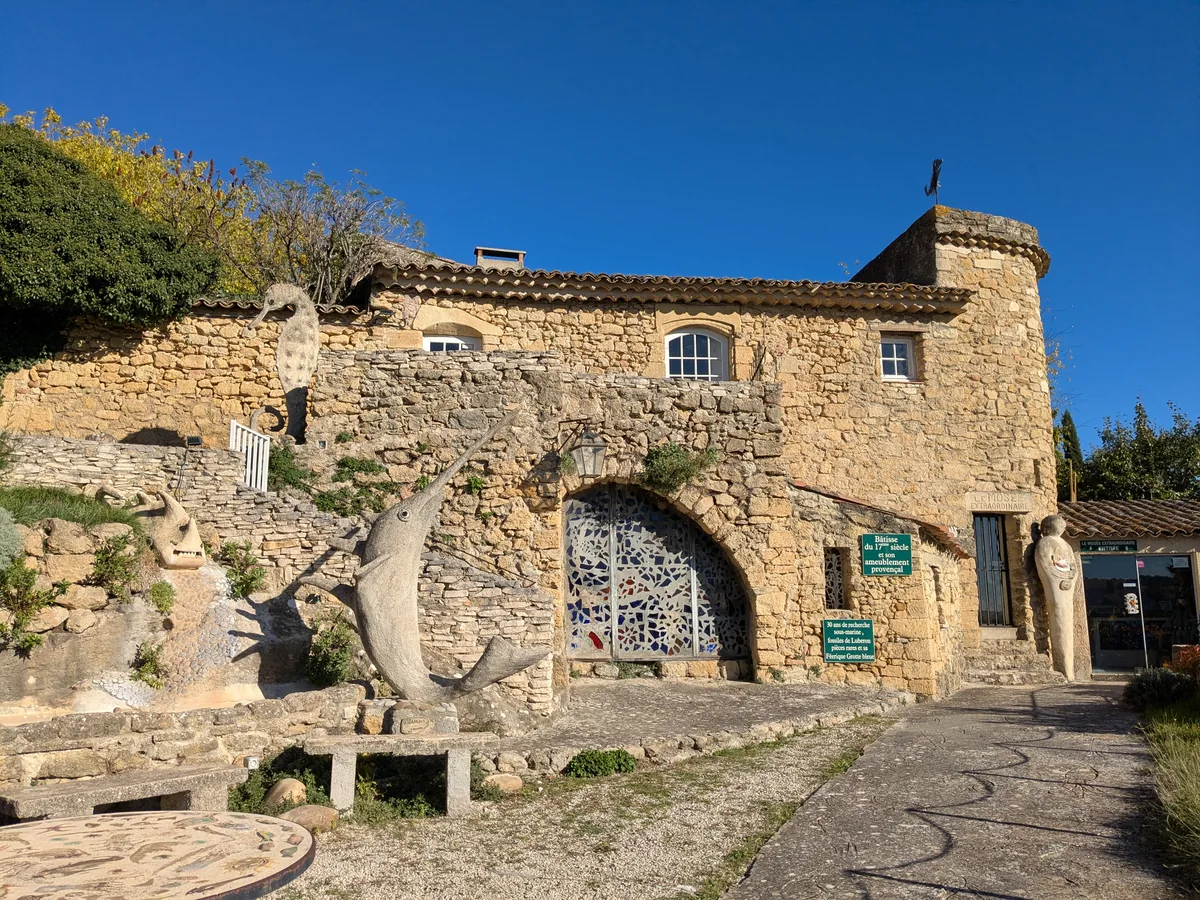
Shells and fossils share the museum with Mazoyer’s paintings, ceramics and sculptures. In the Blue Grotto, he recreated a scene from beneath the sea.
Continue exploring
At the foot of the Grand Luberon, Cucuron’s Bassin de l’Étang offers a stop in the shade of the plane trees. A little farther west, the Lourmarin market fills the village streets on Friday mornings.
To the east, the Mirabeau Bridge crosses the Durance in the Canteperdrix gorge, between the cliffs at the edge of the Luberon.
Practical information
Exploring Ansouis on foot
- Parking and walking
- The Coignet car park is below the old village. Allow about an hour for the loop via the Petit Portail, the church and the museum, plus time for visits. The climb includes steep, cobbled lanes.
- Ansouis Castle
- The rooms and gardens can be visited on a guided tour with advance booking. Tour times and booking.
- Musée extraordinaire
- The entrance is on Rue du Vieux Moulin. Information about Ansouis’s museums (in French).
Extend your stay
Guest houses to extend your getaway
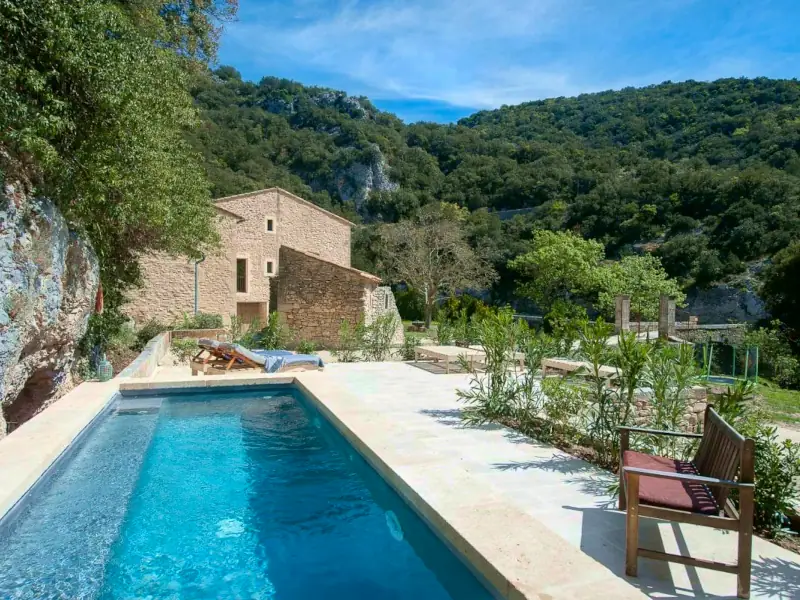
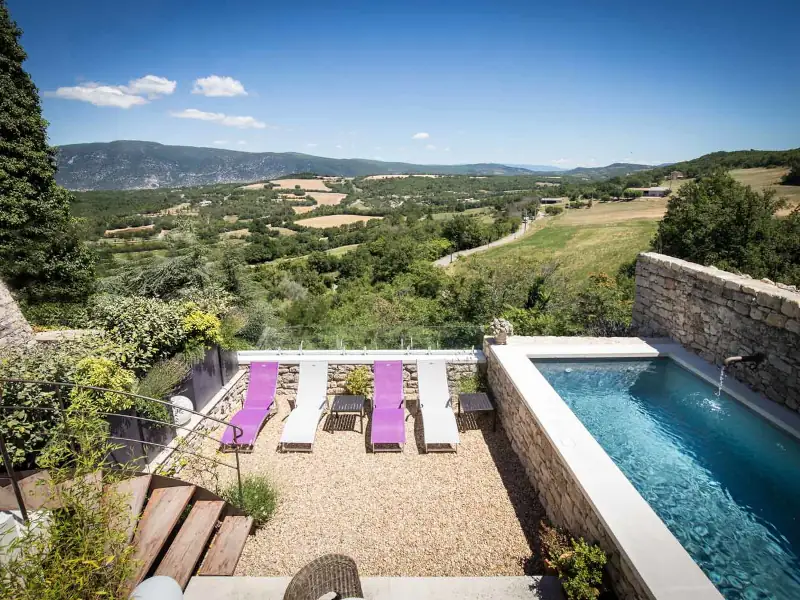
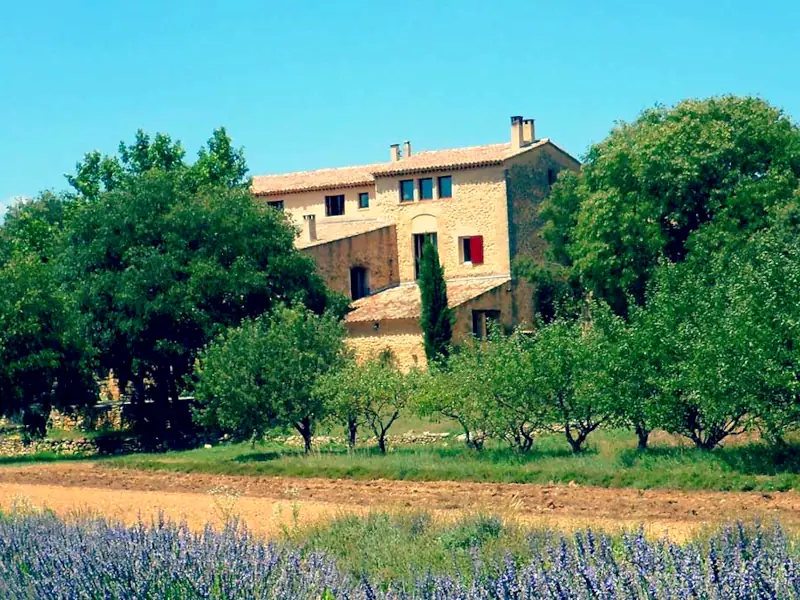
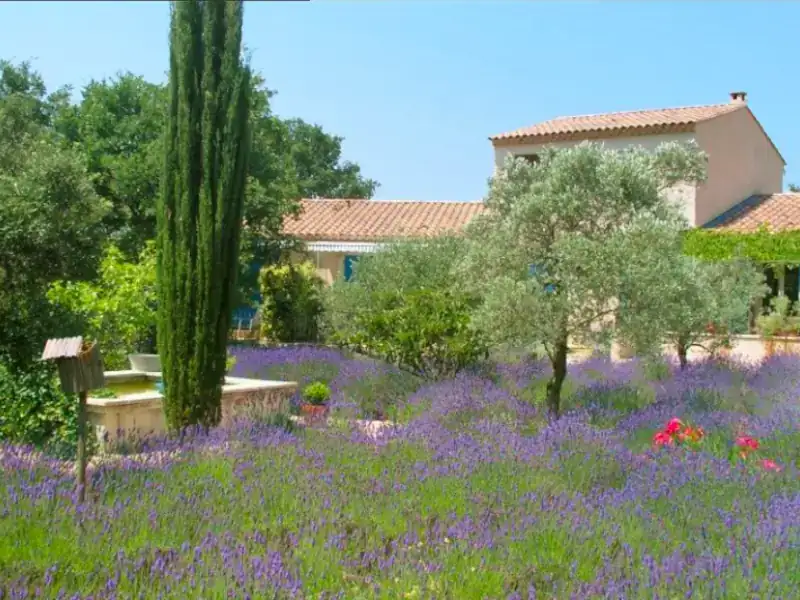
These properties listed on the Portal are within 25 km as the crow flies of the location featured in this getaway. Visit their websites to plan your stay.



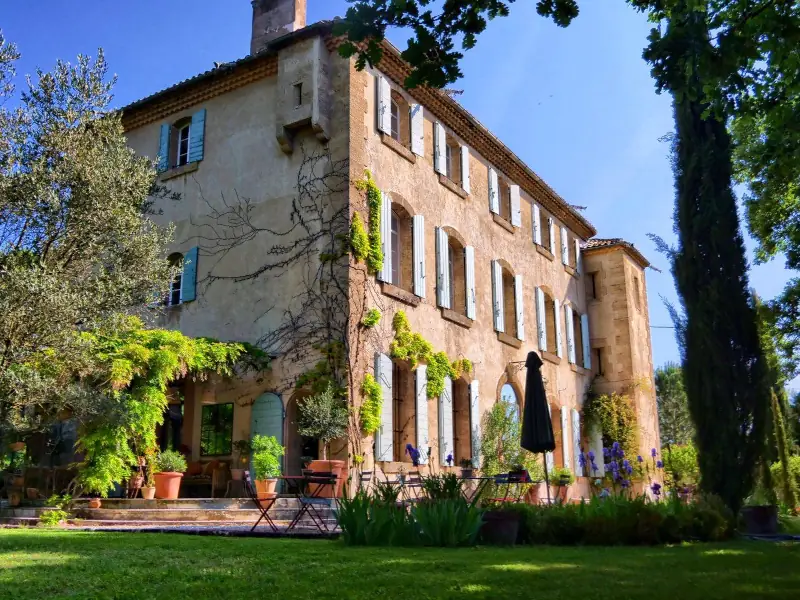
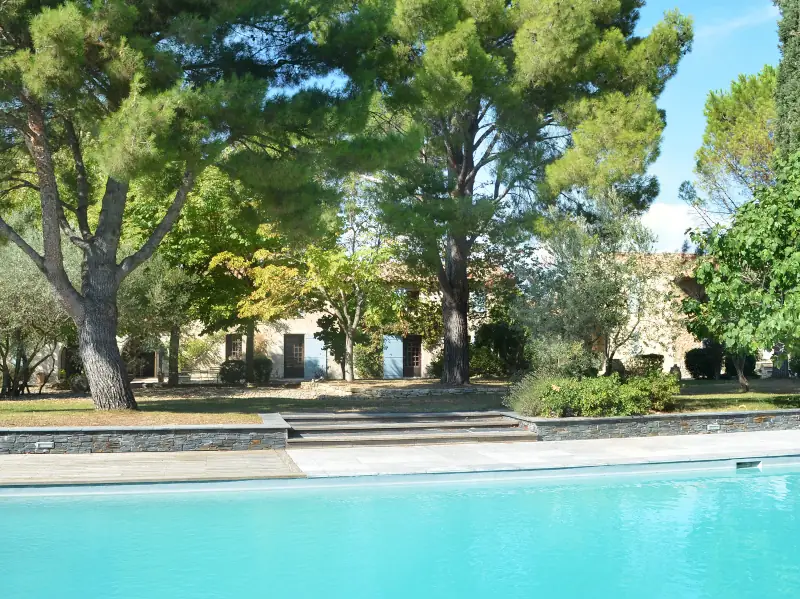
Campagne Chastel
Charming bed and breakfast and Gite
Aix-en-Provence
Visit website
La Ferme
Charming bed and breakfast
Saint-Marc-Jaumegarde
Visit website
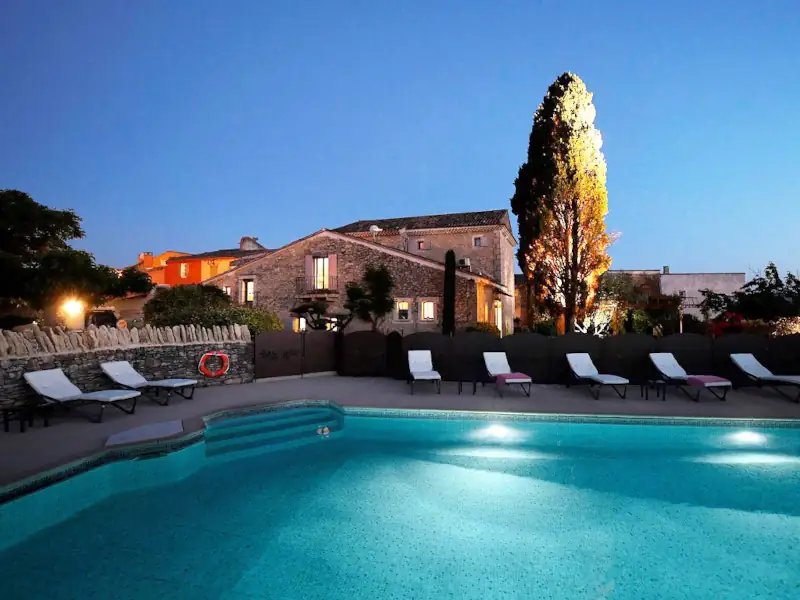
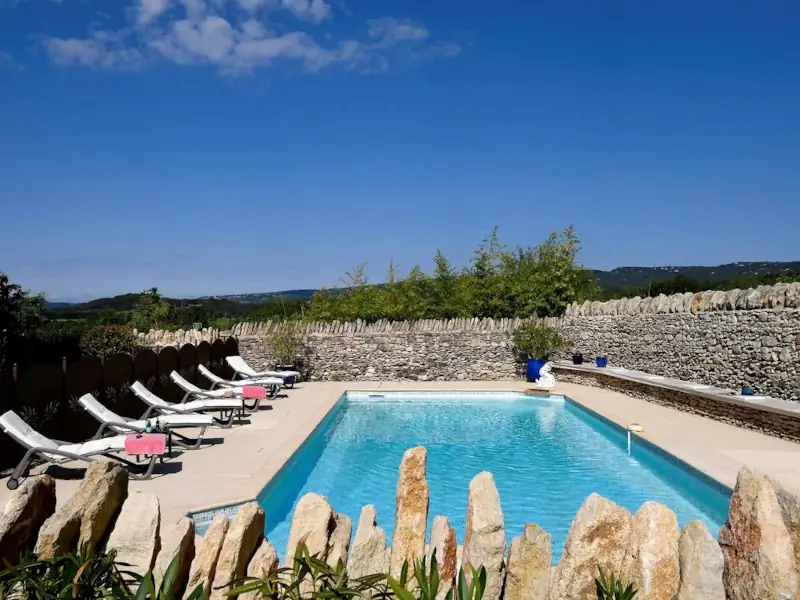
Gîte des Demoiselles
Charming Gite
Roussillon
Visit websiteLast updated: