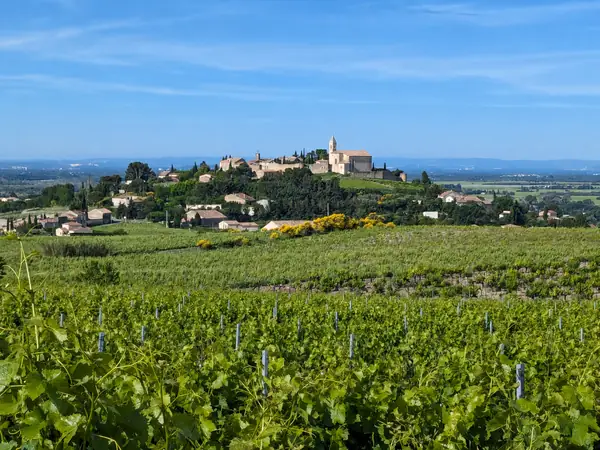
Orange lies in the Rhône Valley, around thirty kilometres north of Avignon. Known for Roman heritage, it is also a base for discovering the vineyards and villages of northern Vaucluse.
Founded under the name Arausio, Orange preserves a Roman theatre whose stage wall remains unusually complete. It gives a sense of the ancient town’s importance.
Each summer, the Chorégies d’Orange use this historic setting for opera and music performances, one of the Rhône region’s cultural events.
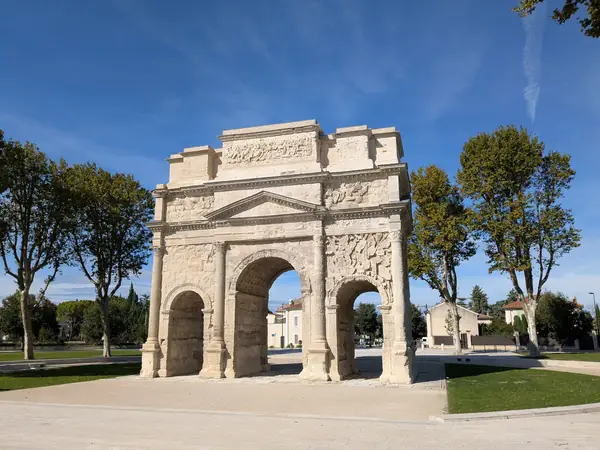
The triumphal arch
At the northern entrance to town, the Roman arch complements the theatre visit. Its military and maritime reliefs provide another view of Orange in Roman Provence.
A former principality
Orange’s history continues beyond antiquity. It was a principality before joining the Kingdom of France in the eighteenth century. The title Prince of Orange remains associated with the Dutch royal family.
Saint-Eutrope Hill
Saint-Eutrope Hill provides open space above the centre. From its heights, views extend towards the Dentelles de Montmirail, Mont Ventoux and, in clear weather, more distant hills.
Vineyards and the Rhône Valley
Several wine-growing areas surround Orange. Châteauneuf-du-Pape, Gigondas, Vacqueyras and the villages near the Dentelles are accessible from town.
Our walk through Châteauneuf-du-Pape combines village lanes, the papal castle remains and wine tasting, offering an outing in the neighbouring vineyards.


 Meals with the hosts